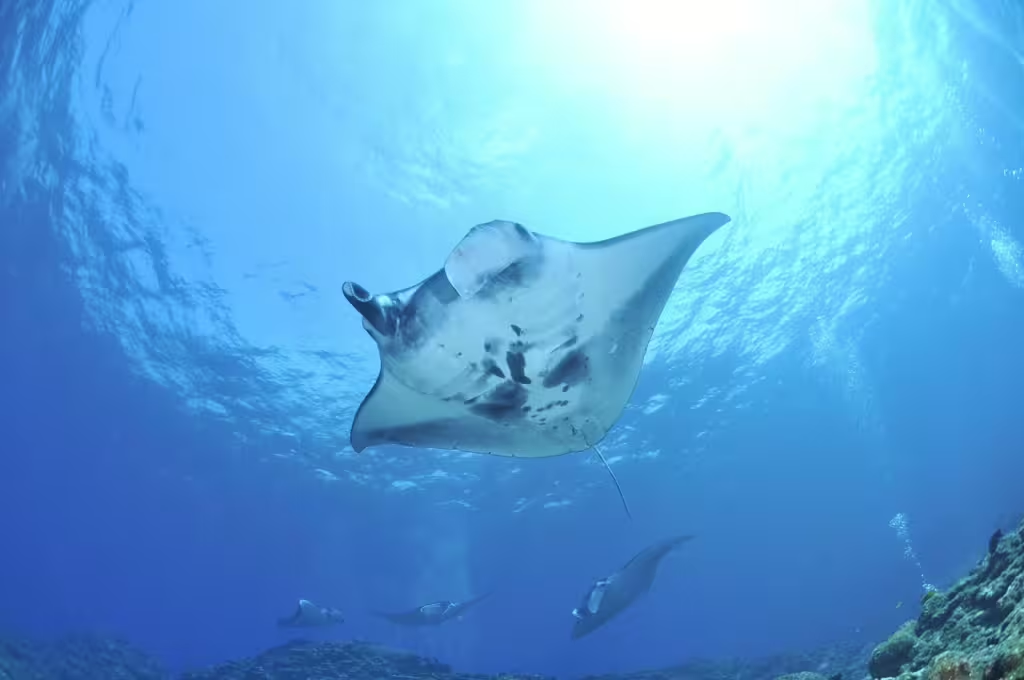

In the past few weeks, we have examined some of the most unusual and dangerous undersea creatures to ever swim the seven seas. From the largest fish known to man to venomous underwater reptiles, we here at True Investigator are determined to investigate all of the ocean’s most remarkable lifeforms. Today, we’ve chosen a truly awe-inspiring animal: the manta ray, a creature that seems to soar through the waves and has long been the subject of myth and legend.
Manta rays don’t swim, they practically glide through tropical ocean waters. Possessed of rare intelligence, peaceful temperaments, and eye-catching morphology, it’s no wonder that these benthic giants have fascinated divers, scientists, and coastal cultures for generations.
In this article, we will examine all there is to know about manta rays, from their uncommon size to their unique diet. At the same time, we will discuss how their astounding adaptations have helped them to thrive in marine environments for millions of years. So grab yourself some scuba gear and get ready to take a dive with us once more. Don’t worry though, the creature’s we’re going to see are some of the nicest fish you’re likely to meet.
What Is a Manta Ray?
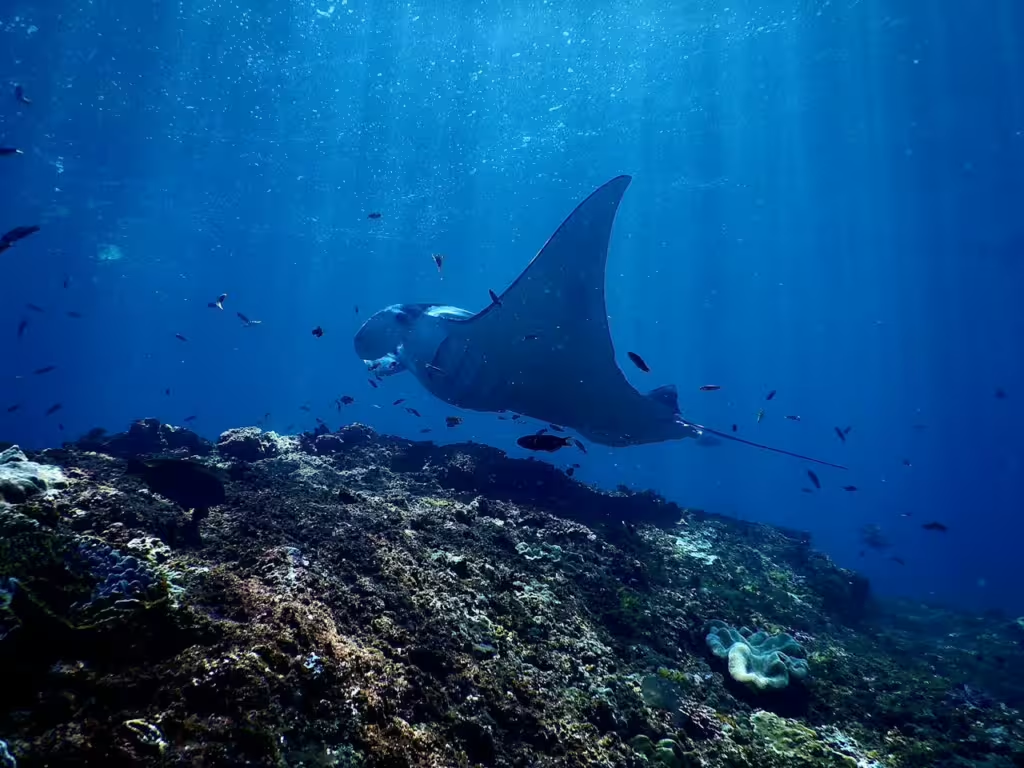
Belonging to the genus Mobula, manta rays are related to stingrays and sawfish. Of course, they differ in many ways from these two animals. First, unlike many other rays, mantas do not possess venomous tail stingers. They also do not live in coastal water, instead choosing to spend their days gliding placidly through the open ocean. Unlike sawfish, they don’t hunt, but instead filter feed on microscopic plankton, tiny crustaceans, and teeny fish.
There are two primary species of manta ray out there: the Giant Oceanic Manta Ray and the smaller Reef Manta Ray. For the most part, however, we will be discussing the giant manta ray, which can have wingspans of over 20 feet in some cases.
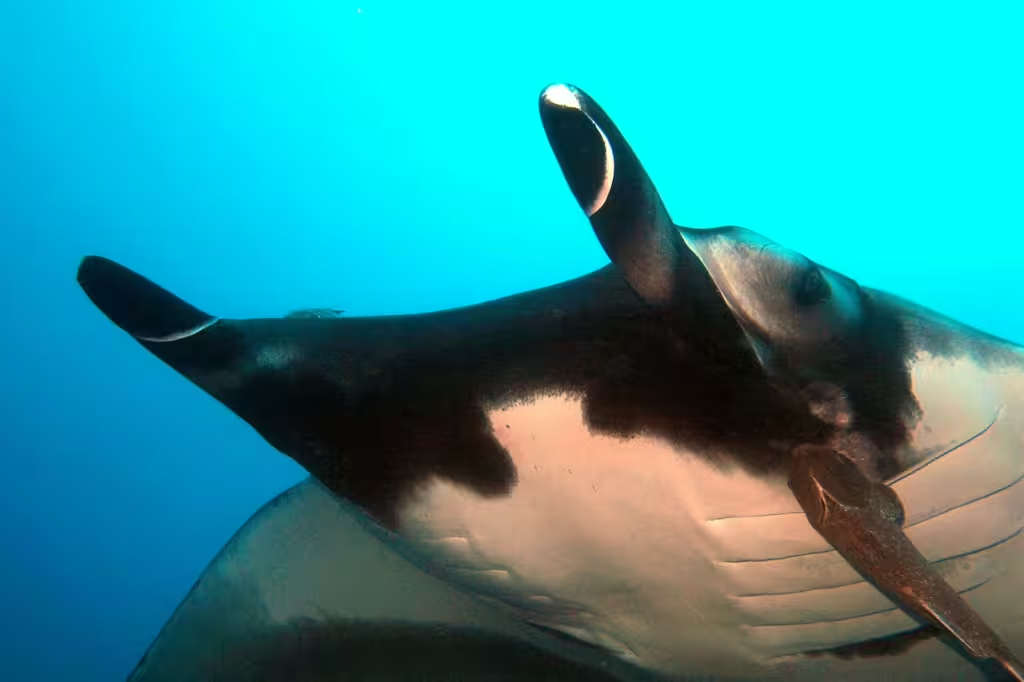
Giant manta bodies are characterized by their large triangular pectoral fins, flattened bodies, wide mouths, which are positioned at the front of their head, between their eyes, and finally, the distinctive cephalic fins that frame those mouths. The purpose of those cephalic fins is to help direct water and food into the mouth while the manta is feeding.
Gentle Filter Feeders
As filter feeders, manta rays eat by swimming through the water with their mouths open. The water enters their mouths and gets filtered by specialized structures in their gills. These are sort of like comblike gill rakeer attached to the gills that catch the plankton, shellfish, and small fish they like to eat.
Manta rays have to keep swimming as a means of passing water through their gills in a constant flow and because of this, they have sort of incorporated several feeding techniques into their endless journey through the open water. Sometimes they will swim in loops or chains, turning around to catch blooms of tiny crustaceans on the way back. To catch plankton, they will barrel roll or swim up near the surface where they gather to scoop them in before heading back down into deeper waters. At times, they will even gather in groups, wheeling about in the water to catch as many microscopic morsels as they can.
Graceful Swimming
Manta rays are famous for their elegant movements and the slow, rhythmic motions they make as they “fly” through the water. The reason that manta rays swim so slowly is two-fold: first, because they have to constantly be on the move, they want to conserve as much energy as possible as they make their way across long oceanic distances. Second, because swimming slowly enables them to maneuver better as they pass over reefs or other potential hazards.
Intelligence and Curiosity
Most people don’t know this, but manta rays are among the most intelligent fish in the ocean. They aren’t say, as clever as an octopus, but they have been observed taking actions that suggest an advanced level of cognition. For example, scientists have seen that they show curiosity toward divers and are gentle when interacting with them. New studies indicate that they have social relationships with their own kind as well, remembering and forming friendships with individual rays they have met before.
Reproduction and Slow Population Growth
Manta rays reproduce slowly compared to many fish species, which wouldn’t normally be a problem, but ocean animals aren’t exactly “thriving” these days thanks to human beings. Typically, females only give birth to one live pup at a time, though two will sometimes happen. In any case, baby mantas are born fully formed, but they mature very slowly; mostly because they have a long way to grow as compared to other fish.
Natural Predators
Besides humans, who don’t really eat or capture manta rays but do end up threatening them with pollution, bycatch, and climate change, these majestic fish have relatively few predators. This is due, primarily, to their large size. The only animals that might take a bite out of a manta is a particularly large shark or an orca whale, depending on where they live. That said, young mantas are more vulnerable to predators until they are full grown. Because of this, they tend to avoid the open ocean and instead stay in shallower habitats for protection.
Spot Patterns as Fingerprints
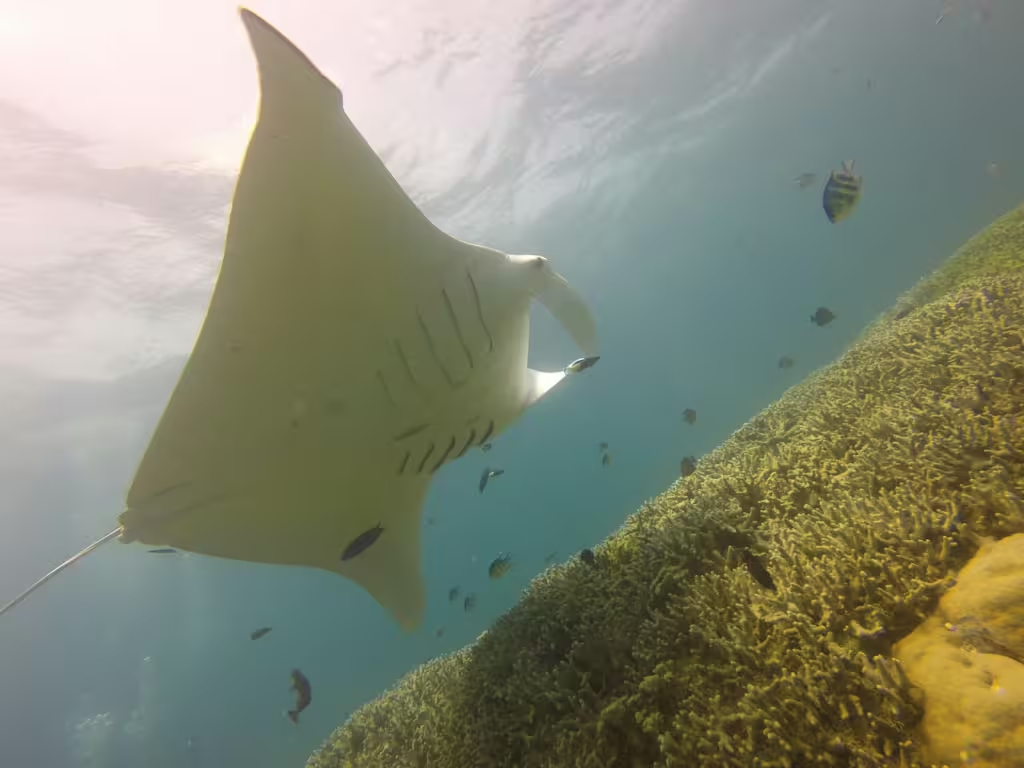
Like whale sharks, each manta ray has a unique pattern of spots that can be found on no other manta ray. These unique markings can be found only on the manta’s underside but they have become very useful in helping to study these animals. Researchers use photographs of these patterns to identify individual mantas, track their movements, and monitor their populations. It is a great way to conduct non-invasive research, though based on how geneal the manta rays are, they probably wouldn’t mind the company.
Cultural Significance
In some coastal cultures, manta rays are highly-regarded, having inspired countless stories, myths, and local tradition. Many native peoples in the Pacific Islands respect manta rays and see them as symbols of grace, wisdom, or even freedom. These days, human cultures all over the world view the manta rays as ambassadors for marine conservation. They are a hope for our ocean’s future.
True Investigator Says…
As you can see, manta rays are graceful, intelligent giants that defy our preconceived notions about what a large marine animal should be. Like whales, whale sharks, and other large filter feeders, manta rays are not inherently dangerous humans, nor would they deign to attack one of us unless we gave them very good reason to do so.
Sadly, despite their beauty and adaptability, manta rays, like so many of the ocean’s most fascinating animals, remain vulnerable to environmental changes and other dangers wrought by human activity. Whether we realize it or not, the manta ray’s future depends on healthy oceans, and so does ours. As a species, as a collective global culture, we need to respect oceanic ecosystems and begin to take real steps towards cleaning up the damage we have already done. Let’s just hope it’s not too late for us or for the manta rays…
Discover more from TrueInvestigator
Subscribe to get the latest posts sent to your email.