

If one were to look back at the statues, murals, tapestries, and paintings that depict humanity’s storied history, they might notice that among the famous faces and epic scenes, there is a near-constant companion sharing the space with us: horses.
Indeed, few animals have shaped human civilization as profoundly as the horse. They have been our companions nearly as long as canines, connected us across entire continents, led us to victory in battle, and helped us farm. In many ways, the domestication of the horse can be counted among the most important turning points in human history.
In this article, we will discuss the domestication of horses and how having them as allies fundamentally changed how societies moved, traded, and expanded. We will travel back through time on horseback to learn where their ancient ancestors once roamed and the circumstances that had them enter our service. Saddle up, drear readers, this is going to be one heck of a ride!
The Wild Ancestors of Horses
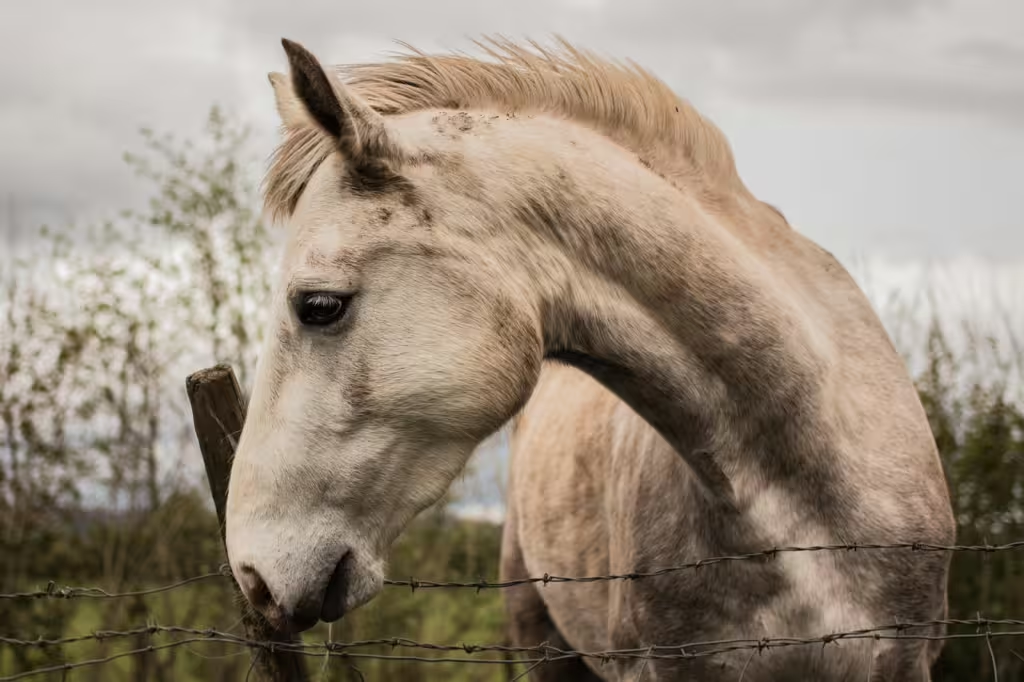
If you’ve ever seen a Przewalski’s Horse, either through a zoo or wildlife conservation project, then you’ve had a glimpse into what ancient horses used to look like. The lean, tall, or tiny domesticated horses we’re used to seeing today looked very different once upon a time. They evolved from ancient wild equines that lived across Europe and Asia and their one surviving relative is Przewalski’s Horse, an endangered species native to Central Asia.
Early wild horses were similar in some ways to the horses we know and love today. They were herd animals, they grazed in open grasslands, lacked cloven hooves, and ran a startling speeds to escape large grassland predators like wolves and big cats. In many ways, it was these most admirable traits that ended up becoming so valuable to humans.
Oddly enough, the horse’s herd structure also made them more adaptable to domestication. They were used to being with others of their kind, they were caring, social, clever, and could learn to trust…with time and patience. This made them much more ideal companions than other solitary animals.
Where Horse Domestication Began
Most evidence suggests horses were first domesticated on the Eurasian steppes around 5 to 6 thousand years ago. These vast grasslands stretched across the continent and encompassed Kazakhstan, Ukraine, and Southern Russia, to name a few modern countries.
Many archaeologists link the initial “event,” if indeed one could pinpoint an exact moment, to the Botai Culture. Researchers investigating ancient Botai settlements have uncovered some of the earliest known horse domestication evidence including horse bones, evidence of corrals having been built, and horse milk residue in some of their earthenware containers.
Though the evidence is still being studied, these findings are particularly interesting, as they may indicate that humans were interacting closely with horses long before written history!
Why Humans Domesticated Horses
At first, humans probably hunted horses the same as we did any herd animal. We wanted their meat, their hide, and their bones. This was a somewhat short-sighted understanding of the true value of horses, but we can forgive early hunter-gatherers for this. In time, they realized that horses offered much more as companions than they did as mere foodstuffs.
Transportation
Hitching up a horse to a cart or riding one, allowed humans to travel farther and faster than they ever could on foot. Mounted travel eventually transformed trade routes and migration patterns, but they also changed how distant human civilizations could communicate with one another.
Herding and Agriculture
Horses helped humans manage livestock and once we hitched them to plows, they even assisted with agricultural work. Oxen were always better for this purpose, of course, but the improved speed and mobility of horses allowed them to do things other animals couldn’t in terms of helping herd other domesticated species like goats or sheep.
Warfare
Remember when we mentioned all those epic paintings and statues depicting horses earlier? Well, the reason for all this horse iconography is that horse domestication revolutionized warfare. Mounted warriors could travel farther and faster. They could attack with speed, surprising and overcoming infantry forces with ease. The addition of horses to the fray dramatically changed military power across ancient civilizations.
Building Trust Between Humans and Horses
As with dogs and cats, the domestication of horses did not happen overnight. Wild horses, having once been prey to early humans, were naturally cautious of us. They were also extremely fast-moving. The first horses to be captured by humans were probably young and were tamed slowly and gradually. Adults that were captured were likely harder to tame and trust had to be established.
Over time, generations of horses became more accustomed to living among humans. They were bred with favorable traits like reduced skittishness, greater tolerance for riding and handling, and a newfound penchant for cooperation with humans.
Horses as Social Animals
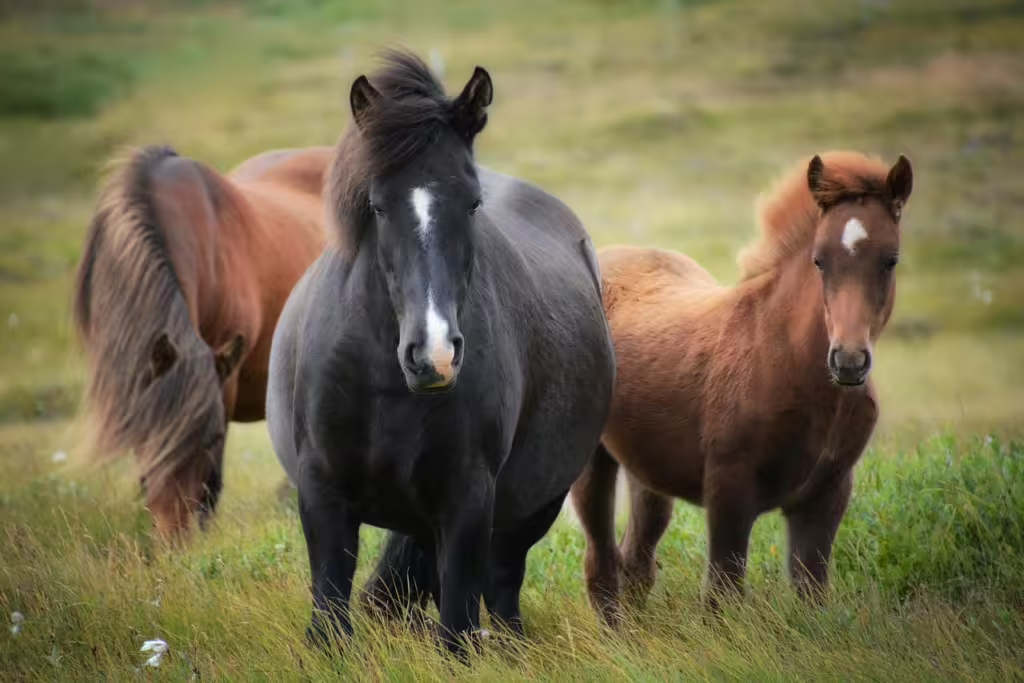
One reason horses adapted well to domestication is their social nature. Horse herds have their own social hierarchies, where they follow leaders and coordinate with the group for the collective safety of all. They can also communicate with one another. This made training them easy. All we had to do was co-opt those social systems and become their “leaders.”
Riding and the Invention of Horse Equipment
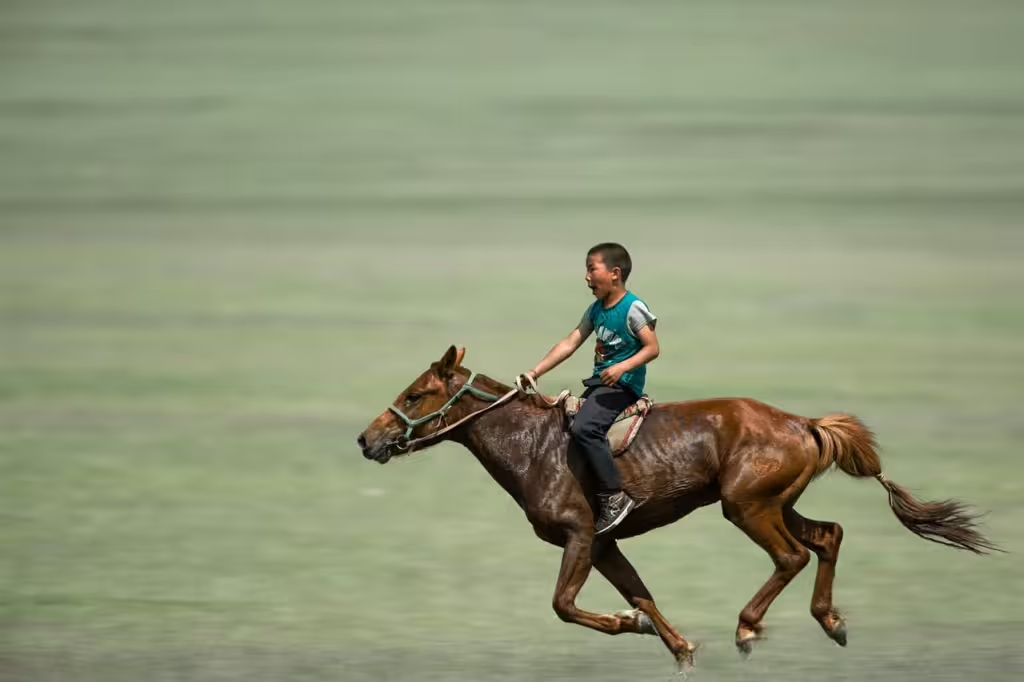
At some point, humans began riding horses directly and this innovation greatly transformed our relationship with them. Eventually, we started inventing gear to make both horse and rider more comfortable. Bridles, bits, stirrups, and saddles became essential and they allowed the horse to play a greater role in human society; particularly in the areas of transportation and warfare.
Horses and Human Culture
As we said early on, horses became deeply woven into human culture and mythology. They are in our art, religion, and folklore. They represent the national identity of some peoples, symbols of freedom, strength, power, or nobility. Their influence on our lives can be seen in everything from language, to tradition, to poetry, and even sports!
The truth is, useful as they are, we also kind of love horses. And in many ways, after so long as our companions, they love us back. There is an emotional bond that exists between horse and handler and it is tangible, especially to those who live and work with horses.
True Investigator Says…
As you can see, the domestication of horses changed the course of human history for all time. What began as a relationship between humans and wary grassland animals has since evolved into one of the most influential partnerships ever formed between divergent species.
There is no denying that the inclusion of horses into society transformed everything from transportation and exploration, to agriculture and warfare. They have become an intrinsic part of our collective unconscious, our art, our storytelling, and in turn, we have shaped and transformed them in ways that nature may not have been able to do on her own.
Even today, despite all they have become, there remains an echo of that ancient her animal in every gallop. Our companionship with horses is truly a wonder of the world and worthy of deeper understanding.
Discover more from TrueInvestigator
Subscribe to get the latest posts sent to your email.