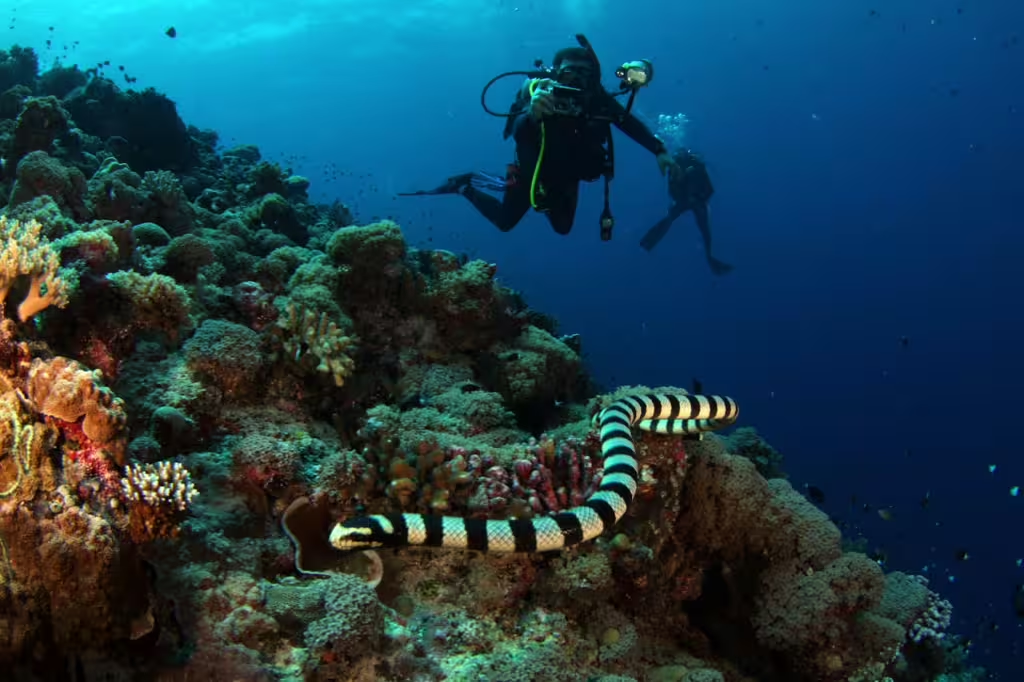

In the warm, shallow waters of the Indo-Pacific, countless dangers lurk beneath the waves. Anyone who knows anything about that particular ocean, specifically the area the abuts the Australian coastline, is home to some of the deadliest marine creatures on the planet. However, it isn’t the crushing jaws of a Great White or Hammerhead that you ought to be wary of, but something far more unassuming.
Consider, if you will, that you’re snorkeling in the Pacific and you notice a long, slender shape gliding effortlessly through the coral reef below. You might think this creature is an eel, at first glance; something you don’t want to interact with, surely, but nothing that would end your life. Unfortunately for you, a closer look reveals something more surprising, this swimming squiggle is a snake, and a rather venomous one at that.
In this article, we will discuss the snakes that live in salt water. These aptly-names sea snakes have earned a reputation for being particularly dangerous to interact with, specifically because of the potent venom they possess. As we investigate their ocean homes, we will discuss the sea snake’s behavior, biology, and why these elusive creatures play such a vital role in marine ecosystems.
A Life in the Ocean
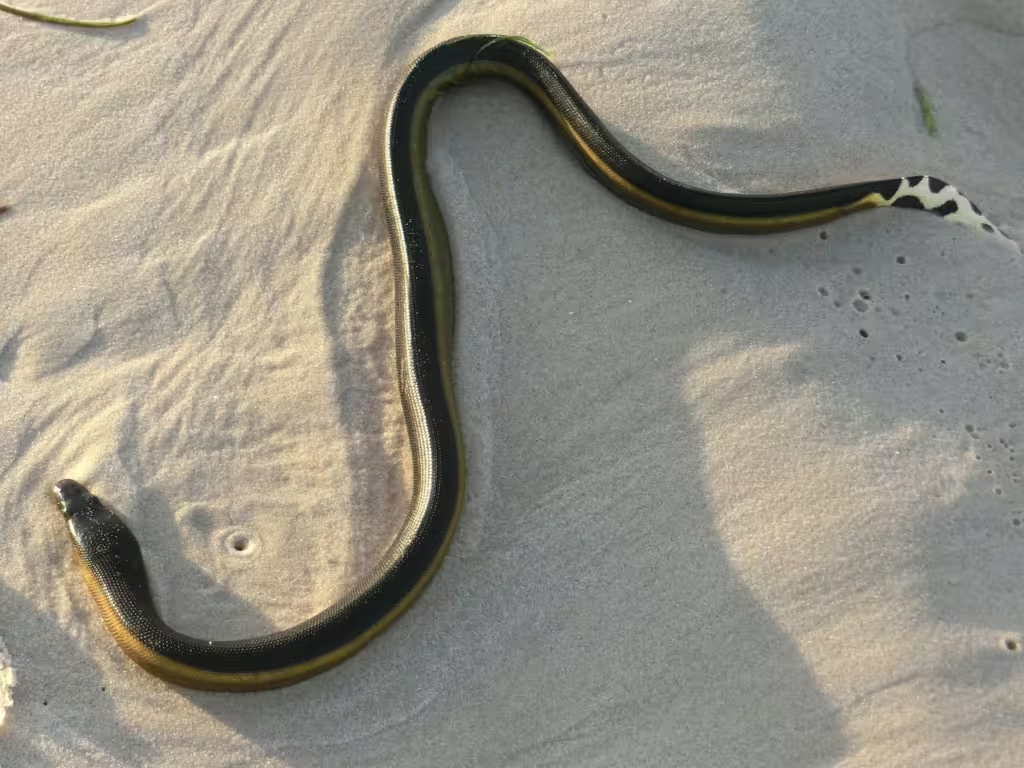
Hailing from tropical and subtropical waters, sea snakes are among the most specialized reptiles on Earth. There are aroun 60 or 70 species of sea snake out there in the world today, all of them descended from land-dwelling ancestors. In their current form, they have evolved a suite of adaptations that allow them to thrive in marine environments. Belonging to groups such as the Hydrophiinae and Laticaudinae, these animals represent a remarkable example of evolutionary transition.
Sea snakes are found primarily in coral reefs, coastal lagoons, and on shallow continental shelves, but though they can come ashore if they please to, they rarely do. Their bodies, as you can see from the images of them, are built primarily for swimming, and though it allows them to move easily through the water, their rudder-like tail can be cumbersome on land.
They spend much of their lives in tropical waters, navigating the reef in search of prey and resting/hiding in sheltered areas beneath the waves.
Unique Adaptations for Marine Living
Thanks to their unique physical and behavioral adaptations, sea snake movements are smooth and efficient, making them well suited to aquatic life. They have developed several traits that distinguish them from terrestrial snakes such as paddle-like tails, streamlined bodies, specialized lungs, and the ability to regulate the salinity (saltiness) of their chosen habitats.
Paddle-Like Tails
One of the most noticeable features is their flattened, paddle-shaped tail of the sea snake, which provides propulsion and enhances the reptile’s maneuverability underwater. It allows for efficient swimming, even when waters are rough.
Streamlined Bodies
At the same time, the body of the sea snake is both elongated and laterally compressed, reducing its resistance as it swims in the water water. This shape helps the sea snake glide smoothly through it’s environment.
Specialized Lungs
Sea snakes have extended lungs that run much of the length of their body, which both allows for longer dives and helps the snake to stay buoyant while it swims. Some species of sea snake are even able to stay underwater for longer periods of time before they need to surface for air; not too bad for such a small, unassuming reptile.
Salt Regulation
Living in saltwater presents a challenge for many vertebrates when it comes to maintaining internal balance. In order to live in the sea without becoming “too salty,” sea snakes have evolved specialized glands that help remove excess salt from their bodies. These glands enable them survive in marine environments that would overwhelm many other reptiles. Marine Iguanas from the Galapagos Islands and Saltwater Crocodiles possess similar adaptations that allow them to expel or process excess salt or chlorine.
Breathing and Diving
As we mentioned earlier, though sea snakes live in water, they are still air-breathing reptiles, which means they must surface periodically to breathe. To that end, some species have an additional adaptation; namely the ability to absorb small amounts of oxygen through their skin. Note that while this trait does not replace lung breathing, it can extend dive times when the snake is fleeing or hunting.
Diet and Hunting Behavior
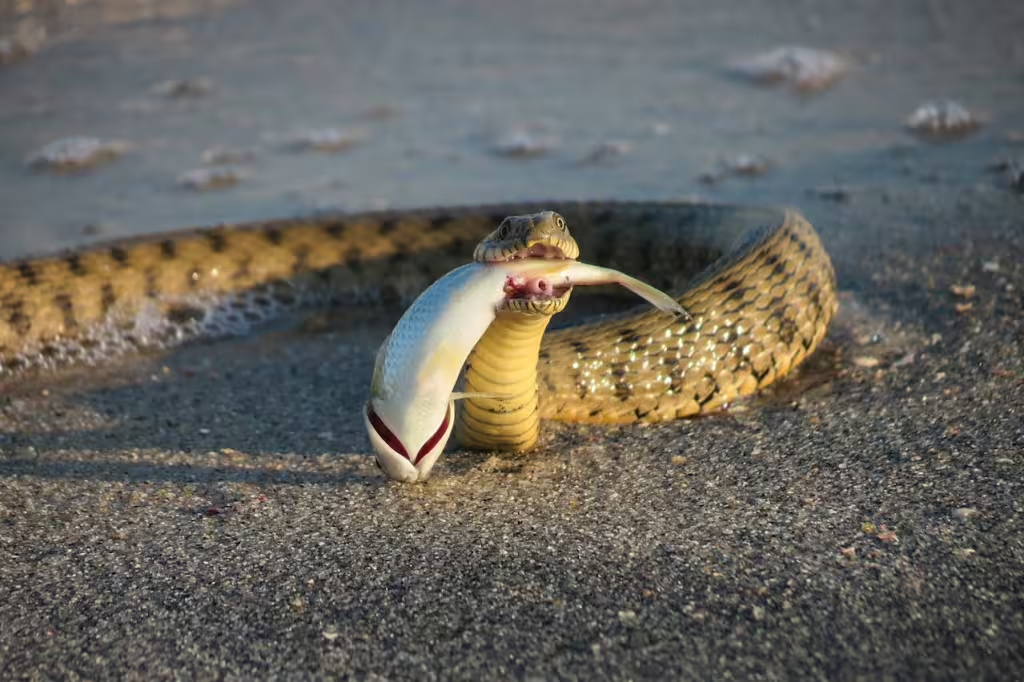
Sea snakes are carnivorous and primarily feed on fish, eels, and other small marine animals. They hunt in crevices in coral reefs and can even follow scents underwater in search of prey. Once prey is captured, it is swallowed whole.
Venom: Powerful but Rarely Used
At the start, we mentioned how sea snakes are among the most venomous snakes in the world, but they don’t use that venom unless they absolutely need to. Sea snake venom is adapted to immobilize fish quickly which prevents it from escaping into the jaws of another predator. When it comes to humans, however, sea snakes aren’t generally aggressive.
Bites are rare mainly because sea snakes tend to avoid contact with human beings. Also, their fangs are relatively small. Finally, many sea snakes will deliver dry bites, bereft of venom, to ward off large would-be predators rather than risk using up a vital hunting resource. The truth is, most interactions occur only when humans accidentally disturb them.
Sea Kraits: A Link to Land
The Banded Sea Krait represents a group of sea snakes that still maintain a connection to land on some capacity. Basically, sea kraits hunt in the ocean but return to land to rest and lay eggs. This dual lifestyle reflects an intermediate stage between land and fully aquatic living. In many ways, this dual-environment behavior is what offers zoologists valuable insight into how sea snakes evolved.
Reproduction and Life Cycle
Most fully aquatic sea snakes don’t lay eggs like the krait, but actually give birth to live young in the water. This adaptation allows them to remain in the ocean throughout their lives. Young sea snakes are independent from birth and begin hunting soon after.
Predators and Threats
Sea snakes have relatively few natural predators. Larger fish, sharks, and birds of prey will eat them if they find them, though most snakes utilize camouflage or venom to keep would-be predators at bay. In addition to natural threats, sea snakes face challenges from human activity. Fishing nets catch them accidentally as bycatch, pollution and climate change destroy their reef ecosystems, and habitat destruction by boats and tourists is a continuous issue.
Role in Marine Ecosystems
Sea snakes play an important role in maintaining ecological balance because they are predators that can control fish populations within their reef and coastal habitats. Their presence contributes to the health of coral reef ecosystems.
True Investigator Says…
As you can see, frightening though they might be in concept, sea snakes are nevertheless some of the most remarkable reptiles living on our planet today. Their singular ability to transition from land to sea and thrive in a completely different environment speaks to the adaptability of life and of reptiles, in general.
With their physical adaptations and specialized marine behaviors, sea snakes a are perfectly suited to their roles as a marine predators. As such, they continue to be vital to the continued health of interconnected ecosystems like coral reefs an coastal waters, both. Quiet, beautiful, and deadly, sea snakes are a fine example of how mother nature can put all of those facets into one, streamlined little package.
Discover more from TrueInvestigator
Subscribe to get the latest posts sent to your email.