

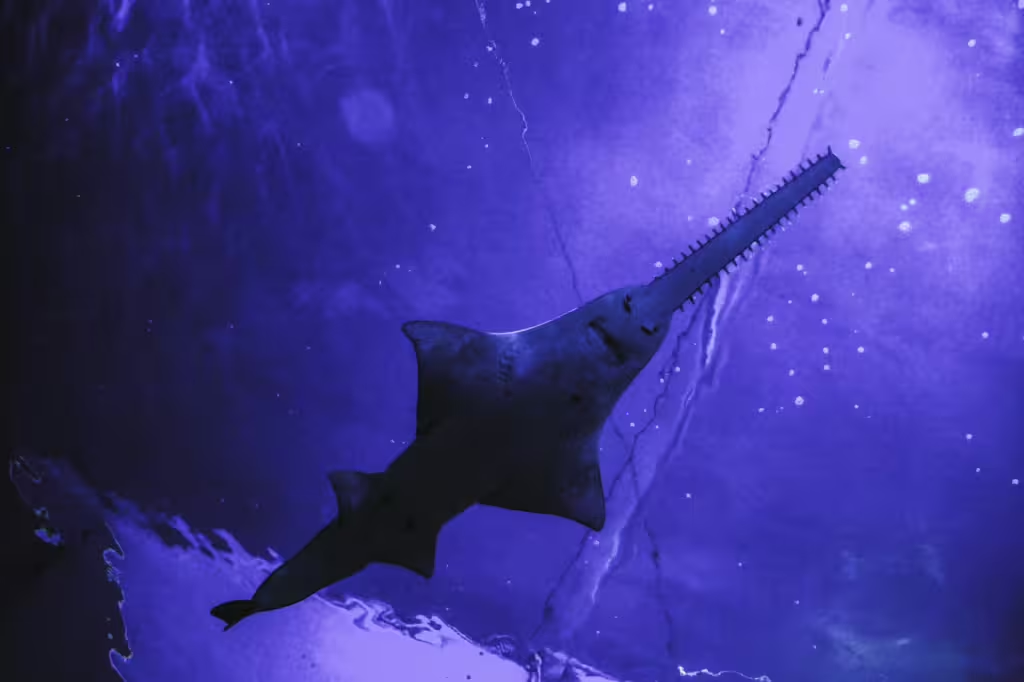
If you’ve ever been fortunate enough to visit one of the great aquariums out there in the world, you may have gotten a chance to view one our the strangest creatures in the ocean; the sawfish. In all the wide world and all the seven seas, there are few fish as instantly recognizable as the sawfish. With a long, flattened snout lined with tooth-like structures, these animals look almost prehistoric, and in fact, belong to one of the oldest families of fish alive today.
Believe it or not, sawfish are closely relate to sharks…well, as closely-related as manta rays and skates are, anyway. Like their cousins and their distant shark relations, sawfish are cartilaginous fishes, though their snout gives off the impression of being distinctly different.
In this article, we will discuss the sawfish’s distinctive facial accessory, as well as its ecology, diet, habitat, behavior, and its current endangered status. You see, like so many of our most amazing animals, sawfish face serious threats from habitat loss and fishing activity. This, coupled with their prehistoric punum, has made them important symbols of marine conservation and quite worthy of some deep-sea exploration.
What Is a Sawfish?
Belonging to the family Pristidae, sawfish are large, flattened fish with broad bodies and wing-like pectoral fins typical of rays. They tend to be found swimming in shallow coastal habitats. They use their remarkable sawtooth nose for hunting, but also for navigation and defense.
That distinctive feature is not actually a “saw” as it appears, but a rostrum. This long, blade-like extension covered is covered with tooth-like projections. There are several different types of sawfish out there in the world: hacksaw, jigsaw…we joke of course. The species include the smalltooth sawfish, largetooth sawfish, and the green sawfish to name a few.
The largest of these various species have been known to grow over 20 feet long, making them among the largest rays in the world.
The Purpose of the “Saw”
Upon viewing this silly fish’s sawtoothed snout, you might be asking yourself, “how does that thing even work?” Well, the good news is that the saw-like rostrum of the sawfish is far more than mere decoration. As we said earlier, sawfish use their rostrum in several important ways, most importantly, for hunting. Carnivorous, their primary prey is fish, crustaceans, and any other small marine mammals that wander their way.
They don’t just lie in wait, however, but will actively hunt and chase after schools of fish, swinging their rostrum side to side in an effort to stun or injure prey. This distinctive motion allows them to not only disrupt the school, it also lets them potentially stab at a random member of the throng.
The rostrum doesn’t just hold bony protrusions, it contains specialized sensory organs that detect electrical signals produced by other animals. Animals like the platypus, some sharks, and the electric eel also use special organs like these in order to hunt prey by sensing their internal electric patterns through the water. This is called electroreception and it helps sawfish find prey hiding in the mud, sand, or murky water of their shallow habitats where visibility can be limited.
Defending Themselves
The rostrum is shark and strong enough that it can also serve as protection against predators. Indeed, a powerful sideways swing can discourage threats quite handily or even injure them. This can also be used to help the sawfish escape danger in a jiffy.
Habitat and Distribution
As we said, sawfish are typically found in coastal waters, but they can also swim inland and survive quite well in estuaries, mangrove forests, and rivers. How can a seafaring creature survive living in freshwater you may ask? Why, because like saltwater crocs and diadromous fish like salmon, the sawfish can tolerate freshwater just as well as it can seawater. This is why it has been seen traveling inland in search of food at times.
Historically, sawfish were found across tropical and subtropical regions worldwide, including the Atlantic Ocean, the Indo-Pacific region, and many coastal areas of the Americas, Africa, Asia, and Australia. unfortunately, their modern range is far, far smaller, and that can easily be attributed to massive population decline.
Life in Shallow Waters
The reason that sawfish live in these shallow habitats is because mangroves and estuaries provide abundant food sources and offer protection for young sawfish looking to hide. These calm waters are also excellent for placid animals like the sawfish. Juvenile sawfish will often spend all of their early years in these sheltered environments before moving into larger coastal areas. The problem is, this dependency on coastal estuaries and the like means that they are even more vulnerable should those areas diminish.
Reproduction and Growth
Not to be rendered unusual by virtue of their schnoz alone, sawfish reproduction is similarly unique. They do not lay eggs like other fish but reproduce through a method called ovoviviparity. This means that their eggs develop inside the mother’s body and that the babies are born live. Fortunately for momma, baby sawfish rostrums are covered in soft tissue prior to being born so they don’t hurt their mother on the way out.
Despite being able to swim and hunt well even in their youth, sawfish grow slowly and mature later than many fish species. This just adds to the problems they face regarding their slow swim towards extinction. Slow growth patterns and gestation means that population recovery is difficult, and especially so when numbers are already in decline.
A Threat to Sawfish and Marine Ecosystems
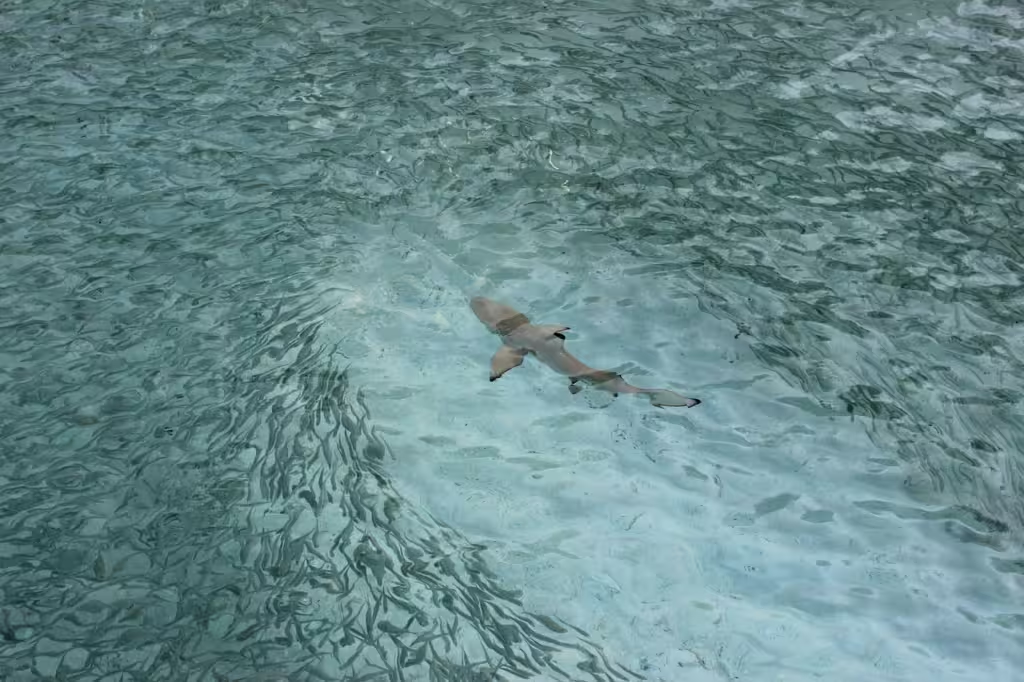
Sawfish are important apex predators in coastal ecosystems because they help regulate prey populations and maintain biodiversity in those waters. The problem is, thanks to bycatch, overfishing, pollution, climate change, and habitat loss, sawfish are among the most endangered marine fish in the world. Their loss would cause serious harm to coastal ecosystems.
Conservation Efforts
The good news is that conservation programs are already attempting to mitigate the loss by protecting remaining sawfish populations. They accomplish this through fishing restrictions, habitat protections like marine protected areas, and public awareness through schools, museums, and yes, aquariums that may in fact house some of these amazing animals.
True Investigator Says…
As you can see, sawfish are unusual and eye-catching, and a symbol of why it is so important to preserve our marine wildlife. Goofy though they might seem to some, these prehistoric throwbacks combine power, precision, and an ancient evolutionary design that shows us how sometimes, nature can think outside the box and still remain successful even after millions of years.
Sadly, thanks to humanity and our self-absorbed, over-consuming ways, sawfish now face an uncertain future. In the past, these peaceful piscis may have been left to hunt and swim and live without having to worry about the likes of us, but today that quietude has been disrupted.
Nevertheless, we can take comfort in the fact that their story is a reminder about the folly of man. They teach us that even the most impressive animals can become vulnerable when ecosystems change too quickly or when human beings meddle without thinking about the consequences.
Discover more from TrueInvestigator
Subscribe to get the latest posts sent to your email.