
Here at True Investigator, we’ve gone into the ocean in search of creatures great and small. We’ve seen critters as teensy as krill and as enormous as the legendary blue whale. In recent weeks, we’ve begun an exploration of several different kinds of sharks; having most recently evaluated the stunning hunting adaptations of the thresher shark. Today, we are going a bit bigger…
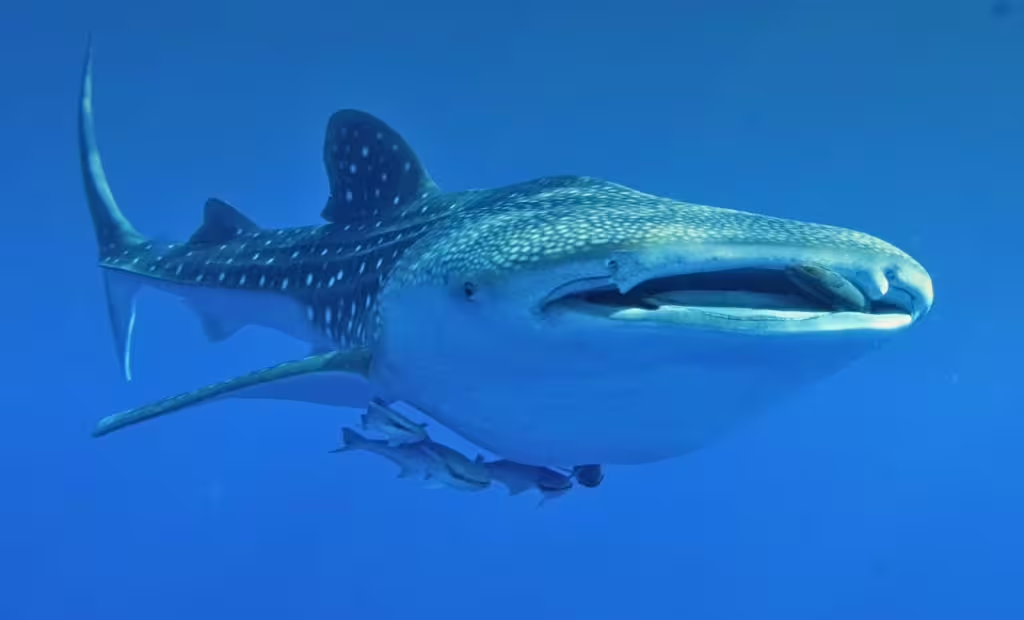
Of all the creatures in the sea, few inspire as much awe and elicit as many questions as the whale shark. This massive creature is larger than any other species of fish on Earth, yet though it is a shark, it has much more in common with the prefix of its name than the suffix. You see, whale sharks are not voracious predators that can smell blood in the water, they are calm filter feeders that pose little threat to humans.
In this article, we will examine the whale sharks, from their spotted bodies and enormous mouths, to their singular feeding behavior among shark-kind. To discover these things, we must first travel to the deep, tropical waters where these gentle giants reside. So put on your scuba gear as we once again venture out to sea to learn about one of the true ichthyic icons of ocean biodiversity and marine conservation.
The Largest Fish in the World
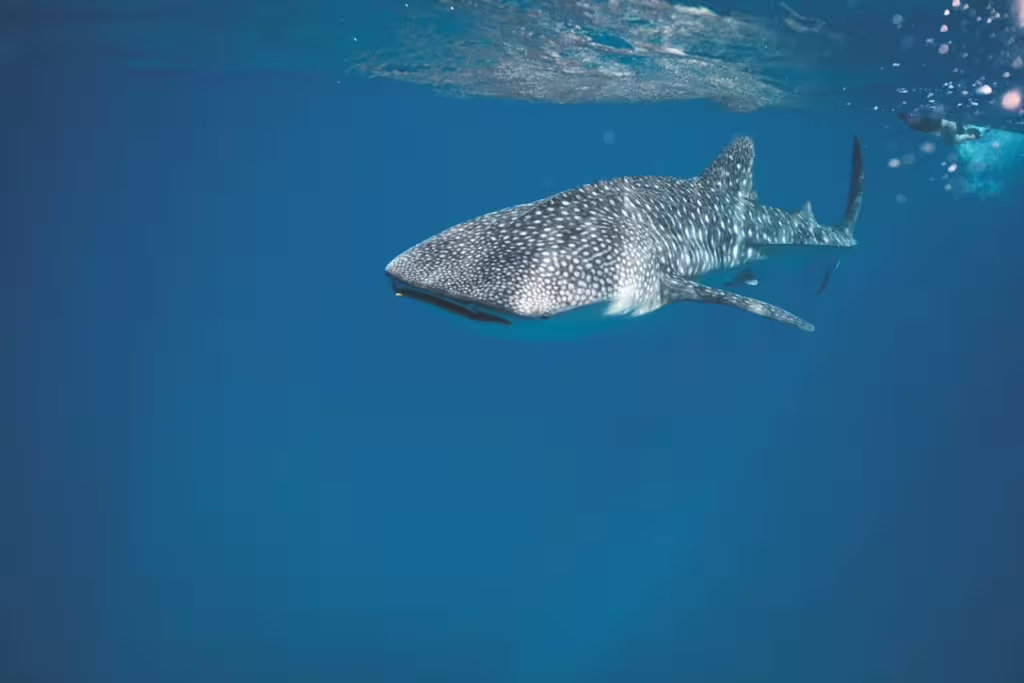
We weren’t being hyperbolic or anything earlier, incidentally. Whale sharks are indeed the largest known fish species on Earth. Adult whale sharks can reach lengths of 30 to 40 feet or more, and there have been some individuals among the species that have grown even bigger than that! Despite their spatial similarity to whales…and their name, whale sharks are not at all related to those colossal cetaceans.
Instead, these massive fish are members of the shark family, a group of cartilaginous fish whose skeletons are made of cartilage rather than bone. The whale shark’s body is unlike most of its kin, however. It is characterized by a broad, flattened head, wide mouth, and distinctive spots and stripes along its skin. What’s interesting about those markings is that each whale shark’s pattern is unique, much like a human fingerprint.
Gentle Filter Feeders
Although whale sharks are massive, like half of their namesake, they feed on some of the smallest organisms in the ocean. They do this by filter feeding, opening their mouths as they swim and drawing in large amounts of water. Within that water is an assortment of their favorite filtery foods including, plankton, small crustaceans like krill, tiny, fish, and fish eggs.
Whale sharks catch these little critters with special filtering structures located inside the mouths. Those structures trap the fish food, while water exits through out the back past the shark’s gills. This type of feeding is the only way such a large animal could consume the huge quantities of tiny organisms required to slake their massive hunger.
Unlike predatory sharks, whale sharks do not use their teeth to hunt prey; not in the traditional sense. And despite what some people might think, they do have them. In fact, they have thousands of them, around 3,000 to 4,000 in total, each measuring only a few millimeters in length. These teeth are essentially what they use for filtering rather than biting or chewing.
Slow and Graceful Swimmers
Whale sharks move through the water with slow, steady motions. They aren’t swift like threshers or hammerheads and they aren’t powerful jumpers like great whites, but they are by no means weak. Slow and plodding though they might be, they are incredibly strong and possessed of great endurance. They use their powerful tails propel them across long distances, while their large fins help maintain balance and control.
Despite their size, whale sharks also happen to be surprisingly graceful swimmers. They don’t dwell as deep as one might think, either, choosing instead to spend much of their time near the surface, especially in areas rich in plankton. This means they often share that section of the ocean with manta rays and other plankton-eaters.
Migration Across the Oceans
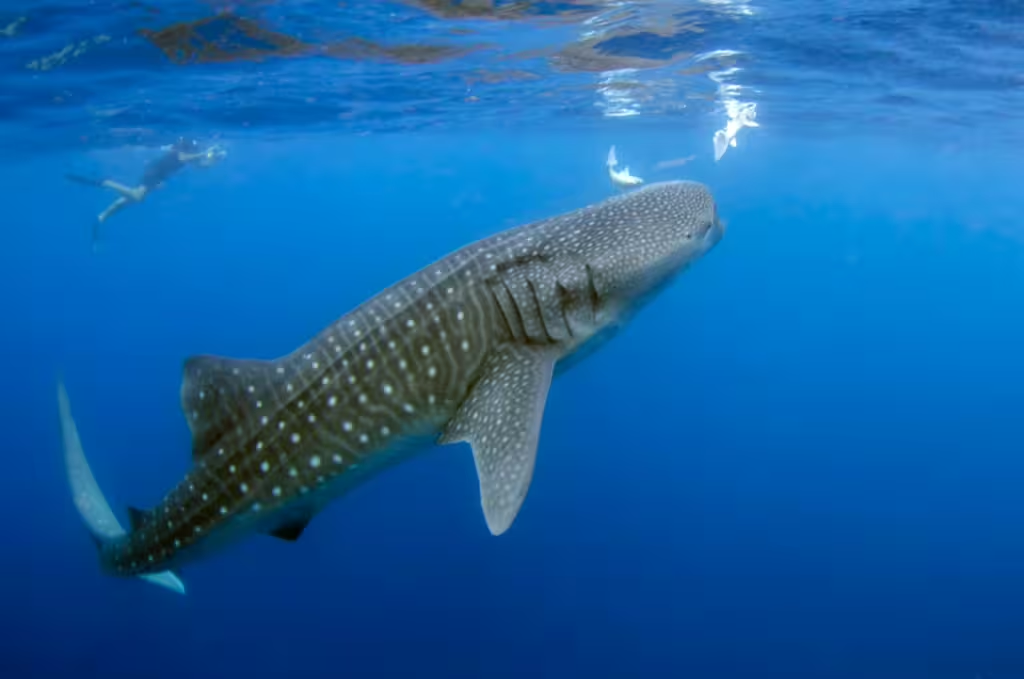
The reason that whale sharks need to be so indefatigable is that they are highly migratory animals. When you eat as much as they do, you often need to travel across vast distances to find it. Their migrations takes them to many different tropical and subtropical oceans in search of food, including the Indian Ocean, Pacific Ocean, and Atlantic Ocean.
Researchers believe that these migrations follow seasonal plankton blooms. Moreover, these long-distance takeout runs help the whale sharks to connect whole ecosystems, even across fully distant ocean habitats. Whale sharks are most commonly found in warm tropical seas where plankton blooms are abundant. They can be found around islands and coral reefs.
Natural Predators and Threats
Thanks to their prodigious size, adult whale sharks have few natural predators. Young whale sharks are threatened by larger sharks and other marine predators…and humans of course. Indeed, most of what threatens the whale shark is caused by human beings. They are even hunted for their meat, fins, and oil in some areas. Meanwhile, climate change, pollution, overfishing, and accidental boat impacts are also having a detrimental effect on their slow-to-produce populations.
Conservation Efforts
Sadly, as of the writing of this article, whale sharks are considered endangered. That said, conservation efforts include fishing protections and marine protected areas for the fish to name a few. Research and tracking programs are helping to keep their schools safe, while sustainable tourism guidelines are in place in many areas where they feed and roam. International cooperation is especially important because whale sharks migrate across national boundaries. This is essential, as their enormous range means that protecting them requires large-scale ocean conservation efforts.

True Investigator Says…
As you can see, the whale shark is one of the great wonders of the ocean. This is a giant fish that is so unlike its kin, that it beggars belief. Through adaptation, patience, and biological efficiency the whale shark has found a way to not only stand out from the pack of sharks, but feed in a way that invites very little competition.
Indeed, with its enormous body, spotted skin, and gentle nature, the whale shark is among the most compelling creatures in the briny deep. Despite its charming nature and its singular size and strategies, however, the whale shark is just as vulnerable to the ever-changing oceans as any other sea creature. Like so many marine animals, its future depends on humanity’s help. With any luck…and with perhaps a little restraint, and some serious conservation efforts, human beings will be able to keep this creature an oceanic icon for many generations to come.
Discover more from TrueInvestigator
Subscribe to get the latest posts sent to your email.