
Today, we continue our exploration of Avian Oddities to talk about another bird whose beak can be compared to few other creatures in the animal kingdom. Our first article in this serious centered on the iconic pelican, a species that needs no introduction, but this bird, if viewed from a distance, might be mistaken for another waterbird entirely.
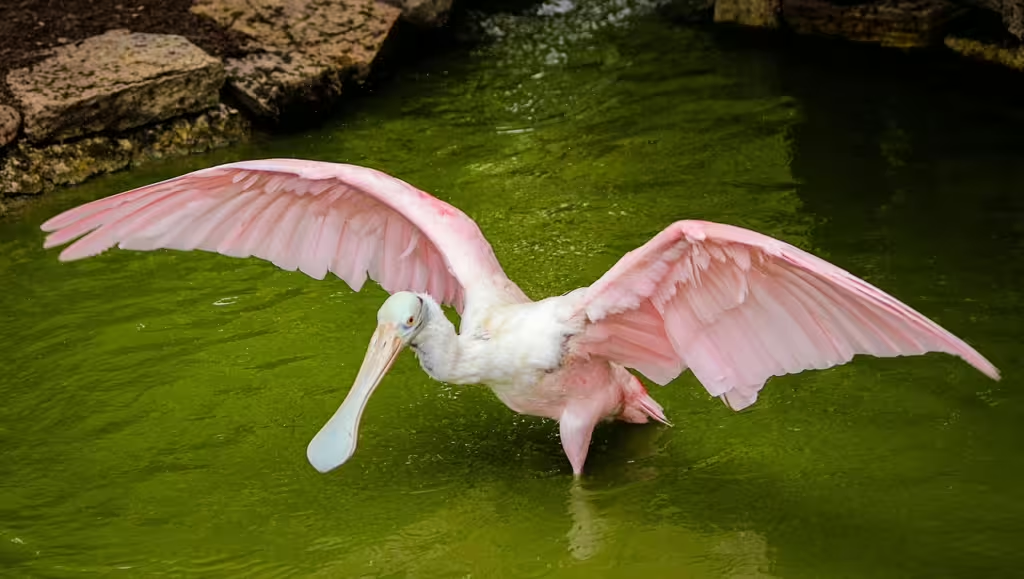
With their bright pink feathers, long legs, it would be quite easy to think that what you were looking at is a flamingo of some kind and not an entirely different waterfowl. Distinguished by their spoon-shaped bills, roseate spoonbills are among the most striking birds living in the whole of the Americas. Their elegant, pink plumage brings pops of pink color to marshes, mangroves, and shallow coastal waters all across the western hemisphere.
In this article, we will discuss why spoonbills have such a unique beak shape, as well as the other morphological features that makes these birds so highly specialized to live in their wetland habitats. We will also touch upon their social nesting behavior and their fate in the wake of a host of environmental threats that always seem to be prevalent among wetland species. So get ready ornithological enthusiasts, we’re heading down to the coast!
What Makes Roseate Spoonbills Unique?
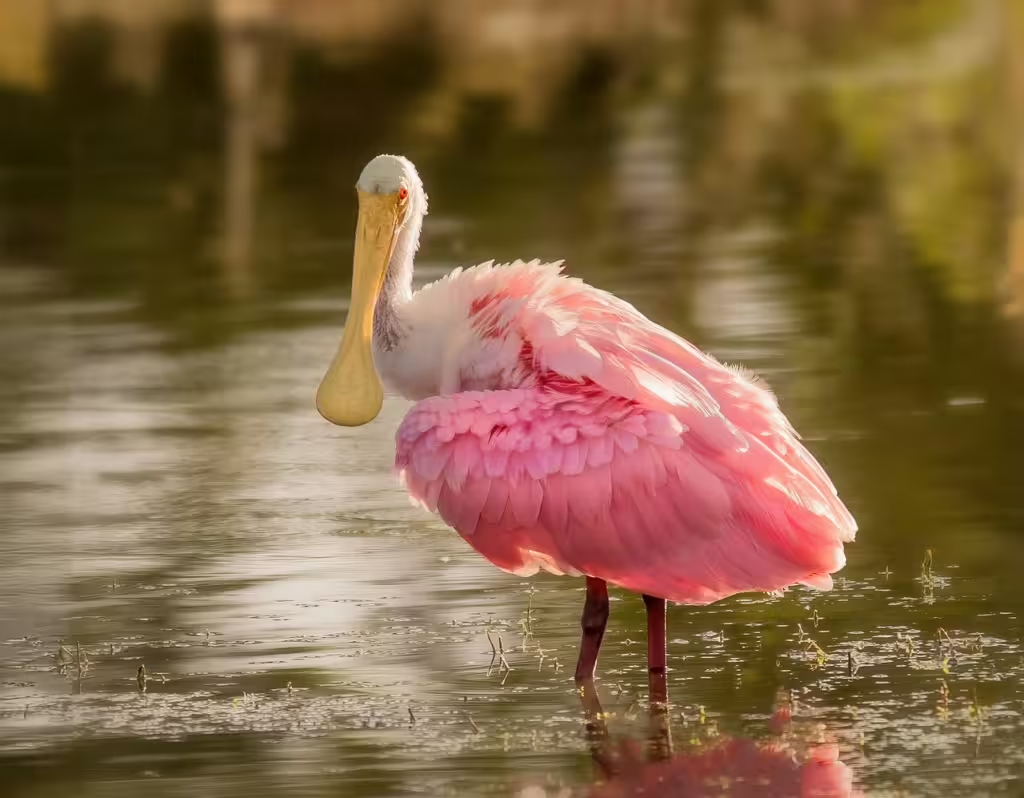
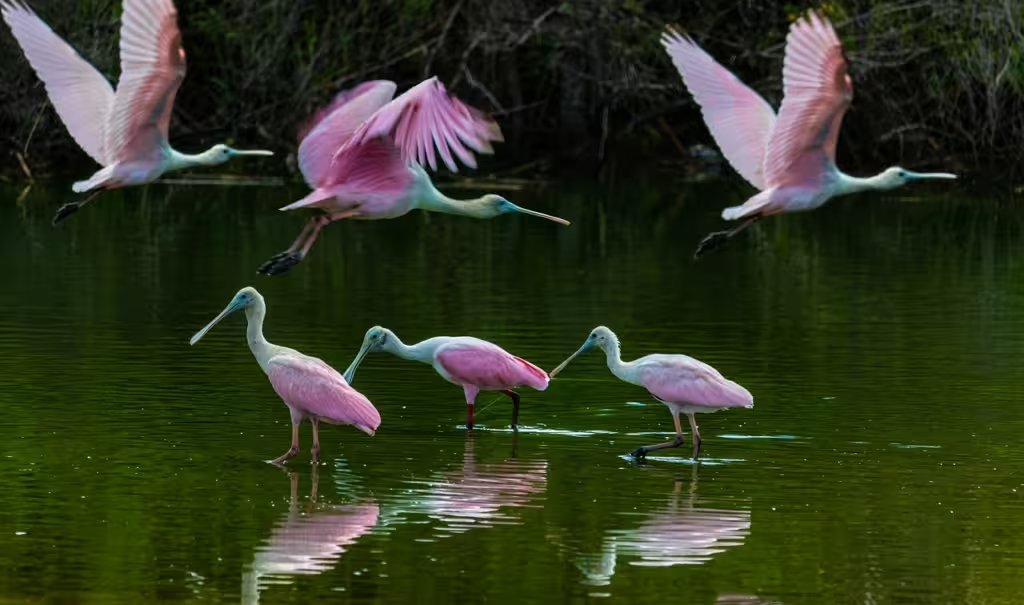
This might seem like a fairly obvious question considering the image posted right above it, but bear with us here. Roseate spoonbills are easy to recognize because of several unusual features, not just their wide, spoon-shaped bills. They also stand out from their surroundings and just about every other animal living in their vicinity by their bright pink plumage.
They are also possessed of long legs, well-adapted for wading through flooded marshes, and bald, greenish heads. Still, of all their unique features, it is the spoon-shaped bill that captures the most attention; so much so, that it even earned the animal its name! This most specialized adaptation plays a major role in how the bird eats and what it eats is eqully intriguing..,
Why Are They Pink?
Like flamingos, roseate spoonbills are pink in color because of what they eat. Their favorite things to eat are shrimp, small crustaceans, and other aquatic invertebrates rich in pigments called carotenoids. The more of those little pink critters they eat, the more the pigments accumulate in the birds’ feathers over time, thus producing their famous rosy appearance. There are spoonbills that happen to be drabber in color, of course, but this is usually an indication that the bird has a poor diet compared to the healthy hues of their pinkish brethren.
The Spoon-Shaped Bill
The roseate spoonbill’s bill is perfectly shaped to help the birds dig out their favorite pink viddles. These bills are designed or shallow-water feeding and have sensitive nerve endings inside of them that detect even the slightest movement of their chosen prey, even in murky, muddy water. While searching for food, spoonbills sweep their partially open bills side to side through the water. When prey is detected, the bill snaps shut quick as a flash!
Wetland Habitats
Considering their shape, feeding habits, and diet, it’s safe to say that roseate spoonbills depend heavily on wetland ecosystems for their survival. These birds can be found in everything from marshes to mangroves, estuaries, freshwater wetlands, and coastal lagoons. They can be found all along the souther coast of the Eastern United States, Central America, the Caribbean, and South America.
These habitats and regions provide the shallow water and the abundant prey these creatures need to survive. At the same time, wetlands also offer protection and nesting locations for colonies. Like flamingos, spoonbills are highly social birds that live in large groups, called colonies. Oftentimes, they will actually share their nesting areas with herons, egrets, and ibises.
Colonial nesting offers several advantages to all the birds, spoonbill or egret. Living together can help increase the vigilant power of the whole colony, offering increased protection from predators. What’s more. there are usually more than enough nesting sites within a given area to go around, especially because spoonbills are just as happy to nest in a tree as they are in a shrub or mangrove roots.
Courtship and Breeding
As if being bright pink most of the time weren’t ostentatious enough, during breeding season, spoonbills become even more colorful. They also have a fairly robust repertoire of courtship moves, including loud bill clapping, jerky head movements, and offering up ideal nesting material to their potential baby mamas.
Once they find their ideal mate, pairs will work together to build that nest and raise the chicks. In fact, both parents take turns incubating the eggs and feeding the chicks after they hatch. Funnily enough, baby spoonbills actually have straight bills that flatten as they age.
Flight and Seasonal Movement
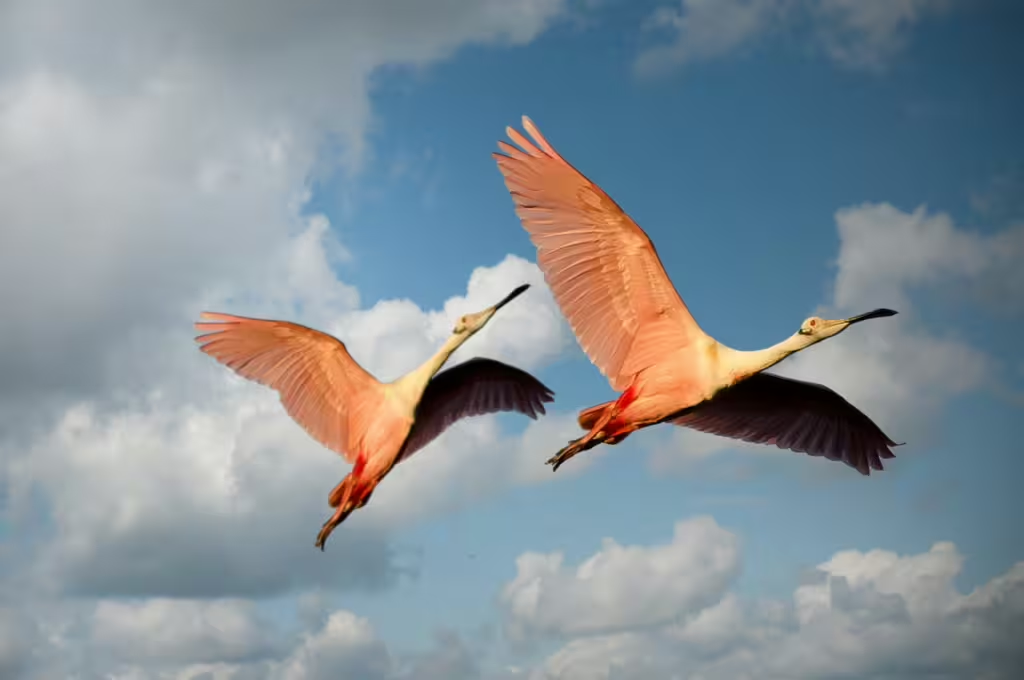
Despite their somewhat unusual appearance and ungainly gait, roseate spoonbills are quite graceful in the air. In flight, they extend their necks and their long legs out behind them. They often fly together in flocks, moving in time with the seasons, water levels, food availability, and breeding conditions.
Ecological Importance
Roseate spoonbills play important predatory roles in wetland ecosystems. Their ravenous taste for certain aquatic animals helps regulate the populations of fish, crustaceans, and other aquatic invertebrates. Their presence can also indicate healthy wetland conditions, as their populations often wax or wane if the water quality and food availability begins to drop.
Like pelicans, spoonbill populations often respond quickly to environmental threats like pollution, chemicals, and water level changes. They also face threats from human disturbances near their nesting sites and habitat destruction. Poaching was also once a problem, as in the past, spoonbills were also hunted for their feathers. This was during the plume trade era, however, when decorative feathers were used in fashion. Those days, thankfully, are long gone, and populations have since recovered.
Conservation Success
Indeed, many conservation efforts helped many spoonbill populations recover. These days, wetland protections, hunting regulations, and habitat restoration projects are working to improve conditions for these birds and other neighboring species in several regions.
True Investigator Says…
As you can see, roseate spoonbills aren’t just pretty flamingo facsimiles, they are among the most important waterbirds living in the Americas. Their iconic look and status as an ecological indicator of coastal wetlands and marsh ecosystem health, has made them symbols of ecology in many scientific circles.
Like flamingos, parrots, and many other beautiful birds, spoonbills are more than just pretty plumage. These remarkable water birds are also specialized predators, making sure to keep marshland ecosystems in check. Thus, roseate spoonbills are clear examples of how delicate and interconnected wetland ecosystems truly are; and how important it is to protect the habitats that allow such remarkable birds to survive.
Discover more from TrueInvestigator
Subscribe to get the latest posts sent to your email.