
Longtime readers will be familiar with many of our penchant for talking about some of the largest, most impressive animal species on the planet. Here at True Investigator, we’ve spoken about big cats, elephantine engineers, and the largest mammals to ever swim the seven seas. At the same time, we’ve explored the miniature worlds that often go unnoticed by human eyes. But rarely have we had occasion to talk about the animals that exist somewhere in between.
Nature is filled with giant animals that dominate ecosystems and our attention. With their size, strength, and skill, they have proven themselves more than capable. But in some parts of the world, evolution has taken a very different turn. In some corners, miniature versions of much larger species have evolved to fill a certain ecological niche. These pygmy animals, be they hippo, horse, or antelope, are among the most curious examples of adaptation in the animal kingdom.
In this article, we will travel the world in search of these pee-wee critters. As we find them, we will examine how their size and unique behaviors have made them well-adapted to survive and thrive in a number of diverse ecosystems. We will also explore the vital ecological roles they occupy and discover why evolution chose to miniaturize certain species.
Why Do Pygmy Animals Evolve?
We want to begin with an explanation, we aren’t using the word “pygmy” in any derogatory capacity; far from it in fact. This article is discussion of why these miniature versions of larger species are so remarkable, not an attempt to deride them for being smaller.
That said, the word “pygmy” is commonly used to describe animals that are significantly smaller than closely related species. In many cases, these miniaturized animals have evolved to be so because of the isolated environments where they live. Islands, dense forests, or habitats with limited food resources are the perfect places for miniaturizing adaptation.
Scientists often explain this pygmy evolution process through a process called insular dwarfism. Most of the time, this occurs when animals become isolated in environments where food is limited, but it can also occur because large predators simply aren’t there to threaten the animals themselves.
Under these conditions, a smaller body is far more advantageous than one that requires vast amounts of food, water, and space to survive. This is not an isolated process, either. Indeed, this phenomenon has occurred repeatedly throughout evolutionary history.
The Pygmy Hippopotamus
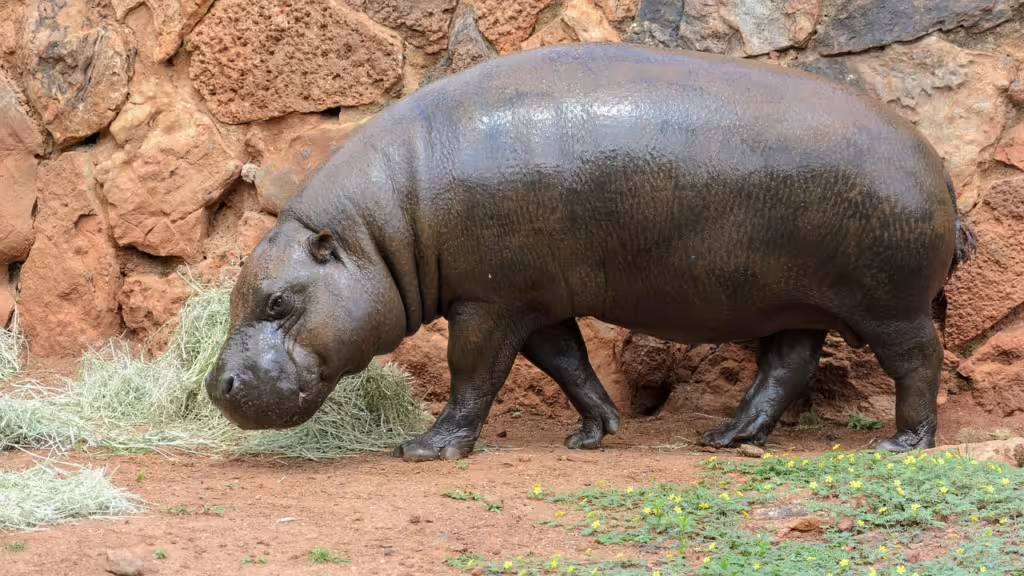
One of the best-known pygmy animals is the one pictured in this article’s leading image; the Pygmy Hippopotamus. This adorable relative of one of the world’s most dangerous land animals can be found living in the forests and swamps of West Africa.
Pygmy hippos are much smaller and more secretive than the common hippo, weighing only a fraction of their weight. They are also more solitary, choosing to spend time alone rather than consort with the herd at large. They also prefer dense forest habitats to the open plains and rivers of their larger kin.
At the same time, pygmy hippos are less dependent on large rivers than their massive cousins and often move quietly through forest undergrowth without any water at all. That all said, they still have relatively thick skin and very strong jaws; they are not an animal with whom you’d want to tangle if you encountered them alone in the jungle.
Miniature Horses and Ponies
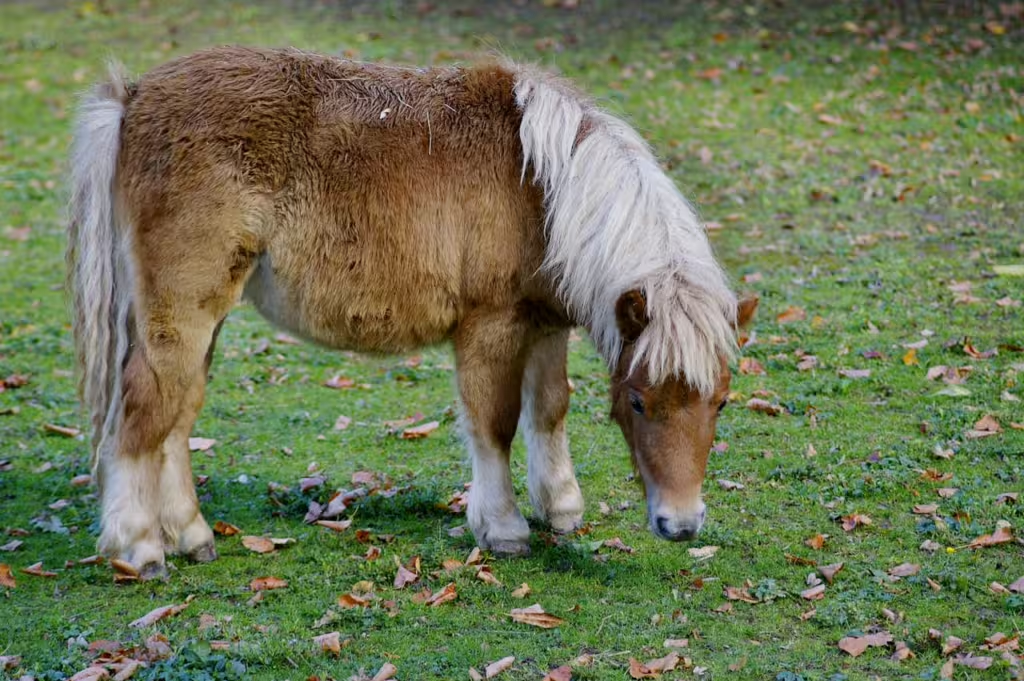
Anyone who has ever seen an episode of Parks and Rec will be familiar with famous bereaved mini horse, Lil Sebastian. These adorable horses and ponies are not always something that occurs naturally in the wild. Instead, miniature horses demonstrate how selective pressures and breeding can produce smaller versions of iconic animals; even though the circumstances that led to their creation came at them from different angles.
At the same time, these creatures are just as adapted for survival in harsh conditions as their larger equine relatives. The Shetland pony is one example of a horse that evolved on rugged islands, without the overt input of man. With limited vegetation and difficult weather conditions, Shetland ponies shrunk down and adapted to conserve their body heat and mitigate the need for more food.
Pygmy Elephants of the Past
We know that the two surviving elephant species of today are among the largest land mammals alive, but in prehistoric times, there existed elephants of a much more diminutive nature. Fossil evidence shows us that some islands in the Mediterranean and Southeast Asia once hosted dwarf elephant species. Those same fossils indicate that these teeny elephants may have only stood a few feet tall at the shoulder.
The Pudu: The World’s Smallest Deer
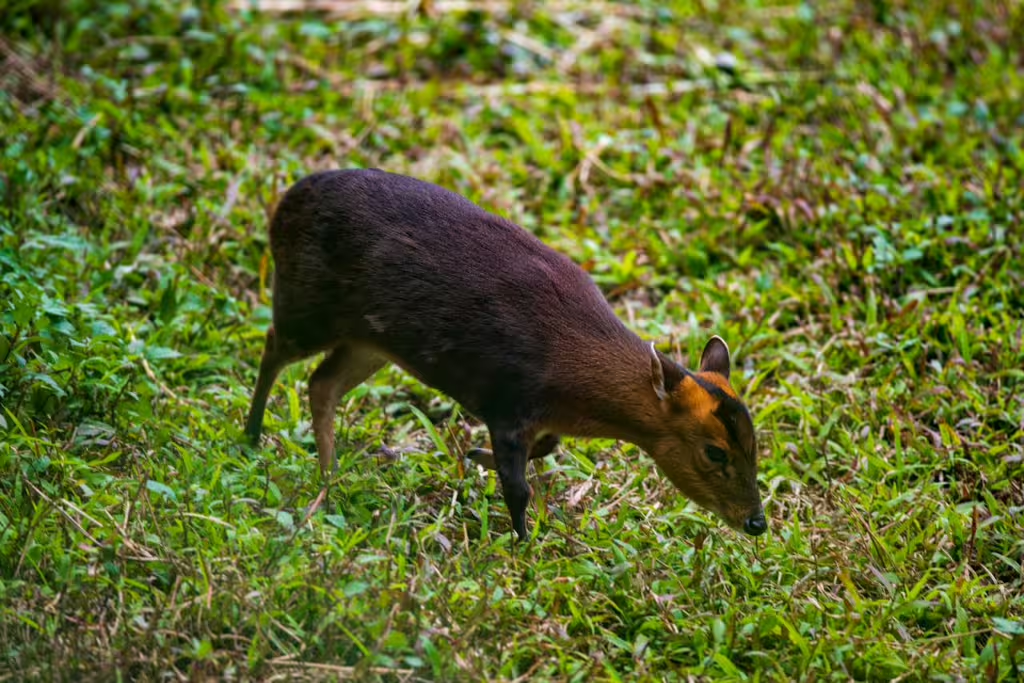
In the thick jungles of South America, lives the smallest deer in the world; the Pudu. These miniature cervids are known for their short legs, shy behavior, and rounded little bodies. Pudu likely evolved to be so small as a means of avoiding jungle predators, who would have trouble chasing them through the thick underbrush. In addition to their small size, pudu also rely heavily on camouflage to keep them safe from prying eyes and drooling fangs.
Pygmy Marmosets: Tiny Monkeys of the Rainforest
It isn’t just large herd animals that have miniature versions out there in the world. Even some primates have gotten in on the game. Take the Pygmy Marmoset for example, this Amazonian resident is one of the smallest monkeys on Earth and weighs only a few ounces. Their size and agility allows them to move easily through thick branches and canopies in search of fruit, insects, and tree sap. Despite their size, pygmy marmosets can be as loud as any other primate if they want to be. In fact, they are highly social and communicate using surprisingly complex vocalizations.
Dwarf Crocodiles
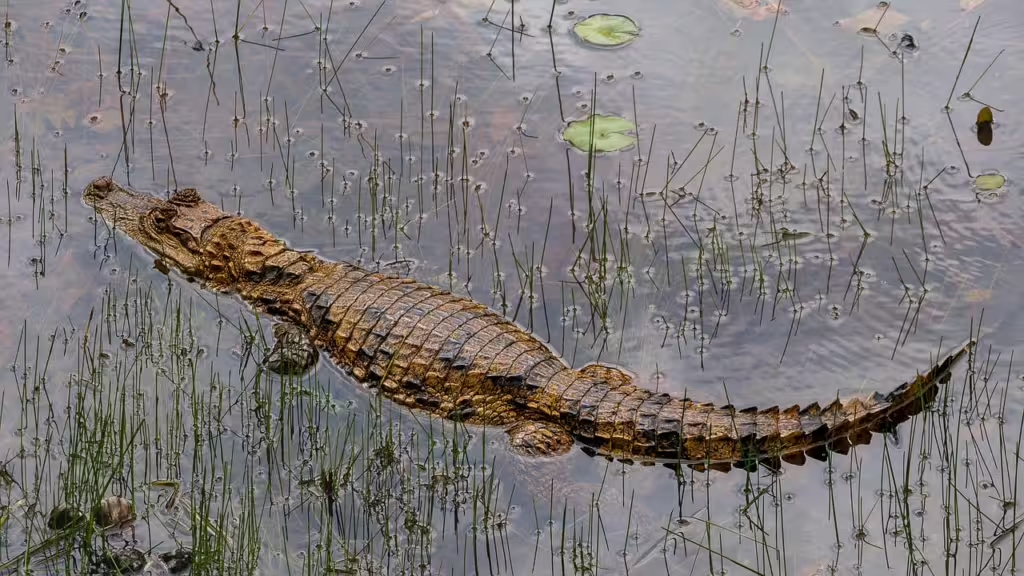
Even some reptiles have found miniaturization to be a solid way to increase their chances of survival. Take the Dwarf Crocodile, a reptilian carnivore that also happens to be the smallest crocodile species in Africa. Don’t let their size fool you, however. Dwarf Crocodiles are just as capable of feeding on fish, crustaceans, birds, and other small animals as any of their larger crocodilian cousins.
Why Smaller Size Can Be Helpful
As we touched on earlier, being small provides many survival advantages that often go overlooked by laypersons everywhere. Pygmy animals often benefit from lower food and energy requirements than their larger relatives. They are also better able to hide, move through dense habitats, and blend in than gigantic or even regular-sized animals. Finally, their size means they face less competition for food and other resources than animals that need more food, water, and space to get through a day.
Tiny Animals, Big Ecological Roles
Despite their small size, pygmy animals remain important parts of their home ecosystems. These animals contribute to nutrient cycling, seed dispersal, and predator-prey relationships as much as any other species; big or small. They show us that even the tiniest species can have a major environmental impact on the world around it.
True Investigator Says…
As you can see, these miniature marvels might be smaller but that doesn’t mean they are any less important than their full-size cousins. Though they are small in stature, they are highly specialized to occupy the lower height brackets in which they dwell. In forests, islands, and wetlands around the world, pygmy critters remind us that in nature, bigger isn’t always better.
In fact, the continued survival of these animals reveal to humanity one of evolution’s most fascinating tricks for survival: smallness can lead to success. In becoming smaller, pygmy animals found the key to staying safe, conserving resources, and finding a new ecological niche to call home.
Discover more from TrueInvestigator
Subscribe to get the latest posts sent to your email.