
The world’s oceans are home to a host of amazing plants and animals. Over the years, we have discussed some of the strangest and most dangerous of the bunch, among those, large apex predators. Yet, the sharks and giant squids of the world aren’t the only dangerous critters in the sea. Indeed, while the poisonous creepy crawlies featured in this article might not appear overtly dangerous, they are certainly not something that any human wants to trifle with if they can help it.
Hidden among coral reefs, drifting across open water, or buried beneath sandy seafloors are a multitude of venomous creature. Though they differ in size, shape, and potency, each one of them is equipped with powerful venom that they use for hunting, defense, and/or just plain survival.
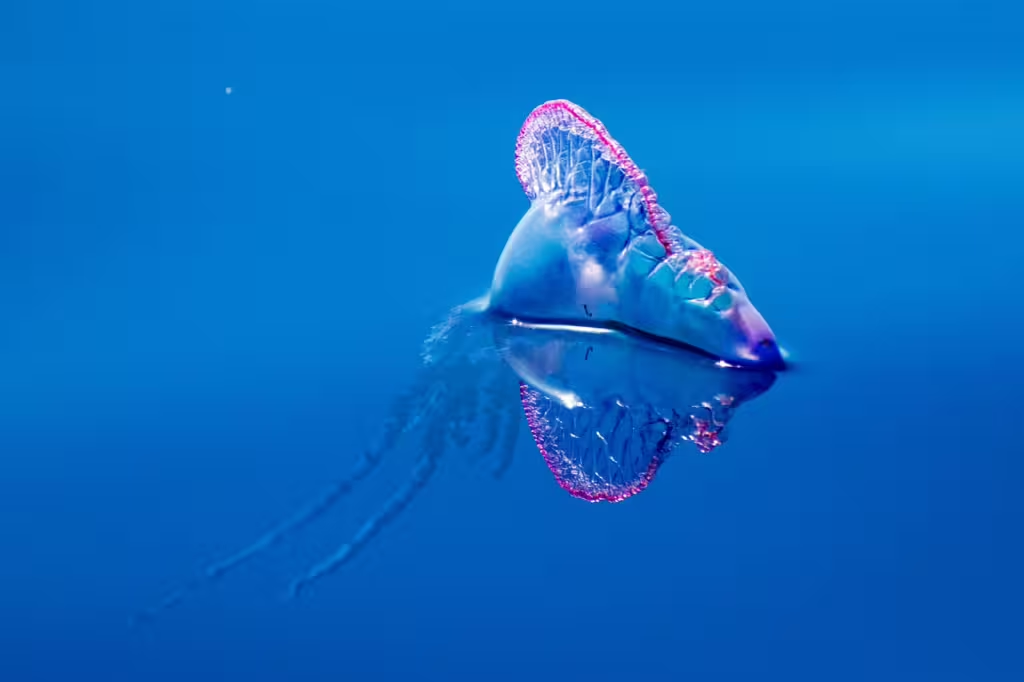
In this article, we will discuss a number of these toxic terrors, chief among them being the Portuguese Man o’ War, a floating marine predator often mistaken for a jellyfish. This creature, while mostly immobile, has become one of the most recognizable venomous invertebrates in the entire ocean. In the natural world, beauty and danger swim side-by-side, so be careful where you tread water, dear reader; here there be monsters.
What Is the Portuguese Man o’ War?
Despite how jellyfish-like the Portuguese man o’ war might appear, it is not actually a jellyfish. Heck, it’s not even a singular animal. The Portuguese man o’ war is a siphonophore; a floating colony made up of specialized organisms called zooids. Those teensy organisms work together as one unit, sort of like the crew on a ship. This is one of the reasons this creature(s) is so-named, for the large, heavily armored sailing ships that is sort of represents in miniature.
Like crew members on a sailing ship, different zooids within the single man o’war perform different functions. Some are responsible for floatation, others for feeding or defense, and still more for reproduction. The man o’ war is similar to a ship in other ways as well. For example, the gas-filled float at the top of it acts like a sail, allowing winds and ocean currents to move the colony across the sea surface with relative ease.
Venomous Tentacles
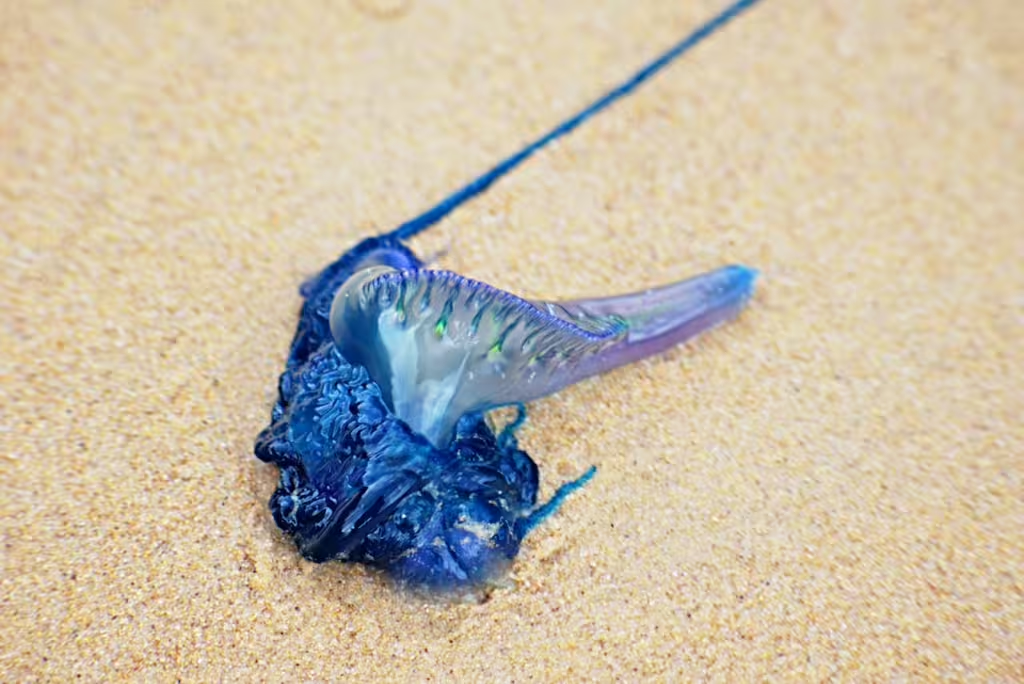
As remarkable as the multi-organismed nature of the Portuguese man o’ war might be, the part we are most interested in are the toxic tentacles; probably the creature’s most dangerous feature. These tentacles are quite long and can extend dozens of feet beneath the water. Each one is covered with countless microscopic stinging structures called nematocysts, which inject venom into threats or prey the moment they are grazed.
If you’re a small fish, the venom will paralyze you. If you’re a predator, you may feel pain and be forced to flee. If you’re a human, well, then you’re in for some pain of your own. Human stings often result in intense pain, skin welts, muscle cramps, and even difficulty breathing in some rare cases. That last one isn’t exactly desirable when one is submerged in water.
It should also be noted that even detached tentacles that have washed onto beaches may still be capable of delivering quite the sting.
Life Adrift on the Open Ocean
Unlike many jellyfish that swim weakly or slowly, the Portuguese man o’ war is at the mercy of the tides. These floating fortresses drift passively with ocean currents and wind, and can commonly be found in warm coastal regions, subtropical waters, or out in tropical oceans. There are times when storms will push huge numbers of man o’ wars toward the shore, thereby increasing the amount of encounters they have with humans.
Box Jellyfish: Among the Most Venomous Marine Animals
If reading about the Portuguese man o’ war got you nervous about getting stung, then we apologize in advance for the next entry. Though it is much tinier than the man o’war, the box jellyfish is one the ocean’s most feared venomous invertebrates. Located in waters in the Indo-Pacific region of the world, this jellyfish has toxins that can affect the human hear, nervous system, and our skin cells. Even the slightest graze can send your nerve endings into panic mode and cause excoriating pain.
Despite the potency of their toxins, box jellyfish are fairly unassuming creatures, They are small and cube-shaped, with long tentacles, and fairly complex sensory structures for their ilk. They are also surprisingly active swimmers, so beware if you encounter one mid snorkel. You’ll want to slowly escape the area without drawing them closer by mistake.
Blue-Ringed Octopus
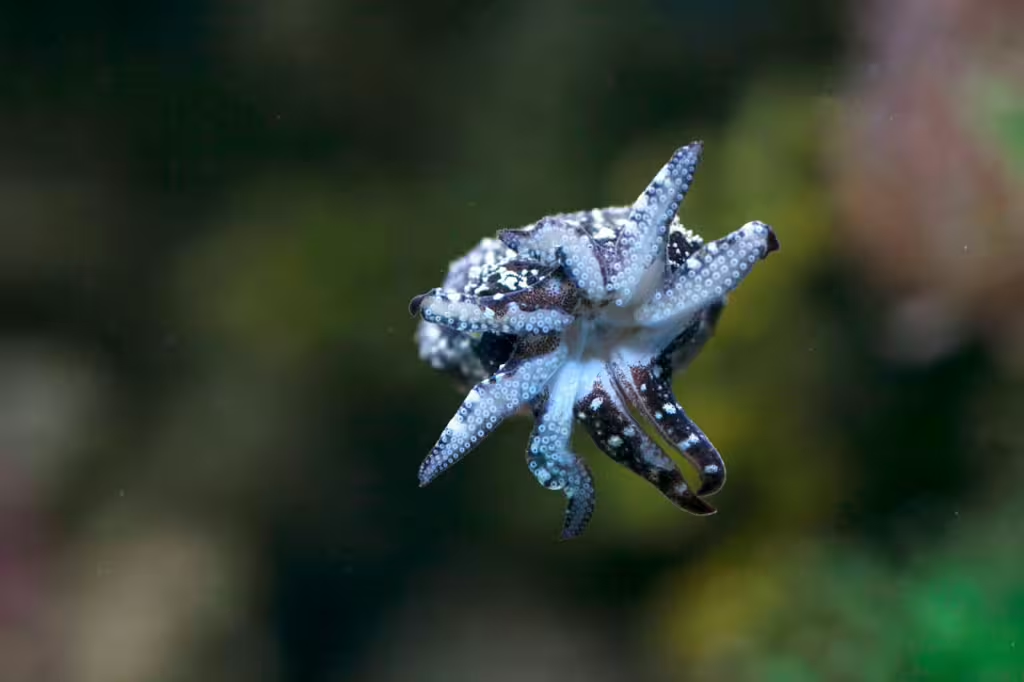
The Blue-Ringed Octopus is another tiny, adorable, and yet highly venomous marine invertebrate. Native to the Pacific and Indian Oceans, these octopuses are usually small enough to fit in a person’s hand…which is a problem since picking one up would be a very big mistake! They have chromatophores in their skin that glow a brilliant blue when they are threatened. This warning signal is where they get their namesake, but it also tells predators that there’s trouble afoot.
It they do manage to bit, they will inject a potent venom into their would-be attacker. This venom contains tetrodotoxin, a neurotoxin capable of causing paralysis and respiratory failure, again, two things you don’t want if you’re surrounded by water. Fortunately for us, blue-ringed octopuses are generally shy and avoid humans. It is only when we attempt to engage with them that the trouble starts.
Sea Anemones and Venomous Tentacles
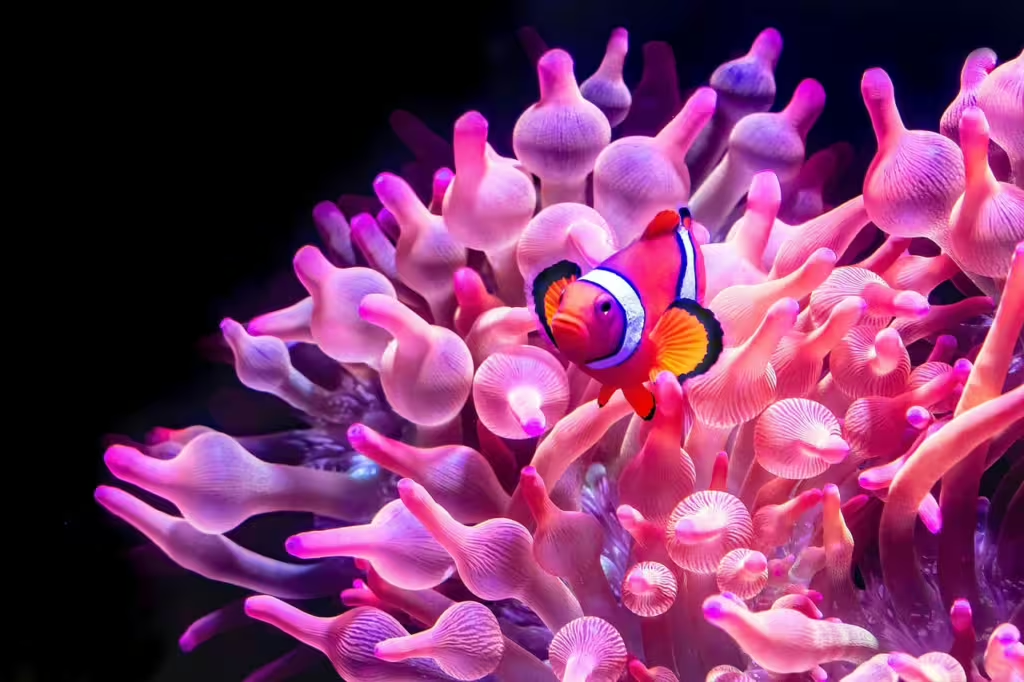
Sea anemones might look like colorful underwater flowers, but they are nothing of the sort. These predatory invertebrates are armed with stinging cells that can paralyze and capture, fish, crustaceans, and other small marine animals. The only things that are immune to the sting are clownfish, which can weather the sting and have formed symbiotic partnerships with the anemones. Fortunately for us, anemones are one of the few things on this list that aren’t dangerous to humans. Their venom can only cause minor skin irritation.
Ocean Venoms and Medicine
In an interesting twist, many modern scientists that study marine venoms have found ways to co-opt these toxins into something quite helpful to humanity. The powerful biological compounds they contain are strong enough to help enhance pain medication, contribute to neurological research, and have even been used to create viable cardiovascular treatments. Not to mention the important medical insights they continue to provide.
True Investigator Says…
As you can see, the oceans are teeming with life in a multitude of shapes, sizes, and venomous potency. The poisonous and venomous invertebrates that dwell here, from the drifting Portuguese man o’ war to the tiny but deadly blue-ringed octopus, are each dangerous in their own way and should be respected.
In so many ways, these animals reveal evolution’s ability to use chemistry and color as powerful tools in an animal’s arsenal, as powerful as any teeth or claws, in fact. Bruce force might work out for some of the ocean’s monsters, but for little monsters, venom is the key.
And while it’s true that some of these creatures can be dangerous to humans, they are also ecologically vital within their ecosystems. They are also scientifically fascinating enough for researchers to continue to risk interacting with them to find new cures for human problems.
Discover more from TrueInvestigator
Subscribe to get the latest posts sent to your email.