
In the past, we’ve spoken about birds that travel more than any other, birds that fly faster than any other, and birds that can’t even fly at all. Today, we here at True Investigator will begin our weeks’ long investigation into some of the most unusual-looking birds ever to have evolved from dinosaurs. Our first subject is one that, although fairly commonplace in some parts of the world, certainly qualifies as an avian oddity.
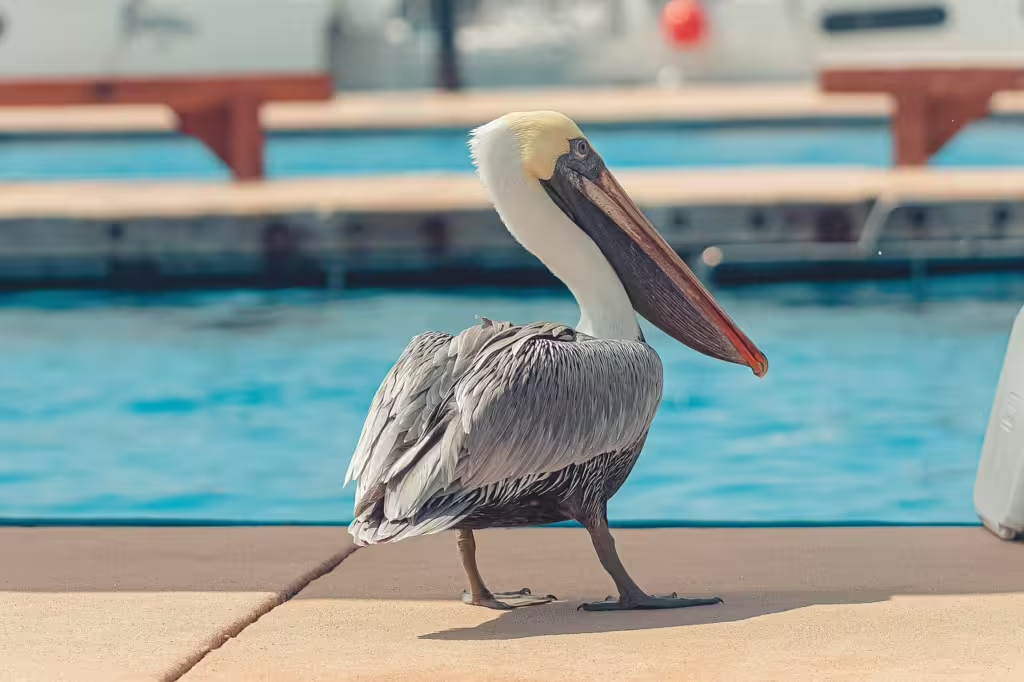
Pelicans are not the most elegant of birds, especially not when viewed up close. Nevertheless, they are among the most recognizable, even to those who don’t live near the coast. They’re large throat pouches have made them a favorite of cartoonists and animators for decades, but their comical appearance belays their ecological importance.
Pelicans can usually be seen gliding low over oceans before they dive dramatically into water for a meal. This grace and skill is somewhat at odds with their somewhat ungainly movement on land. These are animals that are built for the water…and it shows.
In this article, we will take a deep dive into the world of pelicans to see beyond the bill. We will discuss their habitat, diet, range, behavior, and their singular morphology among bird kind. So get ready for our first Avian Oddity article, dear readers; we promise you won’t be disappointed.
What Makes Pelicans Unique?
Belonging to the genus Pelecanus, pelicans are relatively large aquatic birds that can be found on every continent except Antarctica. This widespread distribution of species is likely due to the fact that these birds have become quite well-adapted to the aquatic life.
Pelicans are immediately recognizable because of their enormous bills and the expandable throat pouches that many mistakenly believe are used to “store fish.” In reality, these pouches are used to catch fish and drain water when they are attempting to do so. They are also used to cool down the bird’s body in hot weather; a common occurrence in some of the ecosystems that pelicans call home.
In addition to the tell-tale pouch, pelicans also possess webbed feet, lightweight skeletal structures, and long wingspans which help them to soar great distances. Despite how large they are compared to some seabirds, pelicans are quite capable of traveling long distances while expending minimal energy.
Different Species Around the World
There are several pelican species out there in the world and each of them is perfectly adapted to thriving in different environments. For example, some species like coastal ocean waters, while others are more at home near inland lakes or even wetland ecosystems. We know about he Brown Pelican, the American White Pelican, and the Australian Pelican, but there are others. In fact, each pelican species has its own set of behaviors and feeding strategies to help them survive in their chosen habitat.
The Famous Pelican Pouch
The pelican’s throat pouch is probably their most defining characteristic. It also happens to be one of the most specialized feeding tools that exists in the entire avian world. Basically, the pouch is a temporary fishing net, designed to catch fish and sieve out liquids. While hunting, pelicans use their pouch to scoop up fish they spot while flying over water. The water in the pouch drains out as they fly, leaving a space for the fish now trapped in their mouth.
The interesting thing about the pouch is that it can stretch out quite a bit, allowing the bird to catch fairly large amounts of prey. They do not, however, use the pouch to store the fish for later, like a hamster would with seeds in its cheek pouch.
Brown Pelicans and Dive Hunting
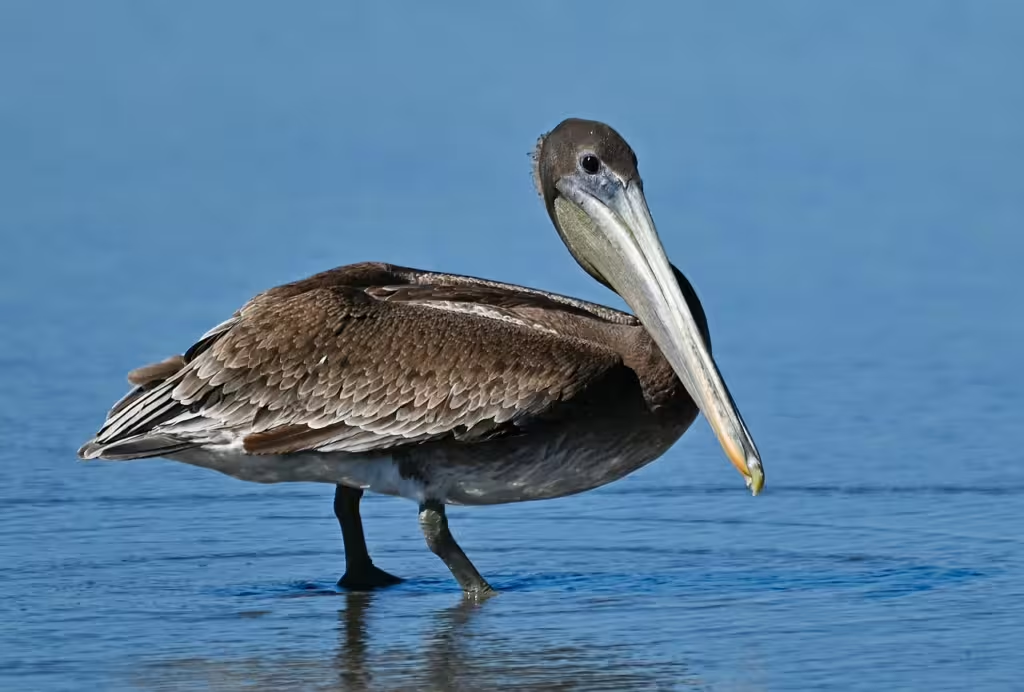
The Brown Pelican is a diver through and through. It is most famous for its dramatic plunge-diving behavior, which sees it diving headfirst into the ocean in search of fish. Once it makes impact, the pelican captures the dizzied fish and flies back out of the drink. It is a unique hunting strategy among birds, one that is more about striking than scooping. And to do it effectively, brown pelicans have to have great eyesight and precise timing.
White Pelicans and Cooperative Fishing
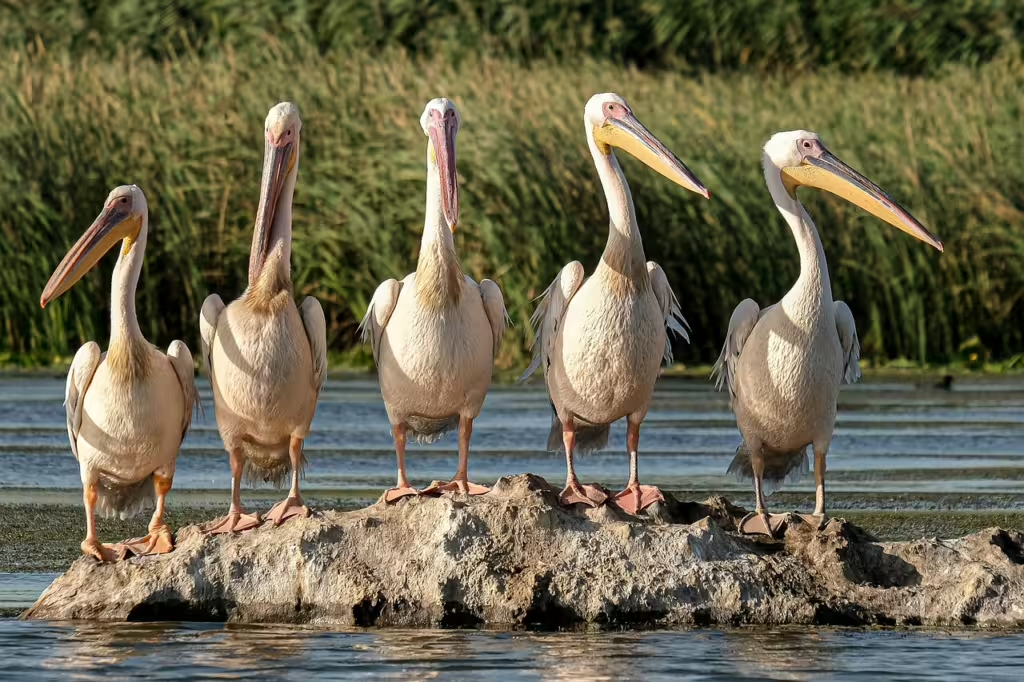
The American White Pelican is a different breed of bird. Their hunting style is less about shock and aw and more about working together. You know the old saying, “birds of a feather flock together?” Well, for white pelicans, that should be “birds of a feather hunt together.”
White pelicans often work together cooperatively in groups, forming lines or semicircles, and herding fish into shallow waters. Once the fish are cornered, the pelicans scoop as one and eat at their leisure. It is a prime example of how social intelligence can sometimes be a better tool than pure, hunter’s skill.
Masters of Flight
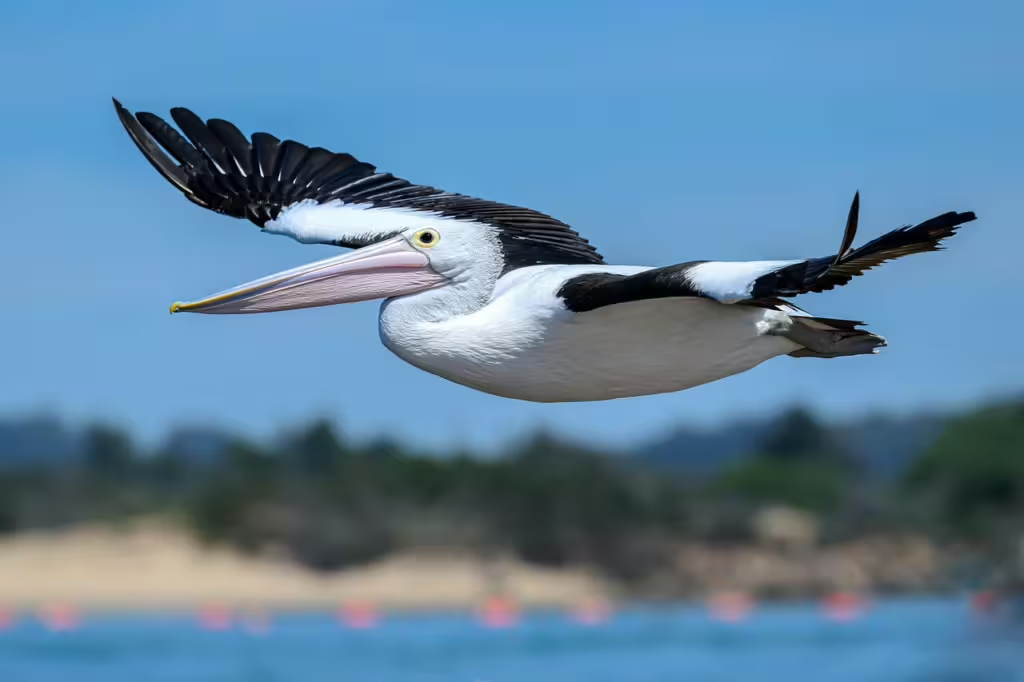
As ungainly as they appear when they’re waddling about on land, pelicans are positively elegant in flight. These water birds are surprisingly graceful fliers that use their long wings to soar on air currents with the greatest of ease. They can glide effortlessly over water, traveling or migrating great distances. Some even fly in formations similar to geese.
Pelicans and Coastal Ecosystems
As we mentioned earlier, pelicans play important ecological roles within their habitats. As fish predators, they help to regulate the populations of small fish, marine species that dwell off the coast, and some freshwater prey species such as amphibians. As such, they are a vital part of aquatic food webs wherever they are found, contributing positively to wetland, bay, and coastal ecosystems.
Their importance within aquatic ecosystems also means that scientists will often use pelicans as indicators of ecosystem health. Declines in pelican populations may signal problems caused by overfishing, pollution, or habitat degradation.
Threats Pelicans Have Faced
Sadly, like most water birds, pelicans have faced major environmental challenges over the years. In fact, one of the most serious environmental threats in history had to do with pelicans and pesticide pollution. In those, thankfully, bygone days, pesticidal chemicals such as DDT caused steep population declines for many aquatic bird species. Eggshell thinning and nesting failures were common and the brown pelican was heavily affected in many parts of North America.
Conservation Success Stories
Fortunately for the pelicans and their avian ilk, governmental restrictions on harmful pesticides and stronger environmental protections, helped to bring many bird populations back from the brink. The significant recovery of brown pelicans became one of the best-known conservation success stories in North America and it paved the way for greater conservation efforts on behalf of many aquatic and semi-aquatic species.
Modern Threats
When all was said and done, however, pelicans still face many of the same dangers today that they did in those days; with the exception of DDT of course. They are still threatened by plastic and chemical pollution, oil spills, habitat destruction, and fishing line entanglement. Overfishing and climate change are also affecting the availability of the pelican’s food source, which is already affecting populations in coastal and wetland ecosystems.
True Investigator Says…
As you can see, pelicans are indeed Avian Oddities, but they are some of the most extraordinary aquatic birds we know of today. Not only do their unique, physical adaptations allow them to survive in host of marine and aquatic environments, their behavioral adaptations and fishing techniques are true standouts of the avian world.
For some threatened species of pelicans, their recovery in the wake of environmental threats only serves to highlight how adaptable and resilient these birds are. At the same time, this reveals to us that conservations initiatives from caring people can indeed make a difference. When we take action to protect our animal neighbors, we can do amazing things. It gives us hope for the future of many endangered species and that’s always a comfoting thought.
Discover more from TrueInvestigator
Subscribe to get the latest posts sent to your email.