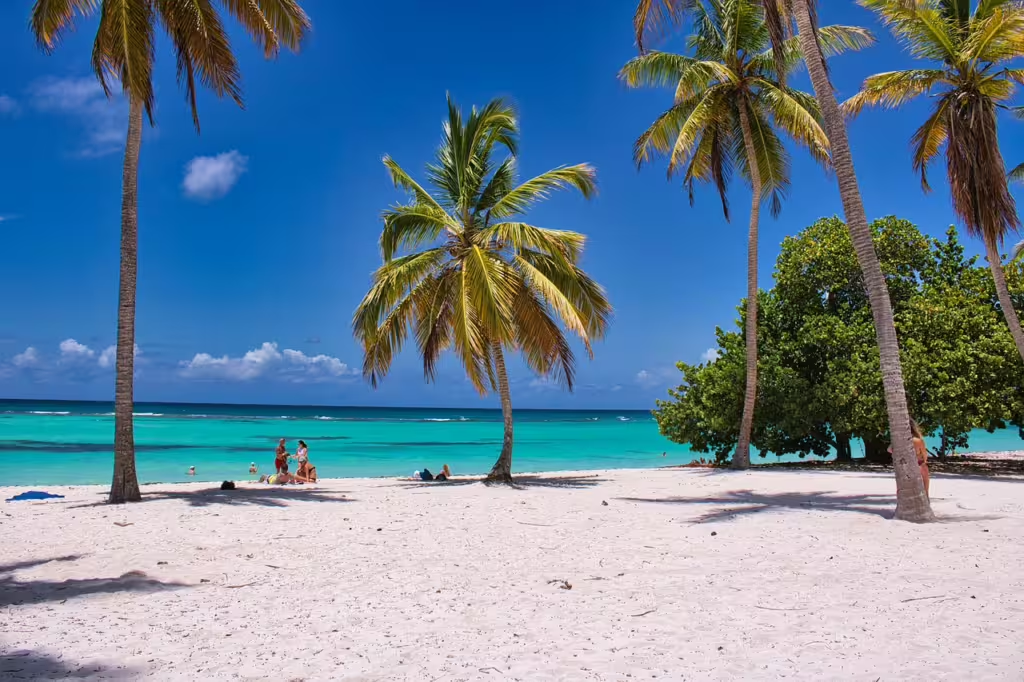

Imagine that you’re sitting there on a sunlit beach, the sound of the ocean lapping against the shore, the wind in your hair, sand between your toes; what tree do you imagine is providing you with shade? We’re willing to bet that you said “palm tree,” not just because you clicked on this article, but because that is the plant that has become synonymous with the tropical islands, beach vacations, warm coastlines, and lush rainforests.
Indeed, few plants on this planet are as instantly recognizable as palm trees. It’s easy to see why, too. Possessed of tall trunks and sweeping, iconic-looking fronds, palm trees are basically global icons of the plant world. Yet, beyond their famous appearance and relaxing aura, palm trees are incredibly important plants within their home ecosystems. These are trees that, by virtue of their survivability and adaptability, support entire ecosystems, as well as the wildlife and humans that dwell there.
In this article, we will discuss the unique look of the palm tree, as well as the places they can be found, and the cultures around the world that view them as a way of life. Though we won’t get to all 2,500 species of palm tree, we will talk about the many similarities and difference that exist within the family Arecaceae. So put on your flip flops and your Hawaiian shirt, we’re about to take a little break to examine the palm trees in closer detail.
What Makes a Palm Tree Unique?
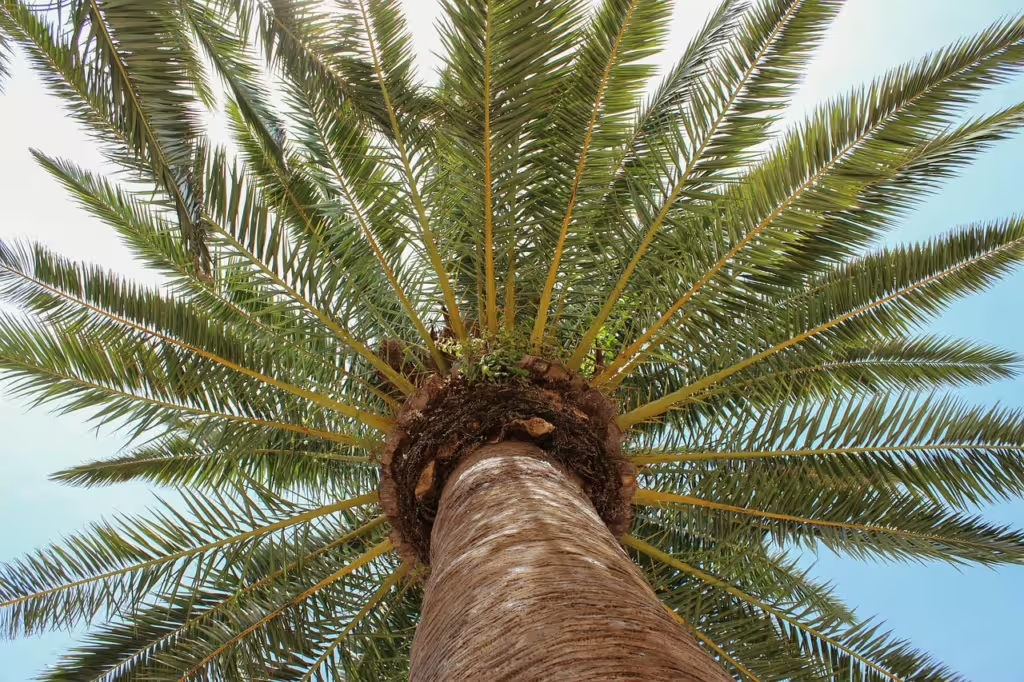
Palm trees are not like the oak, birch, and walnut trees many of us that live in temperate climates are used to seeing in our day-to-day. In fact, they differ from most other trees in several important ways. The main difference between these and hardwood trees is that they are monocots, a group of flowering plants that are actually more like grasses or lilies than they are trees.
The most prominent, recognizable features of most palms are a long trunks without branches and large leaves set atop them called fronds. In addition, most palms are highly-flexible and wood-like, though they aren’t exactly wood in the same way a maple tree is.
Some palms also have crowns of leaves at the top of the tree rather than at branched intervals on the way up. Their trunks also grow differently from standard trees and generally do not produce annual growth rings. This means that telling the age of a palm tree is much more complicated.
A Wide Variety of Palm Species
There are more than 2,000 known palm tree species that exist across many climates and ecosystems. Each of the different palms have evolved to survive under very different environmental conditions. The most well known are the Coconut Palm, Oil Palm, Date Palm, and Royal Palm; and most of those are use by humans and other animals for food or resources.
The most intriguing thing about these plants is that, while some thrive in coastal salt spray, others grow best in humid rainforests. Meanwhile, still others can survive in the harsh desert or are rooted alone on desolate islands in the middle of the sea.
Palm Trees and Tropical Ecosystems
We mentioned earlier that palm trees play major ecological roles in tropical and subtropical habitats. The main reason for this is because they provide food sources for many neighboring animals. They also provide shelter and nesting locations for animals, not to mention a nice amount of shade.
Birds, monkeys, bats, insects, and reptiles may feed on palm fruits like dates or coconuts. These animals might rest in their fronds as well, or else nest in among their branches. Some botanical experts consider palm trees to be keystone plant species in certain ecosystems. Like bees, wolves, or even beavers, palms gain this distinction because so many other organisms depend on them for their continued survival.
The Coconut Palm: One of the Most Useful Plants on Earth
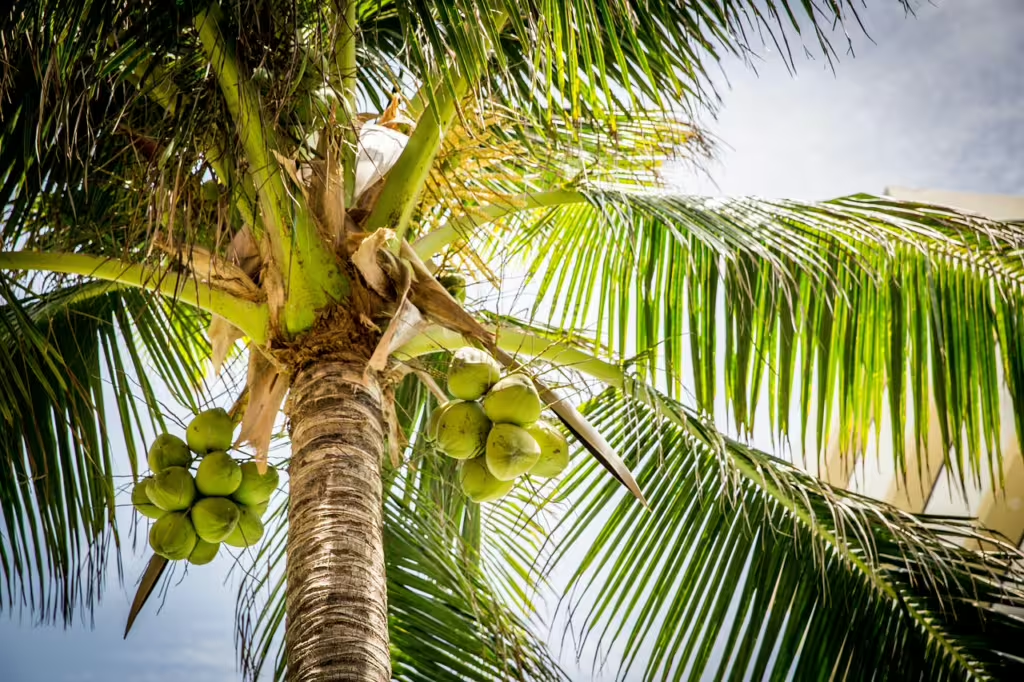
The Coconut Palm is, understandably, one of the world’s most economically and culturally important plants on the entire world; and it has been since time immemorial. Believe it or not, nearly every part of the coconut palm can be used by humans. We use coconuts for their meat, water, and fibers. We use the palm wood for building and the palm leaves for roofing.
Coconut palms are also well-adapted to island and coastal ecosystems and can be found throughout those regions. This is due to the fact that floating coconuts can travel across oceans, allowing the species to spread naturally between islands and island chains.
Date Palms and Desert Survival
The Date Palm is similar in that it has played a crucial role in human culture for thousands of years, though in this case, it involves civilizations founded near desert ecosystems. You see, date palms thrive in oasis environments where water is limited and the sweet fruits that grow amongst their fronds are perfect for those living in arid landscapes.
Dates themselves provide calories and nutrients for humans and animals alike. They can also be dried and stored for long periods of time. This is why, in many desert regions, date palms became a central part of trade and agriculture. They were often the key to a people’s survival.
Palm Trees and Coastal Protection
Believe it or not, the root systems of palm trees can aid in soil stabilization, especially in coastal or island ecosystems. Palm tree roots reduce soil erosion and sand movements, so that, even when strong coastal winds hit, the shoreline remains stable enough to recover. Now, palm trees can’t stop soil erosion entirely, but they can prevent more damage than is necessary.
How Palm Trees Survive Harsh Conditions
By our examples above, you can plainly see that many types of palms are remarkably adaptable, even when encountering a host of environmental difficulties. Palm trees have been known to withstand high winds, can survive salty ocean spray, endure intense sunlight, and even stand tall in the face of seasonal flooding. The former of these is due to the fact that the palm tree’s leaves and trunks are flexible enough to bend, rather than break in a storm.
The Role of Palm Oil
Finally, we come to the “black sheep” of the palm tree family, the Oil Palm. Now, to be fair, the only reason this palm is so problematic because of humanity, but that doesn’t change the fact that it is a problem in many parts of the world. You see, the oil palm is widely cultivated for palm oil production, which is used in foods, cosmetics, biofuels, and cleaning products.
All of this is well and good, until you realize that large-scale palm oil farming has also contributed to major environmental concerns, including deforestation and habitat loss. Palm oil has resulted in huge swaths of rainforest being torn up for monoculture farming of oil-producing palms, which dilutes the biodiversity of an area and devastates the surrounding plant and animal populations.

True Investigator Says…
As you can see, palm trees are far more than decorative symbols of beach vacations. The evolutionary success of these plants, coupled with their ecological importance, and how deeply important they have been throughout human history make palm trees far more fascinating than many people realize.
These ancient, adaptable plants are vital within their home ecosystems. From desert oases to sun-soaked sandy beaches, these iconic trees sustain wildlife and shape human culture. To this day, palm trees remain enduring symbols of nature’s resilience and they are worth more to the world than monoculture and corny beach t-shirts would indicate. So, the next time you lay on the beach and see a palm tree shading you, take a moment to appreciate that tree, and everything it’s done for the world since the dawn of time.
Discover more from TrueInvestigator
Subscribe to get the latest posts sent to your email.