
When you think of insects, you probably think of the irritating ants on you kitchen counter, the bees in you backyard, or the moths fluttering around your porch light. To most of us, insects are little more than minuscule creatures crawling though our world. For the most part, they buzz their way past us unnoticed, their tiny lives having little or nothing to do with our own. But in some corners of the world, insects are not at all tiny…
Today, we are here to talk about the big ones, insects that can grow to astonishing sizes. These oversized bugs seem to be remnants of a bygone, primordial age, and they challenge our expectations about the forms most of us believe insects can take. But astounding size isn’t all that these bugs have going for them. Indeed, their expanded morphology is a sign that certain insects possess some truly fascinating adaptations.
In this article, we will talk about a few of these most notable insectile giants. We will discuss their evolutionary adaptations, survival strategies, their habitats, and the ecological roles they fill within their home ecosystems. Fear not entomophobes, they might appear intimidating but most of these insects are actually perfectly harmless.
Why Some Bugs Grow So Large
Most people don’t fully understand why insects could grow to such incredible sizes. In the past, we’re talking many millions of years ago, mind you, insects were much larger, on average, than they are today. In those prehistoric days, there was more oxygen in Earth’s atmosphere. In the Carboniferous period, for example, atmospheric oxygen was roughly 30%, compared to about 21% today. This was about 300 million yeas ago.
The prevailing theory is that this excess oxygen allowed insects to grow larger, but the theory is more nuanced than that. The lack of large flying carnivores that might prey on these animals, such as birds and bats, also contributed to their ability to grow larger. Larger size meant they were easier to catch, so as more predators emerged, they grew smaller to avoid being lunch.
These days, scientists understand that certain environments encourage larger insect sizes. These environments provide a combination of ideal conditions, including: stable warm temperatures, dense vegetation, abundant sources of food, and fewer environmental extremes. This is why most of the world’s largest bugs are found in tropical rainforests, because those biomes are most favorable for giant insects all year-round.
The Giant Wētā: Heavyweight Champion
We begin our entomological journey with one of the heaviest insects in the world: the Giant Wētā of New Zealand. Basically enormous crickets, some Giant Wētās specimens can weigh more than small birds. They have thick, armored bodies, long legs and antennae, and come out to forage at night.
Nocturnal herbivores, Giant Wētās are basically harmless, and have been able to evolve to this size thanks to the lack of mammalian predators on the island nation of New Zealand for many millions of years. In fact, they were likely immune to most predation until humans began to settle on the island.
The Atlas Moth: Giant of the Air
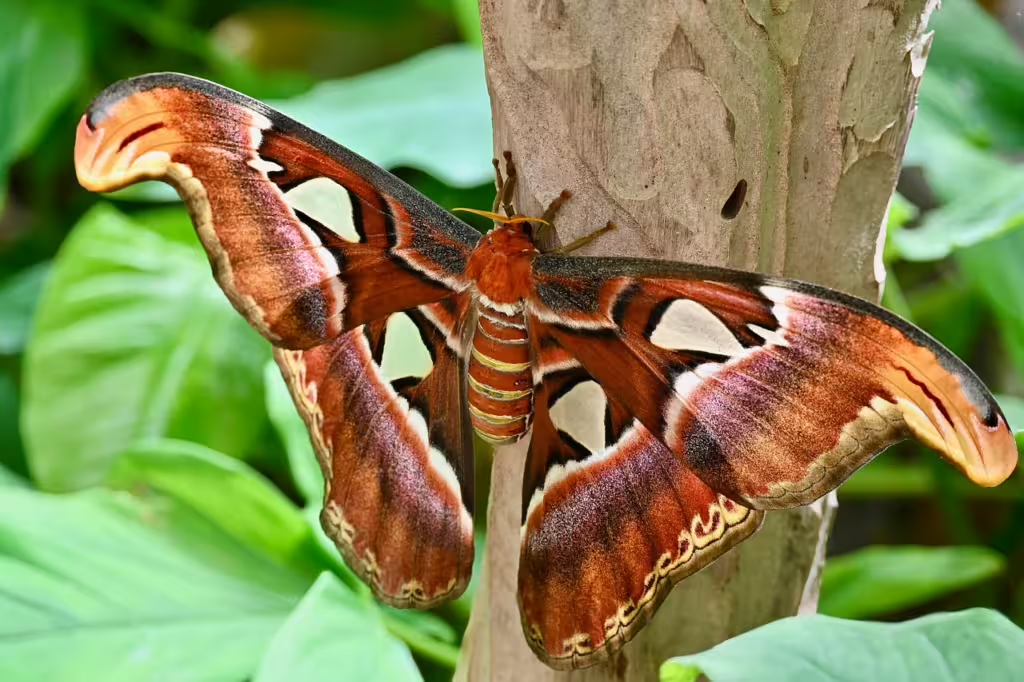
In our article about moths, we briefly touched upon the Atlas Moth. This 10-inch-wide insect is one of the largest moths on Earth by wing area. It can be found in Southeast Asia and it has wing patterns that look like tree bark, dead leaves, or even snake heads. Why have this particular fashion sense? Simple, it helps protect the moth from predators.
With no stings, horns, or armor, camouflage is one of the only tools the Atlas Moth has to protect itself in it’s brief stint as a moth. We say brief because Atlas Moths do not live very long in their adult forms. They lack fully developed mouths, surviving only on the energy they stored while in their caterpillar stage as they do their best to find a mate and propagate the species.
Goliath Beetles: Massive Forest Insects
Some big bugs do have armor, however. Take the African Goliath Beetle, for example. This group of beetles are among the largest and heaviest beetles in the world. They have distinctive black-and-white patterns, thick armored exoskeletons, and strong legs. Also herbivorous, Goliath Beetles feed on fruit and tree sap and come in about six different subspecies.
The Giant Stick Insects
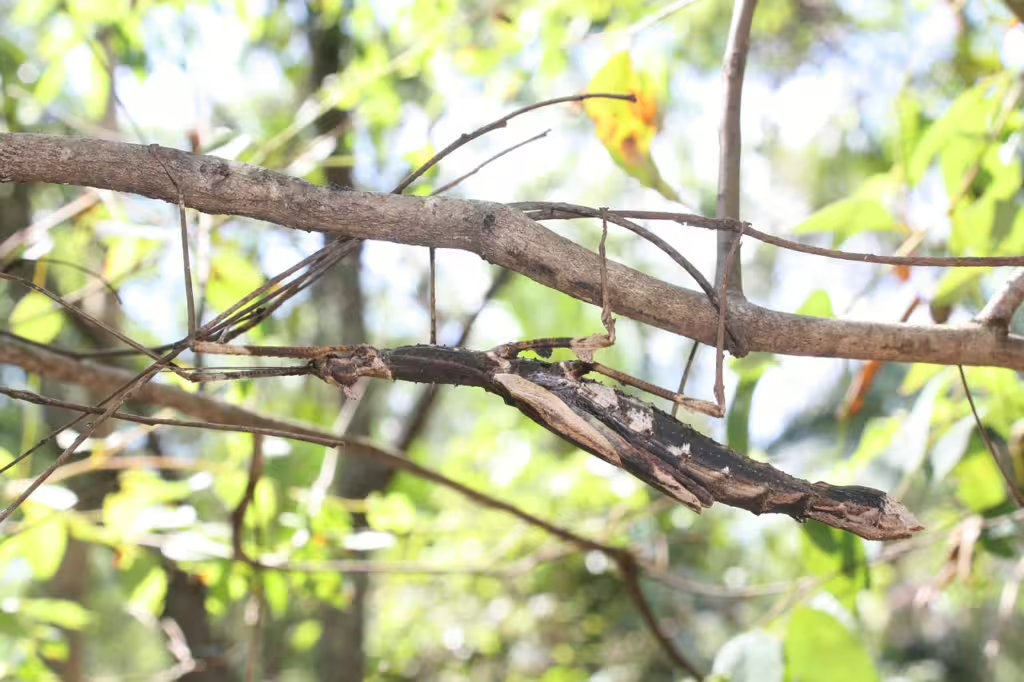
Stick insects are aptly-named masters of camouflage that can exceed two feet in total length. One of the largest of these is Chan’s Megastick, which can be found in the rainforests of Borneo. Stick insects can blend perfectly into the surrounding branches, twigs, and forest vegetation, allowing them to be fully overlooked by even the cleverest predators. They are fully herbivorous and come in many different shapes, sizes, and types of camouflage.
Hercules Beetles and Enormous Horns
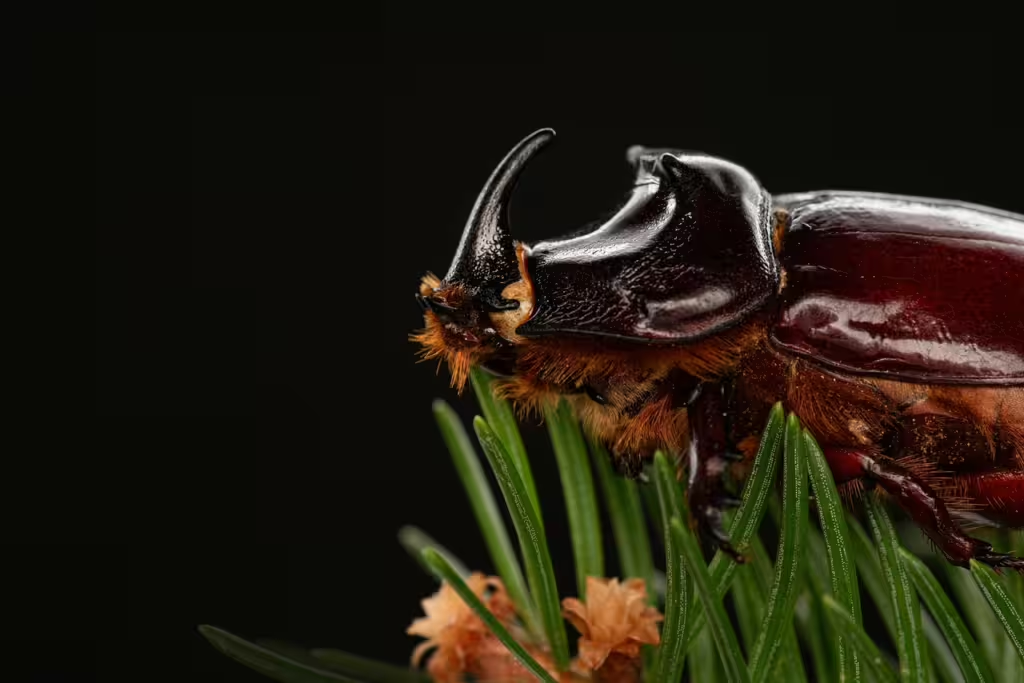
The Hercules Beetle is famous for its huge horn-like structures and its fierce battles. Male Hercules beetles use their heavy horns and armor when it fights rivals over territory and mates. They can apparently lift upwards of 850 times their own weight, basically the equivalent of a human being lifting a fully grown elephant. That is astonishing!
Giant Water Bugs: Underwater Hunters
Not all giant insects live in forests and not all of them are harmless herbivores. Take the predatory Giant Water Bugs of North America, for instance. This species are large aquatic predators can be found in freshwater habitats from Canada to Mexico and everywhere in between,
Sometimes called “toe-biters,” these insects are known for their powerful front legs, strong piercing mouthparts, and an astounding ability to hunt larger vertebrates like fish and frogs. They also prey upon other insects when they want an easier meal. Some species grow over 4 inches long and they hunt like an alligator, waiting patiently beneath the water’s surface before they find a chance to strike!
The Tarantula Hawk Wasp
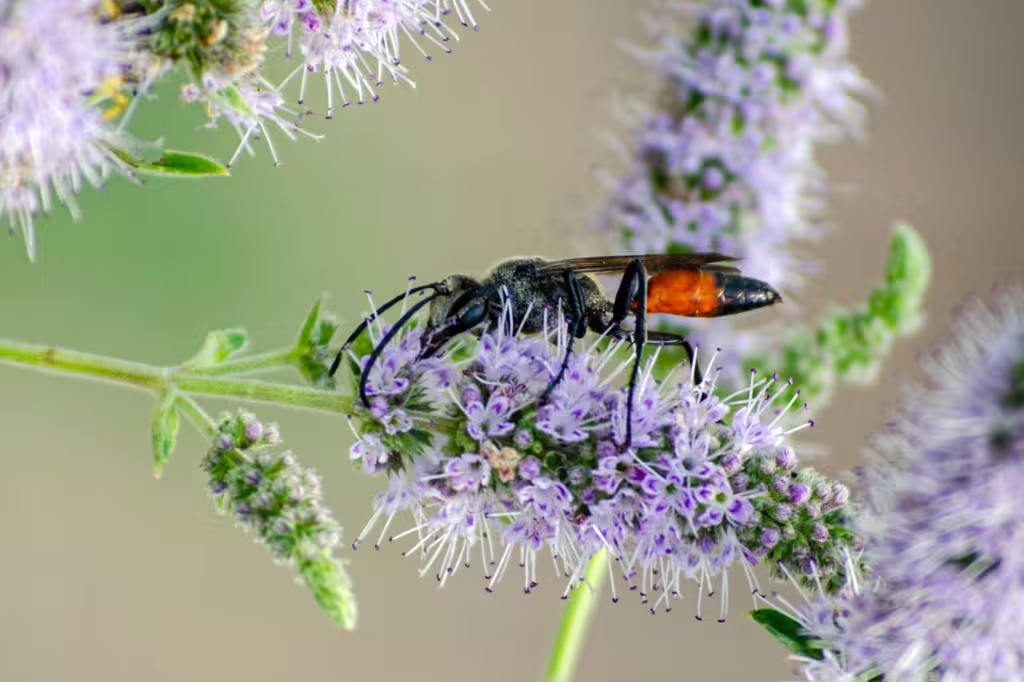
We close with another giant insect predator. The Tarantula Hawk is one of the world’s largest wasps and it is so-named because of its penchant for hunting, you guessed it, tarantulas! They do this in a most unpleasant but effective way. When they find a worthy prey spider, female tarantula hawks attack. They first paralyze the spiders with a sting before laying their eggs inside the immobilized prey. Once they hatch, the baby wasps eat their way out of the spider.
Their metallic blue-black bodies and orange wings make them visually striking. Though intimidating and though their stings are painful to us, they usually avoid humans unless they are directly threatened. Just be glad you’re not a tarantula.
True Investigator Says…
As you can see, though they might be icky or intimidating to some, the world’s largest bugs reveal just how diverse and surprising insect life can be. Be they beetle, stick insect, wasp, or cricket, these oversized creatures show us that nature is always finding interesting ways to adapt her children to their ecosystems. Pollinators, predators, and nutrient recyclers, giant insects are valuable additions and contributers to their habitats,
Sadly, because they are so specialized and live in many threatened habitats, many of these giant insects are also threatened by habitat destruction, pollution, climate change, and the pet trade. Nevertheless, we need to do everything we can to protect them and the places they call home, or our own children may never get the chance to experience their awe-inspiring presence.
Discover more from TrueInvestigator
Subscribe to get the latest posts sent to your email.