
Everyone loves a panda bear. It’s true! There’s something about these cuddly-looking, monochromatic ursine creatures that delights kids and adults alike. The undefinable charm that panda bears possess is only enhanced by their placid personalities, playful behavior, and silly antics. It also doesn’t hurt that they are the only animal on the planet that looks like they do; with the exception of maybe the zebra.
For all these reasons, panda bears are among the most recognizable animals on Earth. That popularity, and the fact that they have been endangered for the better part of the last few centuries, has seen pandas become powerful symbols of wildlife conservation.
In this article, we will take a deep dive into these most charming bears. We will examine their homes, unique diets, and their continuing saga as one of the world’s foremost endangered species. By the time we’re done, you will see that these bears are not only iconic for their looks but for their remarkable adaptations and the conservation success that we see through the lens of their species’ continued survival.
What Makes Panda Bears Unique?
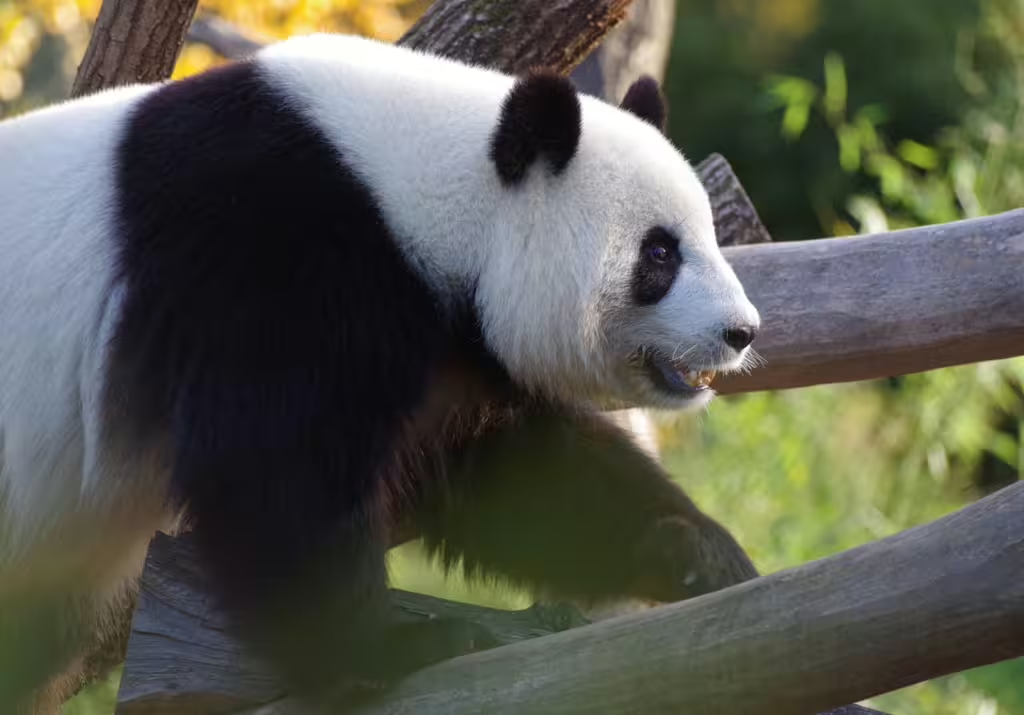
Scientifically known as Giant Panda, this unique species of bear can be found primarily in the mountain forests of central China. Despite belonging to the carnivore order and having evolved from meat-eating ancestors, pandas have a highly specialized diet. Their food of choice is bamboo, a tough, ever-growing grass than is more weed than productive plant.
Pandas obviously stand out from other bears for several more overt reasons as well. Their distinct black-and-white fur patterns are found on few other animals. They have round heads with strong jaws, perfect for ripping and tearing at tough bamboo. They also have thick fur, which makes them appear overly fluffy, though it is actually there to keep them warm in their cool mountain habitats.
Adult pandas are relatively small for a bear, around 4 to 6 feet long and standing only 2 to 3 feet at the shoulder. This is a far cry from their humungous predatory relatives the grizzly bear and polar bear. Still, they can weigh around 250 pounds as an adult, and this is despite spending much of their lives quietly eating plants.
Where Pandas Live
Most of the giant pandas you have probably seen were in a zoo, where employees and conservation experts have been successfully breeding them for many decades now. In the wilds of central China, however, pandas can be found mainly in the mountainous regions.
Their preferred spot within this region is any place that has a bamboo forest nearby. After all, who wouldn’t want to be surrounded on all sides by your favorite snack? The bamboo forests they call home are typically cool, wet, and covered in mist for the better part of the year. They are typically found in provinces such as Sichuan, Shaanxi, and Gansu.
The Bamboo Specialist
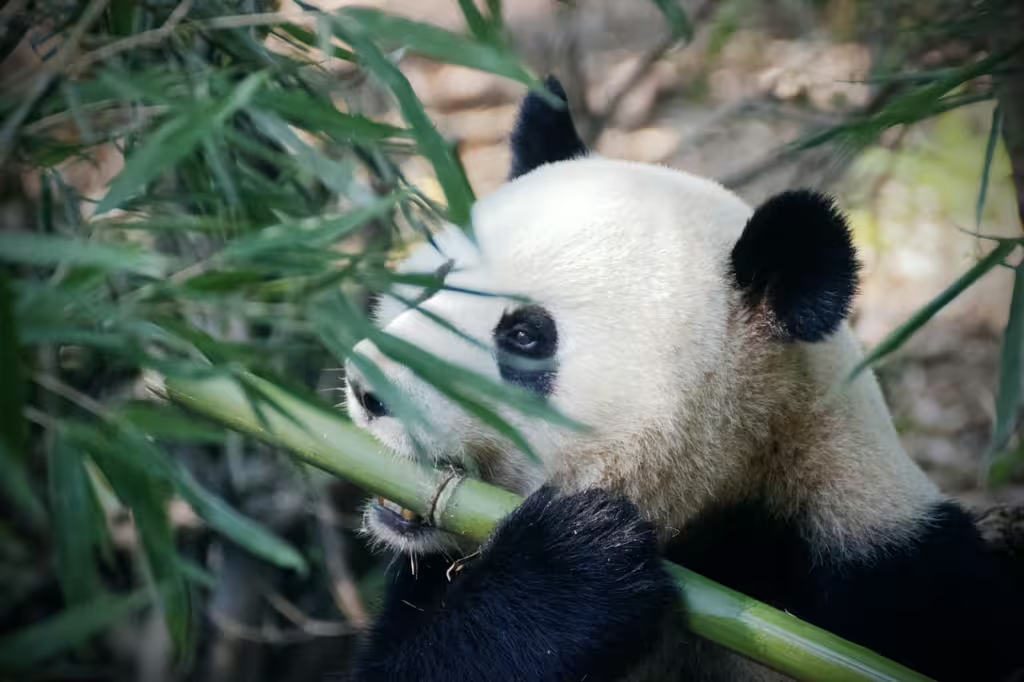
Obviously, one of the most fascinating and iconic things about pandas is their diet. Approximately 99 percent of their diet consists of bamboo leaves, bamboo stalks, and bamboo shoots. The problem is, bamboo is seriously lacking in nutritional value, so pandas must consume an enormous amount of it every day to get the nutrition they need to survive. This means spending upwards of 12 hours a day feeding on the stuff. Not exactly a rough life but not especially culinarily interesting either.
The Panda’s “Thumb”
Did you know that pandas also have thumbs? Well, not really a thumb like ours, per se, but a remarkable adaptation often referred to as a “false thumb.” This structure is actually an enlarged wrist bone that helps pandas grip bamboo stalks while eating. It helps the panda hold food more effectively than the average bear, while also allowing it to manipulate the bamboo with remarkable precision. The false thumb is also one of the clearest examples of specialized evolutionary adaptation in the mammalian kingdom.
Solitary Forest Animals
Unlike some social mammals, pandas tend to keep to themselves…and they like it that way. In fact, adult pandas spend much of their lives on their own, gathering together only during breeding or mating periods. Otherwise, they are generally solitary, communicating with one another through scent markings, vocalizations, and territorial signals.
Panda Cubs and Parenting
Panda cubs are born live but they are incredibly small compared to adult bears. As newborns, cubs are blind, tiny, and nearly hairless, which means they depend on their mothers’ protection a great deal in order to even make it to cubhood. Eventually though, the inquisitive cubs will learn to climb, explore, and eat bamboo on their own. Panda cubs generally become independent and leave their mother’s side after about a year.

Why Pandas Have Black-and-White Fur
This is a very good question, actually, and it is something that scientists have been trying to figure out for a long time. As of the writing of this article, the current thinking is that a panda’s black and white fur may serve several functions but mainly camouflage. Some research suggests that it is also a way for them to communicate with one another. Other than that, the monochromatic coloration helps them blend in with the mixed light environment that streams into a bamboo forest, as well as the snowy areas in their mountain homes.
Threats to Wild Pandas
For many years, pandas faced serious threats from human beings due to habitat destruction. Human development and forest fragmentation have cleared away huge swaths of bamboo forests, making panda communities smaller and more isolated with each passing year, They may like living alone but they do need to be able to find a mate, and habitat fragmentation seriously affects their ability to do so. This made it harder for panda populations to move, breed, and maintain healthy numbers. Poaching pandas for their distinctive coats certainly didn’t help.
Conservation Success Stories
Fortunately for the pandas, conservation efforts on their behalf have been very successful. China and international conservation groups worked to protect panda habitats through a combination of nature reserves, zoo breeding programs, and forest restoration efforts.
As a result, panda populations have improved compared to previous decades. Though they are still vulnerable, their status reflects how conservation efforts can make a meaningful difference when all the right moves are made.
True Investigator Says…
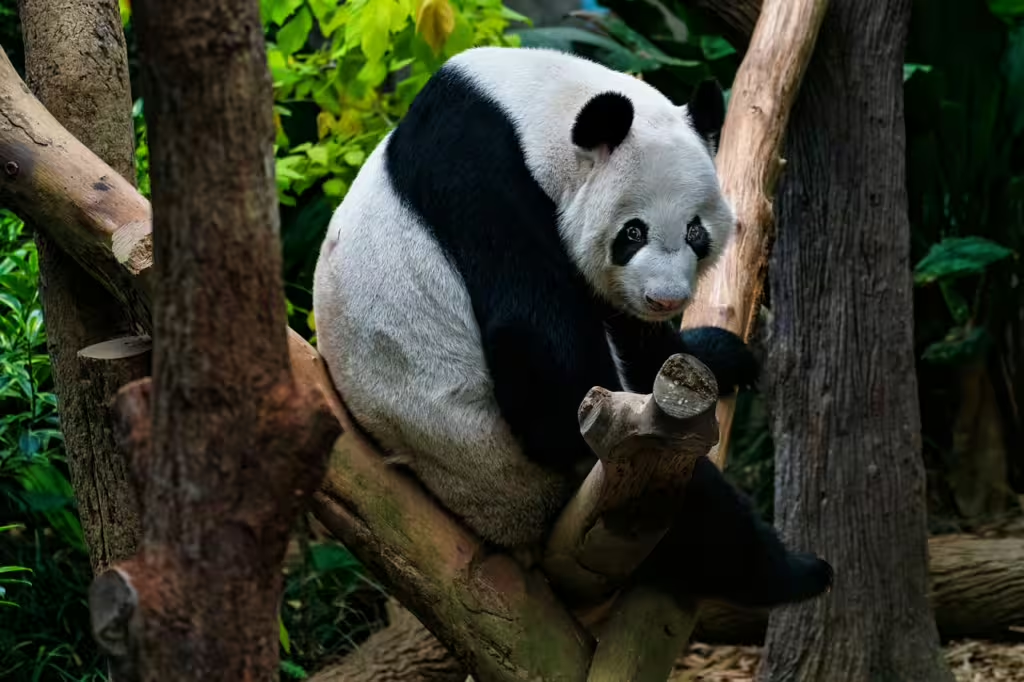
As you can see, panda bears are among the most extraordinary mammals on Earth and their successful return from the brink has made them symbols of wildlife conservation the world over. Though solitary and specialized, pandas have emerged from the shadows of the Chinese mountains to become a beacon of hope for endangered species everywhere.
Still, we must not forget that pandas are also a reminder of how delicate ecosystems can be. Their survival depends on healthy forests, protected habitats, and continued conservation efforts, so we cannot give up just because their species is nearly out of the woods; pun very intended.
Discover more from TrueInvestigator
Subscribe to get the latest posts sent to your email.