
When you look over at your dog, what do you see? Do you see the powerful carnivore it used to be or the docile companion who loves you unconditionally? Despite their many variations in size and appearance, domesticated canines can trace their origins back to the dawn of time, to an age when packs of roving dire wolves ravaged the countryside.
Their closest living relative, the gray wolf, is strange by comparison. Some breeds, like the German Shepherd, share features withe wolf; and in that comparison, the evidence seems clear. But when one looks at a tiny Yorkie or even a massive Mastiff, it’s hard to imagine them as anything but a “good dog.”
In this article, we will delve into the evolutionary origins of modern domesticated dogs. How these animals evolved from wild canids into the “purse pets” we know today is one of the most fascinating examples of human-animal relationships that exists in our written history. It is a story shaped by adaptation, environment, opportunity, and thousands of years of selective breeding.
The Origin: The Gray Wolf
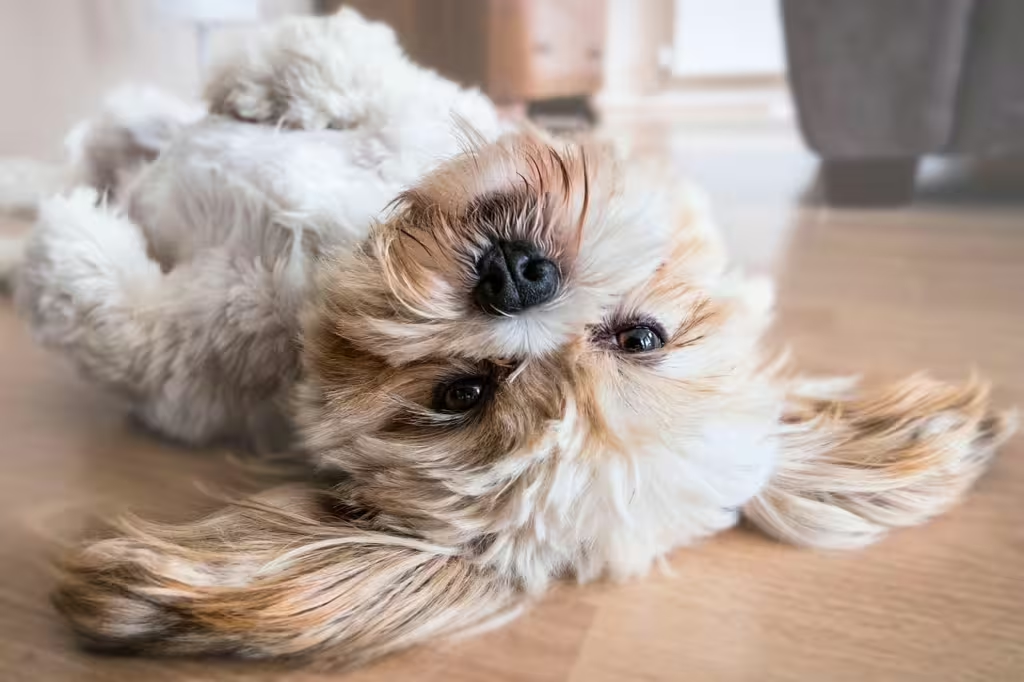
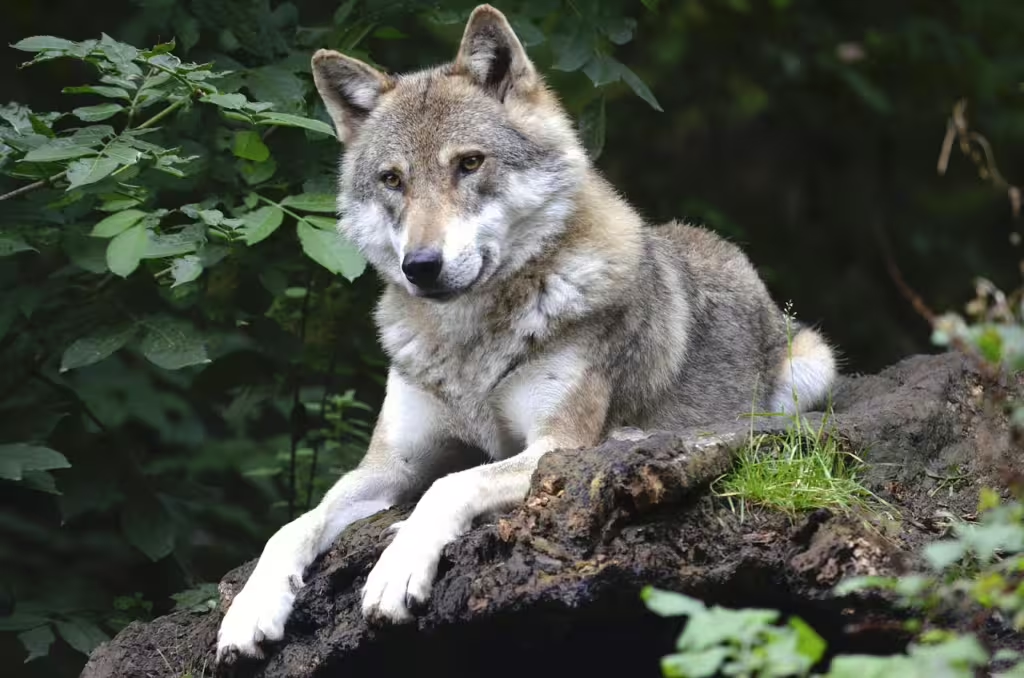
Even as this writer sits here, staring down at my Shi Tzu lounging lazily on the floor beside me, it’s hard to believe that her primary ancestor is none other than the Gray Wolf. Still, it’s hard to argue with science. Modern genetic evidence shows that dogs can link directly back to the wolves, though their current evolutionary chain diverged from them some tens of thousands of years ago.
The working theory is that, certain early wolves that were less fearful of humans likely approached human settlements in an effort to scavenge food. Over time, a relationship developed. The exchange was simple: wolves benefitted from eating human scraps and the humans got help hunting and a built-in early warning system. Considering the original breeding purpose of my own little pup, this latter benefit makes perfect sense. Leia lets me know the second anyone is even approaching the house…
The Process of Domestication
These mutual advantages set the stage for domestication. That said, domestication was not a single event but a gradual process. Over generations, wolves that were less aggressive, more tolerant of human presence, and better at reading human behavior started hanging around and breeding near human settlements. These animals survived and subsequent generations of these proto-dogs began to change in even more in behavior and appearance.
Common changes included shorter snouts, floppier ears, smaller size, and a reduced fear response. This process of self-domestication is rare, but it has been evinced by several species over time including cats, pigs, and rats. Even today, we can see it occurring among coyote, fox, and even raccoons. The latter of these having been recently investigated because the signs of self-domestication were so evident.
From Early Dogs to Specialized Roles
Amazingly, just as humans began to form more complex societies, dogs began to take on specific roles within those societies as well. Different environments and human needs led to the development of distinct types of dogs; which is where breeding comes in.
Hunting Companions
Some dogs were bred for their ability to track, chase, or retrieve prey. The Greyhound was built for speed and sight hunting, while the Beagle and Blodhound were made for scent tracking. Over the centuries, these hunting breeds retained strong instincts from their wolf ancestors but were shaped for specific hunting tasks.
Herding Dogs
In agricultural societies, dogs were also used to manage livestock. Breeds such as the Border Collie or Sheepdog developed stronger focus, greater intelligence, and a marked ability to respond to human commands. The current thinking is that herding behavior is a modified version of the wolf’s natural hunting instinct. The only difference is that the “hunt” for a loose member of the herd stops short of the final capture; good news for the little lost lambs, no?
Guarding and Protection
Some dogs were bred to protect people, while others, larger breeds mostly, were meant to protect property or livestock. Rottweilers, German Shepherds, and Dobermans are all examples of strong, loyal, alert, protective breeds. This instinct to protect is often traced back to the innate territorial nature of wild canines.
Working Dogs in Harsh Environments
In colder regions, dogs kept some of their cold-weather adaptations so that they could endure and protect in even the most extreme climates. These breeds have the same thick fur, high stamina, and pack-oriented behavior as their wild wolf cousins. In fact, there are some breeds of dogs, such as the Siberian Husky or Alaskan Malamute, that exist just on the line between dog and wolf.
Companion Dogs
Not all dogs were bred for work. Some were selected primarily for companionship. Breeds such as the Pug and Shi Tzu were bred to be smaller, friendlier, and more dependent on humans. Their close interaction and love for their human companions represent a distinct shift in the roles that dogs played in the early days of humanity, top the one we know today; the shift rom survival-based roles to social ones.
Physical Diversity Through Selective Breeding
One of the most remarkable aspects of dog evolution is the range of physical forms they possess. Selective breeding didn’t just hone in on desirable behavioral traits, it also shaped dogs to exhibit different sizes, varied coat types, distinct facial structures, and in some cases, even different vocal ranges. Despite all these many differences, all dogs remain part of the same species. Curiously enough, this diversity developed relatively quickly in evolutionary terms, largely due to human influence.
Behavioral Traits from Wild Ancestors
Even the most domesticated dogs retain certain wild behaviors inherited from their lupine ancestors. They communicate through vocalizations and body language, form packs, and love to chase and hunt; just as they did when they were once wolves. The best dog experts understand these behaviors, which helps them explain why dogs act the way they do.
True Investigator Says…
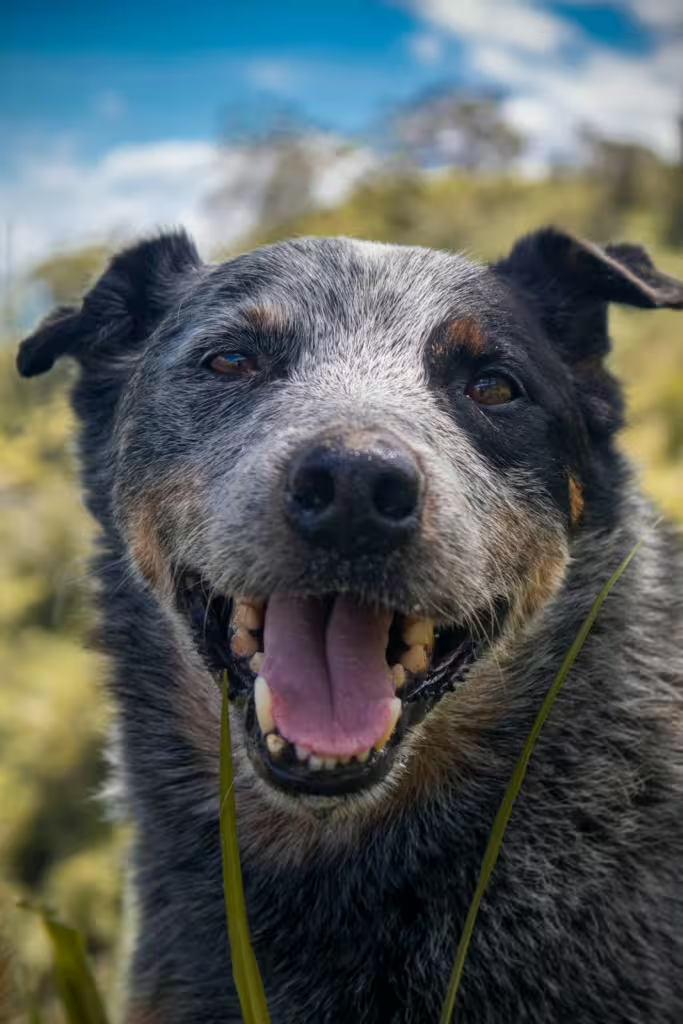
As you can see, the evolutionary journey of the modern dog is truly remarkable. Through cooperation and adaptation, dogs have branched away from their savage ancestry to become our closest companions. And yet, while modern dogs may look very different from their ancestors, they still carry the legacy of the wild within them.
Perhaps, in understanding these origins, you have gained a deeper appreciation for the behaviors, traits, and roles that make dogs such unique companions among all animalkind. Even now, as humanity itself continues to adapt, evolve, and improve, so too will the canines with which we’ve chosen to share our lives.
Discover more from TrueInvestigator
Subscribe to get the latest posts sent to your email.