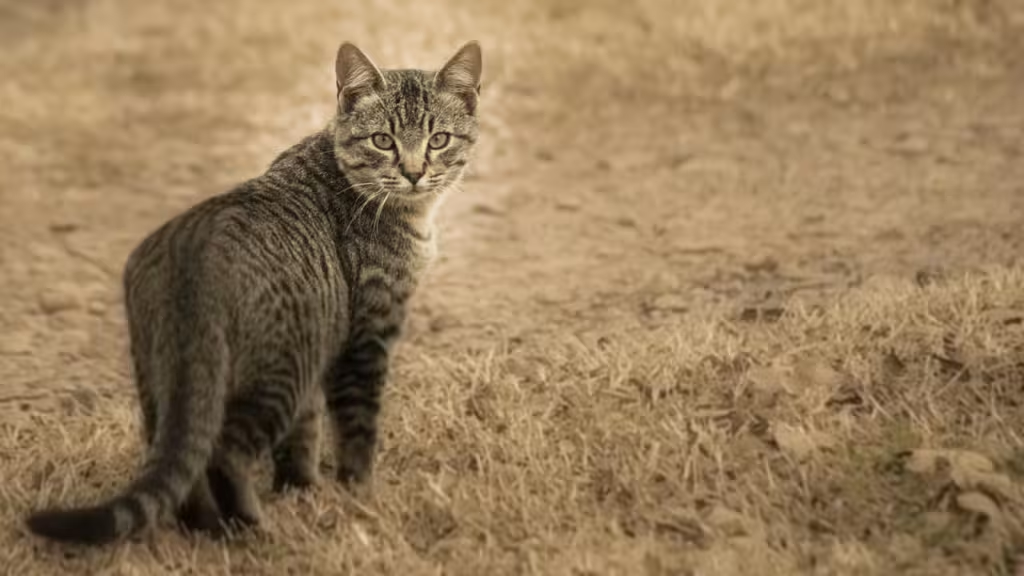

Some weeks back, we explored the fascinating history, rather prehistory, and circumstances that caused once-wild wolves to evolve into man’s best friend. That was definitely one for the dog people in the audience. Today, we’re going to appeal to the cat people. Like the domestic canine, housecats were once quite untamed. It’s hard to see now, especially if, like me, you have a friendly feline curled up on the sofa beside you, but these cuddly kitties were can trace their ancestry back to some of the most fearsome predators ever to stalk the ancient grasslands.
These days, all our cats do is stalk toys across our living room floors and mewl for us to feed them treats. Yet beneath their soft fur and relaxed naps lies the heart of a highly specialized predator. As any cat owner may attest, modern house cats still share many behaviors, instincts, and physical traits with their wild cousins. These similarities reveal a deep evolutionary connection that stretches back thousands of years, to the days when men and beast were almost exclusivelyy at odds with one another.
In this article, we will trace the ancient ancestry of the domestic cat back to the very first time they curled up at our feet. We will examine where cats came from and how they became part of our everyday lives. Perhaps through this historic journey, we might all gain some insight into one of the most unusual domestication stories that exists in the animal kingdom.
The Wild Ancestors of Domestic Cats
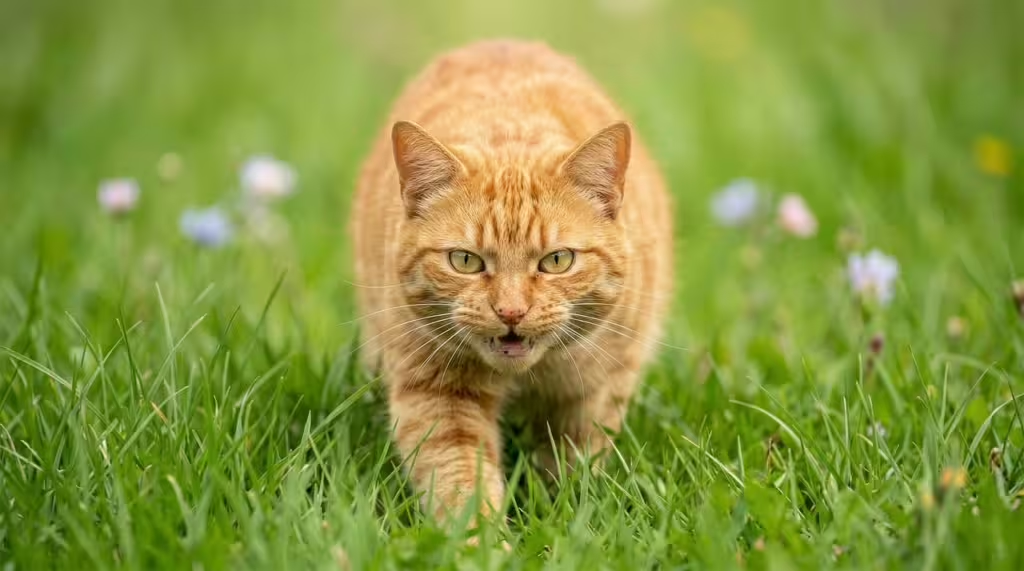
It’s hard to pin down exactly when wild cats first decided to move into our settlements. After all, we’ve had rodents living among us almost as long as we have cats, and it seems pretty likely that this might be what brought the cats into our caves and villages back in the day. Still, scientists believe domestic cats descended primarily from the African Wildcat, a small wild feline native to parts of Africa and the Middle East.
This theory as to where domestic cats came from makes perfect sense if one looks at the African wildcat. These felines quite closely resemble many modern tabby cats, having the same slim bodies, large ears, and sandy/striped coats.
Unlike large cats such as lions, these wildcats were solitary hunters that thrived near grasslands and semi-arid environments, though they hunted much smaller game. Their size, feeding preferences, and sneaky, stalking behavior made them particularly suited for life around early human settlements.
How Cats Became Domesticated
The thing is, cats didn’t just one day decide to help out on the hunt like dogs. They didn’t let us ride them or herd them like horses, cows, or sheep. As it happens, the domestication of cats differed greatly from animals like dogs, horses, or cattle. At first, we didn’t even realize that we were choosing to domesticate them at all, really.
You see, cats were likely not aggressively bred or controlled by humans in those days. We just kind of let them be because they hunted the mice, rats, and other small rodents that hung out in our farms and food stores. Over time, we started to appreciate the presence of these wildcats, who were drawn into our lands by the abundant rodential food source. Thus, domestication appears to have happened gradually through an unintentional, yet no less mutually beneficial relationship.
Over time wildcats that tolerated humans had better access to food and humans, in turn, tolerated more wildcats around, so long as they behaved themselves. And remarkably, they did. Like dogs before them, these felines learned how to react to human beings so that humans embraced them rather than chasing them away.
A Partnership Rather Than Full Control
Unlike other domesticated animals like horses, dogs, and especially sheep, cats retained much of their independence. For example, domesticated sheep have actually become so dependent on humans through the generations that they can no longer live on their own. Cat’s though can still survive without direct human guidance. This is due in part to the fact that they maintain strong hunting instincts, even as they doze on the windowsill. This semi-independent domestication process also explains why house cats still resemble their ancestors so closely.
Shared Behaviors Between Domestic and Wild Cats
Despite thousands of years living alongside humans, those same hunting behaviors remain strong. They stalk by crouching low to the ground, focusing intently on the movement of their desired prey, and pounce quickly and precisely to “bring it down.” This is true even if the prey happens to be a ball or a feather on a stick. domestic cats continue to display behaviors nearly identical to those of wild felines. We’re not just talking about outdoor cats, either here. Even indoor cats stalking toys are performing behaviors inherited from their wild cousins and ancestors.
Territorial Behavior
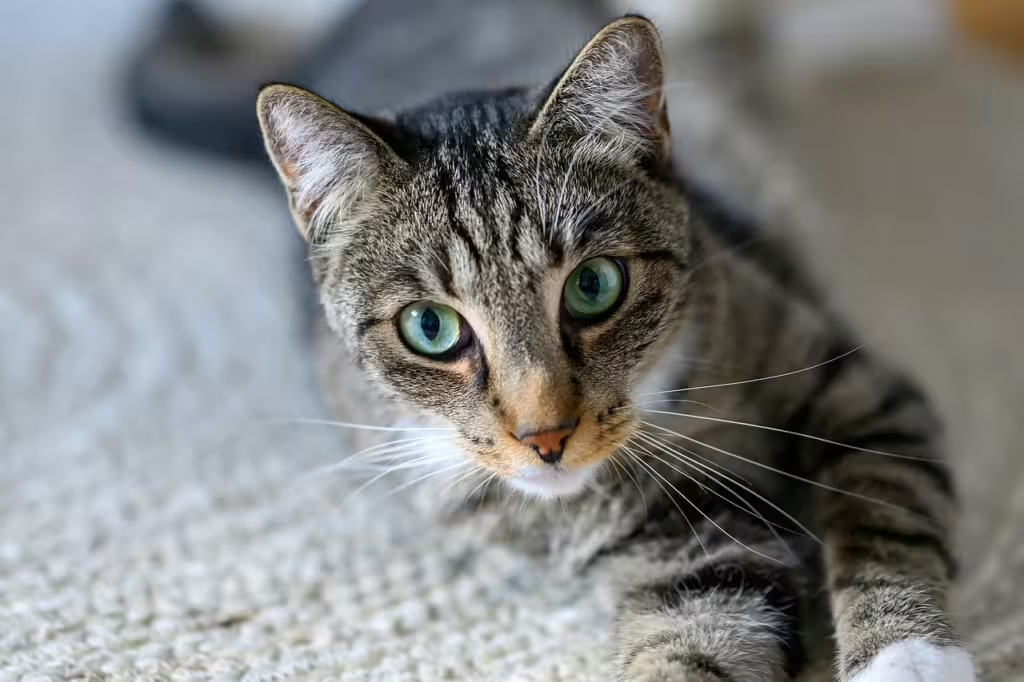
Even modern domestic cats are strongly territorial beings. Wildcats are able to mark their territories with scent, scratching, and visual signals, while domesticated felines do some similar things. They rub against objects to scent them, scratch at furniture or posts they like, and will defend their favorite sports from other pets and even some humans!
Grooming
Domestic cats and wild felines both spend significant time grooming themselves. This behavior helps to maintain the condition of their fur while removing parasites and dirt. It also helps keep them cooler or warmer, and can regulate their scent.
Solitary Tendencies
Unlike pack animals such as dogs, cats are mostly solitary creatures. Domestic cats can be social with humans but most cat owners will tell you that they still love their “me time.” They value personal space, quiet, and independent exploration, even if they want pets and scritches now and again.
Cats in Human Culture
As cats became more common around human settlements, they gained cultural significance in many societies. We know that the Egyptians kept and valued cats very highly and that they are often associated with protection and spirituality. Over time, cats have appeared in art, folklore, literature, and even religious symbolism in every place they have found a home. It is very likely that their grace and beauty, as well as their mysterious and independent nature, ultimately contributed to their unique place in human culture.
Adaptability and Global Spread
Domestic cats can now found in nearly every country across the globe. Indeed, beyond the rats and pigeons of the world, few animals have spread as successfully alongside humans. Their adaptability allows them to thrive in farms, urban environments, and. coastal communities.
True Investigator Says…
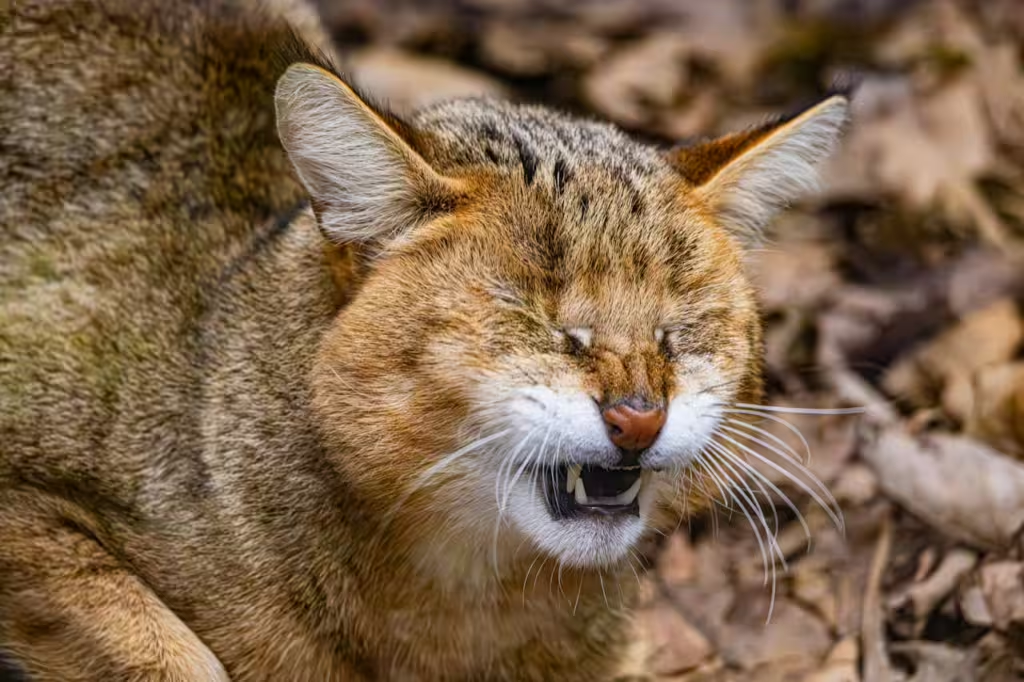
As you can see, domestic cats are far more than simple household pets; though any cat lover would have been able to tell you that. The cat’s wild ancestors, those that once hunted near early human settlements, eventually found their way into our care, ultimately forming one of the most unusual partnerships in the history of human domestication.
Day in and day out, we see how the domestic feline’s hunting instincts and territorial behavior continual remind us of that far-off connection to some of the planet’s most spectacular predatory beasts. Indeed, when compared to still-existing species like the African wildcat, it seems as though the housecat hasn’t changed all that much, really.
Nevertheless, it is precisely this balance between independent hunter and trusted companion that makes cats so fascinating to study, to observe, and to own. In every pounce, stare, and quiet nighttime movement, there remains a glimpse of their wild nature and the instinct that, given the chance, they would probably still hunt us if they could.
Discover more from TrueInvestigator
Subscribe to get the latest posts sent to your email.