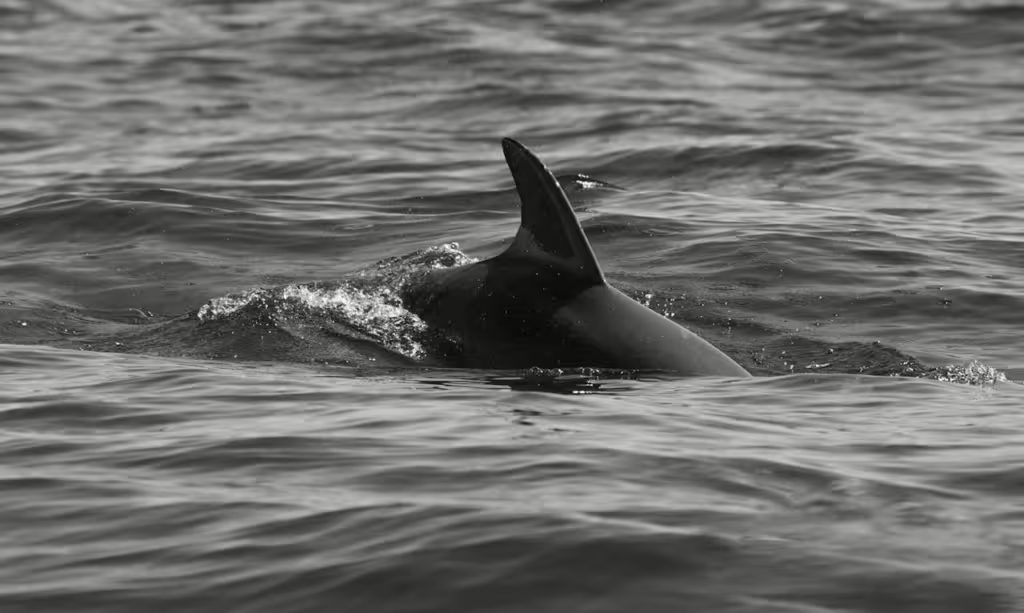

You’ve probably heard it before, someone in a conversation starts talking about this or that, trying to sound smart, and they end up referencing a dolphin and calling it a porpoise. It’s not their fault really, we as a society have taken to using the words “porpoise” and “dolphin” interchangeably, but these animals are actually very different.
Not only are they different animals, they are from different groups of marine mammals, each with their own unique traits, behaviors, and evolutionary histories. And sure, they may appear similar at a distance, but closer inspection will reveal very different morphology. An even deeper dive (pun intended, obviously) will glean you more information about their differences in social behavior, teeth structure, and the marine habitats in which they dwell.
The reason that dolphins get more recognition is mostly due to the fact that porpoises tend to be smaller, quieter, and more elusive. In this article, we will show that the negative or “boring” connotations ascribed to these attributes are doing the porpoise a great disservice. They might not be dolphins, but porpoises are nevertheless fascinating animals that play important roles in marine ecosystems all over the world.
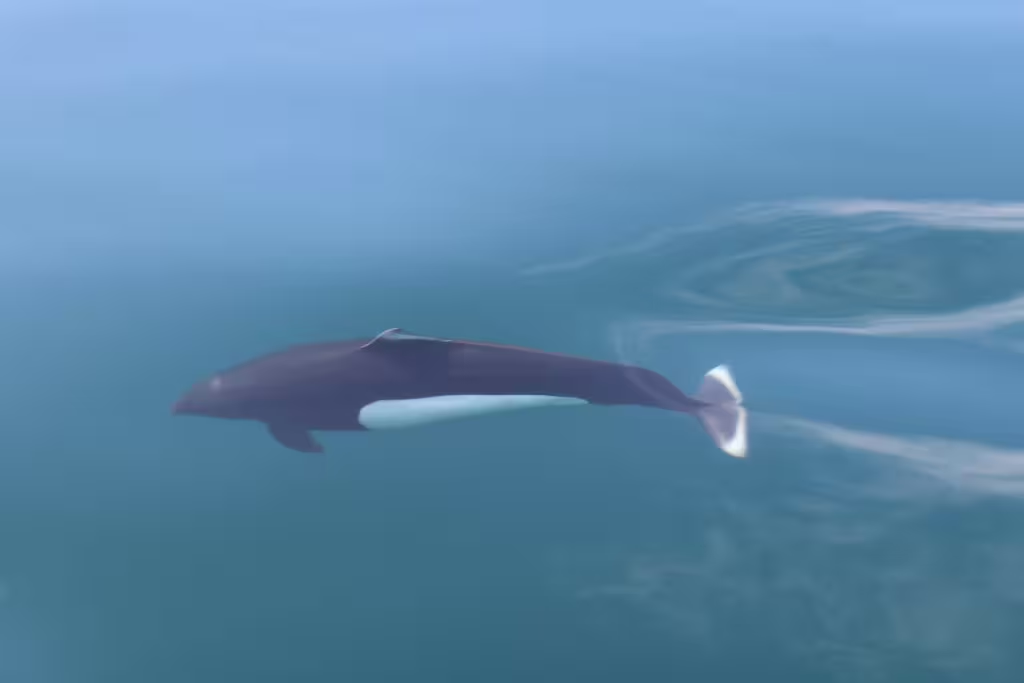
What Is a Porpoise?
Belonging to the family Phocoenidae, porpoises are quite similar to dolphins in many ways. Scientists believe that the reason for these similarities is likely due to the fact that they evolved alongside dolphins for millions of years before branching out into their own cetacean subset.
Understanding how these animals differ from dolphins isn’t just important for scientific reasons, it also helps reveal the incredible diversity that can found within the ocean’s mammalian population.
We mentioned that porpoises aren’t dolphins but what we haven’t really told you is what they are. Basically, porpoises are mall toothed whales closely related to other members of the whale family. They are smaller and more compact than dolphins and tend to be more drab in color.
Most of the time, they can be found swimming around in just about every oceanic ecosystem, from coastal waters, to open oceans, to colder marine environments. They come in several varieties, seven to be exact, including the Dall’s Porpoise, Harbor Porpoise, and the Vaquita; to name a few.
The Main Differences Between Porpoises and Dolphins
We mentioned earlier that porpoises and dolphins share certain similarities despite the fact that they belong to completely different scientific families. For one, dolphins belong to the family Delphinidae, while porpoises belong to the aforementioned Phocoenidae. In addition, there are several physical and behavioral characteristics that set porpoises apart.
Body Shape and Appearance
One of the easiest ways to distinguish porpoises from dolphins is by their body shape. Dolphins have longer, beak-like snouts, curved dorsal fins, and more streamlined bodies, whereas most porpoises have shorter, stockier bodies, triangular dorsal fins, and shorter, rounded snouts.
Teeth Structure
Another major difference between the two has to do with dentation. Porpoises have flat, spade-shaped teeth and dolphins possess cone-shaped teeth. This dental distinction is one of the clearest scientific ways that researchers separate the two groups; though clearly anyone seeing the two side-by-side could tell the difference immediately.
Behavior Differences
Behavior-wise, dolphins tend to be more gregarious, social, and free-wheeling than their porpoise cousins. These mammals are well-known by the general public for playfully chasing ships, jumping out of the water, surfing waves, and doing a host of aquatic acrobatics…porpoises, not so much. Porpoises are usually more reserved, more difficult for humans to approach, and less likely to make a dynamic jump from the waves.
In fact, where dolphins are curious about humans and actively attempt to interact with them, most porpoise species actively avoid boats and human activity. This general shyness is why porpoises aren’t as widely known as dolphins. After all, people don’t get as many chances to interact with the, much less see them in person.
Intelligence and Communication
Both dolphins and porpoises are intelligent marine mammals. Most readers will likely already be familiar with the complex social behaviors and communication skills of dolphins, but they might not know that porpoises are nearly as clever.
For instance, porpoises also use echolocation and sound for communication, hunting, and navigation. That said, they do live in smaller pods than your average dolphin, so they tend to have fewer fellow porpoises to interact with on a daily basis. Nevertheless, marine scientists are working to discover how porpoise communication actually works, to better understand their behavior in the same way we do that of dolphins.

Echolocation and Hunting
Like dolphins, porpoises rely heavily on echolocation for hunting fish and squid. The high-frequency clicks they emit bounce off objects, which also helps them avoid underwater obstacles. It’s a helpful talent when you swim in dark or murky water.
The Vaquita: The World’s Most Endangered Marine Mammal
Of all the threatened marine mammals in the world, one of the most endangered is actually a member of the porpoise family. The story of the poor vaquita is one of the most tragic examples of marine conservation challenges in our history.
The vaquita is a tiny porpoise found only in a small region of the Gulf of California but its population is in deep trouble thanks to the fishing industry. Accidental entanglement in fishing nets has rendered the population down to only double digits. As of the writing of this article, there are only about 10 vaquita left on planet Earth. Thus, the vaquita is considered the world’s rarest marine mammal.
It isn’t just the fishing industry that affects porpoise populations. Climate change, habitat degradation, ocean acidification, noise, chemical, and plastic pollution are all threats to porpoises around the word. Noise pollution from underwater drilling and boats is especially devastating, as it interferes with the echolocation the porpoises use to find their food, friends, and way.
Life in Marine Ecosystems
We ought to be more worried about porpoises than we are too, especially because these unassuming mammals do play important ecological roles in oceanic ecosystems. They might be small, but these mid-level predators help regulate the populations of the squid, small fish, and marine invertebrates upon which they choose to dine. At the same time, porpoises are themselves prey to larger predators like sharks and orcas.
Conservation Efforts
Though the vaquita may be something of a lost cause and a true cautionary tale, there is still hope for other porpoises. Indeed, it might be because of the vaquita’s plight that conservation efforts are being made on behalf of the other species. Current conservation strategies include reducing harmful fishing gear and regulating the fishing industry so people avoid accidentally catching more porpoises.
In addition, the creation of more protected marine areas and the monitoring of porpoise populations are great ways to keep them from meeting the same fate as so many endangered marine animals. People are also doing what they can to reduce physical, chemical, and sonar pollutants.
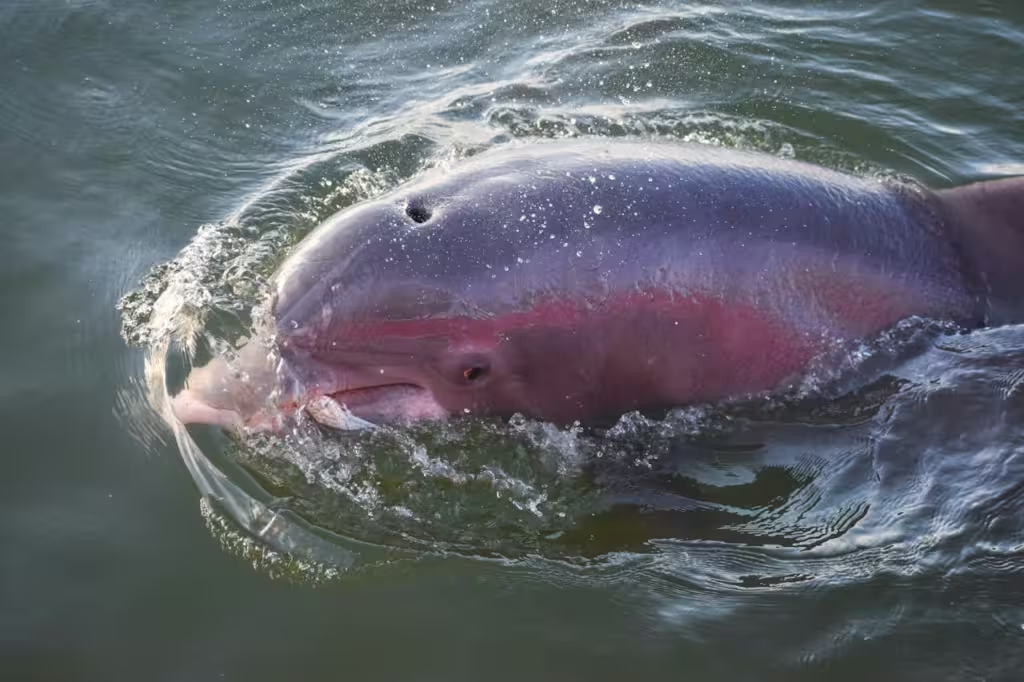
True Investigator Says…
As you can see, porpoises may not have the street cred that dolphins do, but they’re still remarkable mammals. Their unique morphology, shy behavior, graceful swimming patterns, and roles within the marine ecosystem make them just as worthy of attention and consideration as any other oceanic creature.
We explore a lot of very unusual creatures on this website and though the porpoise might seem hum-drum to some by comparison, they remind us that some of the most important animals in the world often go overlooked and that can be a dangerous thing for the animals in question. The vaquita, in particular, reminds us that its so important to pay attention to the world around us, to avoid a dire result.
So remember, the next time someone mixes up the term dolphin and porpoise at a dinner party, you can take pride in the fact that you can unabashedly “Um, Actually…” them.
Discover more from TrueInvestigator
Subscribe to get the latest posts sent to your email.