
In our many travels to the bottom of the sea, we have beheld remarkable creatures that look like nothing else. Today, we flip that notion of novelty on its head to explore marine animals whose whole main idea is to actually look like something else.
The ocean is a realm where survival doesn’t always depend on strength, speed, or armor, but often on deception and camouflage as well. Whether in coral reefs, sandy seabeds, or in the open water, animals have evolved ways to alter their appearance in ways that allow them to defy expectations. In some case, this is the extraordinary ability to imitate other species, not just in color, but in shape, movement, and even behavior.
This phenomenon, known as mimicry, allows creatures to avoid predators, ambush prey, or blend seamlessly into their surroundings; and is is what we have come to talk about today. In this article, we will examine these marine mimics in great detail and learn how they use this unique survival strategy in ways that even the greatest human actors may not have envisioned.
What Is Mimicry?
In the natural world, mimicry is defined as the ability of one organism to resemble another. In human culture, we usually see this in comedy sketches, pantomime, improv, or in general acting of all kinds. We display it as bird calls or wolf howls, but rarely do humans look like other animals in order to avoid being eaten; at least not anymore.
In the ocean, however, where life has not evolved so far down the line, mimicry is far simpler. Marine mimicry can involve copying the appearance of a more dangerous species, imitating the movement or behavior of another creature, or simply blending into the surrounding environment via camouflage.
There are several types of mimicry, but two common ones include defensive mimicry, where animals avoid predators and aggressive mimicry, where animals change so that they can deceive would-be prey. Underwater, where visibility can be limited and shapes can blur, mimicry is particularly handy. Indeed, even the most keen-eyed fish might have trouble spotting a deception in the briny deep.
The Mimic Octopus: A Shape-Shifting Marvel
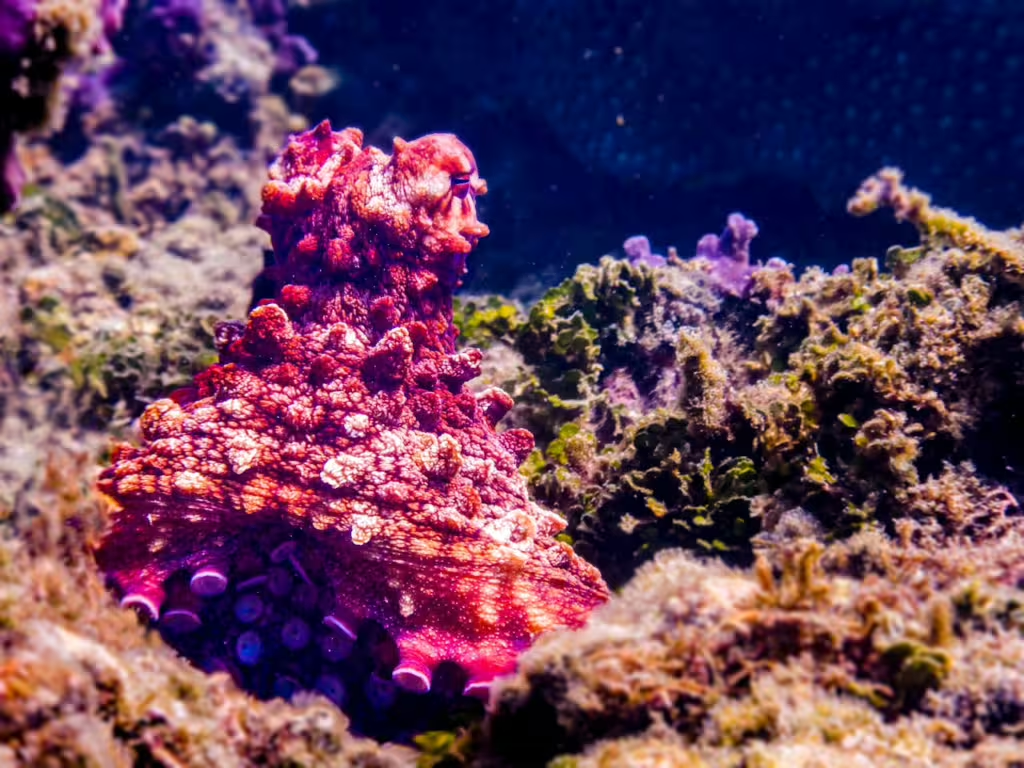
Among the most famous of the world’s animal shape-shifters is the Mimic Octopus. It might not be the only marine mimic out there, but there’s no denying that it is perhaps the most versatile mimic in the entire ocean. To begin, octopuses are particularly intelligent for invertebrates. They evince play behavior, problem-solving, and even minor communication skills. Thus, it’s easy to understand how an intelligent mollusk like an octopus might have figured out how to do fully-genetic costume changes at some point.
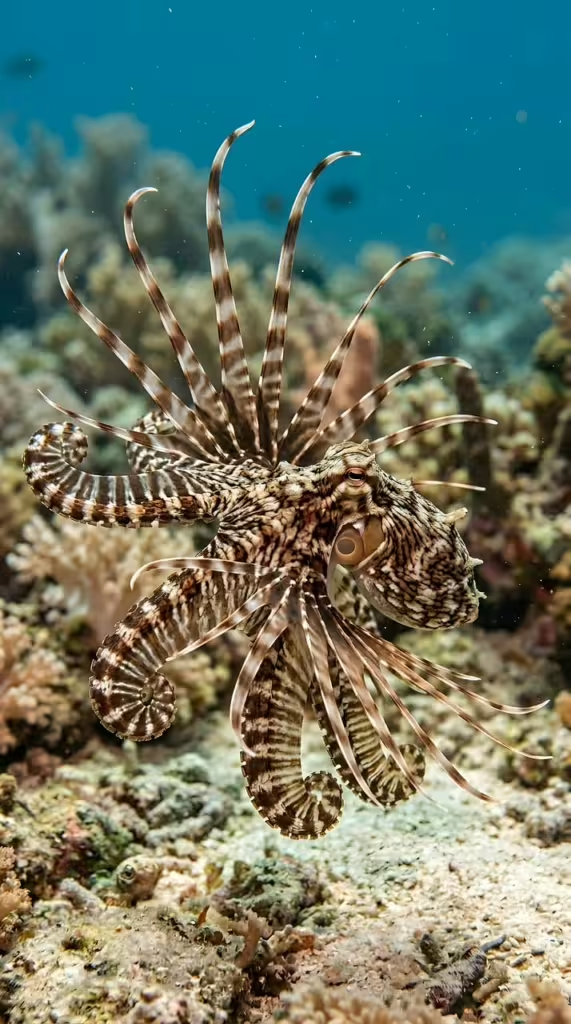
Discovered in the late 20th century, the mimic octopus has been seen and recorded imitating multiple species, including lionfish, sea snakes, flatfish, crabs, and more. To facilitate this, the octopus uses a combination of traits and adaptations. First, it can use its flexible arms to change into a variety of shapes. It is also observant enough to know how to alter its movement to replicate those of animals it wishes to mimic. Finally, its remarkable skin cells are able to change their color and pattern so they match the thing they want to copy.
For example, when imitating a lionfish, the mimic octopus spreads its arms outward in striped patterns, resembling the fish’s spines. Meanwhile, when it tries mimicking a sea snake, it buries most of its body and waves two arms in a serpentine motion.
Why It Mimics
These disguises help the octopus to avoid predators and confuse them into thinking it is more dangerous or benign than it might otherwise appear. It also helps them move through open areas more safely, unbothered by creatures who know better than to tangle with a poisonous sea snake or lionfish. The ocotopus can even switch between these disguises at will, rather quickly we might add, making them one of the most advanced mimics known to humankind.
It should be noted that, the mimic octopus might be the best at it, but many octopus species use camouflage and mimicry to avoid detection or hide in plain sight.
Cuttlefish: Masters of Instant Transformation
Another expert in underwater mimicry also happens to be a mollusk. The Cuttlefish is known for its ability to rapid color-change, not jut for camouflage purposes, but for communication. This is remarkable, not just because they can change colors and skin texture to match their surroundings, but because they can do it in milliseconds. They can even create patterns and textures on their skin that mimic the surrounding rocks, sand, and coral.
Leafy Sea Dragons: Living Seaweed
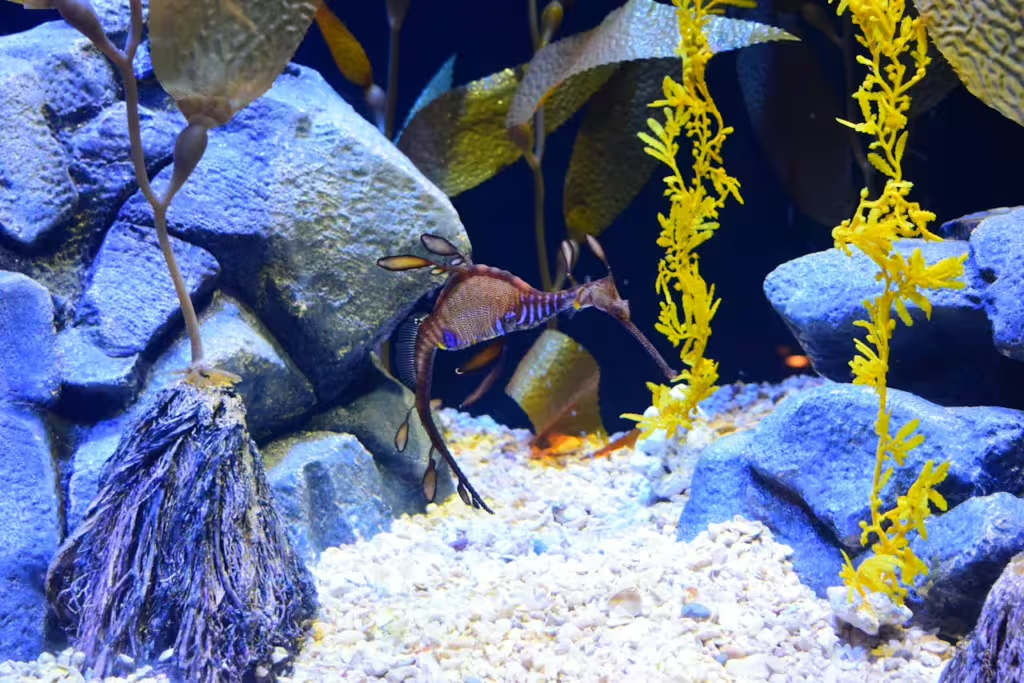
The Leafy Sea Dragon is not a mimic that wants to draw attention but one that wishes to avoid unwanted attention. Rather than copying another animal, leafy sea dragons are camouflaged so that they look like floating seaweed. Their leaflike appendages and subtle coloration allow them to become almost indistinguishable from the surrounding vegetation to avoid predators while they placidly feed.
Flounders and Flatfish: Blending with the Seafloor
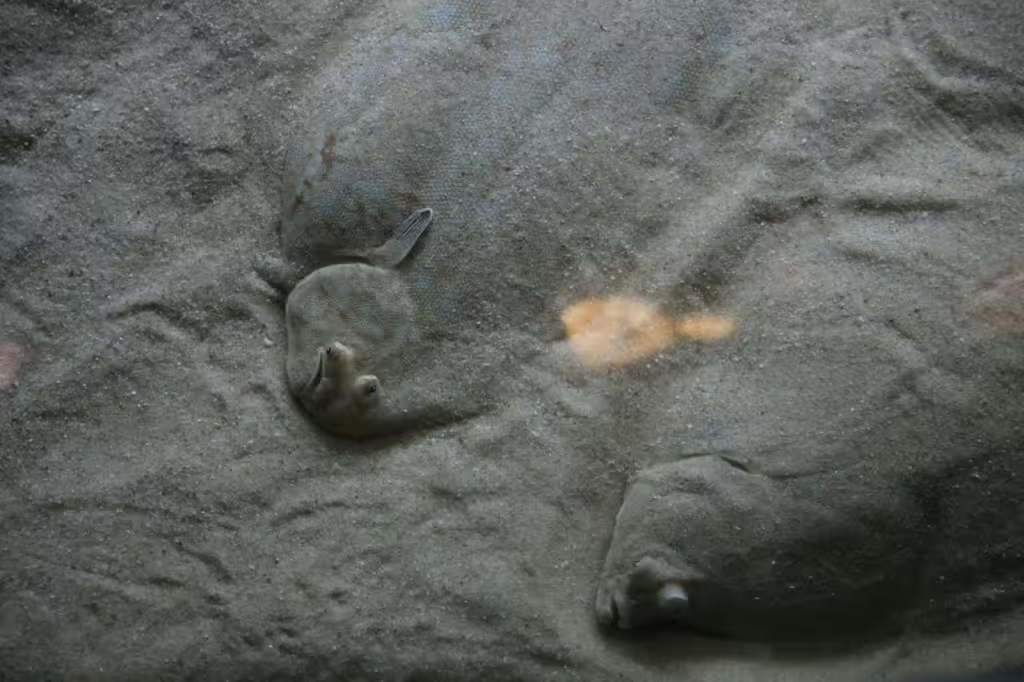
Flatfish, such as flounders, use mimicry in a similar way as the leafy sea dragon. Their camouflage sort of makes them merge with the ocean floor. They can change their color to match the surrounding mud or sand, all while digging themselves into the seafloor. Once they have flattened themselves against the ground, they can adjust their patterns to reflect their surroundings and sit still enough to both hide from predators and ambush unwary prey.
Evolution of Deception
Like most unique adaptations in nature, mimicry evolves over time through natural selection. Animals that better resemble their environment or other species are more likely to survive and reproduce. This means that, over the course of many generations, such traits become more refined. This is where we get animals like the mimic octopus, that have put all their evolutionary intellect into being the best mimics they can possibly be. We have even seen cases where mimicry becomes so precise that it is difficult to distinguish the mimic from the original.
True Investigator Says…
As you can see, while undersea mimics are not an abundant lot, they do display one of nature’s most fascinating strategies. From the shape-shifting mimic octopus to the kelpish leafy sea dragon, these curious critters demonstrate how survival isn’t always about who is faster, stronger, and most toothsome, but about well one can give the illusion of such things.
These animals’ ability to deceive, blend, and transform themselves into convincing facsimiles of other sea-faring creatures, is a clear indication that Mother Nature is often far more creative than we give her credit for. In the hidden corners of the world, in places where appearances can sometimes be misleading, these masters of disguise remind us that in the natural world, things are not always what they seem.
Discover more from TrueInvestigator
Subscribe to get the latest posts sent to your email.