
When we’re young, we learn about the different types of animals and what makes them unique. Insects are invertebrates, reptiles are cold-blooded, and mammals give birth to live young. The thing is, as we get older, we learn the secrets of nuance. Yes, most mammals do, in fact, give birth to live young and produce milk…but not all. As we have seen time and time again, every so often, nature produces something that doesn’t quite follow the established “rules” we learned in our grade school days.
Perhaps you’ve heard of a the duck-billed platypus or if you’re particularly interested in the weirdos of the natural world, the echidna. Both of these animal outliers are monotremes; a small, unusual group of mammals that lay eggs instead of giving birth to live young. These animals blur the lines between the categories that we all grew up knowing inside and out.
In this article, we will examine the monotreme family in detail and discuss the evolutionary circumstances that led to them being the biological curiosities we know and love today. Fortunately for us, both of these animals can be found in one place, the global capital of animal oddities; Australia.
What Are Monotremes?
Monotremes belong to a unique group of mammals, of which there are only two or three distinct species. They are classified under the order Monotremata. Despite their small number, they represent a distinct branch of the mammal family tree, which includes the platypus and several species of echidna. Some people refer to echidna’s as spiny anteaters due to their specialized diet. As we mentioned earlier, all the monotremes that we know about can be found either in Australia or in nearby regions such as New Guinea.
Mammals That Lay Eggs
The most famous feature of monotremes, the thing that set them apart from other mammals, is that they lay eggs instead of live young. These eggs tend to be leathery, like a reptiles’ and the monotremes incubate them outside the body much like a bird would. After a relatively short developmental period, the young hatches, and that’s where the mammal behaviors begin.
The reason we still classify monotremes as true mammals is because they produce milk to feed their young, though they do it in a most unusual way…as you will soon read. They are also warm-blooded creatures that have hair or fur on some or all of their bodies. Either way, this unique combination of reptilian, avian, and mammalian traits makes them unique among living animals.
Feeding the Young: Milk Without Nipples
One of the most unusual aspects of monotremes is how they feed their offspring. You see, just because they feed their young milk, does not mean they use nipples. No, monotremes make milk through specialized milk glands in their skin, which collects in grooves or patches of fur for their babies to lap up directly. That’s right, they might make milk but they do not “nurse” their young as other mammals, include marine mammals like whales, do.
The Platypus: A Puzzle of Traits
There are a hundred jokes out there about how the platypus is nothing more than “God’s practical joke” or “All the leftover parts that Mother Nature had when she had created everything else.” Frankly, considering how many unique traits this animal possesses, it’s hard to countermand these humorous assertions.
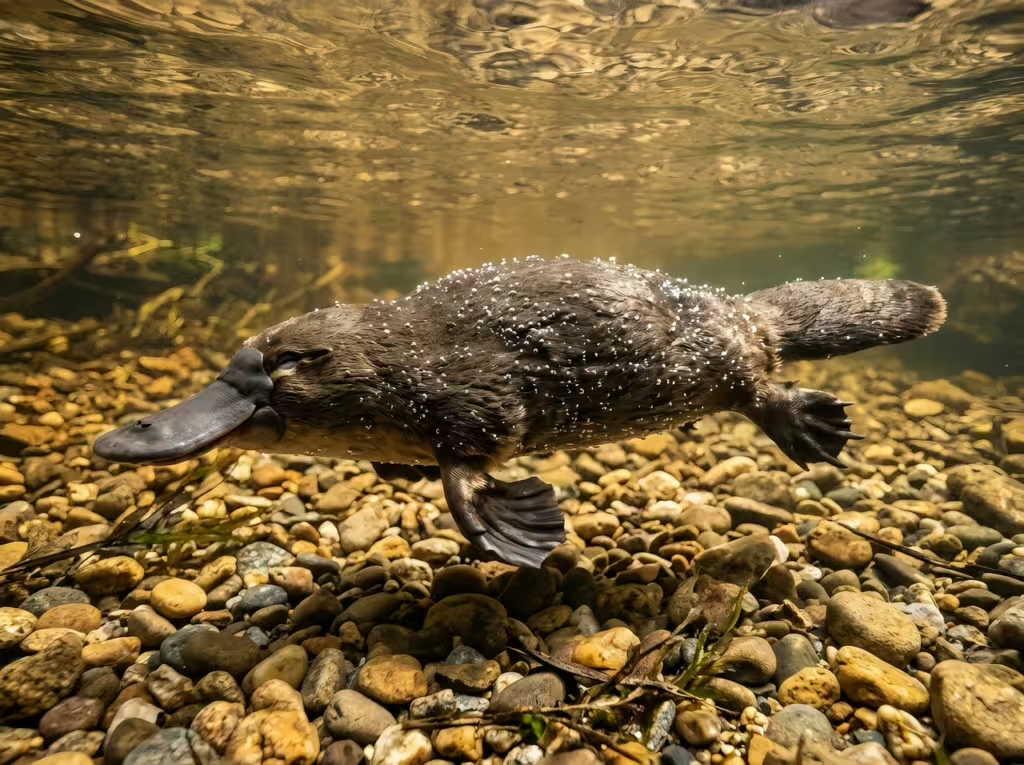
The platypus combines features that seem borrowed from a wide array of different species. They have a duck’s bill, a beaver’s tail and fur, poisonous barbs on their webbed feet, and an electric eel’s ability to hunt via electroreception. That’s not even counting the fact that it lays eggs and nurses it’s young without nipples. To say that it’s appearance and adaptations are remarkable is something of an understatement.
Like the electric eel and some sharks, the platypus can detect electrical signals produced by the muscles of its prey. This ability allows it to hunt in murky waterways with its eyes closed, relying entirely on sensory input from its bill.
Did you know that male platypuses have venomous spurs on their hind legs? Cause we didn’t at first! And sure, this venom isn’t typically dangerous to humans, it is known to be painful and frankly, it is absolutely incredible that they even have it at all.
Echidnas: Spiny and Solitary
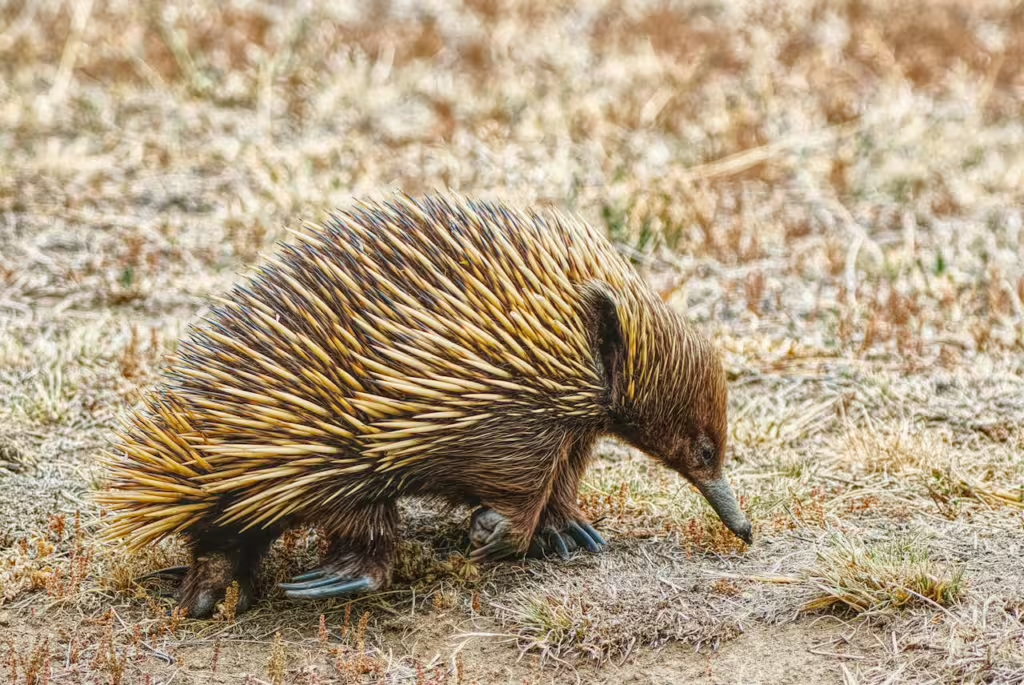
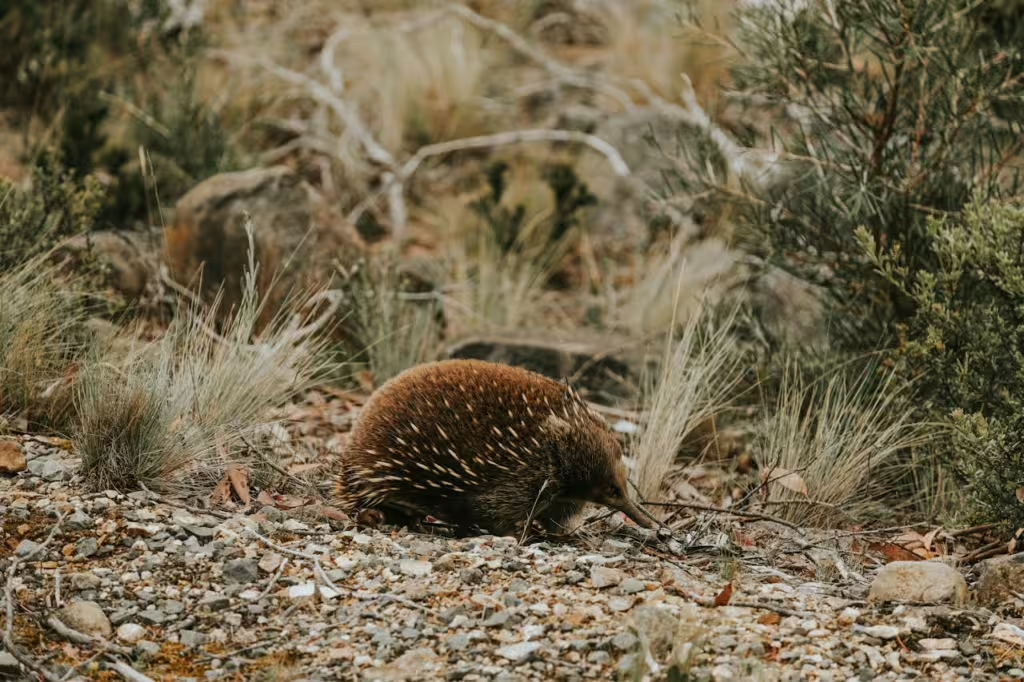
Echidnas, the other group of monotremes, look as though they are from a completely different branch of the mammalian family tree. Quite different from the platypus, echidnas are covered in coarse fur and sharp spines that they use for protection. They are also insectivores that use their long snouts and sticky tongues to feed on ants and termites.
Echidnas are generally solitary and slow-moving, but they are well adapted to their environments and pretty safe from predators. When threatened, they have been known to curl into a ball or dig quickly into the ground to prevent predatory access.
Unique Anatomy
Monotremes have several anatomical features that set them apart from other mammals. The main one is a cloaca, which is where the term “monotreme” comes from. It means “single opening” and it is the same opening the animal uses for both reproduction and waste elimination. This trait is also found in birds as well as reptiles.
There are skeletal differences too. Monotreme skeletons reflect features and structures that were once found on early mammals and early reptiles. Some examples of these include different arrangement of limps and shoulder girdles with extra bones. None of this may seem important to the likes of us, but if you’re a zoologist, we can bet you’re very enticed by these revelations.
Ancient Lineages
Some experts refer to the living monotremes as “living fossils” because their lineage dates back over 100 million years, to a time when early mammals were still evolving alongside dinosaurs. Over time, these animals have adapted and changed quite a bit, but their unusual assemblage of traits reflect certain ancient characteristics. The theory is that, by studying the surviving monotremes, scientists can better understand early mammalian evolution as well as how and why these different traits developed.
Habitat and Distribution
Monotremes are found only in specific regions of Australis, Tasmania, and New Guinea. The platypus lives in freshwater rivers and streams whereas the echidna is more at home in forests and deserts. The problem is, their limited ranges make these creatures particularly sensitive to environmental change. As such, monotremes are facing threats from habitat loss, climate change, pollution, and poaching; the same as many specialized species all over the globe.
The good news is that conservation efforts are in place to protect these animals and their habitats, especially in environmentally-conscious places like Australia. Because these animals are unique, their preservation is especially important.

True Investigator Says…
As you can see, monotremes might be some of the planet’s most unusual-looking creatures, but their unique adaptations remind us that nature’s rules are hardly cut and dry. Without meaning to, it explores possibilities, creating organisms that often evolve in highly unexpected ways.
Both monotremes, be they the duck-billed platypus to the spiny echidna, despite having experienced many environmental changes over the centuries, have remained very much the same as they were in the early days. Their continued existence is a testament to resilience and adaptability; qualities that have allowed them to endure for millions of years.
Discover more from TrueInvestigator
Subscribe to get the latest posts sent to your email.