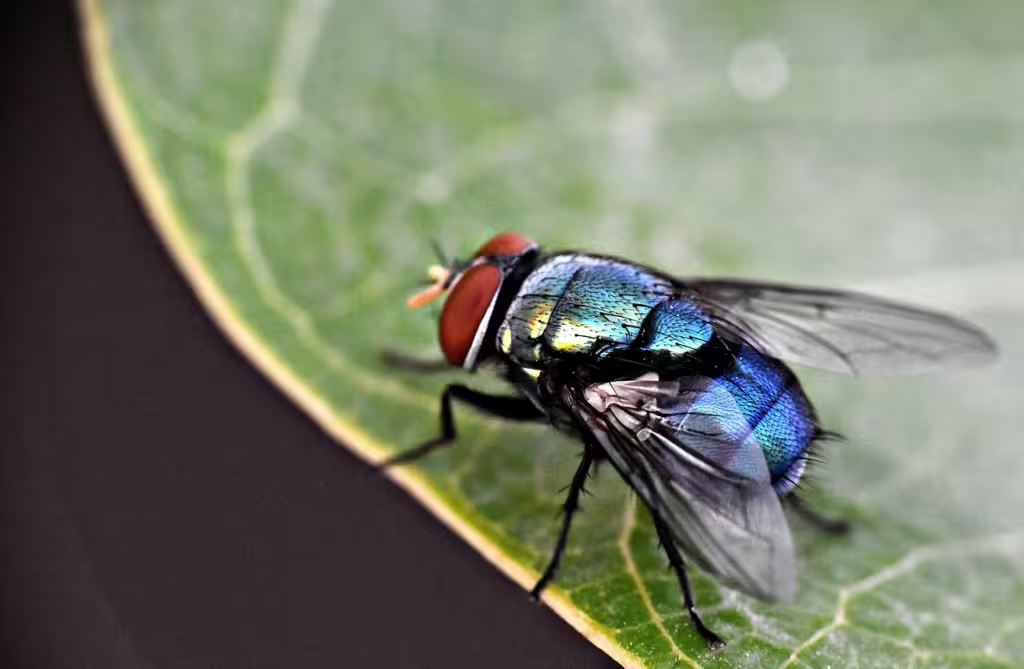

When we see a housefly, our first instinct is usually to reach for the fly swatter. It’s not that we need to swat the damn things, it’s just we’ve probably heard them buzzing annoyingly in our ear for the better part of the past 20 minutes before actually catching sight of them. Irritating though they might be to us, flies are actually deeply woven into many of the world’s ecosystems, and thus, are a distasteful if not necessary part of life.
For our part, it’s hard to appreciate them. It could be the persistent buzz of a housefly, the biting sting of a horsefly or green fly, or the fact that these insects lay their eggs in our refuse. What this basically means is, these insects are impossible to ignore. Yet though they might be pests to us, to many other species, they are food, pollinators, and decomposers.
In this article, we will discuss several different species of fly. We will examine their biology, behavior, and where they fit into their chosen ecosystems; specifically those ecosystems we share. So, for the space of an article, put away your swatters, zappers, and bug spray, because you might soon find that flies are far more than they appear.
What Makes a Fly a Fly?
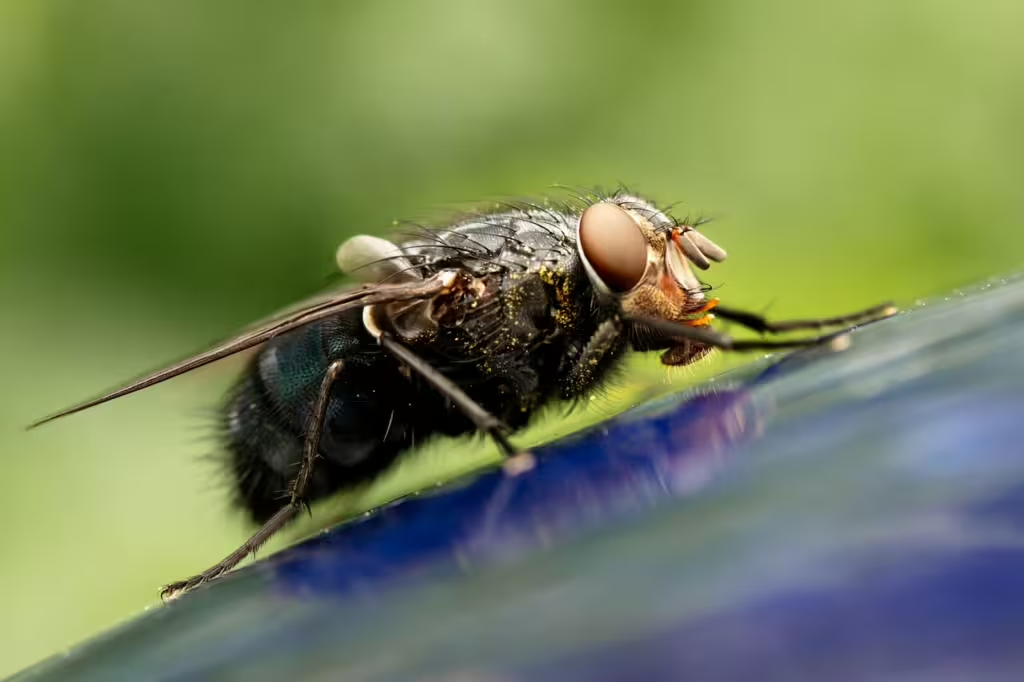
All true flies belong to the order Diptera, a Latin name that means “two wings.” Unlike most insects, which have two pairs of wings, flies, an animal colloquially defined by their ability to do so, only have one functional pair of wings. They did have a second pair at one point in their evolution, though it has since been reduced to small structures called halteres, which help the fly balance and maneuver during flight.
Flies are characterized by several key features beyond their one set of wings and halteres. They also possess large compound eyes, short antennae as compared to other insects, and specialized mouthparts for feeding.
In terms of their flight capabilities, the word is “fast.” Regardless of species, most flies possess the gifts of quickness and agility when in flight. This allows them to evade predators and fly swatters with aplomb. It also lets them navigate complex environments with ease. Flies are found in nearly every habitat on Earth, from forests and wetlands to urban environments.
Houseflies: Masters of Adaptation
We will start our study of flies with the one that you’re most likely to see. The common Housefly is one of the most widespread insects in the world and is one that you’ll often find living in urban, suburban, or otherwise human-populated areas.
The reason for this is that houseflies thrive best in environments close to human activity. They are often found around human food sources, near waste or decaying material, and much to our chagrin, inside homes and buildings. Annoying as they are, they’re ability to adapt to human environments has made them highly successful.
Houseflies live in this way because they have a robust appetite for many different types of “food.” They can feed on a wide range of materials, including food scraps, organic waste, and other decaying organic matter. Of course, their unique mouthparts don’t actually afford them the ability to chew anything, Instead, houseflies essentially dissolve their food into slurpable liquids by regurgitating digestive enzymes before they consume it.
While this feeding behavior can spread bacteria, houseflies also play a role in breaking down organic material, contributing to decomposition. It makes them sort of a mixed bag of helpful and harmful within human society,
Greenflies: Nature’s Recyclers
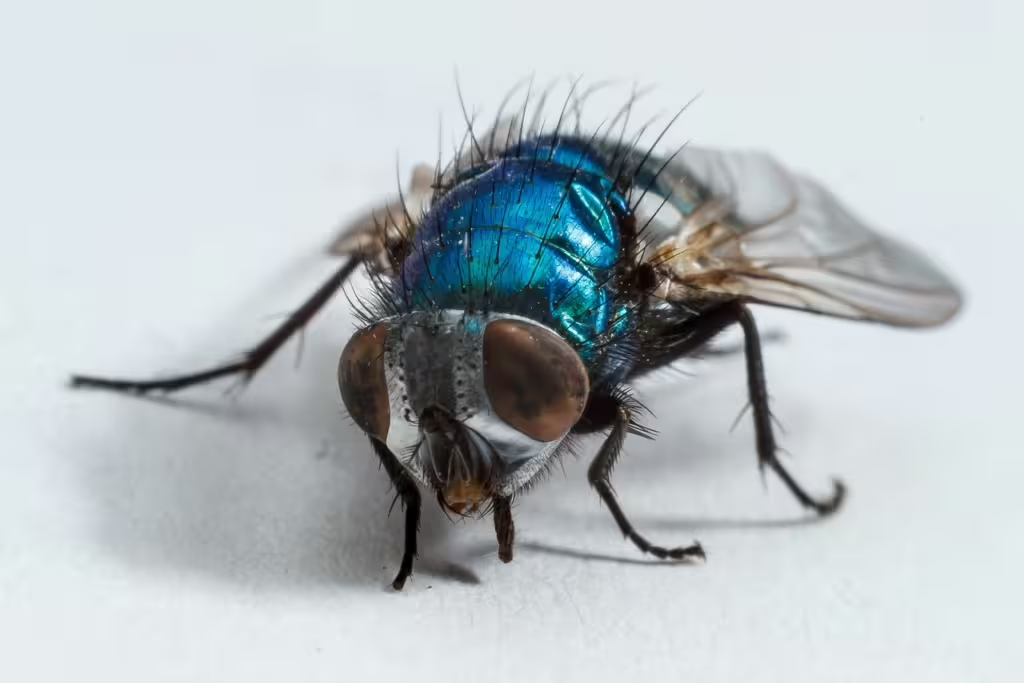
Often referred to as blowflies, greenflies like the Green Bottle Fly are known for their striking metallic coloration and their penchant for feasting upon dead things. Greenflies can be commonly found in nature, most often near carrion or around organic waste. As a result, greenflies are among the first insects to arrive at the feast when organic matter begins to break down and decompose.
Upon arrival, the flies lay eggs on the dead animals or decaying material. The eggs hatch into maggots, a type of greenfly larvae that consumes the organic tissue, thus accelerating the breakdown of the organic matter. This aids in decomposition and is an essential part of nutrient cycling, which returns nutrients to the soil and supports the growth of nearby plantlife.
Greenflies are also very valuable in fields like forensic science, where their life cycles help estimate the time of death of a victim in certain investigations.
Horseflies: Powerful and Persistent Biters
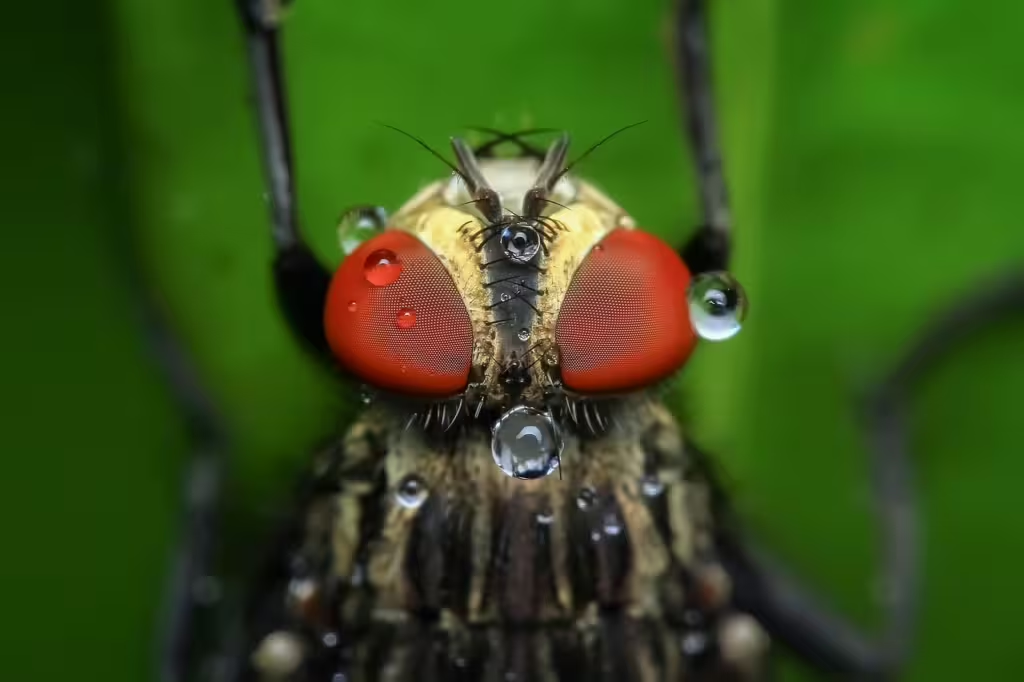
The Horsefly represents a very different type of fly from the other two, and a more ferocious one, in many ways. First, horseflies are larger than most flies, and it is this size and strength that makes them noticeable in outdoor environments. They are strong fliers, like their kin, yet unlike houseflies and greenflies, female horseflies feed not on decaying matter but on fresh blood.
Like mosquitoes, these flies use the protein in blood to help create their eggs. They use their sharp mouthparts to cut the skin and draw blood from mammals, including livestock and humans. As many people who’ve been bitten by a horsefly can attest, this feeding method can be quite painful and can even lead to irritation.
Despite their reputation, horseflies are part of natural ecosystems, where they serve as food for birds and other predators, as well as pollinators. They don’t always drink blood, you see, but will actually feed on nectar in certain situations. Meanwhile, their larvae also live in aquatic or moist environments, contributing to local food webs.
Flies in the Food Web
Flies are an important part of many food chains, where they serve as food for birds, bats, fish, amphibians, and other insects. Their abundance is what makes them a reliable energy source for many such predators.
True Investigator Says…
As you can see, flies may not be the most admirable of insects, but they are among the most important. Not only do they recycle nutrients to support food webs all over the planet, they are also valuable specimens for aiding scientific research. Their reach might be long, but their influence is far-reaching.
In the end, we chose to discuss houseflies, greenflies, and horseflies in this article because, not only are they common visitors in our lives, they each represent different aspects of what flies can be; namely, scavengers, recyclers, pollinators, and predators.
Their persistent buzzing presence is a reminder that even the most overlooked and reviled creatures have an invaluable place in the natural world.
Discover more from TrueInvestigator
Subscribe to get the latest posts sent to your email.