
Anyone who has ever been bitten by a mosquito can tell you that it’s one of the most annoying things one can experience. It’s itchy, irritating, and in some parts of the world, downright dangerous. These insectile irritators are among the most numerous creatures on the planet, surviving and even thriving in a number of different environments from tropical to temperate.
Beyond their annoyance and abundance, mosquitoes are among the most influential creatures on the planet Earth. They also have the ignominious distinction of being the deadliest animal in the world, killing an estimated 1 million people a year through the transmission of fatal diseases like Dengue fever, Malaria, and the Zika virus.
In this article, we will discuss the mosquito and the complex roles they play in ecosystems, human health, and global environments. In many ways, the story of these remarkable bugs is one of contradiction: they are both essential components of a global food webs and major carriers of diseases that disrupt that web from the top down.
So put on your protective suit and spray yourself down with bug spray as we venture into the swamps of the world to find out everything we can about humanity’s bloody, little nemeses.
What Is a Mosquito?
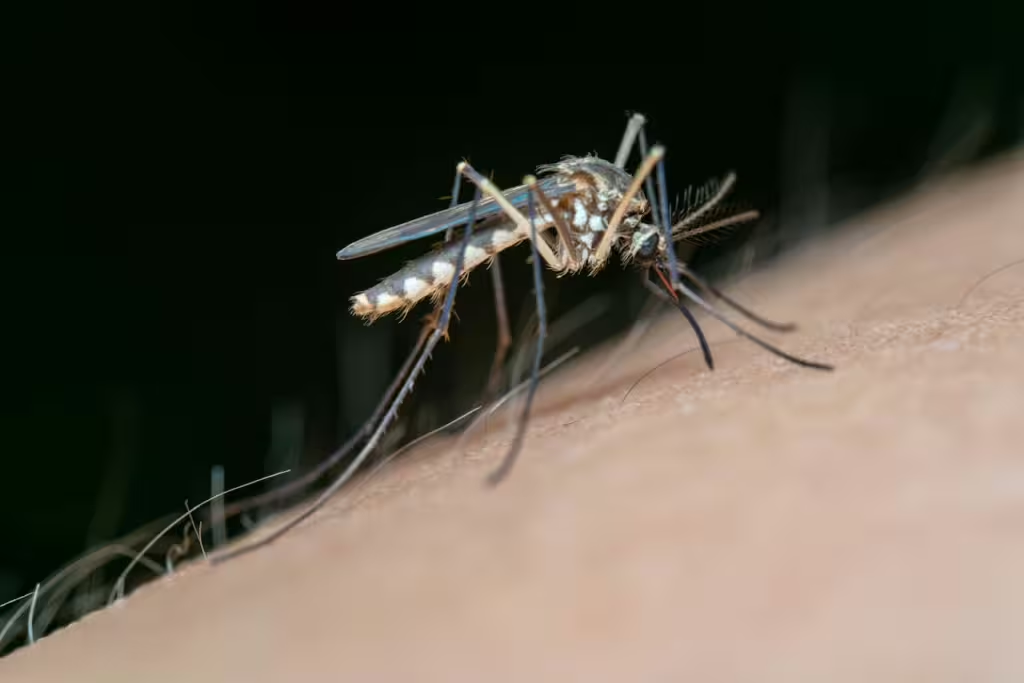
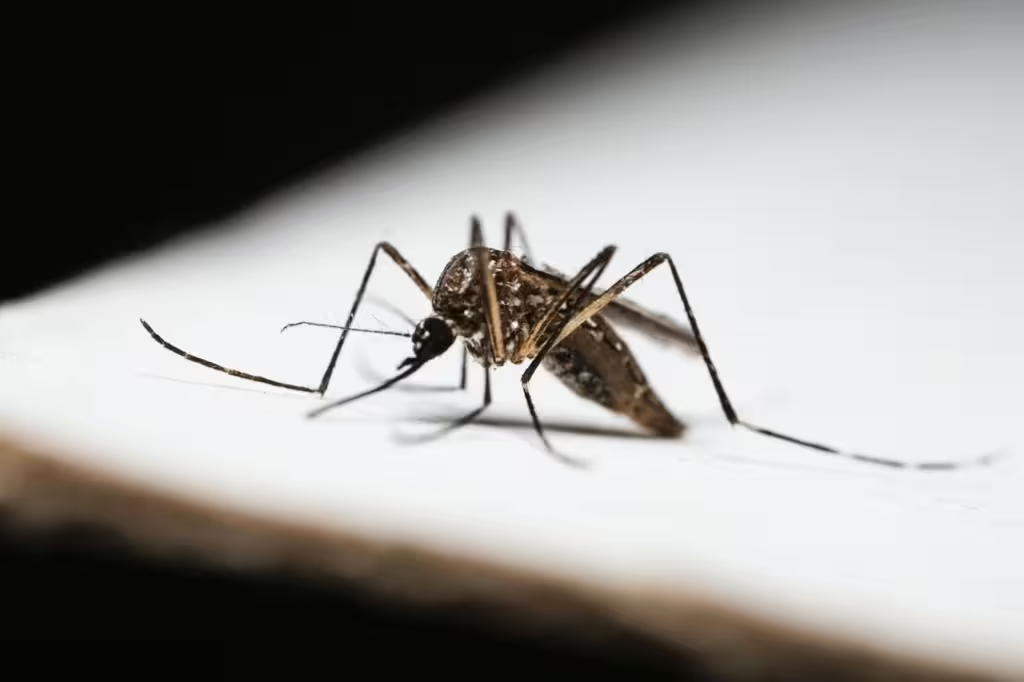
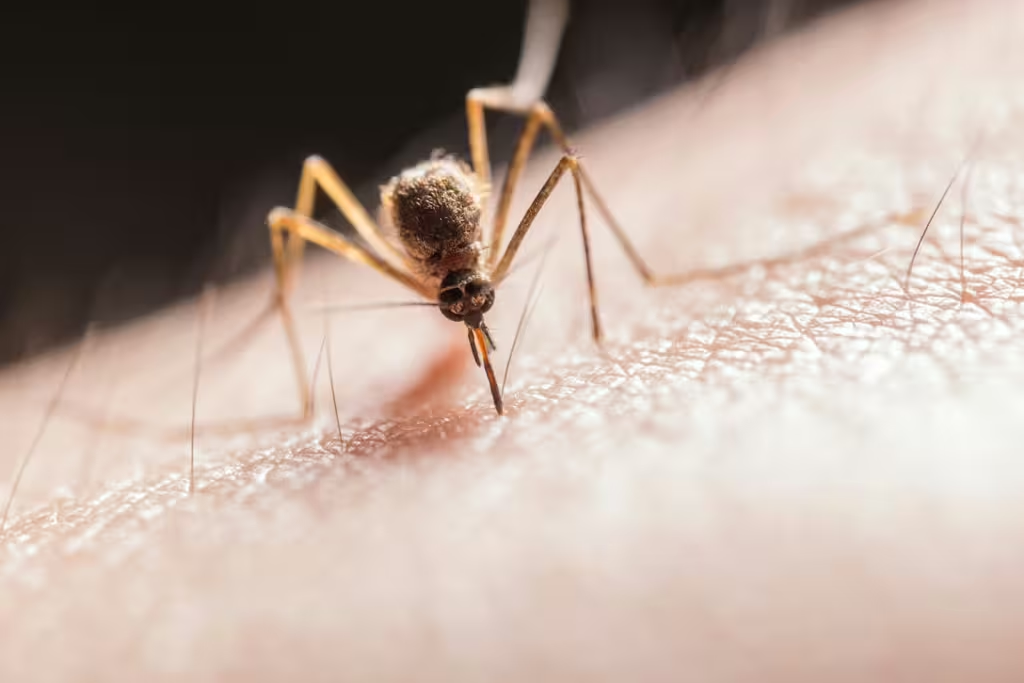
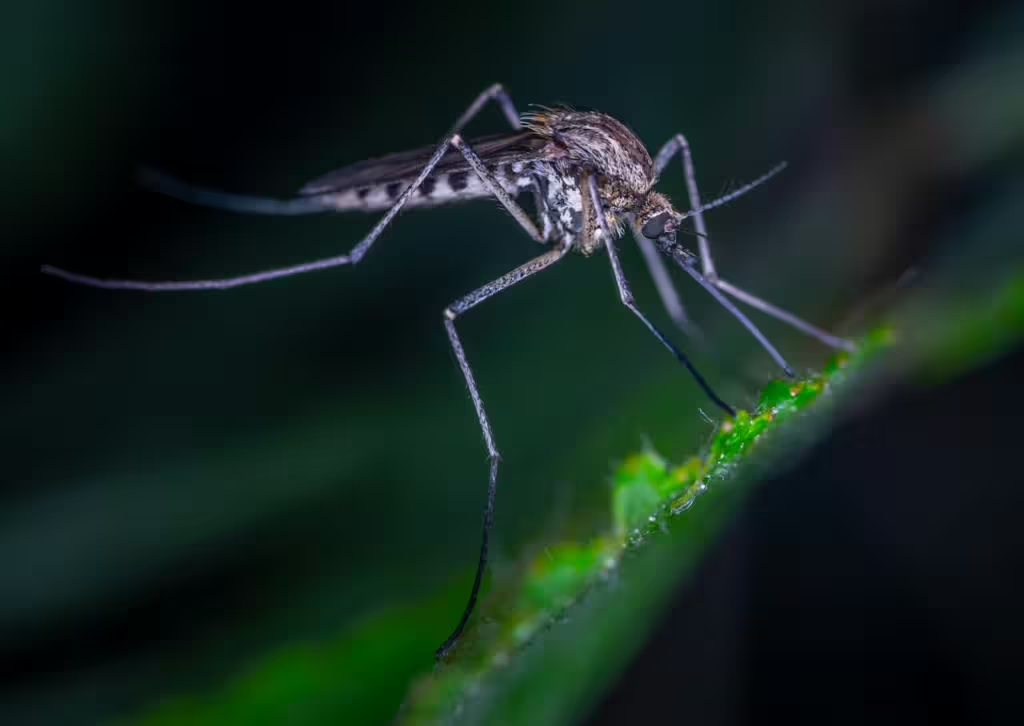
You’d be hard-pressed to find a reader out there that isn’t at least passably familiar with mosquitoes. After all, these small flying insects can be found in tropical environments, temperate forests, swamps, bogs, and urban areas. They have slender bodies, long legs, narrow wings, and a distinctive, blood-sucking proboscis they use to relieve animals of their most vital essence. This needle-like mouthpart is used for feeding and is designed to pierce flesh with ease.
As it happens, there are over 3,500 species of mosquitos worldwide, each adapted to specific environments. But of all these many bugs buzzing about the world, not all of them actually bite humans. In fact, male mosquitos feed primarily on nectar, not blood. Females also feed on nectar, though some species do require blood in order to reproduce. The distinction between genders and species is important when considering their role in both ecosystem health and disease transmission.
The Mosquito Life Cycle
Mosquitoes undergo a four-stage life cycle like most bugs. They start as eggs, hatch as larvae, pupate, and emerge as adult mosquitos; and nearly every stage of their lives requires some amount of water. Female mosquitos lay their eggs in or near standing water sources like ponds, marshes, temporary puddles, or even empty backyard flowerpots if they’re handy. Some species have even been known to lay their eggs in the smallest amount of water, such as those found folded into plant leaves!
That still water is essential because, after hatching, mosquito larvae live in the water. These wormy things are often called “wrigglers” due to the way they move and they feed, not on nectar or blood, but microorganisms. They breathe air, which they take in through tubes that extend to the water’s surface.
The pupal stage is a transitional phase in which the wriggler stops feeding, floats near the surface, and slowly transforms into its adult form. In this stage, it is highly vulnerable, but if it survived to adulthood, it emerges from the water and takes to the skies on a shiny new set of wings.
The lifespan of an adult mosquito varies between species, but for the most part, females typically live longer than males, especially if they continue to reproduce.
Why Mosquitoes Bite
The biting behavior of mosquitoes is closely tied to the female’s ability to lay eggs. You see, nectar might be delicious, but it is all-but bereft of protein, which the females need to develop their eggs. They get this from blood, which they extract using their sharp proboscis. Once they bite, they pierce their nose into the skin, injecting a dose of saliva to prevent the blood from clotting. They then drink their fill and fly off. The reason it itches so much is because mosquito saliva triggers the body’s immune response. Once they bite, voila, swelling, itching, irritation.
Disease Transmission
As we mentioned at the start, mosquitoes are disease-carrying little blighters. Known as vectors, that is, organisms that transmit pathogens between hosts, mosquitoes have been known to carry everything from Malaria to West Nile Virus; and everything in between! These diseases are caused by parasites or viruses that live inside the mosquito and are passed to humans or animals through bites.
Most mosquitos are immune to the effects of these viruses, of course, so they are unaffected. And though not all mosquito species transmit disease, those that do have a significant global impact.
Ecological Importance
Despite their negative reputation, mosquitoes play important roles in ecosystems as food sources and pollinators. Fish, birds, bats, amphibians, and other insects all eat mosquitoes, making them a key food source in wetland ecosystems.
Mosquitoes can also act as pollinators. Both male and female mosquitoes feed on nectar, and in doing so, they transfer pollen between plant and support plant reproduction. In fact, some plant species rely on mosquitoes as part of their pollination network.
Human Interaction and Control
Because of their role in disease transmission, mosquitoes are a major focus of public health efforts.Control strategies include reducing standing water, using insect repellents, installing screens and barriers in and around human dwellings, and even biological control methods that are being used to affect the way mosquitoes feed or reproduce.
What we mean is, in some areas, scientists are exploring innovative approaches, such as releasing sterile males, using genetically modified mosquitoes, or even introducing beneficial bacteria into the food web to reduce disease transmission. These efforts aim to reduce mosquito populations or limit their ability to spread disease, ideally without affecting their role in the natural ecosystem.
Environmental Considerations
Efforts to control mosquitoes must be balanced with ecological concerns. Because mosquitoes are part of food webs, eliminating them entirely could have unintended consequences. We can’t just spray pesticides in areas that might affect other local plants and animals. At the same time, since so many fish and birds rely on mosquito larvae, they might be just as affected by population decreases. Pollination networks could be disrupted and that could affect human agricultural concerns. All of this is to say that humanity must look towards targeted, sustainable approaches, first and foremost.
Mosquitoes and Climate Change
Climate change is influencing mosquito populations in a big way, as it turns out. Rising temperatures and changing weather patterns can actually increase the opportunities for them to breed by leaving more puddles and standing water about. This also expands mosquito habitats and extends their active seasons significantly.
The problem with all of this is that it can lead to changes and surges in areas where mosquito-borne diseases occur. Understanding these patterns is an ongoing area of research and has become ever more important in the modern age.
True Investigator Says…
As you can see, mosquitoes occupy a unique place in the natural world. They are at once, essential to the continued health of countless ecosystems, but so harmful to humans that whole governments have basically declared war on them in order to keep our species safe. The problem is, they are also highly adaptable and difficult to manage, even with modern technology at our disposal.
In short, mosquitoes may be small, but their impact is enormous. Like it or not, their existence is inexorably into our own. In order to combat and protect them in equal measure, we need to be better educated about them. We need to learn all we can so that we can perhaps mitigate some of the deadly damage they do; without outright exterminating an essential piece of so many neighboring ecosystems.
Discover more from TrueInvestigator
Subscribe to get the latest posts sent to your email.