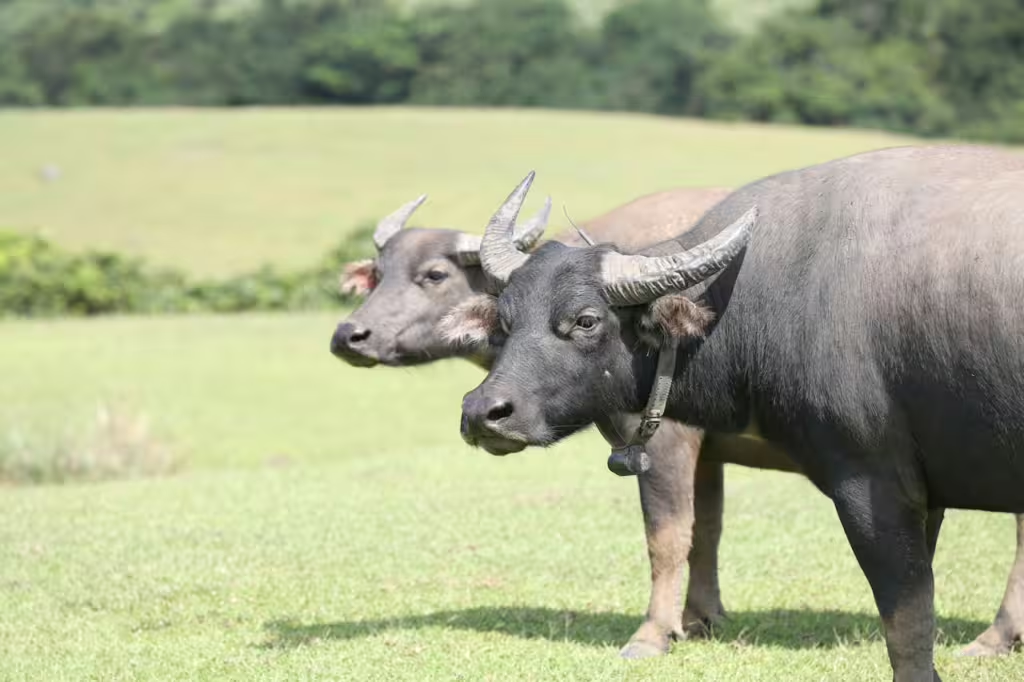

In our continual search for the planet’s most fascinating land animals, our journey has taken us to great plains, frigid tundra, and scorching deserts. From time to time, we’ve made our way into steamy rainforests, but those sojourns were usually in an attempt to discover some massive reptile or jungle cat. Today, however, our visit to the jungles, wetlands, and riverlands of South Asia has led us to a a creature that many readers might mistake as “common” or even “mildly uninteresting.”
When we spoke about wildebeest in the last article, our goal was to hammer home the idea that, while they might be numerous, they are some of the most the most important ungulates within their home ecosystem. The Indian Water Buffalo, subject of today’s article, fills a similarly vital niche within its homeland.
The Indian Water Buffalo has a powerful yet calm presence and a steady temperament, making it ideal for domestication. Since the dawn of civilization, this animal has been a cornerstone of agriculture in the region, but it is also an ecological force all its own.
In this article, we will discuss the Indian water buffalo, its behavior, ecology, role in the jungle and marshland ecosystems, and how its domestication has affected humanity. So get on your waders and venture into the swamp with us as we find out why this “commonplace” cow is more fascinating than we normally give it credit for.
A Powerful and Adaptable Animal
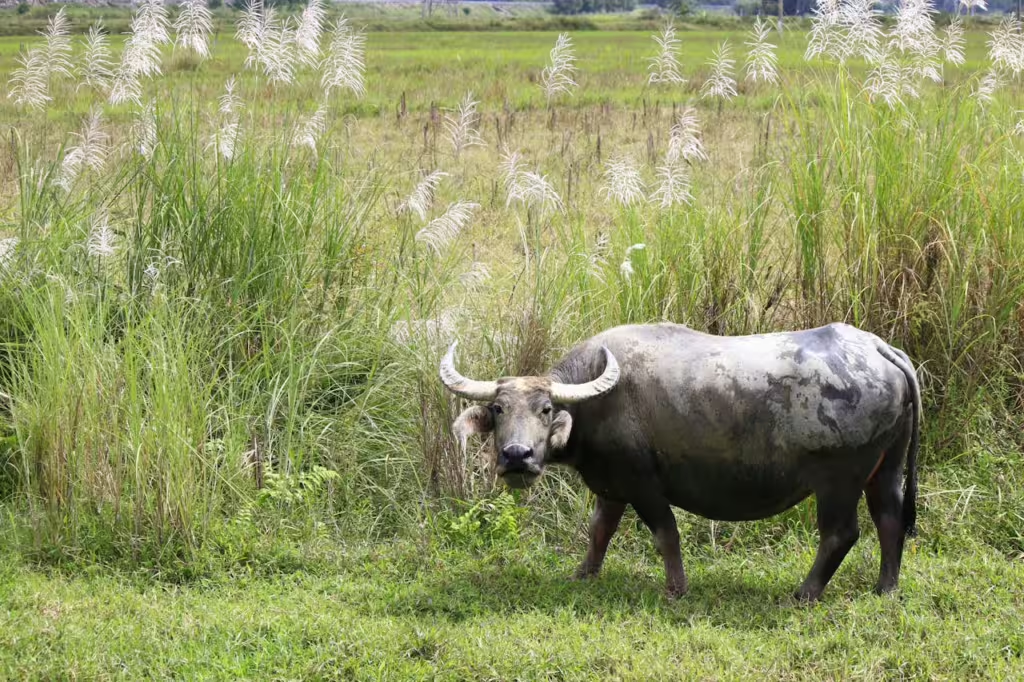
Indian water buffalo are large, muscular, herbivores best known for their strength and endurance. As evidenced by the image above, these burly bovines have thick, dark skin, long, curved horns, and broad hooves. Those hooves are particularly noteworthy here because they are designed to help them move easier on soft ground. Considering that they live in wet, marshy jungles, this adaptation is highly effective.
At the same time, the rest of their bodies are similarly well-suited to living in wet environments. Wide hooves help distribute the animal’s weight as it walks through the mud, thereby preventing them from sinking down into it, while their dark skin tolerates heat and humidity quite well.
Considering their name, it’s safe to say that water plays a central role in the lives of the Indian Water Buffalo; and so does mud. They often wallow in mud or water too themselves down, wash themselves off, and protect their skin from biting insects. This behavior is essential in their stiflingly hot homelands.
Domesticated and Wild Forms
There are two main types of water buffalo living in the same region, the domesticated one and the wild water buffalo. Though they share common ancestry, they do have different places within the ecosystem, slightly different morphology, and different ranges. Domestic Water Buffalo, as one might expect, is closely associated with agriculture. It can be found all throughout Southern Asia.
The wild form, Wild Water Buffalo, is much rarer these days. It can only be found in limited areas of South and Southeast Asia. Still, because of its lifestyle, wild water buffalo tend to be larger and more powerful, in general. They have broader horns, which they use for defense, and a more cautious nature. Both species play an important role in maintaining ecosystems, though the former is much less influential outside agricultural land.
A Partner in Agriculture
For centuries, water buffalo have been essential to farming communities in the region. They are especially important in regions where rice is grown where their semi-aquatic adaptations enable them to plow flooded fields. They are strong enough to pull heavy loads, which can help prepare soil for planting. Their ability to work in wet, muddy conditions makes them uniquely suited for this role. In many areas, these animals are actually primary source of labor. In fact, even as modern machinery becomes more common, the water buffalo is still the go-to source for farm work in those marshy areas.
Milk and Food Production
Water buffalo are also valued for their milk, which is rich in fat and protein. The milk of the domestic variety is often used to produce dairy products such as butter and cheese. Believe it or not, in some cultures, buffalo milk is preferred over cow’s milk for its singular texture and flavor. Buffalo also provide meat and hides for human beings.
Cultural Significance
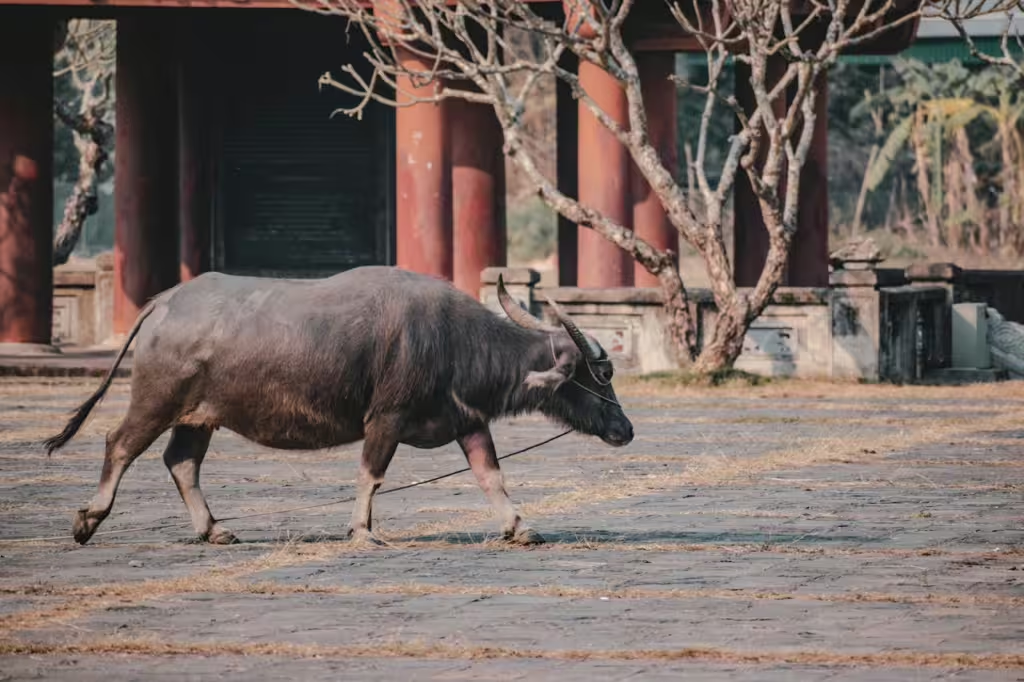
The Indian water buffalo holds a strong place in cultural traditions. Many Southeast Asian people associate them with strength, endurance, and agricultural prosperity. As a result, these animals are frequently spoken of in folklore, local stories, and religious iconography. They are celebrated in festivals and ceremonies and their presence reflects a deep connection between people, animals, and the land.
Life in Wetland Ecosystems
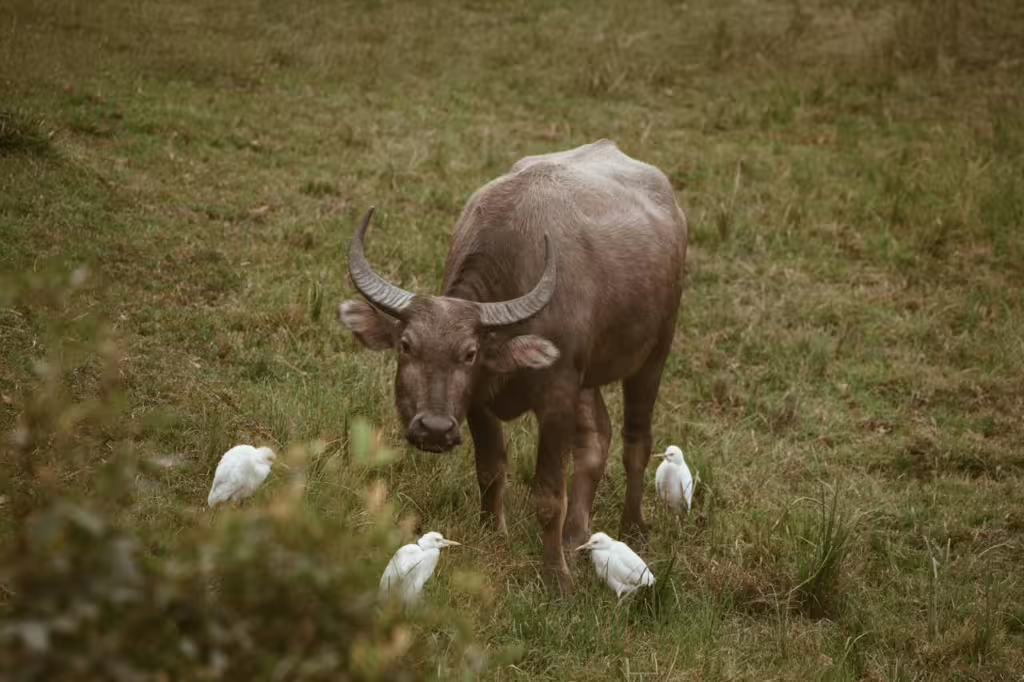
Water buffalo are not only important to humans, they also influence the ecosystems they inhabit. They graze on grasses and other aquatic plants and vegetation. This helps to control plant overgrowth and maintain open habitats. Wherever they are found, the feeding patterns of large herbivores like these tend to support biodiversity.
Meanwhile, even the buffalo’s movements can affect the environment. Their hooves improve water distribution in wetlands and turn over soil. The small depressions and mud wallows they create can serve as shallow pools for smaller animals like amphibians, insects, small fish, and waterfowl. They also serve as prey animals for large animals like tigers, komodo dragons, or any carnivore brave enough to take them on.
A Changing Relationship
As agriculture modernizes, the role of water buffalo is evolving right along with it. Though machinery is replacing animal labor in some areas, they remain an essential, and frankly, cost-effective means of farm work. There are declining buffalo populations in some areas, but this animal’s ability to adapt is helping keep it “in business,” so to speak.
True Investigator Says…
As you can see, the Indian water buffalo is more than a farm animal or a food source. This animal is revered as a figure, as vital to the cultural traditions of the people in the region as it is a vital link between those people and the land on which they live.
From plowing rice fields to shaping wetlands, the Indian water buffalo’s influence is both practical and ecological in nature. Its calm strength and adaptability have allowed it to remain a central part of life in many regions. Even as the world continues to change, the role of the water buffalo has remained largely the same, both in terms of domestication and its important role within the ecosystem.
So the next time you see a water buffalo and think, “man, I wish that was a tiger,” remember, the tiger needs that buffalo, and so do most living things within that biome.
Discover more from TrueInvestigator
Subscribe to get the latest posts sent to your email.