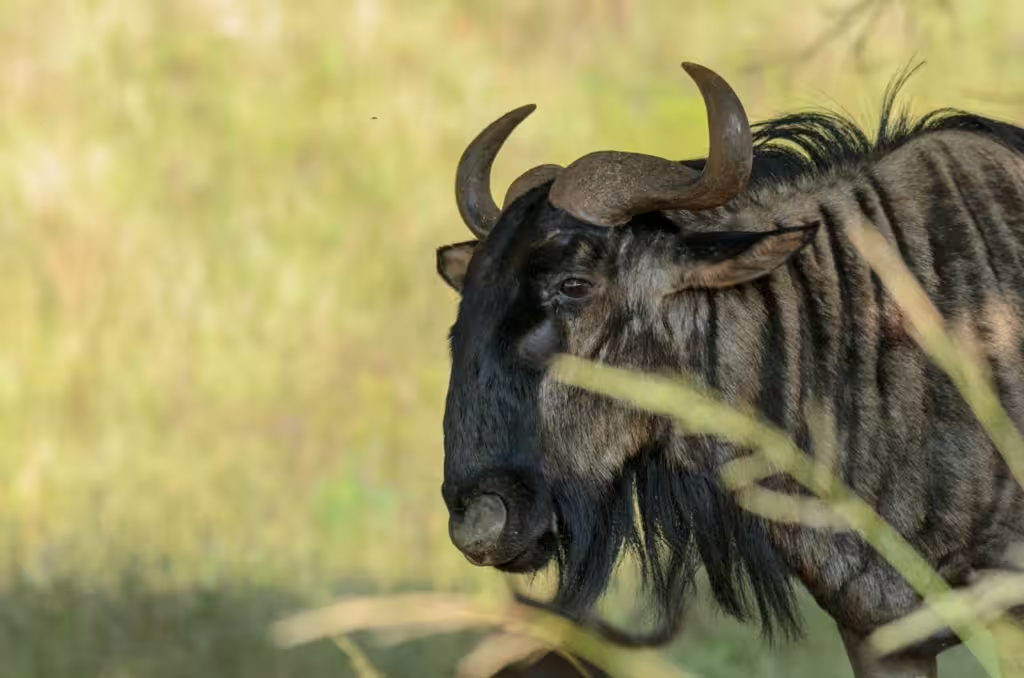

Many readers will be familiar with wildebeest because of the unforgivable act they caused back in the bygone age of 1994. Yes, you read that right, like it or not, wildebeest killed Mufasa. All joking aside, these massive ungulates are as essential to the grassland ecosystems of Africa as apex predators like lions.
We often overlook animals like wildebeests due to how numerous and frankly, commonplace they seem. They aren’t as large as elephants, fierce as lions, or colorful as giraffes and so, we kind of leave them out of our discussions, our zoo posters, and our children’s books.
Like we said though, wildebeest are vital to the continued ecological success of grassland habitats in East Africa. Their presence shapes ecosystems from the literal ground up and sustains the lives of those iconic predators we all know and love.
In this article, we will speak about wildebeest, their purpose, migration patterns, and the deep, cultural meaning they represent for the African people. So gas up your safari jeep and put on your wide-brimmed hat, we’re about to head out into the savanna once more!
A Distinctive Animal of the Savanna
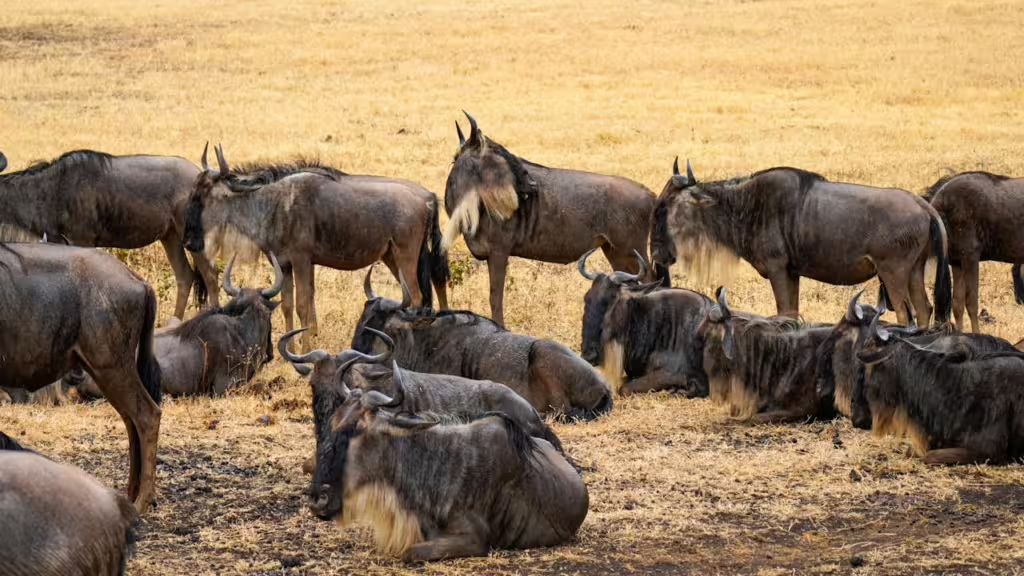
Wildebeest, sometimes called gnus, are actually part of the antelope family. They might look like cows of buffalo to the untrained eye, thanks to their sturdy body, curved horns, and a shaggy mane, but the only thing they have in common is that they graze. The most common species in this family is the Blue Wildebeest, which can found across much of eastern and southern Africa.
Sturdy as they are, wildebeest are built for endurance rather than speed, though they are more than capable of running at a terrific pace if the need arises. Otherwise, much of their physicality is designed for travel. During the course of their lives, wildebeests embark upon great migrations, traveling long distances across the open terrain of the savanna. This is because their lives are closely tied to the seasonal rhythms of the region, as well as the availability of water and fresh grass.
The Great Migration: Nature in Motion
Each year, the wildebeest that dwell upon the savanna take part in something called the Great Migration, one of the largest animal movements currently recorded on the planet Earth. More than a million wildebeest, along with zebras and other grazers, undertake an annual move across regions such as Serengeti and Maasai Mara.
This migration is driven by the most simple and essential of needs: the endless search for food and water. As rains shift across the landscape, fresh grass grows in new areas. Wildebeest and their neighboring ungulates follow these patterns, moving in a continuous cycle that can span hundreds of miles.
As one might expect, this migration is not without danger. There is safety in numbers, but only to a degree. Add to the at the difficult and dangerous river crossings, constant hunting by opportunistic predators, and the sheer exhaustion of the trip itself, and you have a recipe for one dangerous trek. Nevertheless, the movement continues year after year, guided by instinct and subtle environmental cues.
Ecosystem Engineers of the Grasslands
Wildebeests, like elephants, beavers, and earthworms, are ecosystem engineers. This means that their grazing and role as prey to grassland predators, makes them essential to maintaining the health of the savanna.
As grazers, these numerous antelopes consume large amounts of grass, which not only reigns in overgrowth, but stimulate new plant growth. Additionally, their grazing patterns create a mosaic of plant heights and types, supporting a diverse range of species. In addition, their constant movement and migration patterns allow them to distributes nutrients through their waste. Their trampling also helps to aerate the soil.
Supporting the Food Web
As a primary food source for lions, crocodiles, hyenas, and many other native species, wildebeest are a cornerstone of the African food web. In fact, the sheer number of wildebeest ensures that predator populations remain stable, even in times of food scarcity.
Even in death, wildebeest continue to contribute as their abandoned carcasses serve as food for lesser predators like jackals and wild dogs. Meanwhile, scavenging birds like vultures and storks will greedily swoop down to get a piece of a fallen wildebeest. Insects and microorganisms won’t go hungry either, especially not during the great migration, when many a wildebeest falls on the way to greener pastures.
Social Structure and Behavior
Considering they live in groups of literal thousands, wildebeest are highly social animals that can live in harmony with one another. The large herds they form offer the animals protection from predators and an increased awareness of danger. There are also myriad opportunities for reproduction in these massive groups, which is why there are so many wildebeests living in East Africa.
Within these herds, individual animals communicate through a combination of vocalizations and body movements. They also exhibit group communication, which allows them to coordinate their massive migrationary movements. Calves are born in synchronized periods, often within a few weeks. This timing increases the chances of survival, as predators cannot target all young at once.
Cultural Significance
Beyond their ecological role, wildebeest hold cultural importance for many communities in Africa. For pastoralist groups such as the Maasai, who live near regions like the Maasai Mara, wildlife is an integral part of the landscape. The creatures that they share this land with have shaped their stories and cultural identity,
Wildebeest migrations affect the seasonal movement of livestock as well as influencing their traditional knowledge of land and weather patterns. To the Maasai, the presence of wildebeest is often seen as a symbol of abundance and the natural cycles of life.
Challenges and Conservation
Despite their abundance, wildebeest face growing challenges from habitat fragmentation and human development. Climate change has also begun to affect rainfall patterns. The truth is, migration routes for the wildebeest and many other animals, depend on open landscapes. Barriers like towns, cities, and even fences can limit access to food and water that these creatures depend on.
True Investigator Says…
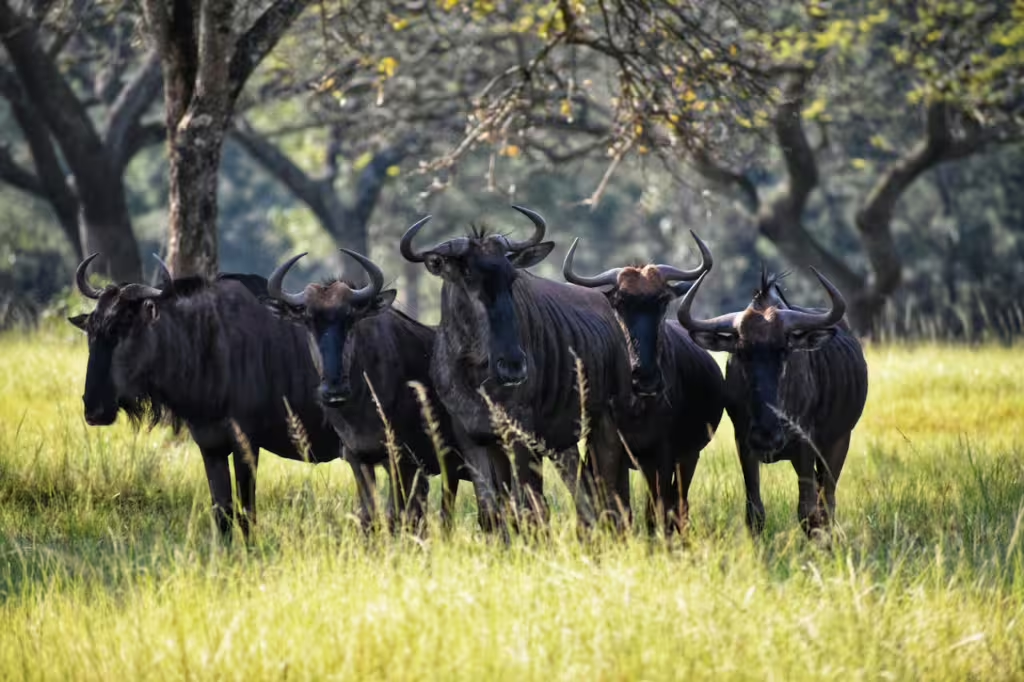
As you can see, wildebeest are more than just members of a faceless herd. These animals are a driving force in one of the world’s most iconic ecosystems, influencing everything from plant growth to predator populations. The massive migrations that they take connect regions, species, and seasons all.
As we learned from the Lion King, everything that lives, “from the crawling ant, to the leaping antelope” is part of the great Circle of Life, and the wildebeest is no different. So long as they continue to thunder across the plains, that balance, that circle, the cycle of life will remain complete.
Discover more from TrueInvestigator
Subscribe to get the latest posts sent to your email.