

If you’ve ever been fortunate enough to do a reiki session, a spiritual cleansing, or any number of other spiritualistic rituals, you might be familiar with a certain type of sacred wood. Found in the dry forests of South America, the Bursera graveolens or “holy wood” tree is not particularly noteworthy looking in any overt sense. It’s not as large as a redwood or as ruthless and spindly as a fig tree. Nevertheless, its subtle presence carries a powerful cultural and ecological story.
Those who have never heard of the Bursera graveolens may have heard it spoken of by its other name, the palo santo. The wood of this tree has been used for centuries in spiritual practices. When burned, it releases a fragrant smoke often described as warm, woody, and slightly sweet. It is a scent that has become widely recognized far beyond its native range, especially among those who dabble in an assortment of offbeat spiritual practices.
In this article, we will discuss why palo santo is so more than an aromatic wood. We will examine the tree’s place within a delicate home ecosystem, as well as its growing popularity among the spiritual and new age movements. To the at end, we will also explore questions of sustainability and cultural respect to determine if palo santo’s popularity is a good or bad thing for the environment at large.
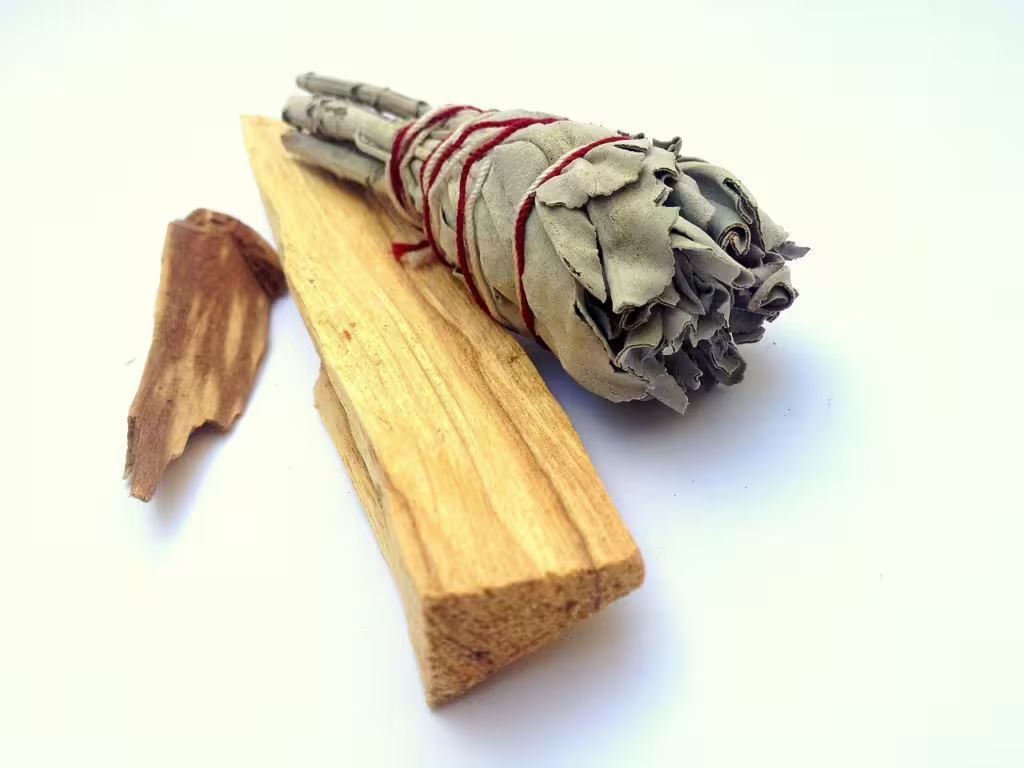
The Tree Behind the Tradition
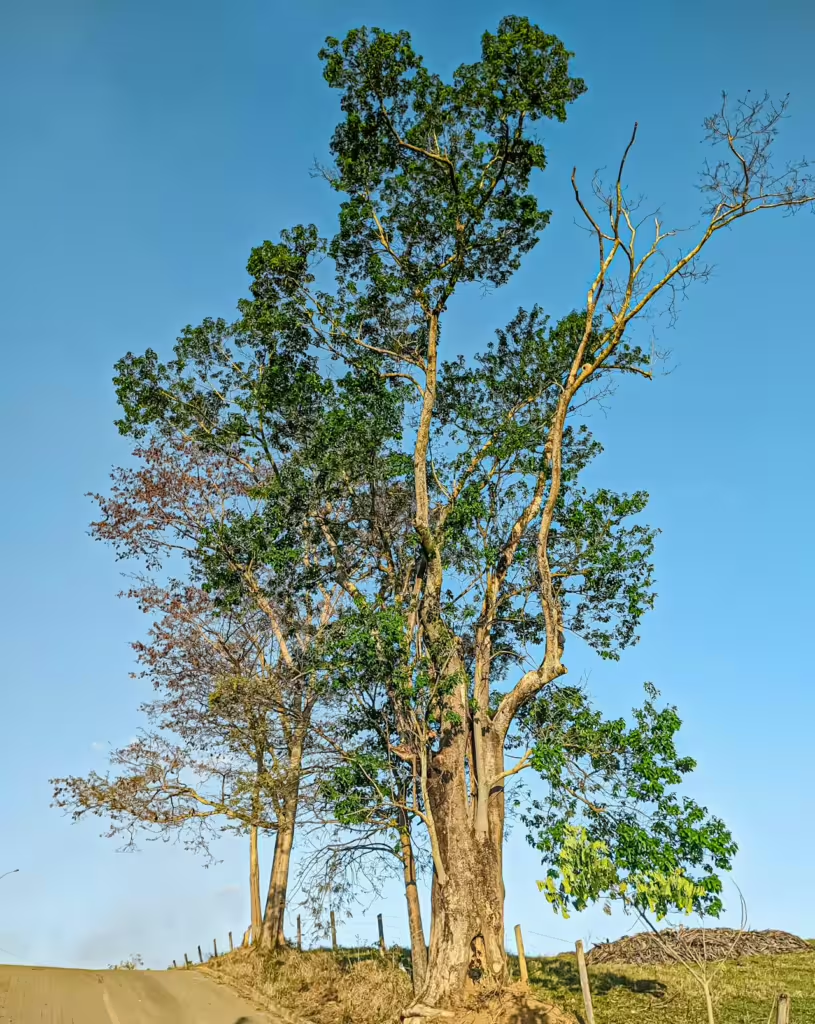
The palo santo tree grows primarily in the dry tropical forests of South America. It is most commonly found in countries like Peru and Ecuador. These forests are very different from the lush, expansive rainforests that most people associate with South America, however. The ecosystems where the palo santo can be found are defined by long, dry periods with only brief periods of seasonal rainfall. There aren’t vast swaths of trees in these arid places, either. In such habitats, the vegetation is sparse, almost like that in the desert, but it is well adapted to survive here.
Palo santo trees are one such plant. These trees thrive in this environment, often growing alongside other drought-resistant species. Their bark peels naturally, and their wood becomes aromatic only after the tree has died and aged; which is why so many local cultures have found ways to use the fallen bits of tree for their spiritual practices.
As a matter of fact, this last detail is crucial. For the most part, palo santo is harvested from fallen branches or naturally dead trees, not from living ones. This is by tradition and it helps preserve the living trees, which are needed to make this unforgiving biome function.
A History Rooted in Spiritual Practice
For generations, palo santo has been used by Indigenous communities in South America for ceremonial and medicinal purposes. Many readers might be familiar with it from cleansing rituals, spiritual ceremonies , and new age healing practices. The belief is that, when burned, the smoke can clear negative energy. There are also some who believe the scent is able to promote calm, focus, or a sense of grounding; all of which are helpful in spiritual exercises.
These practices are part of long-standing cultural traditions, passed down through generations. For many communities, palo santo is not just a product, it is a meaningful element of spiritual life. The same is true for many outside of those communities who believe similarly. This is what makes palo santo so vital to so many cultures.
The Science Behind the Scent
So, how exactly does palo alto smell? Those who have the pleasure of smelling it know that it has a very distinctive aroma, derived comes from natural oils. Palo alto wood contain compounds such as Limonene and Terpenes, which can also be found in citrus fruits and other plants. This is why many describe the plant as having a fresh, slightly sweet scent, even after it has fallen off the living tree.
In addition to being spiritually cleansing, some researchers believe that the oils in palo alto wood possess mild antimicrobial properties. At the same time, the oils may contribute to the aromatherapeutic qualities of the wood, which often has a calming effect on those who inhale the smoke.

Ecology of Dry Forests
The ecosystems where palo santo grows aren’t as notable or outwardly impressive as the tropical rainforests that lay just beyond them. But just because an ecosystem isn’t a rainforest, doesn’t mean it isn’t just as important; especially to the people and animals that live there. For instance, dry forests support a wide array of unique plant species and specialized forms of wildlife that don’t always exist in other biomes. The seasonal cycles of growth and dormancy in these regions are vital to the continued existence of nearly every creature in them.
Palo santo trees are one of the most important pieces of their home ecosystems because they provide habitats for many local species of insects and birds. Their roots help keep the arid soil stable in both wet and dry seasons. Finally, their penchant for falling and also means that they help return nutrients to the soil, thereby sustaining the rest of the forest.
A Slow and Natural Process
One of the most important ecological aspects of palo santo is how its wood develops. The aromatic properties form only after the tree has died a slow, natural death. Then, as the wood ages over the course of several years, local environmental conditions help the oils inside to concentrate in such a way that it will become useful in spiritual ceremonies.
This slow process means that sustainable harvesting depends on a combination of patience and natural cycles. It also means that cutting down live trees is sort of useless for those looking to collect palo santo wood to sell as keepsakes or souvenirs. Cutting down a live tree simply doesn’t produce the same quality of wood that is needed for cultural ceremonies. All it does is disrupt the ecosystem.
Growing Demand and Its Impact
Regardless of how useless cutting down live palo santo tress might be, recent years have seen a marked rise in the popularity of this “new age” ingredient. This increased demand has led to expanded harvesting, greater pressure on natural populations, and serious concerns about overexploitation. This raises important questions about how to balance cultural use, global demand, and ecological health.
True Investigator Says…
As you can see, palo santo wood might be culturally significant to many millions of people but that does not mean we can ignore its ecological importance. In many ways, the tree’s dual role as both a cultural touchstone and a vital piece of arid ecosystems, reflects the complex relationships that exist between humans and nature, all over the world.
By now, readers will perhaps comprehend that, as palo santo’s popularity continues to grow, our species must take thoughtful steps to ensure that we don’t over harvest. Indeed, by understanding how the holy tree fits into its environment, we can make more informed choices that support sustainability, while simultaneously respecting tradition. Doing so will protect palo santo so that it can enrich our arid biomes and our spiritual practices for many centuries to come.
Discover more from TrueInvestigator
Subscribe to get the latest posts sent to your email.