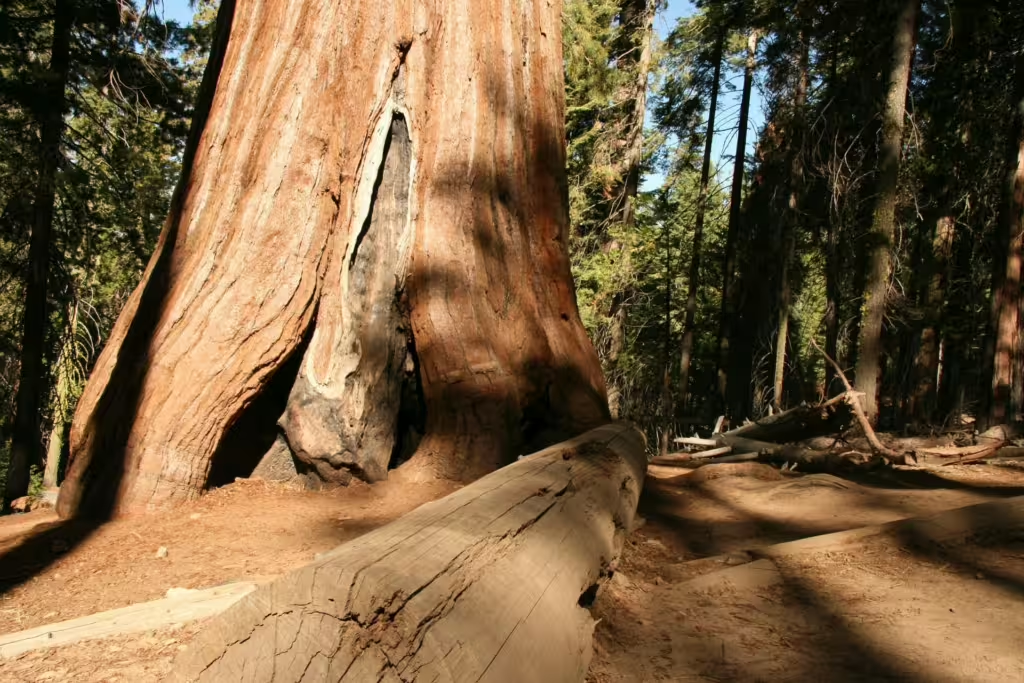

Not everyone has the opportunity to stand amidst the towering redwoods of Northern California, and that’s a shame. These forests, located along the western coast of the United States, are primordial, and possessed of a timeless quality. There is a quiet there that permeates everything. Humans can stand many hundreds of feet beneath bustling canopy and hear very little of what is happening in the boughs above.
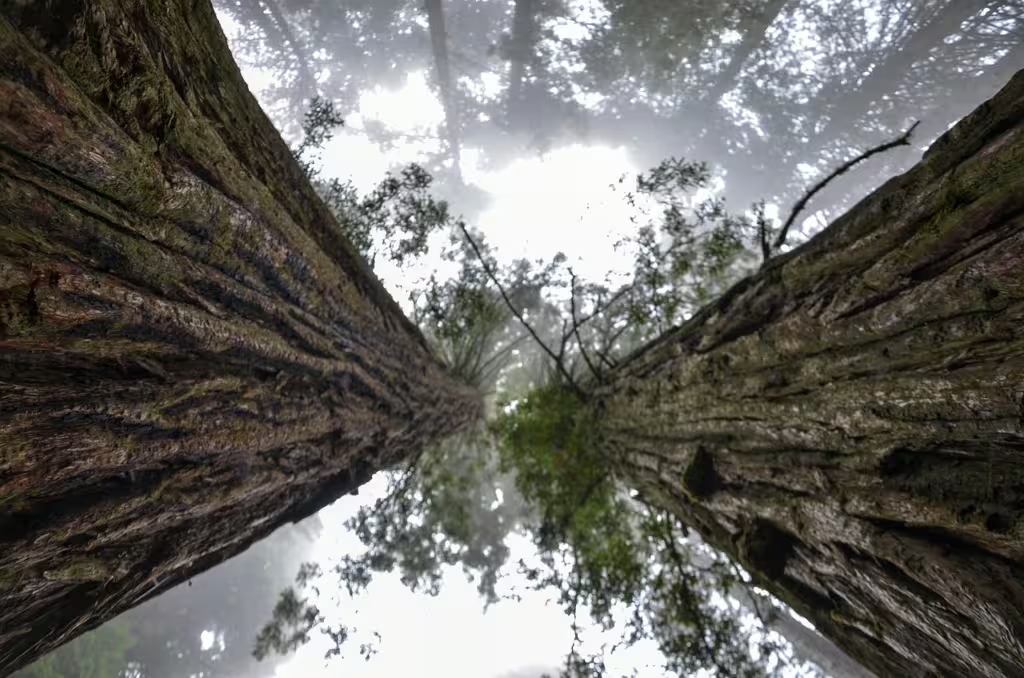
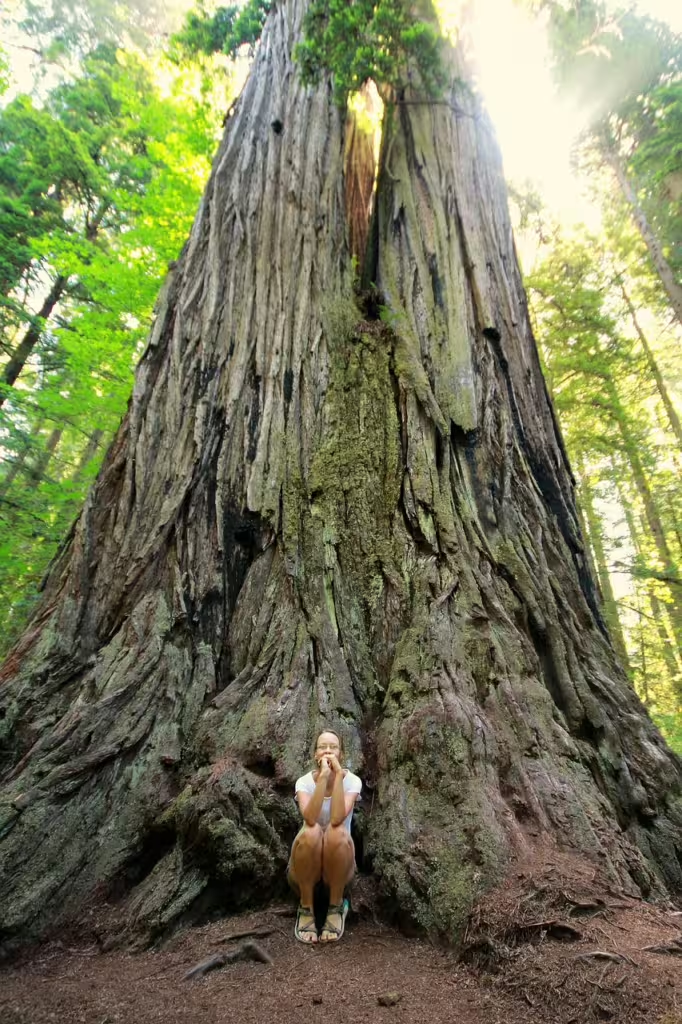
Known scientifically as Sequoia sempervirens, the redwoods of California hold the world record for height among all living trees. Some individuals have been known to rise over 350 feet; that’s even taller than the Statue of Liberty! In this article, we will talk about the fabled redwoods in great detail. We will discuss the remarkable way they grow, how long they can live, and how their very existence shapes their entire home ecosystems; not to mention much of the planet’s ecosystem at large.
Giants of the Coastal Forest
Redwoods only grow in a narrow band along the Pacific coast of the U.S. In order for these legendary trees to grow to such unequalled heights, the environmental conditions have to be just right. Redwood forests depend on a unique combination of coastal fog, consistent moisture, and relatively mild temperatures. The fog is particularly critical in this regard. During the dry, summer months, the redwood groves absorb moisture directly through their needles, supplementing the water they take in through their roots. So long as they get the water they need, the sequoia can grow to extraordinary heights.
How Do Redwoods Grow So Tall?
Water isn’t the only factor that allows these trees to reach phenomenal heights, it requires a combination of biological and environmental factors. Like most trees, redwoods rely on internal systems to move water from their roots to their leaves. As you can imagine, the journey water takes inside a redwood is a pretty lengthy one. This means that the system needs to be highly efficient, though there are limits.
Anti-Gravity Water Transfer
At such extreme heights, gravity and resistance make it difficult for even the most well-adapted giant to transport water upward. To overcome this, redwoods only grow in moist environments, where they can use the fog as an additional water source. They also retain water fairly well within the dense wood of their trunks.
Strong but Flexible Structure
The thick, fibrous trunks of redwoods are built to withstand even the most violent wind and storms. These trees are also resistant to breaking, flexible enough to sway slightly in the wind, despite their size. Such flexibility enables them to survive in the exposed coastal environment of their home ecosystems.
A Life Measured in Centuries
In general, the giant redwoods of the Pacific Northwest are as long-lived as they are enormous. Researchers have found that these trees can live anywhere from 500 to 1,000 years on average, with some specimens exceeding 2,000 years in age. Basically, these trees have seen the climate change in dramatic ways, weathered storms, floods, and fires, and lived to tell us the tale through their rings. Not only is their longevity something for humanity to marvel at, it also allows them to play a stable, enduring role within their ecosystems.
Fire-Resistant Survivors
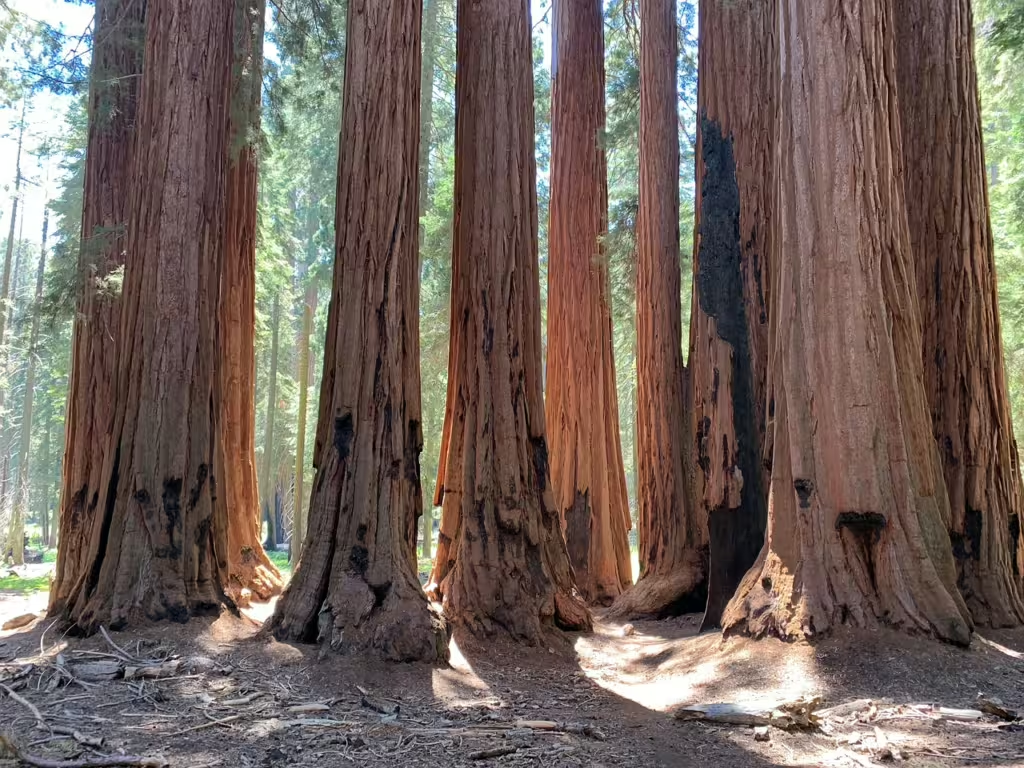
You heard that right, we mentioned wildfires, the bane of forest ecosystems everywhere! We’re not just talking about accidental ones caused by ill-planned gender reveals, but the natural wildfires occur periodically in many forest ecosystems. Redwoods are well adapted to survive these destructive events because their moist, thick bark can be up to 12 inches thick. Because the bark is resistant to heat and low in flammable tree resin, they can remain standing even as the plants around them succumb to the fire. As a matter of fact, fire can actually benefit redwoods, even as it scars them. The fires wind up clearing out competing vegetation, thereby opening space for new growth.
Reproduction: More Than Just Seeds
Redwoods reproduce through seeding and sprouting. Their seeds are set in small cones that can grow into new trees if conditions are right. More uniquely, redwoods can sprout from their base or roots. When a tree is damaged or falls, new shoots can grow around it, forming a ring of trees sometimes called a “fairy circle.” It is a most curious adaptation, one that not every tree intrinsically possesses.
Life in the Canopy
Redwoods aren’t all trunks. High above the forest floor, the branches of these trees create their own ecosystems, rife with mosses, ferns, small shrubs, and in rare cases, even other trees. At the same time, local animals such as birds, insects, and small mammals live almost entirely in the redwood canopies; hence why its often hard to hear them when standing many hundreds of feet on the ground below.
Supporting a Rich Ecosystem
Redwood forests are home to a wide range of species such as owls, woodpeckers, frogs, newts, bears and deer. The dense canopy, even so high above the ground, makes for a cool, shaded environment. Meanwhile, fallen logs and leaf litter provide habitats on the forest floor. Redwood roots run deep in order to stabilize the giant trees. As the reach out into the soil, they stabilize it and help it to retain moisture for the trees and surrounding vegetation.
Carbon Storage and Climate Impact
Redwoods, like rainforests, kelp forests, and grasslands, are great carbon sinks for helping to mitigate the mess of greenhouse gases in our atmosphere. In fact, the redwood stands among the greats when it comes to storing carbon. As they grow, they absorb carbon dioxide from the atmosphere and store it in their wood, which their huge trunks can then hold onto for centuries. The hope is that their continued existence is enough to help lessen the effects of climate change on our global ecosystems; at the very least their own. .
Threats to Redwood Forests
Despite their resilience, redwoods face several challenges from logging, climate change, deforestation, and habitat fragmentation. Sadly, the extensive logging of the last few centuries has vastly reduced the number of old-growth forests in the redwood ecosystems. It is sad, not merely because their continued existence could have helped us continue the fight agains climate change, but because the more we burn or utilize the wood taken from these forests, the worse we actually make the problem!
True Investigator Says…
As you can see, redwoods are more than just the tallest trees on the planet, they are towering ecosystems in and of themselves, capable of storing vast amounts of carbon. Their connection to the planet’s climate at large is, in many ways, a connection between their past and present. Indeed, the redwood’s ability to grow, survive, and endure over the centuries makes them one of nature’s most remarkable living achievements; and certainly worth beholding at least once in your life.
And while the chance of viewing them in person would be reason enough to protect them, their vital role in the planetary web of life means that preserving them should be of the utmost importance. In a world where we take so much of nature for granted, its rare to find a piece of it that both draws our attention and fills us with a desire to keep them around; hopefully for many more centuries to come.
Discover more from TrueInvestigator
Subscribe to get the latest posts sent to your email.