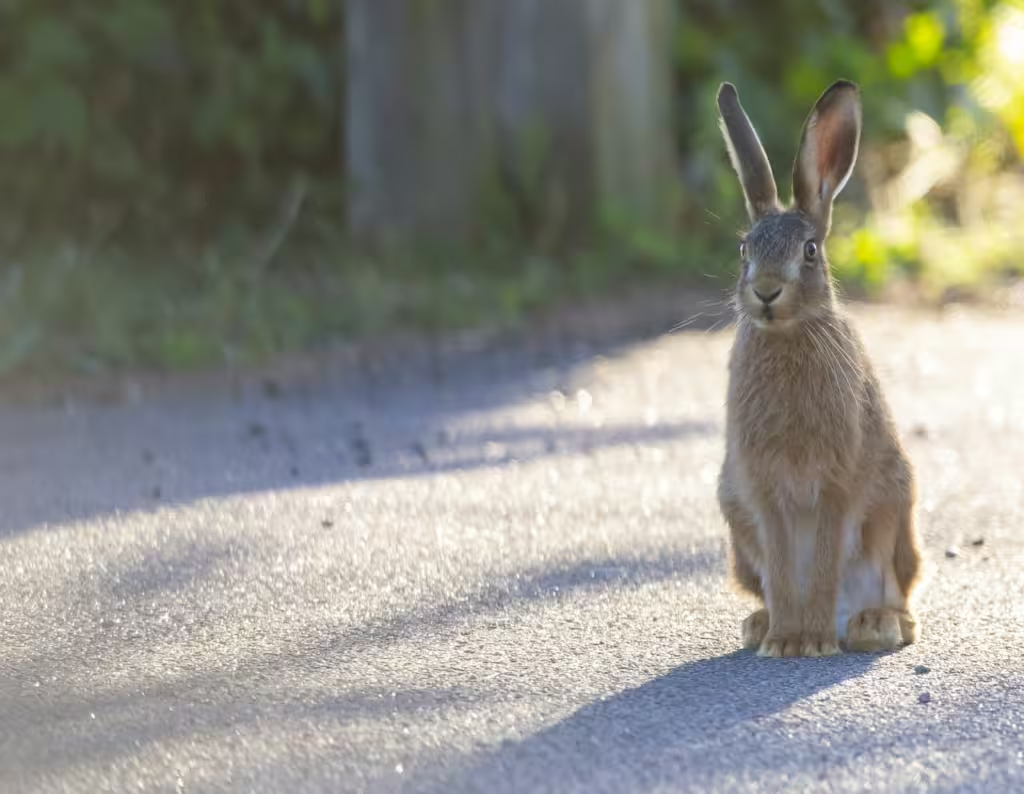

There’s an old adage, a fable actually, about a lazy hare and a rather clever tortoise; you’ve probably heard of it. The thing is, this tall tale sort of frames the hare as something disdainful, a loaf, a lazy layabout, and a braggart. Having not met many sentient hares myself, this writer cannot speak to the validity of these claims. But what I can tell you is that real hares are even more fascinating than their fabled counterparts.
Quick, alert, and perfectly adapted for the rugged life of an open landscapes, hares are among the most recognizable mammals in grassland, desert, and forest ecosystems. They can be found all around the world and though they are often confused with their cousin the rabbit, hares actually exhibit behaviors and adaptive traits that are quite different from our beloved bunny buddies.
Members of the genus Lepus (Yea the Romans were funny, huh?) hares are built for speed and survival both. These rodent relatives are possessed of long legs, powerful muscles, and sharp senses that allow them to evade predators, as well as survive in some of the planet’s most exposed environments. We may see them as mere prey animals, but hares are actually vital to their home ecosystems for a number of reasons.
In this articles, we will set out to catch these wily critters so that we can examine their biology, diet, and how they help shape ecosystems and maintain harmony and balance in places where water, weather, and food are scarce, but danger lurks around every stone.
What Makes a Hare Different from a Rabbit?
Many people mistake hares for rabbits and vice versa, but though they are closely related, they differ in several important ways. Hares, the subject of today’s article, are larger, more long-legged, and faster. Unlike rabbits, that live in large groups or colonies and are fairly social creatures, hares are solitary animals.
Rabbits live in burrows with many of their kind. Between 10 and 30 individuals can live in these burrows, also known as warrens. The burrows themselves are often quite large and widespread, spanning anywhere from 15 to 150 feet. Hares, however, seem to have no need for such domiciles. Instead, they rest in shallow depressions called “forms” which are often hidden in tall grass or underbrush.
Young hares, known as leverets, arrive in the world fully furred and with their eyes open. This is in contrast to the blind, hairless babies of rabbits. Because they don’t have the luxury of a burrow for safety, leverets have to be able to go as soon as they are born. This is why they are also able to move shortly after birth.
Built for Speed and Survival
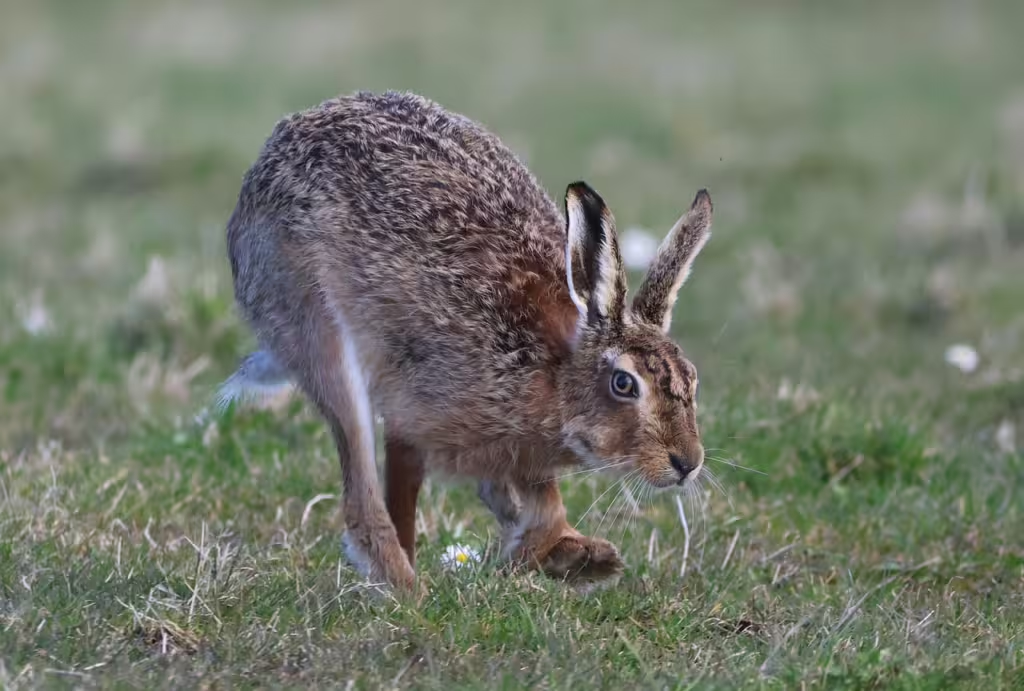
Just as in Aesop’s famous fable, hares are well-known for their speed and agility. Some species are so fast and so agile that they rapidly change directions even when running at breakneck speed. This allows them to escape predators with relative ease, even in areas where there isn’t much cover and very few places to hide.
These abilities make perfect sense if one only looks at the hare’s body, however, which are perfectly adapted for this type of lifestyle. The hare’s long hind legs help them run and their strong muscles and lightweight bodies help them to jump and move with great agility. Such physical adaptations allow hares to survive in habitats where visibility is high and where interaction with predators is a common ocurrence.
Famous Species Around the World
These European Hare, Snowshoe Hare, and the Black-tailed Jackrabbit are all fairly recognizable, even by nature laypersons. The name jackrabbit is actually kind of a misnomer, actually, because these animals are a type of hare, not a type of rabbit. The interesting thing about this selection is that each of these distinct species is adapted to its specific environment in a different set of ways.
The Snowshoe Hare’s Seasonal Camouflage
Take the Snowshoe Hare for example. This animal is famous for its ability to change the color of its fur to suit the season. This means that, in summer the snowshoe has brown fur, which allows it to blend in with forest floors and vegetation.
In winter, the situation changes, and the snowshoe hare’s coat turns white. This helps it to camouflage against the snow-covered landscapes of its habitat. In either case, the snowshoe is perfectly designed to avoid detection by predators like lynxes, wolves, foxes, and even owls.
Life in Open Habitats
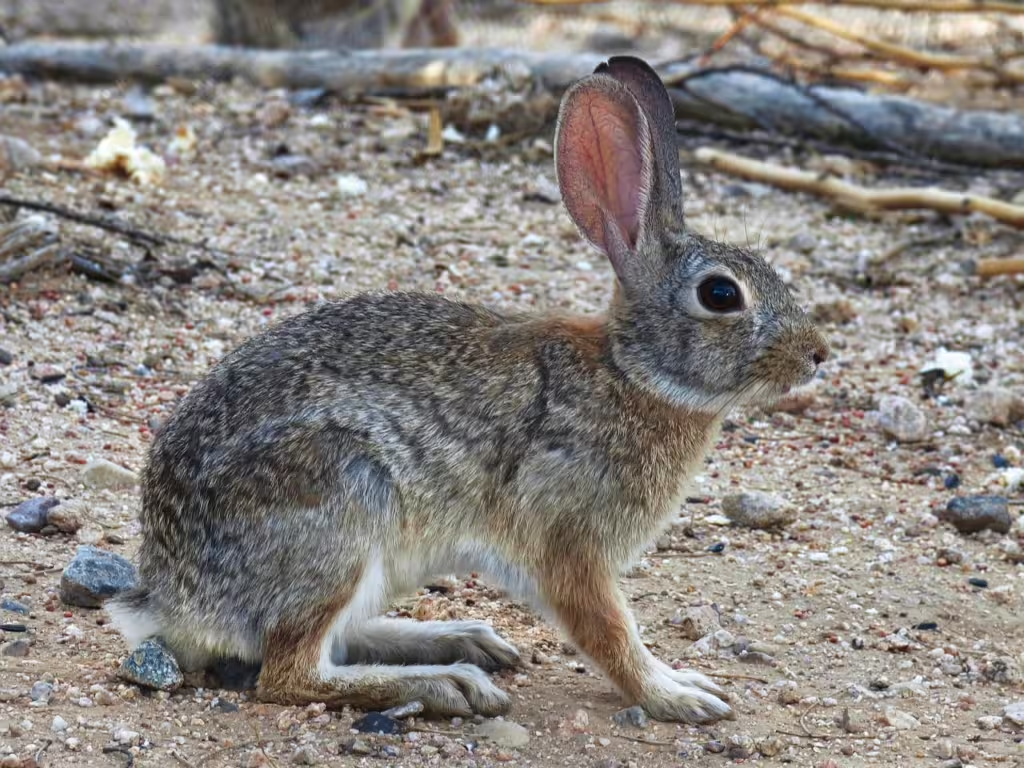
Hares often inhabit grasslands, meadows, tundras, and deserts, though they do live on the edges of forest ecosystems as well. The problem is, these environments expose the hares to predators at all times, rendering proper vigilance a real concern.
Fortunately for the hares, their excellent hearing, wide field of vision, and quick acceleration helps them to escape or avoid detection. Their large ears help detect danger from long distances. In some species, like those that live in the desert, these long ears also help regulate body temperature by releasing excess heat.
Grazers and Plant Consumers
Hares are herbivores that feed on a variety of plant material such as leaves, bark, twigs, grasses, and wildflowers. Through their grazing, hares influence plant growth and vegetation patterns. As it turns out, hares can be quite valuable to some ecosystems, as they help prevent certain plant species from becoming dominant. This contributed to the ecological balance of a hare’s territory, but so too does their ability to disperse seeds.
Seed Dispersal and Nutrient Cycling
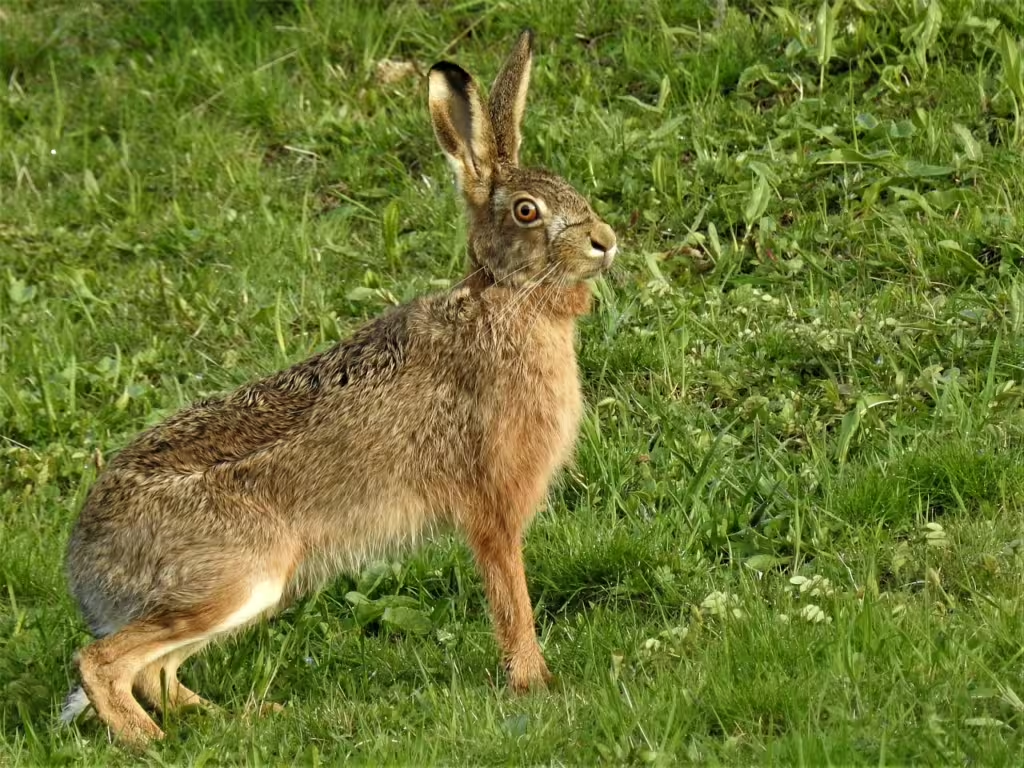
How does a hare help spread plant seeds? Well, as hares move through habitats, they help disperse seeds through their droppings or attached to their fur. Their waste is also an excellent fertilizer and as it returns to its natural state it helps plants grow so they can be consumed again. This greatly supports nutrient cycling.
A Critical Food Source for Predators
Hares occupy an important middle position in food webs bot as predators for plants and prey for local predators like wild canines, birds of prey, and even wild cats. Even as they are scooped up here and there by another animal, there is a silver lining. You see, hares reproduce relatively quickly, which helps sustain predator populations in many ecosystems.
Hares in Human Culture
Hares have long appeared in folklore and mythology beyond the old fable. Some cultures believe hares to be symbols of the changing seasons or phases of the moon. Of course, their contribution to humanity is quite charming.
True Investigator Says…
As you can see, hares are among nature’s curious little survivors. They have a speed, awareness, and adaptability that allows them to thrive in some of the world’s most exposed and challenging places on the planet. And while their survivability is certainly their most redeeming quality, their role as grazers, prey animals, and ecological connectors make hares one of the most important animals within their home ecosystems.
Indeed, whether they are providing those “services” in the woods, huddled in tall grass, leaping across the tundra, or basking in the desert sun, hares are doing Mother Nature’s good work, and we should be thankful for them.
Discover more from TrueInvestigator
Subscribe to get the latest posts sent to your email.