
It’s safe to say that, in the year 2026, people have a generally favorable opinion on bees. Over the years, we have gained a newfound understanding understanding of their ecological importance. The thing is, we’ve kind of always known that bees were important. Our partnership with these insects goes as far back as Ancient Egypt, where archeologists have discovered cultivated jars of honey in the tombs of long-forgotten Pharaohs.
The same long-standing appreciation cannot be said of hornets, however. Anyone who has ever been stung by one of these ornery little buggers can tell you that hornets are not to be trifled with. The internet has been awash with videos and images of Japanese hornets for the better part of the past decade, and these large, fearsome insects have only added to the hornet’s already tarnished reputation.
In this article, we will attempt to untangle some of the hornet’s bad reputation. Let’s be real, they aren’t fully irredeemable; as you will undoubtedly see. Nevertheless, despite their fierce image and painful stings, hornets are more complex, and indeed more ecologically valuable, than many people realize.
What Is a Hornet?
Hornets, which some people often mistake for ordinary wasps, belong to the venus Vespa. They are, by most scientific reckoning, wasps of a sort; though they are the largest and most advanced wasps in the world. They can be found across Europe, Asia, Africa, and parts of North America. They are intelligent colony-builders, skilled hunters, and important controllers of insect populations.
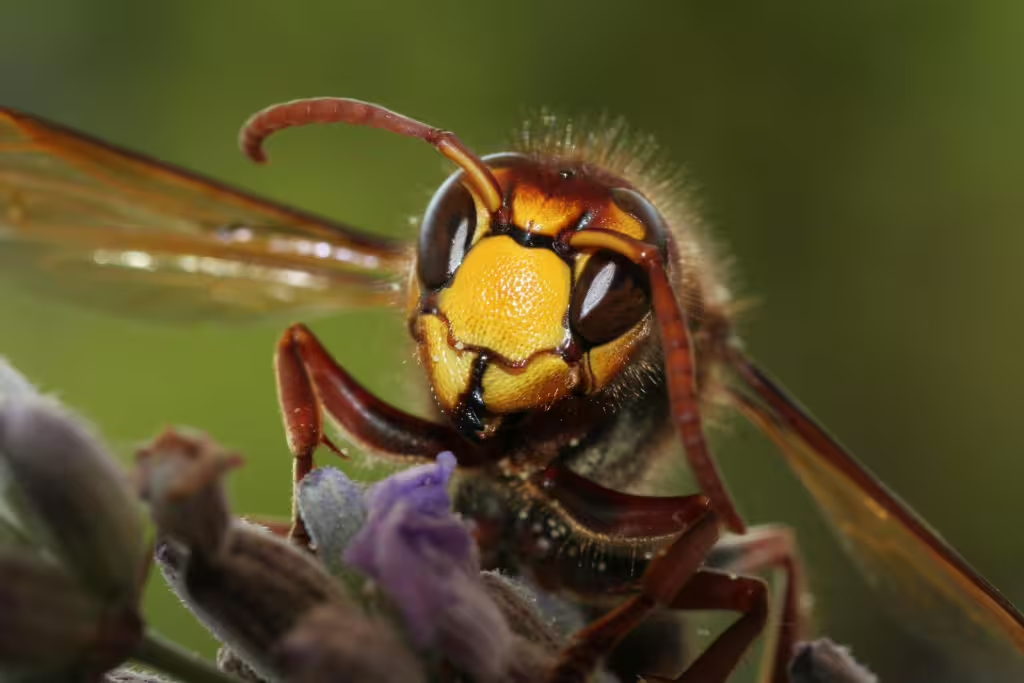
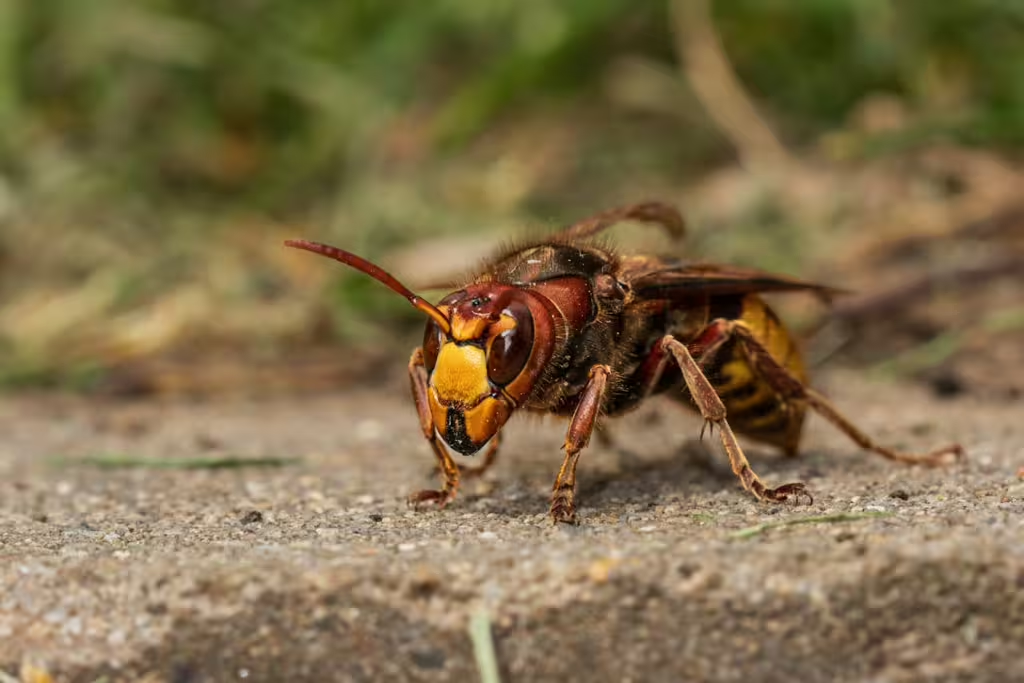
Beyond all that interesting ecological importance, they are most known for their painful stings, and easily recognized by their typical large body size (at least when compared to some other insects), their thick abdomens, powerful mandibles, and distinctive yellow, orange, black, or brown coloration.
Compared to many other wasps, hornets tend to larger, louder, and heavier. In fact, some species like the Asian Giant Hornet, have been known to grow several inches long. Other notable species include the European Hornet and the Oriental Hornet, and all of these species occupies a different ecological role within its habitat.
Life Inside a Hornet Colony
Hornets, like bees, ants, termites, and wasps, are social insects. They live in colonies with a highly organized structure that typically includes a single queen, worker hornets which are usually female, and males; if only during reproductive periods. The queen is responsible for laying eggs to propagate the colony, while the workers build and maintain the nest, gather food, and protect the colony. They also care for the larval hornets. This division of labor allows hornet colonies to function most efficiently.
Building Paper Nests
One of the most fascinating hornet behaviors lies in their ability to construct nests. They accomplish this by chewing wood fibers, which they then mix with saliva, and form a paper-like material to build up the walls and chambers of the nest. The layered paper structure of a hornet’s nest helps insulate and protect the colony.
Most of the time, those nests are build in trees, but many readers will likely have encountered one under their roof, attached to their shed, or in a kid’s playhouse. They also make their nests underground when they need to. Of course, finding one of these nests in or around one’s home is, while fascinating to behold, something of a nuisance.
Hornets as Predators
Hornets are predatory insects. They are not pollinators but active hunters that play a major role in controlling certain insect populations. Their main prey consists of flies, caterpillars, other wasps, beetles, and unfortunately for our friendly neighborhood honey smiths, bees.
Workers on the hunt will capture prey using strong mandibles and powerful flight abilities. Once they are caught in their jaws, the prey is either chewed into pieces or carried off to be fed to the developing larae; which are also carnivorous.
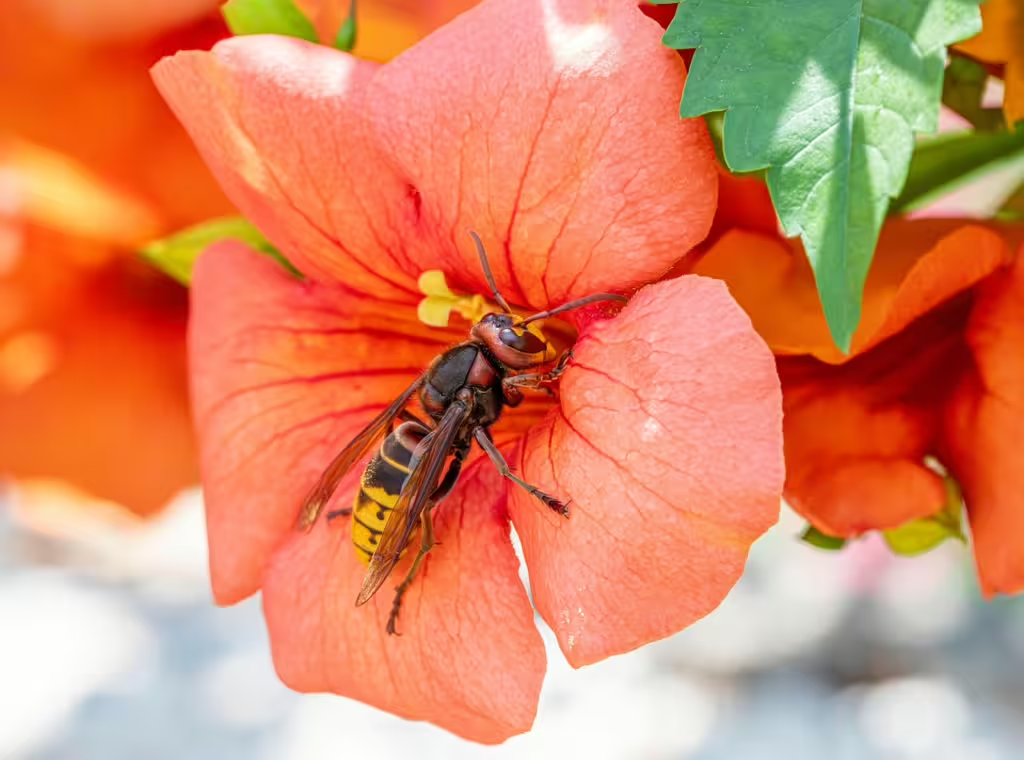
Despite not being pollinators, adult hornets do have a sweet tooth. They will and do consume sugary substances like nectar or tree sap almost exclusively, while saving their protein-rich prey to support the growth of young hornets.
The Famous Asian Giant Hornet
Among the most well-known species is the aforementioned and highly phogenic, Asian Giant Hornet.
This species is notable not only for its large size and powerful, painful sting, but also its penchant for attacking bee colonies. Asian hornets, you see, are relentless in their pursuit of bees, whom they will chase right into the hive, killing any hapless guard bees they come across along the way. Once captured, the bees are fed to their larvae. This rampant bee hunting has made them a significant issue, especially in areas where bee pollination is a vital part of local agricultural processes.
Hornets and Honeybees
The relationship between hornets and bees is more complex than just large predator hunting smaller prey. While hornets might be natural predators of bees, the bees have evolved ways to fight back; rather clever ones as it turns out. For example, some honeybee species can surround invading hornets en masse. When they do, they all vibrate their bodies intensely in an effort to generate heat. This overheats the predator, essentially cooking the invader inside its own exoskeleton.
The Purpose of the Sting
Hornets are stingers; that’s how we know them, and they use their stings primarily for defense. They are meant to protect their colony, not fight other insects. Most of the time, they attack prey with their mandibles, resorting to their stings only when necessary. Unlike bees, which only sting once with their barbed stingers, hornet stings do not remain embedded in the target after it’s been stung. Instead, a hornet can sting over and over, attacking any creature that dares threaten their colony full of larvae.
Communication and Coordination
Hornets communicate using a combination of pheromones, or chemical signals, but they also use sound, vibration, and physical movements to get the point across. The reason for this communicative efficacy is to formulate a defense of the hive, coordinate nest activities, and even organize hunts. When a nest is threatened, hornets may release alarm pheromones that quickly mobilize other workers.
Hornets and Ecosystems
Although often feared, hornets provide important ecological benefits like keeping the populations of local insects in check. Despite not meaning to, the hornet’s desire for nectar often means they inadvertently pollinate when they move from one flower to the next. Sure, they aren’t experts like bees, but they do participate in plant reproduction in some way.
True Investigator Says…
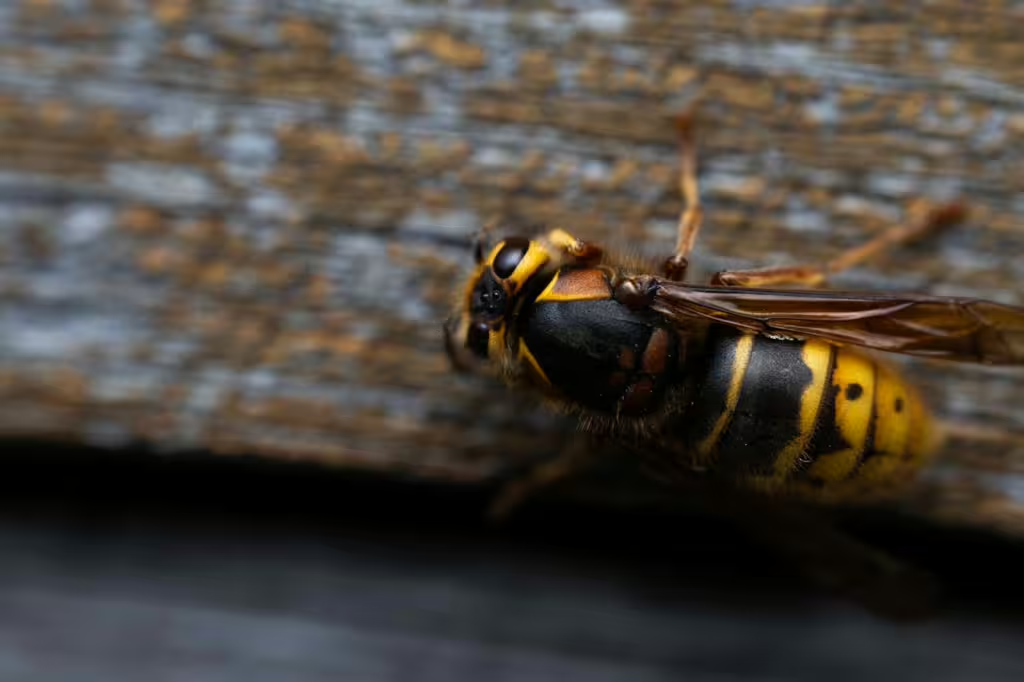
As you can see, hornets might not be cuddly but they are counted among the insect world’s most impressive insectoid predators. Their large size, intricate colonies, and coordinated hunting behaviors make them powerful forces in the natural world. Meanwhile, their impressive size and stings, make them a serious deterrant for any human looking to squish the odd bug on a whim.
And yea, they aren’t the best when it comes to pollination, but they are good enough to warrant some consideration when it comes to keeping them safe from habitat loss, pollution, and pesticides. In the end, like all predators, hornets have their place in the circle of life; it’s just one we hope to not have to interact with on a regular basis.
Discover more from TrueInvestigator
Subscribe to get the latest posts sent to your email.