
Over the years, we’ve taken readers on exciting voyages across the Seven Seas. We’ve explored the endless open ocean, traversed treacherous seaside cliffs, and dove down to the deepest geothermal vents in search of wondrous creatures. But one place we have sorely overlooked, it turns out, are the sandy beaches that border the world’s vast seas.
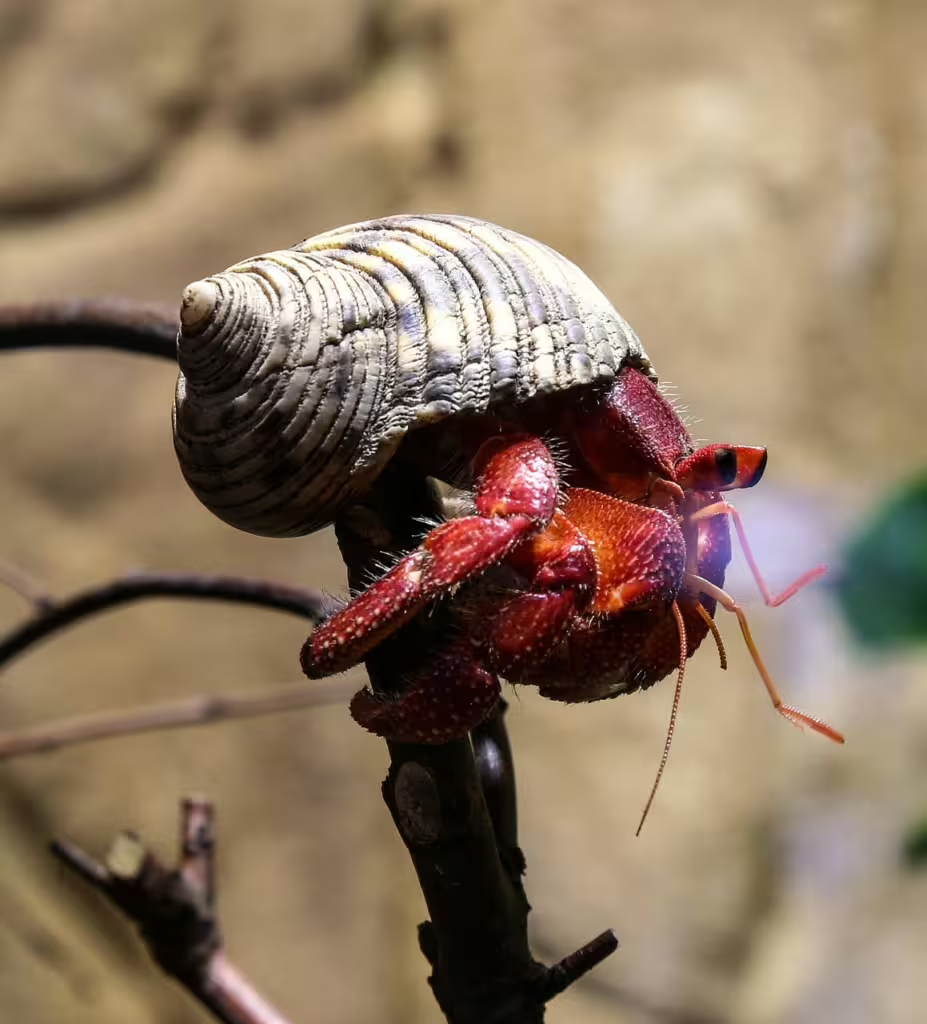
When we walk along the shore, we often look down to avoid stepping on a sharp, discarded shell that might be lurking just beneath the sand. If we look carefully enough, we might see small creatures scuttling sideways, dragging one such discarded shell behind them. Hermit crabs are some of the most unique little crustaceans on the planet. Unlike their seafaring brethren, these teensy crabs spend much of their lives on land. Though their bodies are fairly weak by crab standards, they survive utilizing one of the most unusual survival strategies in the animal world; living inside shells that are not technically their own.
In this article, we will scour the sands for hermit crabs so that we can learn as much as possible about their behavior, adaptability, and interactions with other species. By the time we’re done, perhaps you will gain new appreciation for what has often been described as little more than a “beginner pet.”
Why Hermit Crabs Need Shells
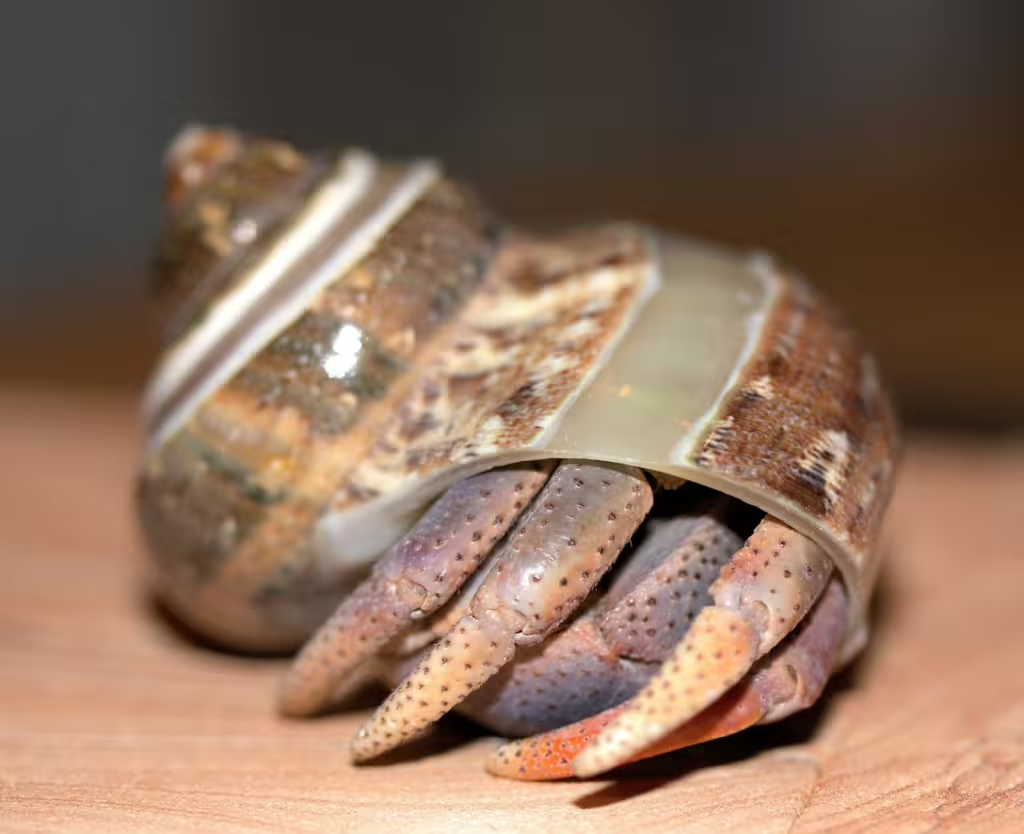
Belonging to the superfamily Paguroidea, hermit crabs are found in oceans across the globe, though many do quite well in as terrestrial environments. Unlike most crabs, hermit crabs do not have a hard shell that protects their entire body. In fact, only their front half, which including their claws and legs, is protected by a tough exoskeleton. Their abdomen, however, is another matter. It is soft, vulnerable, and curved to fit a shell that it simply does not possess.
In an effort to protect this exposed area, hermit crabs have taken to occupying empty shells, usually those that once belonged to sea snails. The borrowed shell offers the crab a portable home, protection from would-be predators, and reduces the risk of the little critter drying out in the sun.
A Life of Constant Upgrading
Hermit crabs don’t just find one shell and stay there forever, because they don’t stay the same size forever. As a hermit crab grows, it outgrows its temporary home and must therefore find larger shells to accommodate its new size. This creates a constant search for suitable homes. Hermit crabs are fairly discerning about which shells they pick, inspecting them carefully for size, shape, and condition. They will also take time to compare it to its the old one. If the shell seems like a better fit, they will swiftly move out of the old and into the new.
This transfer process has to be quick, seconds really, to minimize the amount of time the crab is exposed to predators and the elements. There have even been cases where multiple hermit crabs gather and form a queue, sometimes known as a shell exchange chain, where each crab moves into a slightly larger shell in sequence. This coordinated behavior is a remarkable example of cooperation in a species that often appears to be quite solitary in nature.
Competition for Limited Resources
Despite how numerous they appear when one walks down a beach, whole, livable shells are a limited resource in many marine or coastal environments. This means that hermit crabs often have to compete for the best shells. They will fight over desirable shells, lie in wait for the right opportunity to snipe an ideal shell, or even attempt to steal a shell away from others mid transfer.
That said, hermit crabs can be resourceful when they need to be. In areas where shells are scarce, hermit crabs may even use alternative materials, such as hollow pieces of coral or human trash. The latter is not ideal, of course, but it accurately highlights how much impact our species has had on the environment and the other creatures with whom we share the planet.
Feeding and Diet
Hermit crabs, like most of their ilk, are omnivores. They are also opportunistic feeders that will devour everything from algae, to carrion, to smaller living creatures. In their role as scavengers, hermit crabs help to clean up their environment and prevent the spread of disease. Additionally, by consuming decaying material, hermit crabs contribute to nutrient cycling and support the health of coastal ecosystems.
Land vs. Marine Hermit Crabs
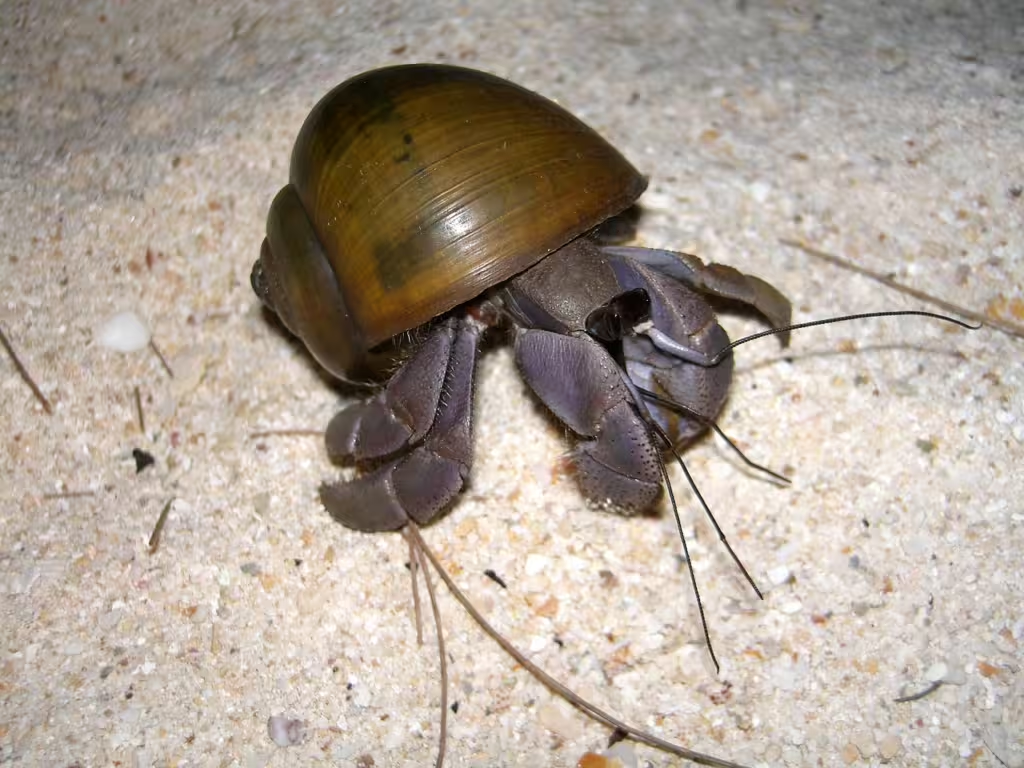
While many hermit crabs live in the ocean, not all of them do. Some species of this crab family have adapted to life on land. You may have even had them as pets at some point! Where marine hermit crabs use gills to breathe, terrestrial ones breathe air through modified gills. The former live in shallow coastal waters, whereas the latter live on land but do require some amount of moisture to survive. The Caribbean hermit crab is an example of a terrestrial variety that returns to the ocean to spawn.
Social Behavior and Communication
In addition to setting up a shell-sharing queue, hermit crabs evince a number of social behaviors that are quite uncommon amongst crabkind. They often gather in groups, especially in areas where food and/or shells are abundant. They can also communicate with one another through chemical signals, vibrations, and even physical interactions. This communication, however simple, can help them to survive in a difficult situation.
Predators and Defense
By difficult situation, we mean that everything from birds, fish, mammals, and even larger crabs prey on the poor little hermit crab. And while the crabs do possess strong little pincers relative to their size, their primary defense is to retreat into their shell when danger approaches. That said, some marine species have developed unique ways of defending themselves via “lookout.”
Some hermit crabs enhance their protection through symbiotic relationships with sea anemones, which they carry on top of their shells as they move. The anemones’ stinging cells deter predators, while the crab provides mobility and access to food. It is a partnership that benefits both organisms and has even inspired children’s books!
Environmental Challenges
Unfortunately, tiny as they are, hermit crabs are quite negatively affected by changes in their environment. Pollution, ocean acidification, and coastal habitat loss have all proven to be detrimental to their daily lives. Plastic pollution is a particular concern because even when a crab does find a “shell” alternative made of plastic, it does not provide the protection the crab needs to actually be safe.
True Investigator Says…
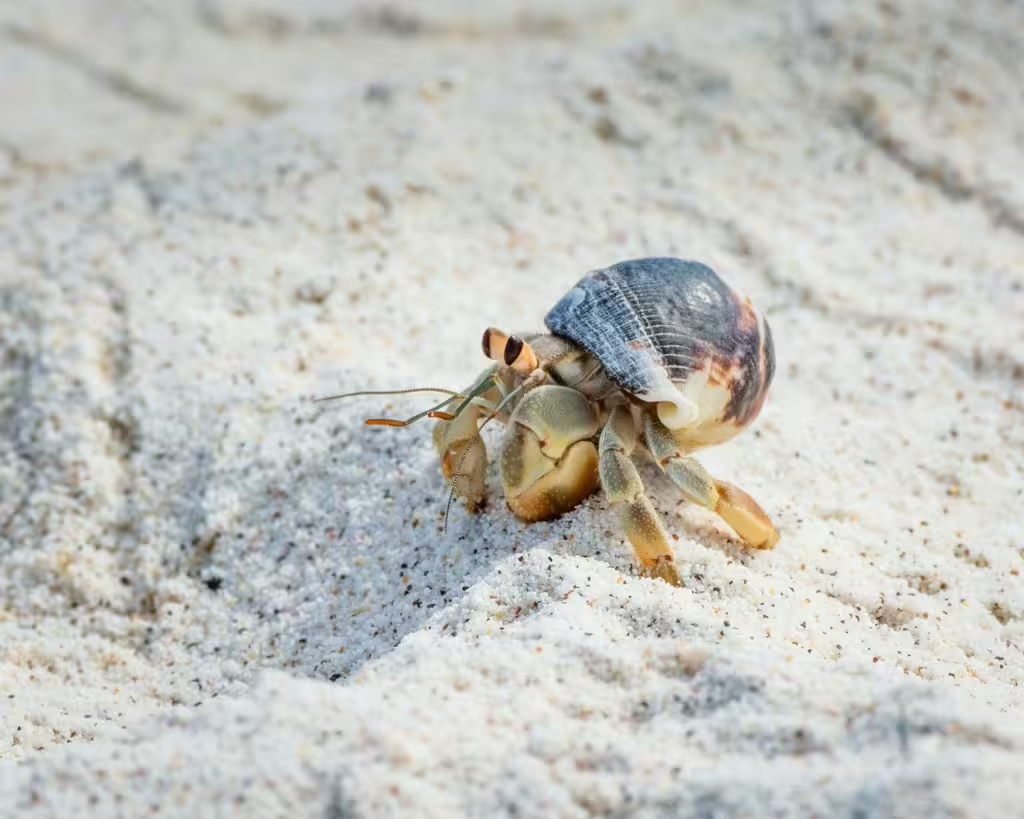
As you can see, hermit crabs may be small, but their lives are complex and deeply important to the marine ecosystems they call home. They are creative, adaptive, and surprisingly social for arthropods. In their role as scavengers and through their ability to reappropriate discarded shells, they teach us that we too can find ways to repurpose things in ways that make them useful. After all, if nature has found so many ways to make the most out of existing materials, why can’t we?
Discover more from TrueInvestigator
Subscribe to get the latest posts sent to your email.