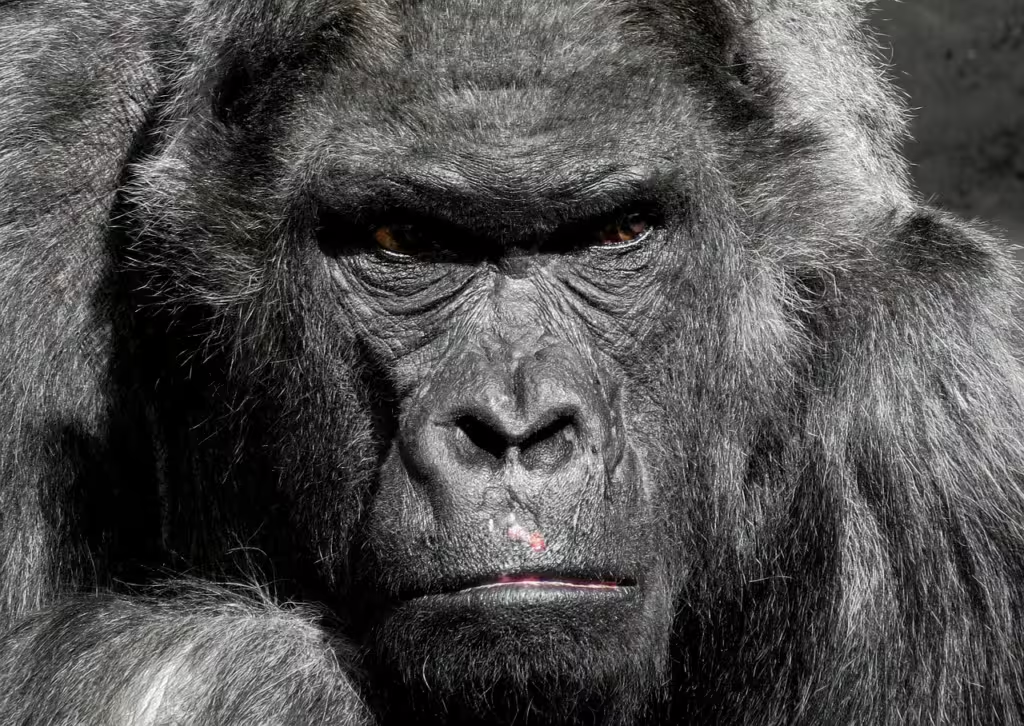

Ever since the first major motion pictures hit the silver screen, mankind has had a collective obsession with gorillas. King Kong wasn’t just amazing for what it did for cinema, it was a character that, despite his bestial, animal nature, many of us felt connected to. Perhaps it is because gorillas are one of the primates that most closely resembles humanity, or perhaps it is because, in their behavior and social dynamics, they are more like us that we know.
Hailing from the cloud-covered mountains forests of Central Africa, the Mountain Gorilla is one of the most remarkable and noteworthy primates on the planet. These powerful yet gentle animals are fascinating to us, not just for their size or strength, but for the deep social bonds they possess.
In this article, we will examine the lives and social connections of Mountain Gorillas. As we journey through these misty forests, we’ll learn why the apes’ survival depends not only on physical adaptation but also on cooperation, communication, and family structure. So get ready, dear readers, as we travel to the heart of Africa to learn from creatures who may well be our clostes kin.
Life in the Cloud Forest
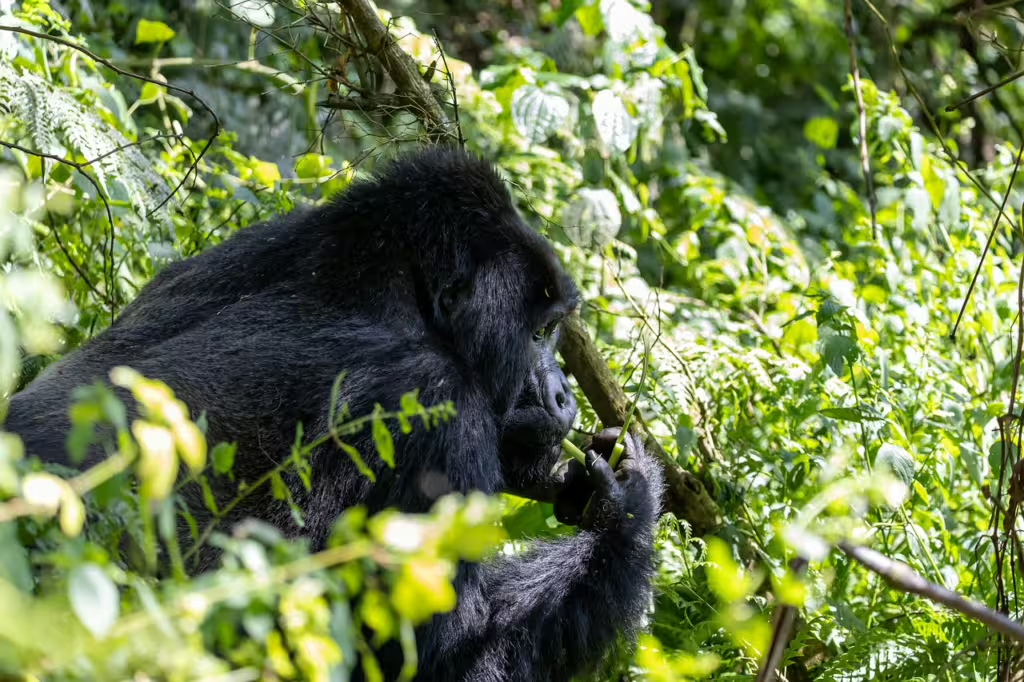
Mountain gorillas inhabit high-altitude forests in Central Africa. They are most commonly found in regions such as Virunga Mountains and the Bwindi Impenetrable Forest. These environments aren’t the stiflingly steamy jungles one thinks of when they imagine a rainforest in fiction, however. They are cool, though humid, and often shrouded in fog.
The terrain, being mountainous, is also fairly steep and densely vegetated. The environmental conditions mean that there is a near-constant supply of plant life, which happens to be the primary food source for gorillas. Their diet includes leaves, stems, bamboo shoots, and when they can find it, fruit.
The Structure of a Gorilla Family
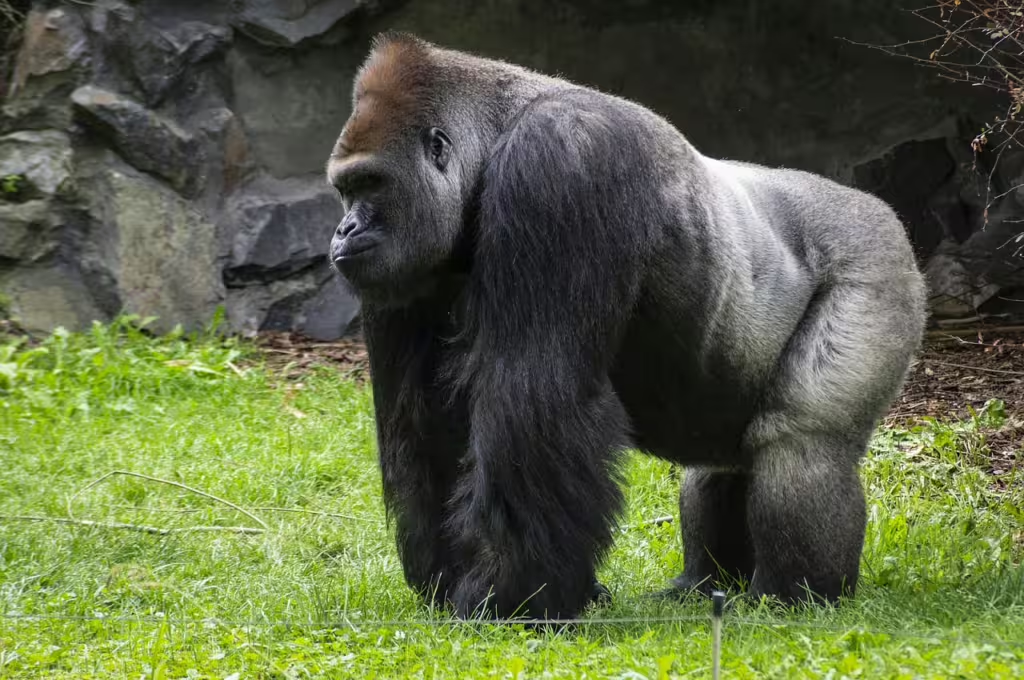
Living in these difficult environments is not just a matter of physical adaptations, it also means that cooperation is essential. At the heart of mountain gorilla life is the family group, often called a troop. A typical group includes one dominant male, usually called a silverback, along with several females, and their collective offspring. Occasionally, younger males may be present, but there is usually no confusion over who is in charge.
The point is, this group structure is stable and helps the apes form tight bond with all members of the troop. After all, members spend most of their time together. They feed, nest, groom one another, and move as a single unit through the forest in search for safe places to sleep and forage.
The Role of the Silverback
As we mentioned earlier, the unquestioned leader of the group is normally the strongest male, otherwise known as a silverback. These patriarchs are usually so-named for the distinctive patch of silver hair on their back. As leader, the silverback has certain responsibilities he must adhere to. These include: protecting the group from threats, leading movement to feeding and resting areas, and finally, mediating conflicts within the group. After all, living in close quarters with so many, conflicts are bound to occur, and being that these are gorilla fights, they’re going to require a strong hand to sort things out.
Despite their size and strength, silverbacks are often more calm and deliberate than you might expect. Rather than resorting to brute force every time, they tend to rely on displays of power, such as chest beating or vocalizations, to deter threats rather. They could, of course, engage in constant aggression to maintain control, but they’re smart enough to know that fighting can lead to injury and death; and it’s not worth the risk. All-in-all, our current understanding is that the stability of the group often depends on the leadership of the silverback.
Strong Bonds Between Mothers and Young
Considering that the silverback males are so measured and gentle, its easy to believe that the females and their babies are equally demure. Indeed, one of the most touching aspects of mountain gorilla life is the bond between mothers and their offspring. Mother gorillas are attentive, patient creatures, and will carry their infants around constantly, grooming them as they travel and soothing them.
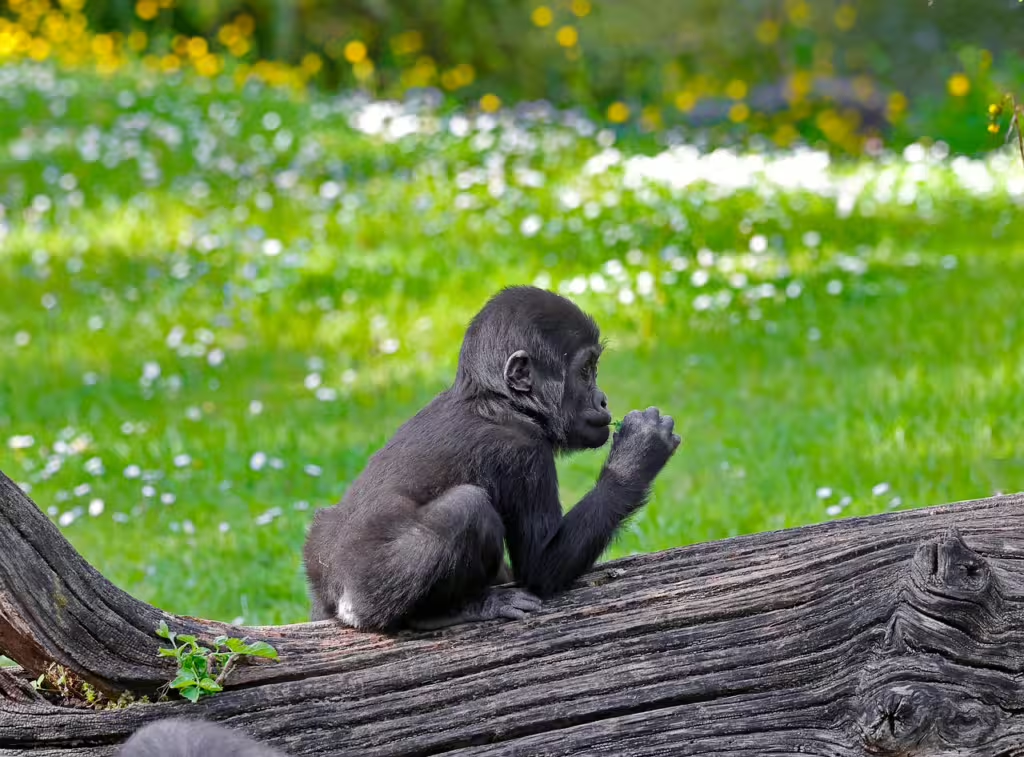
Young gorillas don’t grow up quickly by animal standards, like say, a baby gazelle. They stay close to their mothers for several years as they mature, learning all of their essential survival skills through observation. They also rely heavily on their mothers for protection and nourishment. This close relationship helps young gorillas develop both physically and socially.
Play and Learning
Like our own children, young gorillas spend much of their time playing . Chasing, climbing, wrestling, and swinging about are all aspects of play behavior that helps the animals develop physically, socially, and mentally. Through play, gorilla babies learn about social boundaries, communication skills, and develop their coordination and strength; all of which are essential if you’re a wild gorilla living in the African mountain forests. In many ways, this play helps prepare them for adult roles within the group.
Communication and Social Interaction
Mountain gorillas communicate using a combination of vocal sounds, body language, and facial expressions to talk to one another; just like us!. The most common forms of gorilla communication are less loquacious than our own, however, and include grunts and calls to maintain contact. Grooming is also used to strengthen social bonds because it helps reduce tension and reinforces relationships within the group. These interactions create a complex social network where each individual plays a role.
Cooperation and Group Survival
Living in a group provides important advantages that solitary animals lack. For example, group members not only share information about food sources, they also provide protection against predators while supporting one another socially. The presence of a strong group reduces individual risk and increases the species’ chances of survival; which is basically what happened when humans started banding together and creating “society.”
Emotional Depth and Intelligence
Mountain gorillas are highly intelligent and emotionally complex. They evince behaviors that suggest not only empathy and curiosity, but have shown problem-solving skills and the ability to communicate with other animals. Take Koko the gorilla, for example, a great ape which learned sign language to communicate with her handlers and the many people she met. These traits highlight the depth of their social lives and their similarity to other primates, including humans.
Challenges and Conservation
Mountain gorillas face several challenges in the wild including poaching, habitat loss, disease, and human encroachment into their territories. Fortunately for the gorillas, conservation efforts have made great strides in protecting those that are left. Protected areas such as Volcanoes National Park and Bwindi Impenetrable National Park play a crucial role in safeguarding populations, and scientists/activists like Diane Fossey paved the way for these essential measures.
True Investigator Says…
As you can see, mountain gorillas are not defined by their physical adaptations but by their connection to other members of their species. The relationships that exist between leaders and groups, mothers and young, and individuals within the troop, are all vital to their survival, and provide insight into our own complex social interactions.
The family bonds that gorillas form shape everything they do, from how they move through the forest to how they graze and respond to challenges. As stewards of the natural world, and our great ape cousins, it falls to us to protect these animals; even if it means protecting them from us. Not only have they helped us to gain insight into the importance of social structure in our own lives, they are necessary pieces of their jungle ecosystem that will enable it to continue to thrive for as long as time allows.
Discover more from TrueInvestigator
Subscribe to get the latest posts sent to your email.