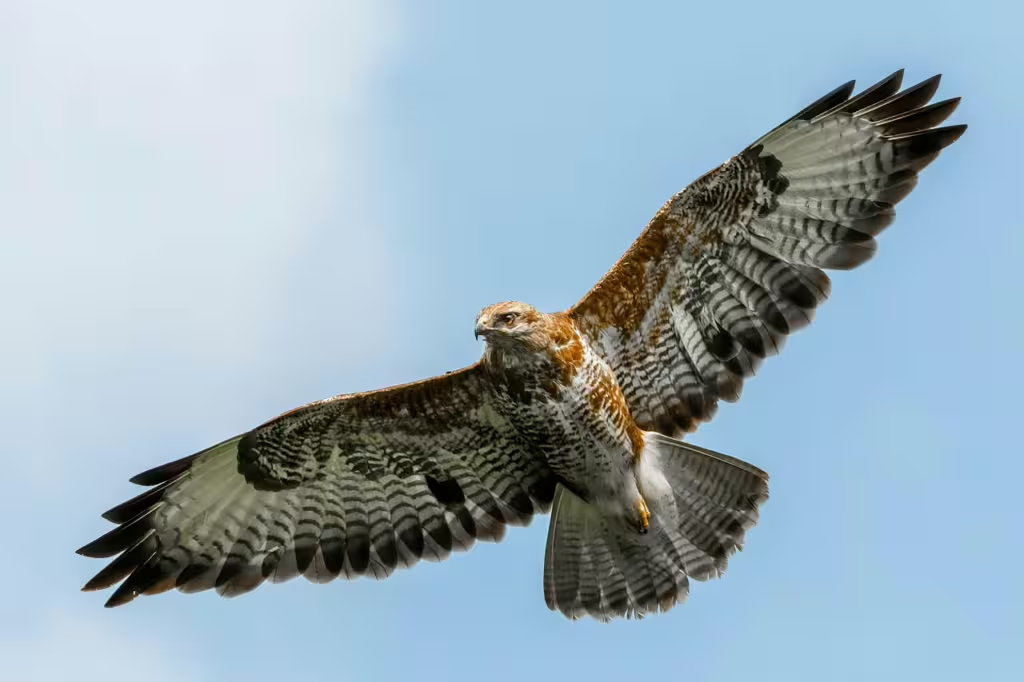

The gift of flight is one that has only been granted to a relative handful of creatures on our planet over the millennia. It comes in many varieties, from the ability to hover with tiny, flapping wings, to soaring across the breadth of continents on massive wingspans. Here at True Investigator, we’ve had the chance to examine some of the swiftest flyers in nature as well as some of the fiercest avian hunters. Today, we look at a group of birds that represents both aspects at once; the hawks.
Whether soaring over open fields, lurking in the branches of forest trees, or perching upon deserts cacti, hawks are one of the most versatile raptors found in nature. These bids patrol the skies with quiet precision, gliding almost effortlessly until they suddenly swoop into a dive. As they fall, they lock onto prey with remarkable accuracy and within a matter of seconds, the hunt is over.
In this article, we will talk about the finely-tuned biomechanical adaptations that allow the hawk to be such an effective predator across multiple biomes. As we explore their evolutionary advantages, we will see how their lethal combination of patience, speed, and precision is the work of both anatomy and behavior. So watch the skies, dear readers, you never know when a hawk may strike!
Built for the Sky
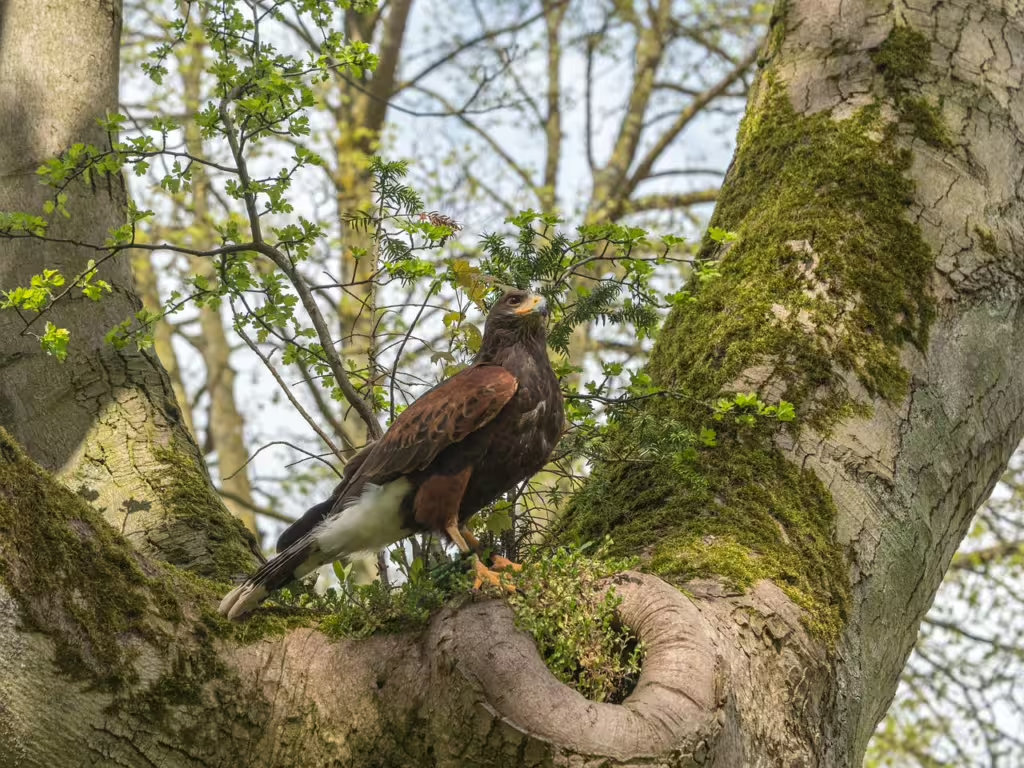
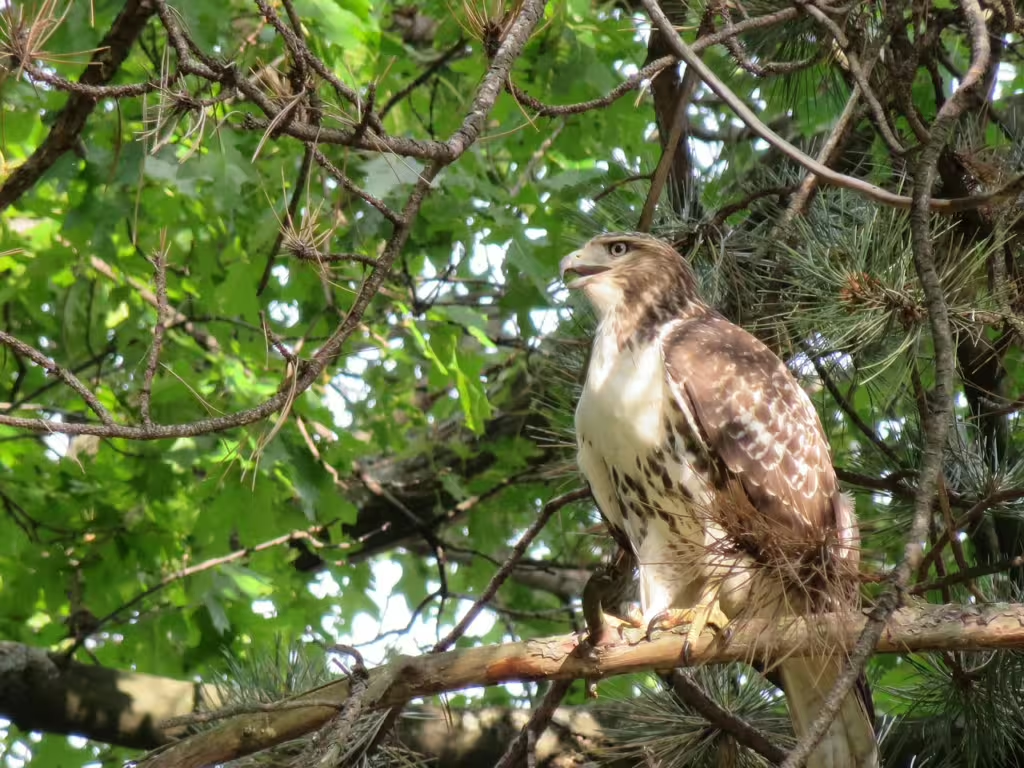
Hawks are part of a group of birds of prey known for their keen vision and strong flight abilities. One of the most popular species among these is the Red-tailed Hawk, which can be found all across the North American continent.
Hawk bodies are designed for a mixture of soaring and sudden bursts of action. They have broad wings that offer lift and gliding potential, strong chest muscles for powerful wingbeats, and lightweight bones that help them to soar higher.
Why do they soar? So that they can use their “hawk-eyed vision” to scan large swaths of land for potential prey. The adaptations listed above are there so that the hawk can conserve the most energy possible while doing so.
The Physics of Soaring
A hawks hunt usually begins with them soaring off into the distance in search of food. As it takes to the skies, the hawk takes advantage of thermals, rising columns of warm air in order to keep it aloft. Using thermals will allow the hawk to conserve its energy for the moment when it needs to dive. By circling within these helpful air currents, hawks can gain altitude without flapping, while also extendingh their hunting range.
The energy efficiency of this step is crucial. Hunting requires bursts of intense effort, so minimizing energy use beforehand increases the chances of success.
Vision: The Ultimate Targeting System
If the hawk’s wings are their main evolutionary advantage, their eyes are a close second. Hawk eyes are capable of seeing fine details from great distances and can detect small movements on the ground, even as they soar high in the sky. In addition, hawk eyes are capable of seeing a broader range of colors than humans and research indicates that their vision is several times sharper than that of the most “eagle-eyed” humans.
Such remarkable vision enables hawks to detect their chosen prey, rodents or small birds, even when they are partially hidden and even from a significant distance. Once their prey has been spotted, the hawk begins to adjust its position in the air…
The Dive: Speed and Control
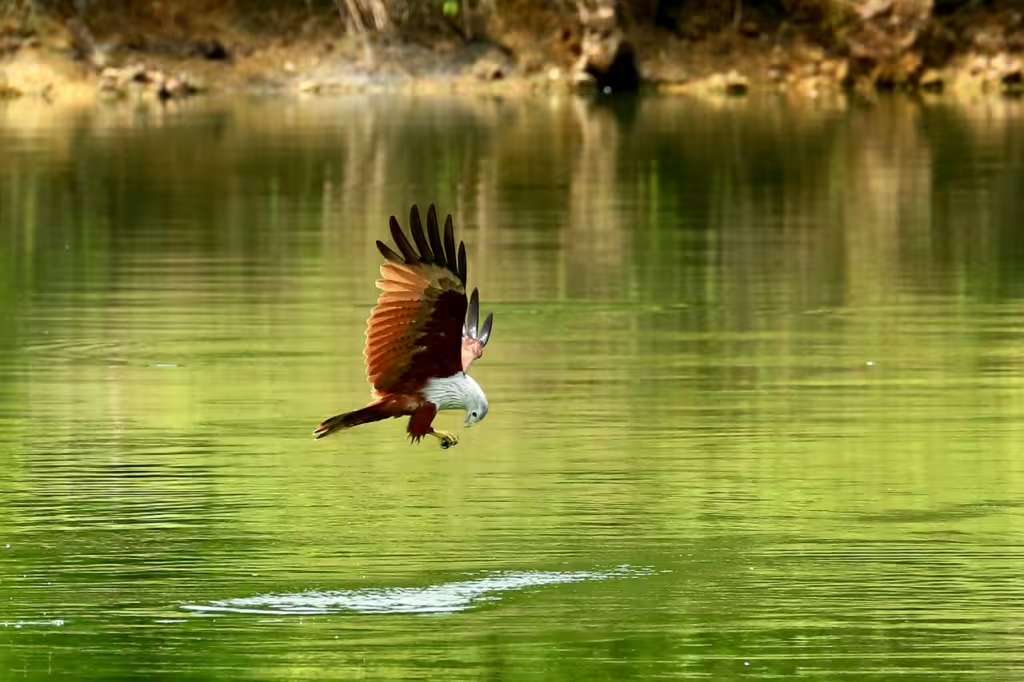
The most dramatic phase of the hawk hunting process is the dive. Once the hawk has decided on its prey, it transitions from gliding into furious descent. It tucks its wings slightly to reduce drag, allows gravity to build up speed, and keeps precise control of its direction as it descends.
Unlike the Peregrine falcon and other birds that rely on extreme speed for hunting, hawks have a way of balancing speed and maneuverability. Why do they do this? Well, if the prey noticed them coming, they need to be able to change direction quickly.
Wing Shape and Function
Though different hawk species have slightly different wing shapes, depending on their environment, the vast majority of hawk wings are broad and rounded, with slotted feathers at the tips. These shapes offer hawks better lift at lower speeds, more stability during a glide, and greater maneuverability during those epic dives. The slotting in the feathers also helps to reduce turbulence, which allows the hawk to main control at all stages of the flying process.
The Role of the Tail
Those of us who don’t fly, don’t really appreciate how effective a bird’s tail feathers are. The hawk’s tail is more than just a stabilizer, it’s a rudder that helps it to steer, adjust pitch and balance, and can even work as a set of air brakes when the hawk lands or strikes. During a dive, subtle tail movements help fine-tune the hawk’s trajectory, which is necessary when chasing after fast-moving prey.
Talons: Precision Tools for Capture
A hawk’s talons are its primary weapons, though its sharp beak doesn’t hurt. The sharp, curved talons, however, are strong enough to grip on and hold struggling prey. They are also positioned in such a way that they can hit for maximum impact during a dive. So long as they hit the prey at the right angle, they can grip, crush, and immobilize their would-be meal.
Adaptations to Different Environments
Different hawk species have evolved to hunt in specific environments. Hawks that live in open landscapes like meadows, plains, and deserts are designed for high soaring, direct dives, and possessed of long-distance vision. Meanwhile, hawks that live in the forest can navigate dense trees and so, need to fly in short, rapid bursts. They also need to have excellent vision, because visibility is often obscured by surrounding vegetation.
True Investigator Says…
As you can see, hawks are not just powerful predators, they are finely tuned biological systems that have been shaped by evolution to meet the demands of their various environments. The hawk’s unparalleled hunting ability is the result of complex biomechanics working in harmony. We can see that their predatory prowess offers insight into humanity’s broader understanding of movement, adaptation, and complex survival tactics possessed by birds of prey. Perhaps, in some way, it offers us a glimpse into the very nature of nature and how extinct raptor relatives may have hunted in a bygone primordial age.
Discover more from TrueInvestigator
Subscribe to get the latest posts sent to your email.