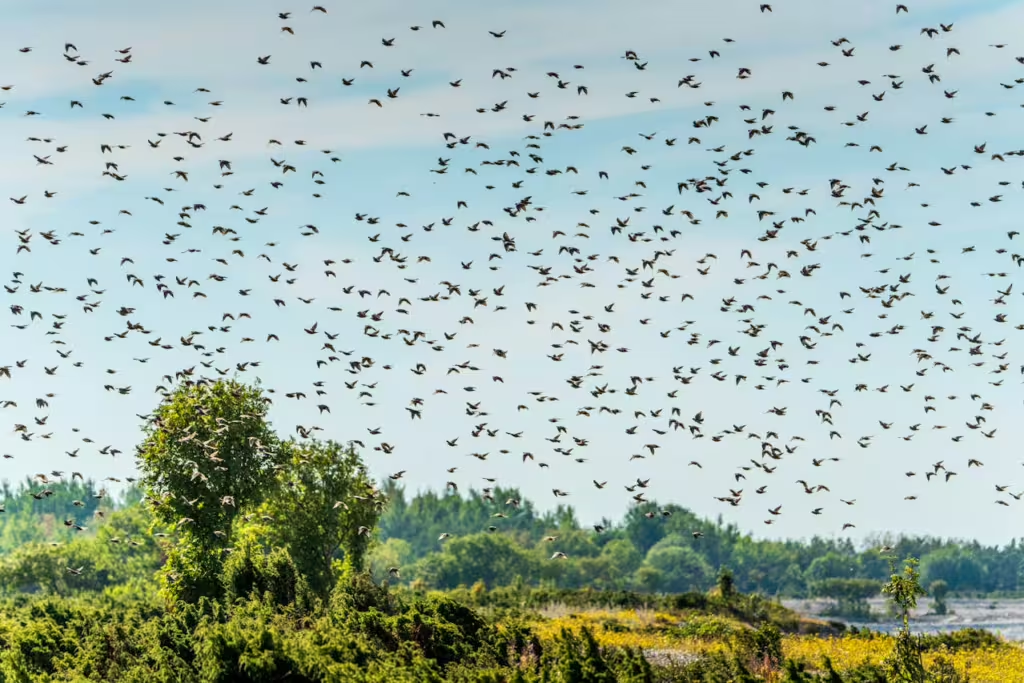

Most readers, even if they have only a cursory understanding of the natural world, will be unfamiliar with the term murmuration. If this is a term you haven’t heard before, don’t worry about it; it’s not as if it is a part of common parlance. The closest synonym you might be able to connect it to is a flock.
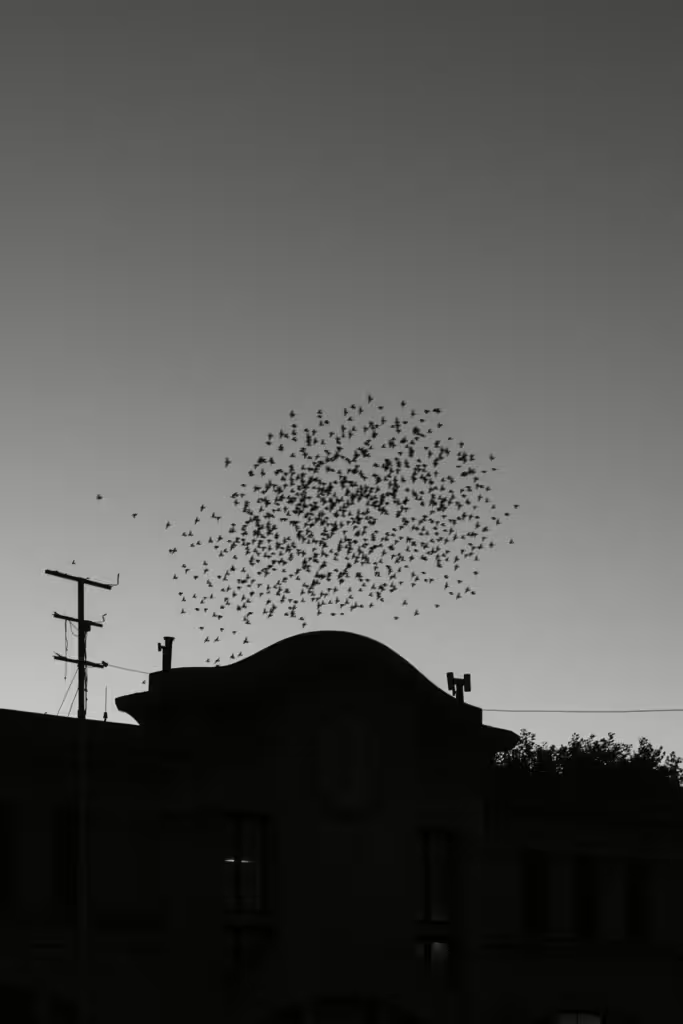
That said, the spectacle that is a murmuration is not a mere flock, but thousands, sometimes hundreds of thousands, of birds move together in shifting, fluid patterns. Often times, this type of massive collaboration of birds can form shapes that ripple and twist like living clouds. And the most famous performer of these hypnotic displays is none other than the European Starling.
In this article, we will discuss murmurations and the starling in detail. We will explain how, chaotic as they might seem to the casual observer, murmurations are a sophisticated system of coordination and communication. Moreover, we will explore how these artistic displays are actually a vital part of the birds’ survival mechanisms.
What Is a Murmuration?
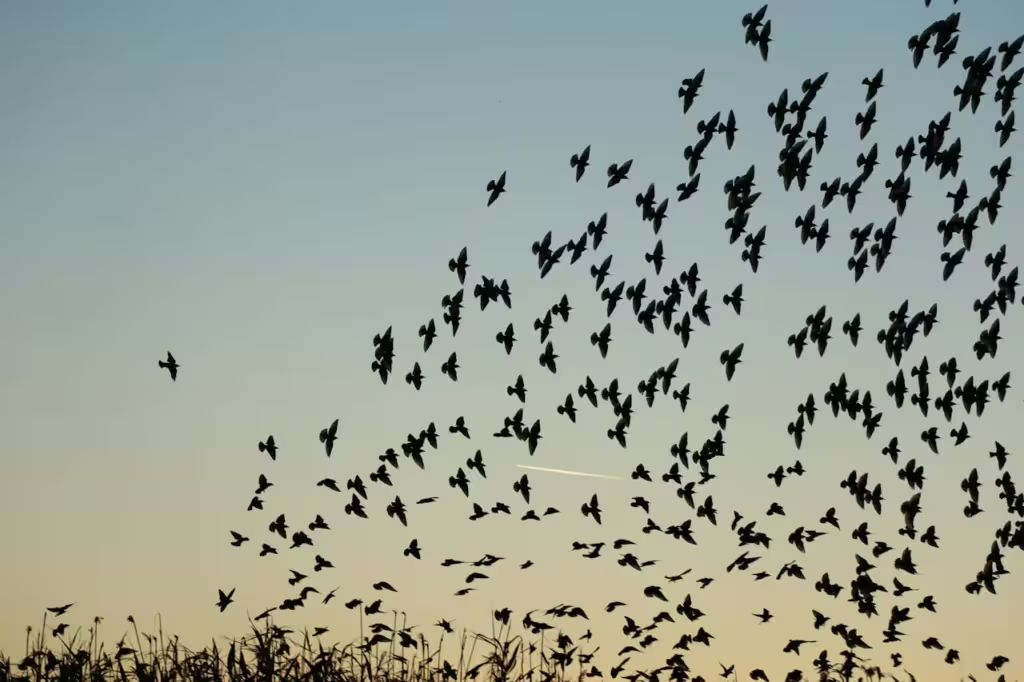
If we are merely defining a murmuration, then we are simply calling it a large flock of birds flying in highly coordinated, constantly changing patterns that lasts for several minutes. However, anyone who has been fortunate enough to witness a murmuration, either in person or through video media, know that it is far more breathtaking then a mere definition could describe.
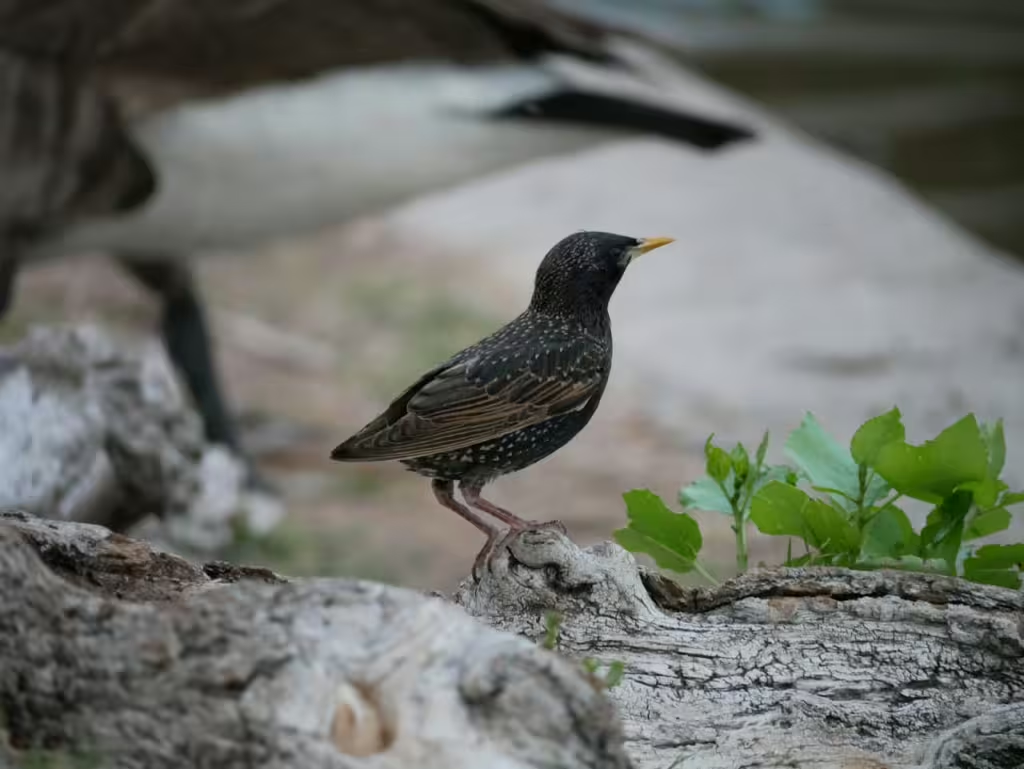
Also, while many bird species flock together, starlings are a cut above the rest in terms of aerial artistry. These birds are well-known for forming dense, dynamic groups that seem to move with shared purpose. To the uninitiated, it almost seems like a swarm of insects, moving at the behest of one single mind, but birds are independent thinkers through and through.
In general, murmurations occur at dusk, before the birds settle for the night. They also tend to be near roosting sites such as trees, reeds, or urban structures. Finally, they only usually take place during certain times of year, especially in autumn and winter.
Why Do Starlings Form Murmurations?
These displays are not simply to delight onlooking humans but to distract would-be predators. Starlings gather in large flocks is an effort to keep one another safe from falcons and the like. The seemingly random movement confuses the predator and makes it difficult for even the most keen-eyed hunter to target a single bird. The result is that each individual bird has a better chance of surviving the encounter. This is the absolute definition of safety in numbers.
At the same time, this type of flocking may also help the birds share information about food sources and safe roosting locations. It isn’t that they share a brain, they just share knowledge; something that many non-humans don’t actually have the capability to do. The murmuration also helps keep the birds warm, especially in colder weather, and as the birds begin to gather at roosting sites.
The Science of Coordination
The question on everyone’s minds right now has likely got to be; how on Earth do these birds coordinate their movements so precisely?
Thus far, researchers have found that each starling does not track the entire flock. Instead, the flock itself follows a few simple local rules. First, each bird typically pays attention to about 6 to 7 nearby birds. Each bird periodically adjusts its speed and direction based on its neighbors, thus contributing to the overall movement of the group. This concept is known as local interaction.
At the same time, scientists describe three basic rules that govern flocking behavior:
Alignment – matching the direction of nearby birds
Attraction – staying close to the group
Separation – avoiding collisions
These simple rules, repeated across thousands of individuals, create the complex patterns seen in murmurations.
A Living Network
Murmurations function like a living network of individuals, but within this network, information moves so rapidly through the group that is hard to clock. It’s remarkable to witness. For instance, say one bird changes course in response to a predator, that change spreads quickly across the flock until all of them do so. In these moments, the wave can actually travel faster than an individual bird can fly, allowing the entire group to respond almost instantly.
The Role of Physics
So how does physics play into all of this? After all, flying, in and of itself, sort of defies much of our own physical limitations. The thing is, murmurations are not only a biological phenomenon, they also involve principles of physics. Researchers have used mathematical models to study how flocks behave, comparing them to systems such as fluid dynamics, particle motion, and magnetic fields. In fact, by studying murmurations, scientists gain insights into collective behavior, a concept that applies to many systems in nature.
Energy Efficiency and Movement
There are some theories that flying in a group may also provide added energy benefits to starlings. We’ve seen it in birds that fly in V-shape formations when they migrate, and while murmurations are not as structured as those formations, they might still reduce air resistance in certain positions, as well as allowing the birds to adjust their movement more efficiently.
Visual and Sensory Adaptations
Though not falcons, starlings are quite keen-eyed themselves. This is because they rely heavily on vision to maintain coordination during their murmurations. Their eyes are positioned to provide a wide field of view, allowing them to monitor nearby birds and detect changes in movement. In addition, their reflexes are quite hair-triggered, allowing them to respond quickly to visual cues, and make rapid adjustments as needed. This sensitivity is essential for maintaining the tight spacing seen in murmurations without collisions.
True Investigator Says…
As you can see, the murmuration of starlings is more than a beautiful, chaotic display, it is a prime example of how nature can be organized, communicative, and artistic, all at once. Over many centuries, the starlings have found ways to move as one, strengthening their bonds and responding to their environment in ways that humans are only now beginning to comprehend.
At the same time, we can see how this behavior mirrors a lot of our own artistic expressions. We are social creatures and through dance, music, and art, we too have found ways to move and act as one. This enriches our own social interactions in many ways, just as the starlings’ murmurations enrich their own. In the birds’ case, this finely-tuned evolutionary behavior is vital to the way starlings move and act around one another, and that makes it essential.
Discover more from TrueInvestigator
Subscribe to get the latest posts sent to your email.