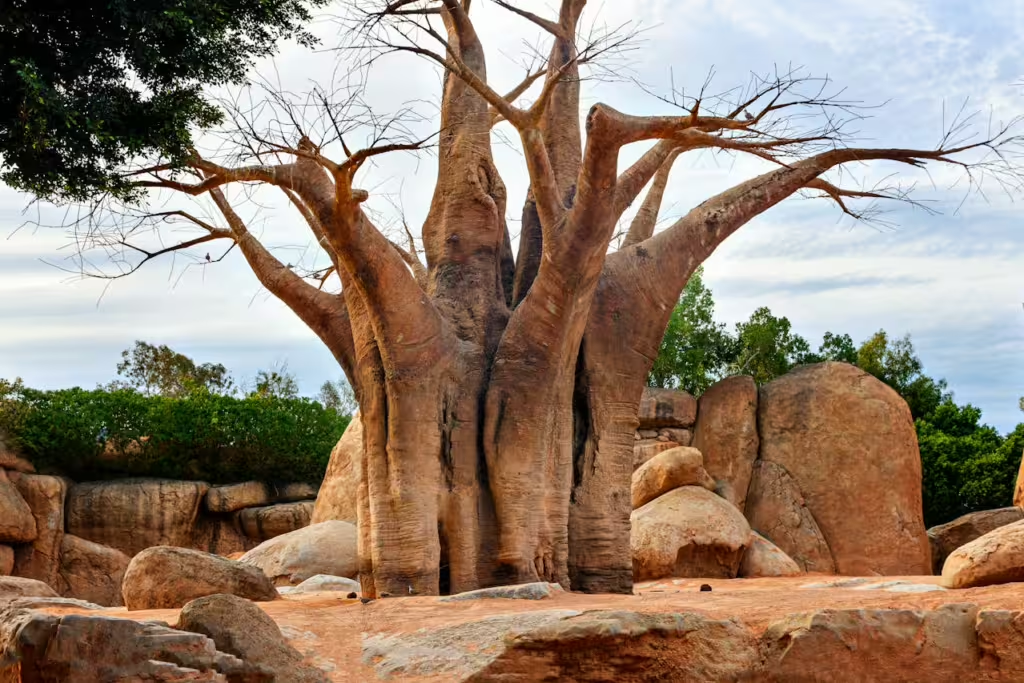

Imagine, if you will, that you’re staring out across the wide, sunlit plains of Africa. The endless grasses of the savanna stretch toward the horizon. Iconic animals meander about; giraffes, zebras, elephants, and a thousand others. In the middle distance, a gnarled, familiar-looking tree stands sentinel amongst them. remarkable tree rises above the landscape. With its thick, swollen trunk and sparse, twisting branches, the baobab looks almost alien, but it too is an iconic mainstay of this African paradise.
Looking like a tree that’s been turned upside down, the legendary baobab is one of the most unusual trees on the planet. Some call it the “Tree of Life,” due to the fact that it has adapted to survive in some of the harshest environments in the world. This name also reflects how a lone baobab can support a wide array of wildlife as well as human communities.
In this article, we will talk about the baobab and what evolutionary traits have made it such a hearty plant. We will also discuss its cultural and ecological relevance. So get in your safari jeep and get ready, we’re heading out into the grassland in search of a real life Tree of Life.
A Tree Like No Other
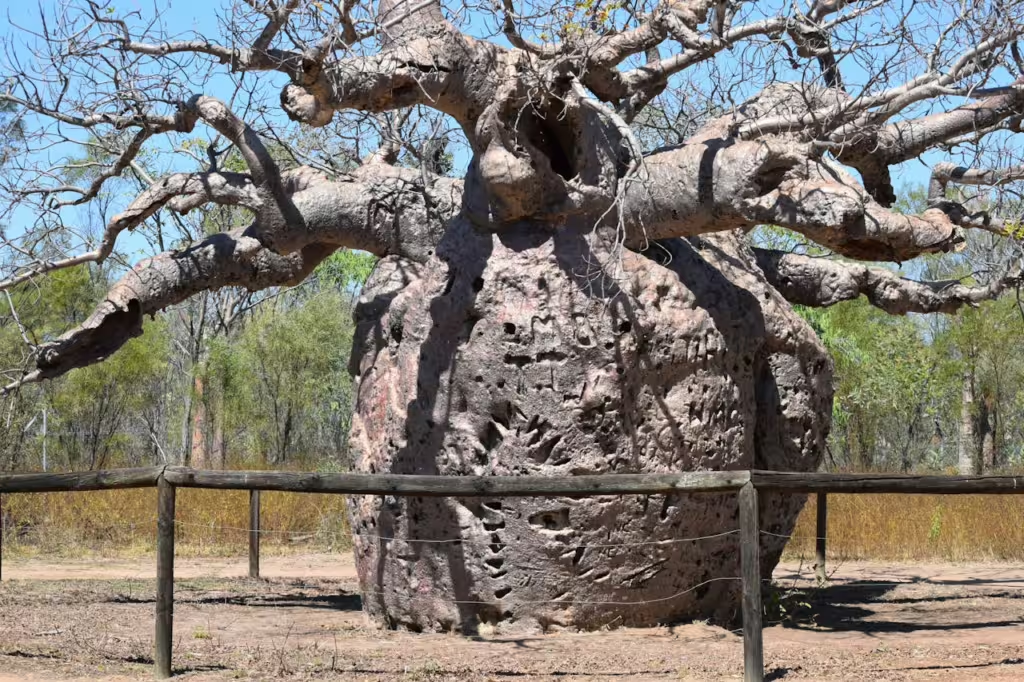
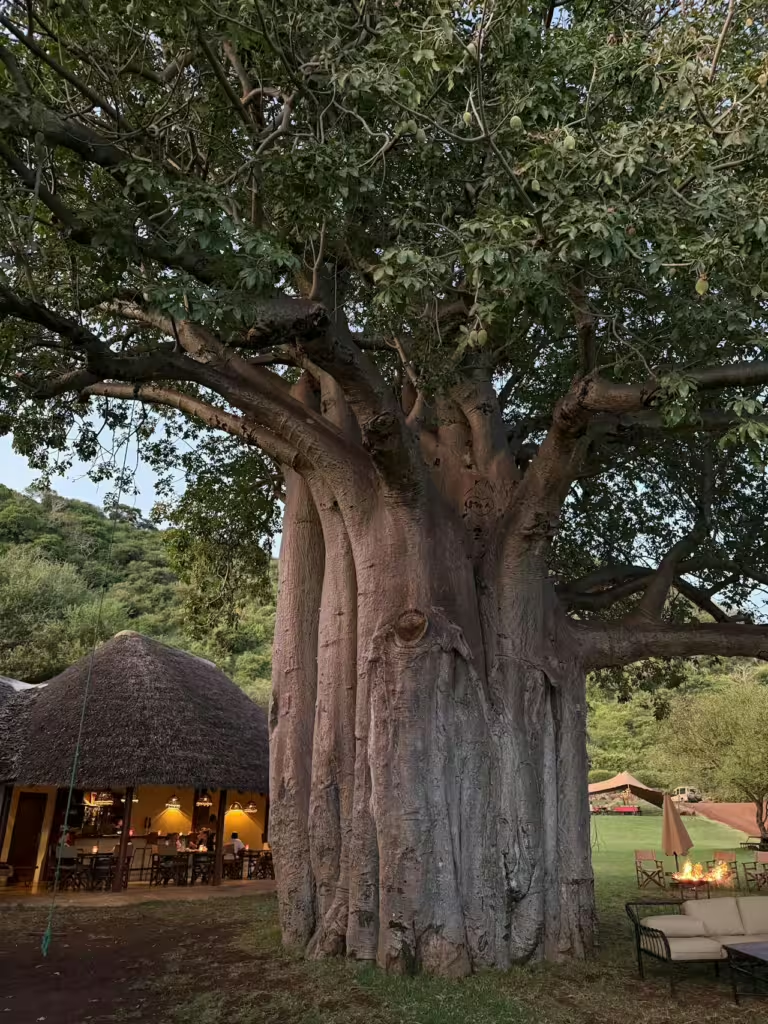
To say that the baobab’s shape is striking would be an understatement. You need only look at a picture of the tree to see why it is particularly noteworthy. Nevertheless, it is not merely the surface of the baobab that’s worthy of appreciation. The massive trunk of this tree can grow to over 30 feet, not in height, but in diameter. Meanwhile, its branches are often short and stubby compared to those of other trees.
As one might imagine, the baobab’s unusual appearance has inspired more than a few myths and legends. In some African folklore, the tree was actually planted upside down by the gods. Odd as it might look, however, every feature of the baobab serves an important function; both for itself and the creatures that rely on it.
Built to Survive Drought
The African savanna might seem placid when viewed through a camera lens, but it is a pretty extreme environment. There are long dry seasons followed by periods of brief, intense rain. The long durations between those extremes means that, to survive and endure months without water, plants must be able to store water as efficiently as possible.
The baobab is an example of a plant that excels at this particular superpower. That thick trunk we spoke of earlier? That’s a natural reservoir, capable of storing thousands of liters of water. With this water inside of it, the baobab can survive periods of prolonged drought, maintain internal moisture, and continue functioning even when other surround plants wither in the heat.
One of the main ways the baobab conserves water has to do with its balding upper branches. You see, during the dry season, the tree sheds its leaves, remaining semi-dormant until the rains come once more. In this way, it does not use any excess water or energy to keep the leaves green and growing.
Longevity and Growth
As if their ability to shed their leaves and survive during droughts wasn’t interesting enough, baobabs also have the distinction of being some of longest-living trees on Earth. According to experts, some individual specimens are estimated to be over 1,000 years old. And that’s not all! Certain specimens might even exceed an age of 2,000 years or more!
This means that some baobabs were alive at the time when their first legends were being told by early civilizations. Another interesting notion about baobab trees is that they don’t form traditional growth rings like other trees. This, in and of itself, is what makes determining their age so very difficult. As a result, scientists have had to resort to using carbon dating in an attempt to estimate their prodigious lifespan.
That big space in the middle of a baobab, usually reserved for storing water, can actually become hollow over time. This isn’t a sign of decay or rot, but a natural part of the tree’s growth pattern. These hollow spaces have been used by humans and animals alike for shelter and storage for untold generations.
Flowers That Bloom at Night
Baobab trees may not have leaves during the dry season, but they do produce large, white flowers when water is abundant. These flowers only bloom at night and possess strong scent that attracts nocturnal pollinators like fruit bats. The bats feed on the delicious baobab nectar and in doing so, transfer pollen from one tree to the next.
The ability to bloom at night not only lets the tree take advantage of the glut of nocturnal pollinators, but reduces competition for daily ones. Baobabs even produce fruit after they have been pollinated. These oval-shaped fruits care called “monkey bread” and contain a dry, powdery pulp rich in nutrients.
Supporting Wildlife
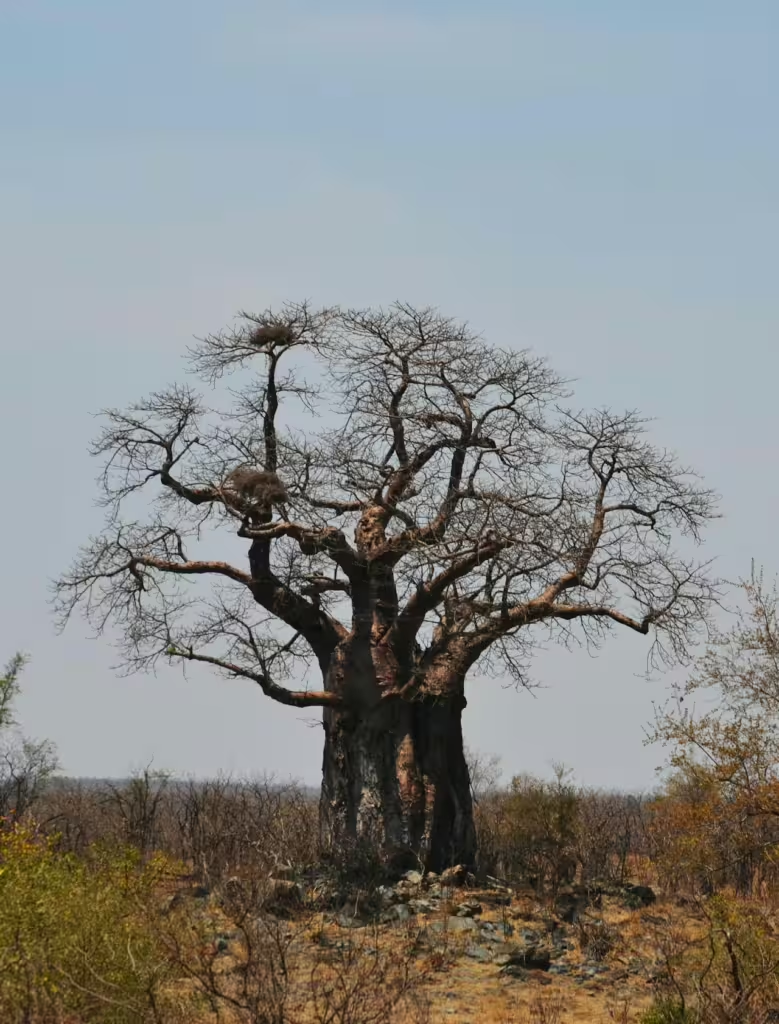
Baobabs are not just survivors, they provide branches for birds to nest in, fruit for birds and small mammals to eat, and leaves and bark to feed insects; and that’s not even mentioning the bats who love to feed on their sweet night nectar. Elephants also enjoy the baobab bark and will strip it for moisture during particularly dry seasons.
A Resource for People
For centuries, baobabs have been an important resource for human communities, providing vitamin C-rich fruit, leaves and bark for crafting, and hollow spaces to shelter and store things. Because baobabs can regenerate their bark after harvesting, they are considered a renewable resource when managed responsibly.
Cultural and Spiritual Significance
The baobab holds deep cultural importance in many African societies because they are seen as a symbol of resilience. Their size also makes them landmarks amidst the savanna and gathering places for communities of people. Over the centuries, tales and traditions have been tied to these trees, making them part of both the natural and cultural heritage of their home ecosystems.
True Investigator Says…
As you can see, baobab trees aren’t just giant, unusual sights dotted about the African savanna, they are oases, trapped in wood. The baobab’s water-storing trunks, night-blooming flowers, and life-supporting presence, make them an essential part of the grassland ecosystem, not to mention a vital water source for nearby human communities.
For untold centuries, these remarkable plants have endured an ever-changing climate, only to emerge mostly unscathed enough to support wildlife and people. The tale of the Tree of Life is one of resilience, adaptation, and the interconnectedness of nature.
Discover more from TrueInvestigator
Subscribe to get the latest posts sent to your email.