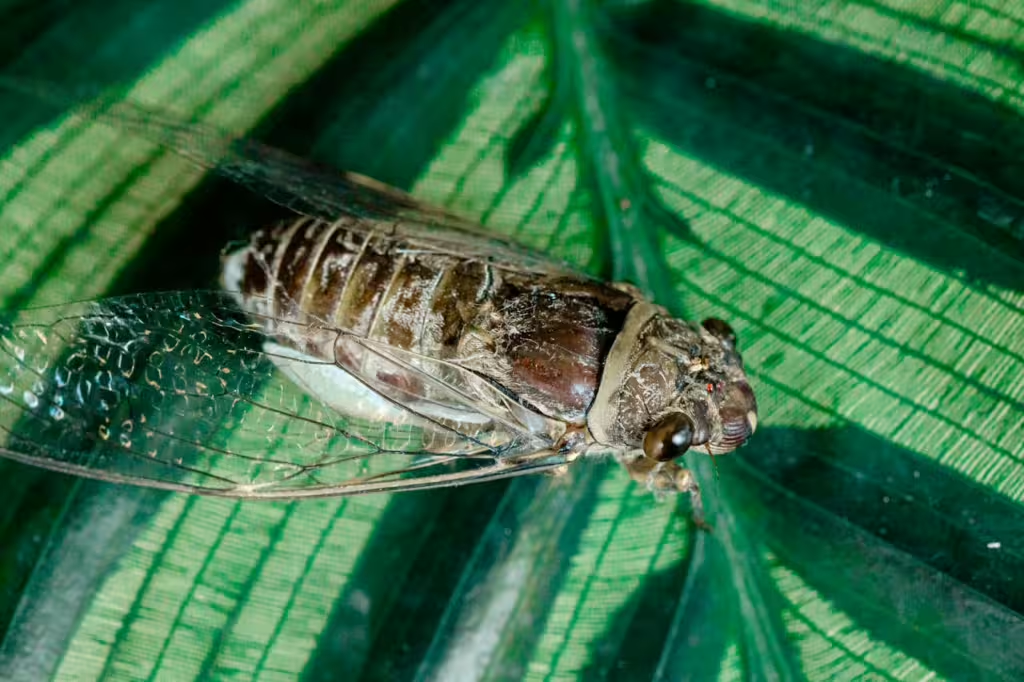

If you hail from a certain part of the United States, every so often, you’re treated to a sound that seems to vibrate through the very air itself. This rising, rhythmic chorus is the result of a brief, dramatic emergence, that of the 17-year cicada. Not everyone is aware of these humming insects, let alone what they sound like. Then again, those people are somewhat fortunate in that they don’t have to feel the crunching of fallen cicadas underfoot some weeks after their ephemeral, summer appearance.
In this article, we will discuss the amazing phenomenon that is the periodical cicada. These insects are known for their extraordinary life cycle: where they spend up to 17 years spent underground before emerging all at once and lingering for only around six weeks. Why do the cicadas live in this way? What biological adaptations allows them to do so? And why is this type of lifecycle so essential to the species’ continues survival? If you want to find out the answers to these questions and more, keep reading!

What Are Cicadas?
If you didn’t realize by the image at the top of this page, cicadas are quite unusual to behold. With their jeweled tones, large wings, and shining carapaces, some might even call them beautiful. Though we know not everyone can feel the same kind of fond appreciation for bugs as we do. Nevertheless, these insects belong to the order Hemiptera, a group which also includes other round-bodied, big-eyed specimens like aphids and leafhoppers.
It isn’t their appearance that usually catches peoples’ attention, however, but their loud, distinctive calls, which the male of the species use to attract mates.
There are two main types of cicadas, the first being annual cicadas, which appear every year, and the famous, periodical or “17-year cicadas,” which appear in synchronized cycles of 13 or 17 years. It is this latter category of insects that we are focusing on today, because their lifecycles are so unusual when compared to most other small animals.
The Beginning: Eggs in the Trees
The cicada life cycle is a long one and it happens in several stages, the first stage begins above ground, high in the trees. After a rousing, loud mating season, female cicadas use a specialized organ called an ovipositor to lay their eggs in small slits that they, themselves cut into tree branches. They deposit these eggs in clusters, laying sometimes hundreds of eggs in a single clip. After a few weeks, the eggs hatch into tiny ant-like nymphs, which make their way down to the soil. This descent is a stressful, dangerous one, and if they make it to the ground it will define the rest of their long lives.
Going Underground
Once they have reached the relative safety of the ground, the cicada nymphs burrow into the soil and attach themelves to plant roots. They will eat from the roots as they do so, feeding on a plentiful, but nutrient-poor fluid known as xylem fluid, that flows through plants.
Cicadas spend the majority of their lives under the ground, up to 17 years in some species, feeding on this root juice and waiting to emerge. As they do, they grow, albeit very slowly, shedding their exoskeletons multiple times in the process. They don’t just sit still as some people think, they will often move around under the ground in search of more suitable roots.
For the most part, they are safe underground, safe from predators and safe from environmental changes taking place above. But why stay down for so long? Is it merely to avoid predators or is something else at work?
The Final Year Underground
As the cicadas approach the end of their underground development, bodily changes begin to occur in earnest. Soil temperature plays a key role at this stage. For instance, when the ground warms to a certain level — typically around 64°F (18°C) — it signals that the time for emergence is near. Nymphs begin to dig upward, creating small exit tunnels that lead to the surface. This synchronized movement is important because it ensures that millions of cicadas emerge at roughly the same time. This, once again, has to do with their long-term underground seclusion, as you will soon understand.

Why 17 Years?
The truth is, the long life cycle of periodical cicadas has puzzled scientists for decades, but the running theory is that this long seclusion is a type of predator avoidance. Their timeline makes it difficult for predators to synchronize their life cycles with them on an annual basis.
When they do emerge, in late May or early June, the predators have a field day, eating as many of them as they can before and after they start dying off at the end of June and into July. This latter strategy is called predator satiation and it basically means there are far too many of them at once for the predators to eat, so plenty of the survivors get to mate and lay their eggs.
The Great Emergence
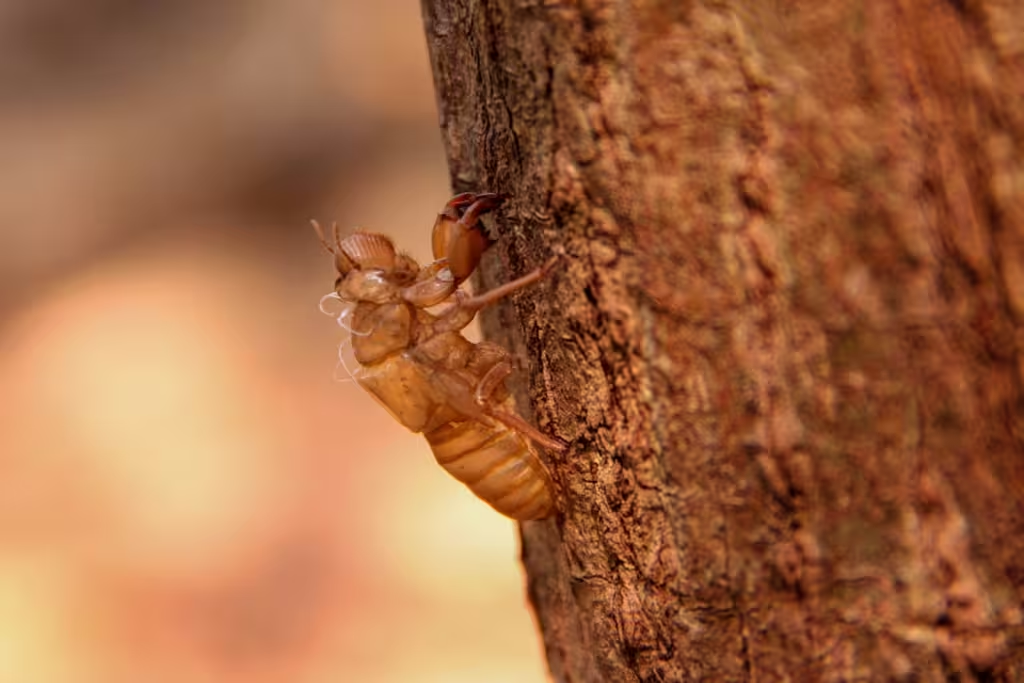
When the moment arrives, cicadas emerge en masse, usually at night. They climb back up into the trees, clinging to trunks, plants, even fences, as they begin to undergo their final transformation into their winged form. Within hours, the nymph splits its outer shell, and an adult cicada slowly emerges. Its wings expand and harden over several hours and it leaves its empty exoskeleton behind for us to find.
A Brief Life Above Ground
After spending up to 17 years underground, adult cicadas begin their mating behavior. They do it quickly, because they are only designed to live a few weeks above ground. Makes make loud calls called tymbals, which they use to attract females. Once they meet their mate or mates, the females climb up, lay their eggs, and begin the cycle anew.
Ecological Impact
Cicada emergences are important for other animals just as much as they are the cicads themselves. As they die, their bodies decompose, enriching the soil and benefiting nearby plants and trees that the cicadas eventually feed from whilst underground. At the same time, their tunneling behavior aerates soil. Finally, their crunchy bodies are a temprary, if not abundant, food source for birds, reptiles, amphibians, mammals, and even other insects. .
Final Thoughts
As you can see, as strange and loud as the cicada emergence is, there is no denying that the life cycle of these insects remains a remarkable example of adaptation and timing. By spending so many years underground, the 17-year cicadas avoid many of the dangers insects like them might otherwise face as they transitioned to their final stage of life. They only emerge only when conditions are right.
In the end, the story of the 17-year cicadas is one of patience, transformation, and the innate drive to perpetuate one’s species. Though their time above ground is brief, they use every second of it to ensure that future generations of cicadas live to sing the end of summer with their droning calls. Despite their abbreviated stint in the waking world, the cicadas leave an indelible impression that is impossible to ignore.
Discover more from TrueInvestigator
Subscribe to get the latest posts sent to your email.