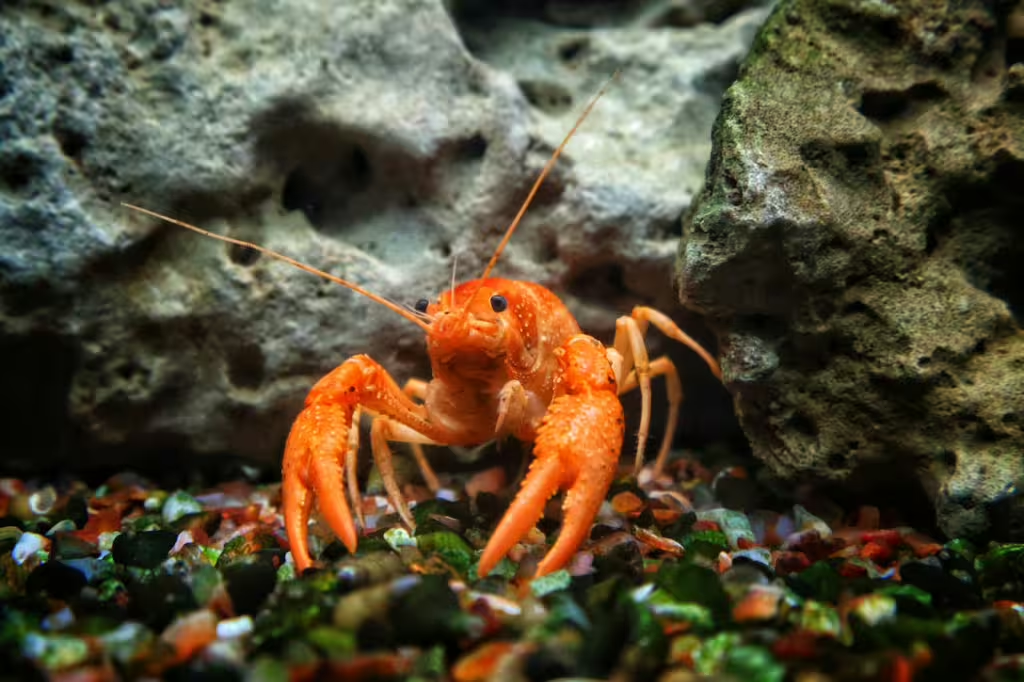

For most of us, crayfish are little more than a spicy snack we can choose to eat while eating Cajun fare. They’re little lobsters, delicious when dipped in drawn butter or else tank accessories for our home freshwater aquariums. And we aren’t the only creatures who dine upon these minuscule crustaceans and their kin. In their natural habitat, these scuttling mudbugs are an essential part of the ecosystem; a foundational element of the food web whose presence helps maintain the health of aquatic environments.
In this article, we will explore the differences in appearance and behavior, between crayfish and their distant cousins, the freshwater shrimp. These teensy crustaceans might seem different in many ways, but both are vital to the freshwater habitats they call home. Perhaps by the time we’re done, you’ll have gained a new sense of pride for the
What Are Crayfish?
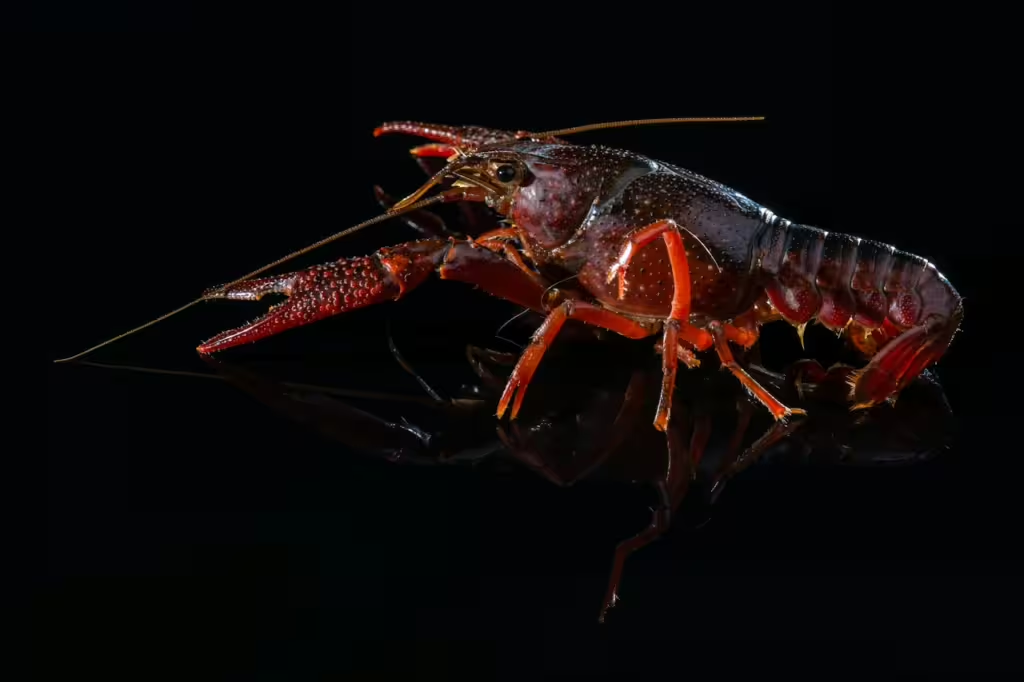
Crayfish (also called crawfish, mudbugs, or crawdads, depending on the region) are freshwater crustaceans that basically look like miniature lobsters. They belong to families such as Cambaridae and Astacidae and are found across North America, Europe, Asia, and parts of Australia.
Crayfish are easily recognized by their iconic, lobster-like visage, as well as their hard exoskeletons, long front claws, long antennae, and segmented tails. They range in size, growing upwards of six inches in length in some species, though some crayfish have been known to grow even larger than that.
Regardless of their size, these critters tend to make their homes at the bottom of freshwater streams, ponds, and rivers, where they hide beneath rocks, sunken logs, or in self-dug burrows in the silty mud.
Freshwater Shrimp: Smaller but Just as Important
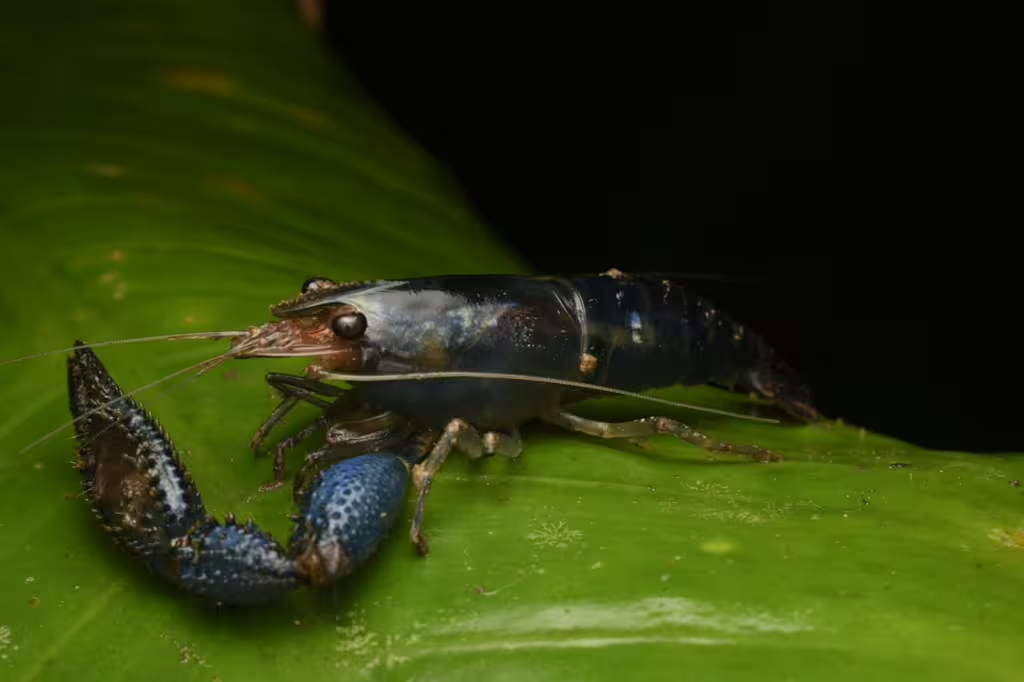
Whereas crayfish are fairly hearty for their size, freshwater shrimp are much more delicate in appearance and build. They lack the large claws and hard shells of their crawdad cousins. In addition, freshwater shrimp often appear translucent, whereas crayfish tend to be colored to blend into their surroundings. This translucence does work the same effect, however, rendering the shrimp nearly invisible in the water. They are more slender than crayfish and though they do have claws, they are much less prominent.
They belong to various groups, including families such as Atyidae and Palaemonidae. Like crayfish, freshwater shrimp are incredibly abundant in many ecosystems, which is important since they play key roles in maintaining water quality and feeding larger animals. Either way, their physical and behavioral differences allow them to occupy different ecological niches, even while coexisting in many of the same freshwater habitats.
A Shared Ancestry
Crayfish and freshwater shrimp are both decapods, so-named because they each have ten legs. Though they aren’t exactly the same, these animals share common evolutionary ancestry with other popular and oft-eaten crustaceans such as lobsters and crabs. Unlike most crabs and lobsters, that live almost exclusively in saltwater environments, crayfish and these particular shrimp have adapted in ways that allows them to thrive in freshwater.
Habitat and Distribution
Both crayfish and freshwater shrimp can found in a wide range of freshwater environments. They live in rivers and streams; places where many readers may have even caught them as kids. They can also be found in lakes, ponds, wetlands, marshes, and some have even found home on floodplains.
Even though these crustaceans sometimes call similar areas home, they look for different details when looking for a place to stay. For instance, crayfish tend to prefer habitats with shelter, such as rocky bottoms or muddy banks where they can burrow. Freshwater shrimp, meanwhile, like to hang out in leaf litter, submerged roots, or among underwater vegetation. In both cases, the dual decapods are looking for shelter from predators, which brings us to our next point…
Predators and Prey
Fish, birds, amphibians, and small mammals like raccoons and otters love to dine on a crayfish or freshwater shrimp now and then. This makes them an important link in the food chain. We humans like them too. Crayfish, in particular, have long been part of human culture and cuisine, particularly in regions such as the southern United States and parts of Europe. This means they are vital to the local human economy in many parts of the world.
Crayfish and shrimp are also predators in their own right. They feed on smaller organisms, helping maintain the ecological balance of their home ecosystems. Like many crustaceans, crayfish also happen to be omnivores and will feed on everything from plant material and algae, to inspects, small fish, and dead animals.
Freshwater shrimp are detritivores and filter feeders, however, and while they do eat algae and other microorganisms, they will also use their nimble claws to dig in to some decaying organic matter from time to time. They are not picky about whether or not that matter is carrion or just decomposing vegetation. In either case, their ability to break down and devour organic material, means they play a crucial role in nutrient cycling within their home ecosystems.
Invasive Species and Environmental Impact
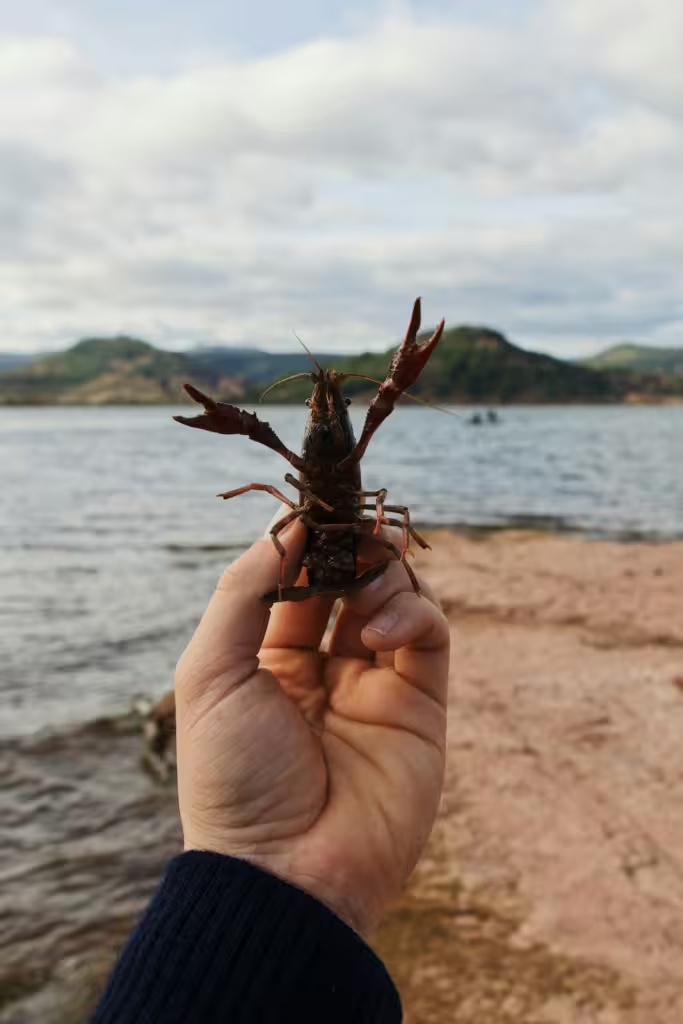
Despite how effective and important they are, some crayfish species have become invasive outside their native ranges. In some cases, they have outcompeted native species for food and territory, altered habitats via their burrowing, and spread disease. This is likely because crayfish are particularly strong and adaptable compared to some other freshwater regulars. Freshwater shrimp aren’t completely innocent either. They can become so numerous that they also become invasive at times, though their impact is often less dramatic.
Sensitivity to Environmental Change
Nevertheless, crayfish and freshwater shrimp are sensitive to changes in water quality. Pollution, habitat destruction and degradation, temperature changes, and reduced oxygen or higher pH can vastly affect whole populations. Because of this sensitivity, scientists often use these animals as indicators of ecosystem health. A decline in their populations can signal problems within a water system.
True Investigator Says…
As you can see, crayfish and freshwater shrimp are a favorite flavor of seafood for human beings, but they’re just as important as a food source for many freshwater creatures. Whether by burrowing, predation, or just being scrumptious, these teensy shellfish are vital to the continued health of freshwater ecosystems the world over. This is why, delicious though they might be, it is imperative that we do whatever we can to protect these creatures and the waters they inhabit.
Fresh water might seem like an infinite resource, but as climate change continues to ravage global temperatures in extreme and unforeseen ways, these pockets of harmony will become harder and harder to come by. As will the tiny creatures who inhabit them and make them hum with life.
Discover more from TrueInvestigator
Subscribe to get the latest posts sent to your email.