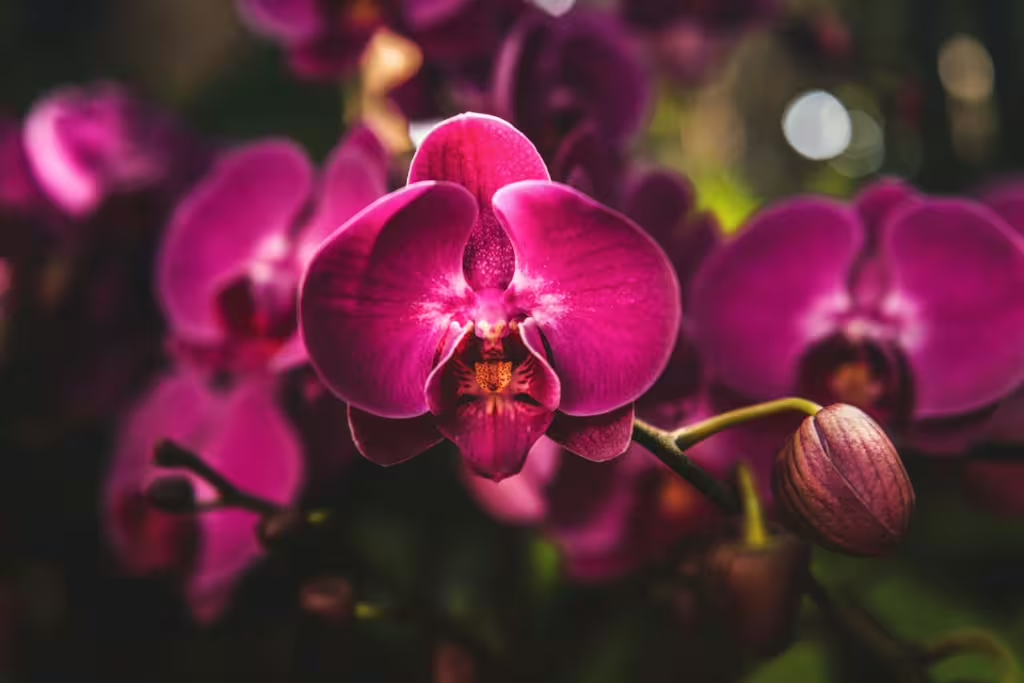

For most of us, the only experience we have with the dainty, enchanting little flowers known as orchids is limited to the grocery store florist around Springtime. We see them there, each one propped up in its own individual pot, advertising ease of care and pops of color for our mothers, aunts, and wives. Few of us realize that these innocuous, charming flowers actually hail from far-flung botanical habitats.
Rainforest canopies, wide expanse of grassland, or even high in mountainous peaks, the orchids of our world bloom in the strangest places imaginable. They bloom in a riot of extraordinary colors, shapes, and patterns, and no matter where their found, it is as if their beauty seems designed to attract our attention; clearly it works when we’re walking through the supermarket.
And yet, beneath the surface lies something far more intriguing than mere beauty. You see, many orchids are masters of deception. They draw pollinators into them with sweet smells, attractive shapes, and bright colors, but aren’t offering them any sort of nectar for their trouble. In this article, we will discuss how this unusual strategy works for the orchid, as well as how it has evolved over millions of years into some of the most intricate relationships between plants and pollinators that exists in nature.
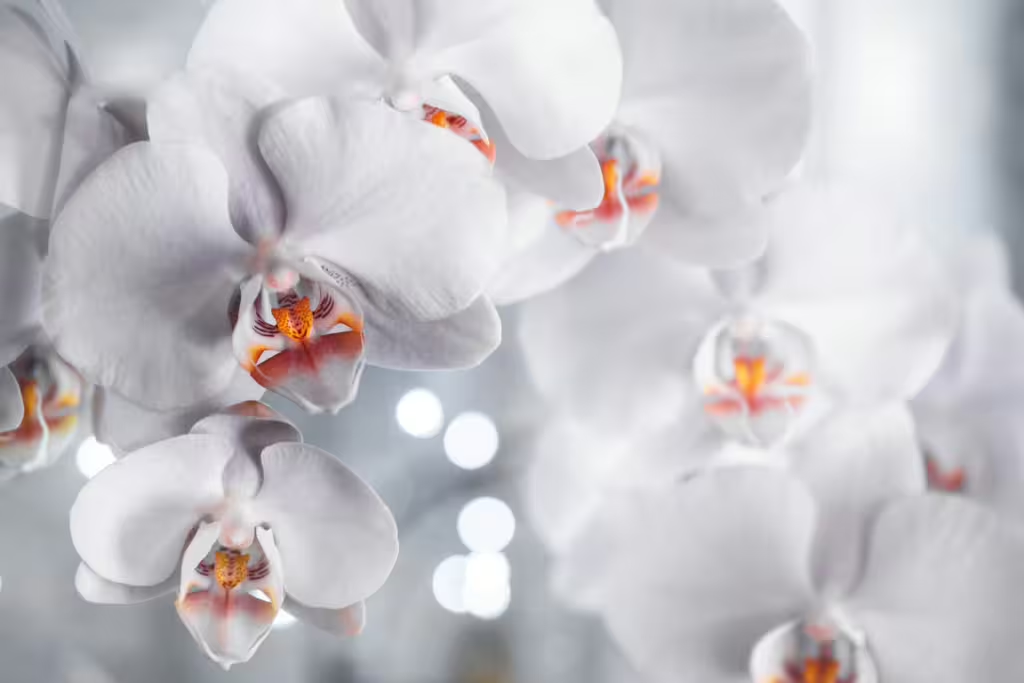
The Basics of Pollination
It does not take a professional botanist to understand that pollination is essential for flowering plant reproduction. In most cases, this natural reproductive process occurs when pollen is transferred from the male part of a flower to the female part, thus allowing fertilization and seed production. Many plants facilitate this process through flowering and they attract pollinators by offering things like nectar, pollen itself, or shelter.
Pollinators species, meanwhile, land on the plant or flower and inadvertently carry pollen from one flower to another. Birds, small animals, and especially insects like bees, butterflies, moths, wasps, and beetles are the most pollinators. They find themselves drawn to the flower with the promise of food or shelter, attracted by scent or appearance. Orchids, however, often take a different approach to attracting and rewarding potential pollinators.
Why Use Deception?
Growing requires energy and so does producing nectar. Orchids circumvent the need to produce nectar and instead rely on certain visual and chemical mimicry to produce the same alluring effect on pollinators. By doing this, orchids conserve resources and still manage to draw pollinators to them.
Let’s face it, bugs and other simple pollinators aren’t exactly geniuses. These insects are, for the most part, unable to distinguish between real rewards and the deceptive imitations that orchids manage to produce. Still, what if the bugs cotton-on to the orchid’s lies? Will the orchid be able to reproduce without pollinators?
Interestingly enough, they have that eventually sewn up too. Sure, deceptive pollination may seem like a risky move, but many orchids compensate for the possibility that some pollinators might not take the bait by producing large numbers of seeds, thus increasing their chances of success.
Sexual Deception: Mimicking Insects
Orchids also practice another sort of deception beyond being sweet and pretty like other flowers. They do this with something known as sexual mimicry or sexual deception. This is exactly what it sounds like, the orchid flower doesn’t smell like a flower, but smells like a female insect. Some even look a bit like a female insect in order to attract a male of that species. The males, again not being particularly smart, attempt to mate with the flower in a behavior known as pseudocopulation.
As it does this, the insect comes into contact with the flower’s pollen structures, pollen attaches itself to the insects body, and then the insect leaves, unsatisfied, in order to find a real potential mate. This might end up leading the insect to another orchid and boom, cross-pollination. A good example of this type of orchid is the bee orchid, which closely resembles female bees in both shape and scent.
This is a highly specialized strategy, as it often targets a single species of pollinator. However, that kind or specialization just makes it more efficient and precise.
Food Deception: The Promise of Nectar
Not all deceptive orchids rely on sexual mimicry. Some species use food deception, which we touched on earlier. Basically, the flower offers up nectar without actually producing it. Pollinators seen that the flower looks like ones they’ve had before and even if they don’t, they are drawn into the center of the flower by deceptive patterns.
The confused pollinators, expecting a reward, visit the flower and inadvertently transfer pollen. The best part of it all is, although the insect receives no benefit, it may continue to visit similar flowers, ultimately increasing the orchid’s chances of successful pollination.
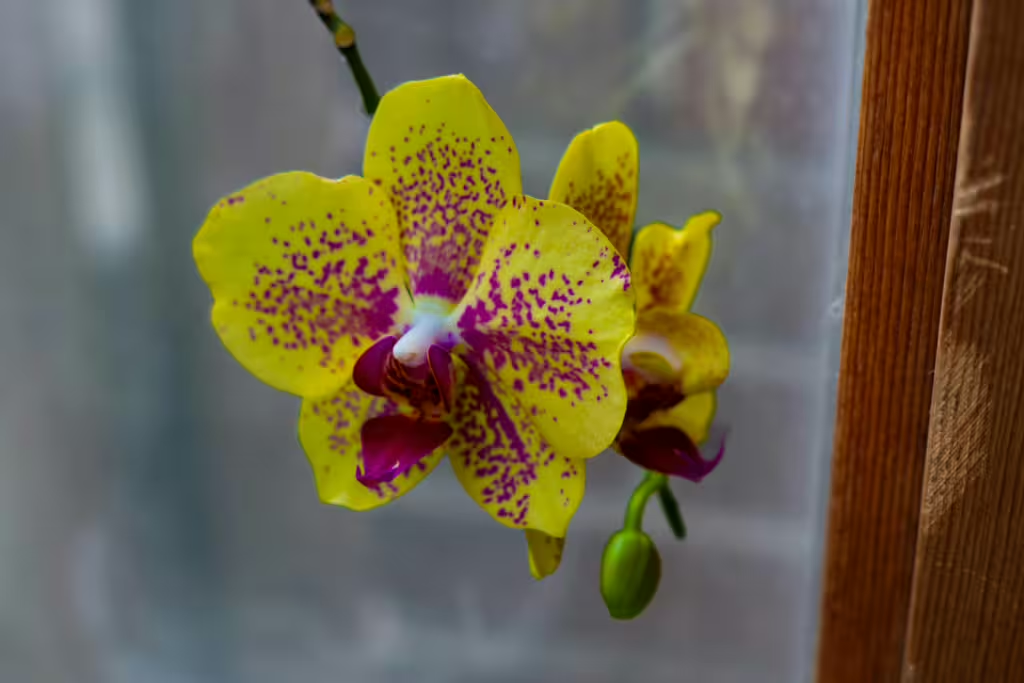
Scent Deception: Chemical Illusions
Orchids are also capable of producing highly specific chemical signals that mimic food, the smell of insect pheromones, or the scent of decaying material. Each orchid has a precise scent and/or appearance to target specific pollinators. For example, some orchids emit odors that resemble rotting flesh, attracting flies or beetles that normally lay eggs on decaying matter. Even as the flies land on the flower to lay their eggs, they unknowingly pick up pollen and fly off.
The Role of Learning in Pollinators
It should be said that pollinators are not entirely passive in this relationship. Insects, dim as they might seem, can learn from experience. And indeed if a pollinator repeatedly visits a deceptive orchid and receives no reward, it may begin to avoid that flower. Orchids have planned for this and counter by blooming in areas where there are many similar flowers, spreading out their flowering times, producing more seeds, or producing a large, unavoidable number of blooms that bugs just can’t resist testing out.
Evolution of Deception
The deceptive strategies of orchids are the result of long-term botanical evolution. These changes came about over many generations. Over time, plants that successfully attracted pollinators even through trickery, were more likely to reproduce. Those adaptations created more specialized and accurate mimicry, either through specific scents, precise bloom timing, and shapes.
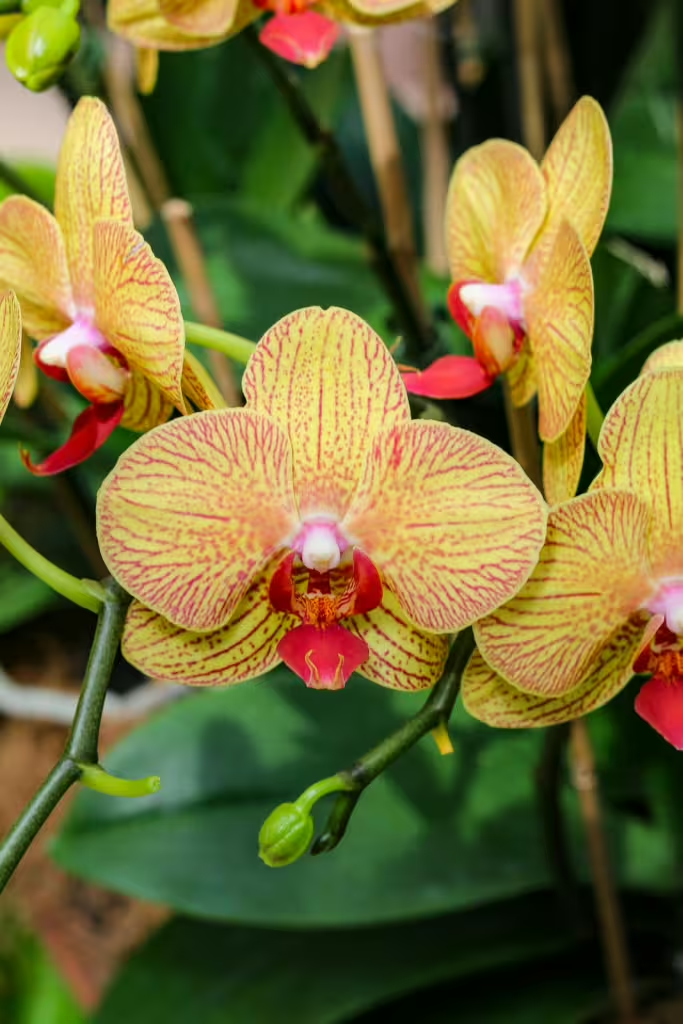
True Investigator Says…
As you can see, for all their perceived simplicity, orchids are clever in every way that a plant can be. These plants utilize deception, when so few plants do, having evolved ways to attract pollinators without offering any of the rewards that other flowering plants typically offer.
Whether by mimicking insects to producing convincing scents, orchids evince the complexity and ingenuity that is possible in the natural world. In a way, the tricks they use are simple, even if the evolutionary tools they used to get there are endlessly complex. In the end, orchids are just another reminded about how the beauty of nature isn’t just found in what we can see or smell, but in how much we glean about its endlessly inventive existence.
Discover more from TrueInvestigator
Subscribe to get the latest posts sent to your email.