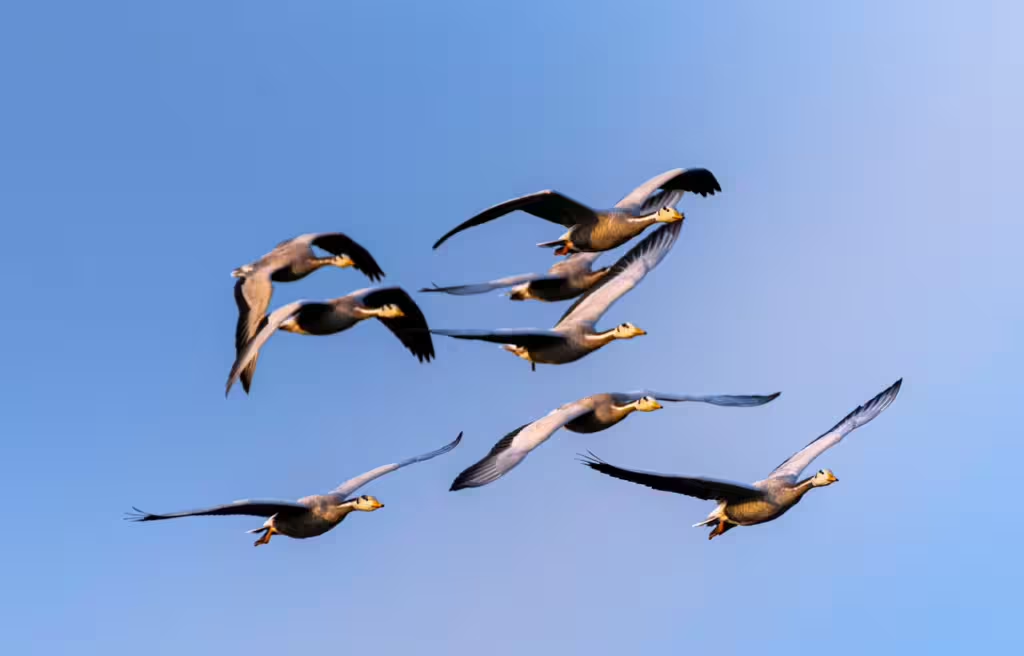

Each year, birds from one end of the world, make their way across the seas and skies, to breed and feed in an entirely different part of the world. We’ve spoken about the amazing migrations of many of our planet’s animals before. Most recently, the pole-to-pole journey of the Arctic tern, but today’s entry is a bird whose journey isn’t just a long one, it’s one that defies expectations.
The Himalaya Mountain range holds some of the tallest mountains on Earth, including the legendary Mount Everest. For centuries, humans have pushed themselves to the point of breaking to climb to this summit; some have never come back down. But one species of goose makes the journey above these towering, snow-covered peaks twice a year!
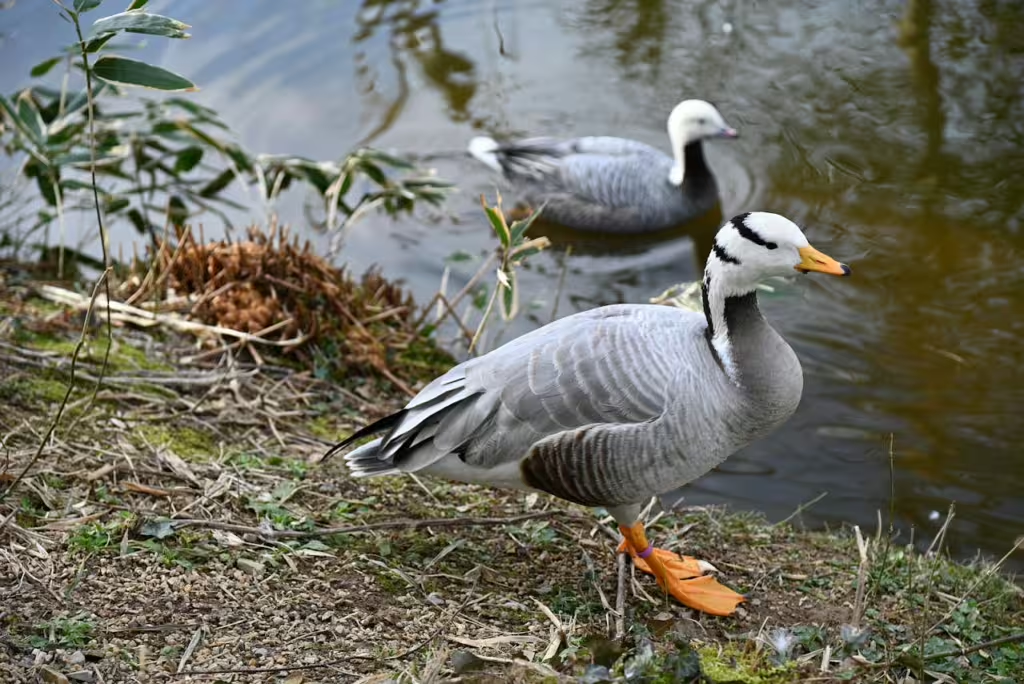
Pushing past the limits of biology, endurance, and survival, the bar-headed goose braves the thin, icy air and unpredictable winds to travel to its breeding grounds in Central Asia and wintering grounds in South Asia. In this article, we will discuss how these seemingly innocuous birds make this extraordinary journey. Along the way we will discuss their unique physiology, flight strategies, and unbelievable gumption!
A Journey Across the Roof of the World
In the spring and summer seasons, bar-headed geese breed in regions such as Tibet, Mongolia, and parts of Central Asia. Like Canadian geese, their lifecycle is such that they have to make their way to greener pastures when winter approaches. As the cold winds begin to rise, bar-headed geese make the move to migrate south to warmer areas, including India and surrounding regions.
The thing is, in order to reach these destinations, many flocks have to journey across the Himalayas, a mountain range that includes some of the highest peaks on Earth, including Mount Everest. Now, you’d think that most migrating birds would simply avoid these mountains and that to fly directly over them would make the bar-headed a very silly goose indeed, but these geese are not deterred by something as trivial as altitudes of 20,000 feet or more.
As far as we can tell, the geese are fond of the old adage that “the shortest distance between two points is a straight line,” and going around these mountains might be more time-consuming and problematic than simply flying straight over. Nevertheless, anyone who has ever attempted to climb Mount Everest can tell you that, at these heights, oxygen levels are less than half of what they are at sea level. Temperatures are also far below freezing and winds are rash and unpredictable. All of that to say that even flying over the Himalayas can be extremely challenging.
The Challenge of High-Altitude Flight
Flying at high altitude presents several major obstacles for birds. First and foremost, is the temperature, which is well below freezing in most situations. The oxygen levels are so low that it makes it difficult for muscles to function; which includes flapping wings. Then there are the strong winds and turbulence that come with being so high in the sky. Finally, the air is often less dense than it is at lower altitudes, making it harder for birds to generate lift.
Now, for most birds, these conditions would be too harsh to sustain flight. Bar-headed geese, however, have been doing this trip for so long that their species has evolved specific adaptations that allow them to overcome nearly all of these environmental challenges.
Specialized Respiratory Systems
Bar-headed geese have evolved a highly efficient respiratory system, even when compared to other migrating birds. Birds already have more advanced breathing systems than mammals, which allows them to have continuous airflow through their lungs. Bar-headed geese take this efficiency even further because their lungs are actually larger, relative to their body size. They also have more efficient oxygen exchange than other birds and practice increased breathing rates when at high altitudes. In short, their lungs are capable of extracting oxygen from thin air more effectively than those of most other animals, including birds.
Hemoglobin That Binds Oxygen Better
Believe it or not, blood is as important to flying at high altitudes as breathing. Bar-headed geese have this adaptation sewn up as well. These birds possess a unique form of hemoglobin, the protein that carries oxygen in the blood. This means that their hemoglobin binds oxygen more tightly than that of other birds, thus allowing them to absorb and transport oxygen more efficiently. And at times when oxygen levels are extremely low, this is incredibly valuable.
Powerful Muscles and Efficient Energy Use
Flying aint easy and doing it at high altitude requires both strength and efficiency. Bar-headed geese have stronger flight muscles than your average goose. They also have a more high-capacity energy metabolism, better adapted for endurance. This, plus their high-powered hemoglobin and efficient oxygen use, allows their muscles to function even with limited oxygen. This, in turn, allows the geese to maintain steady flight for long distances and without experiencing fatigue.
Flight Strategies: Timing and Route Selection
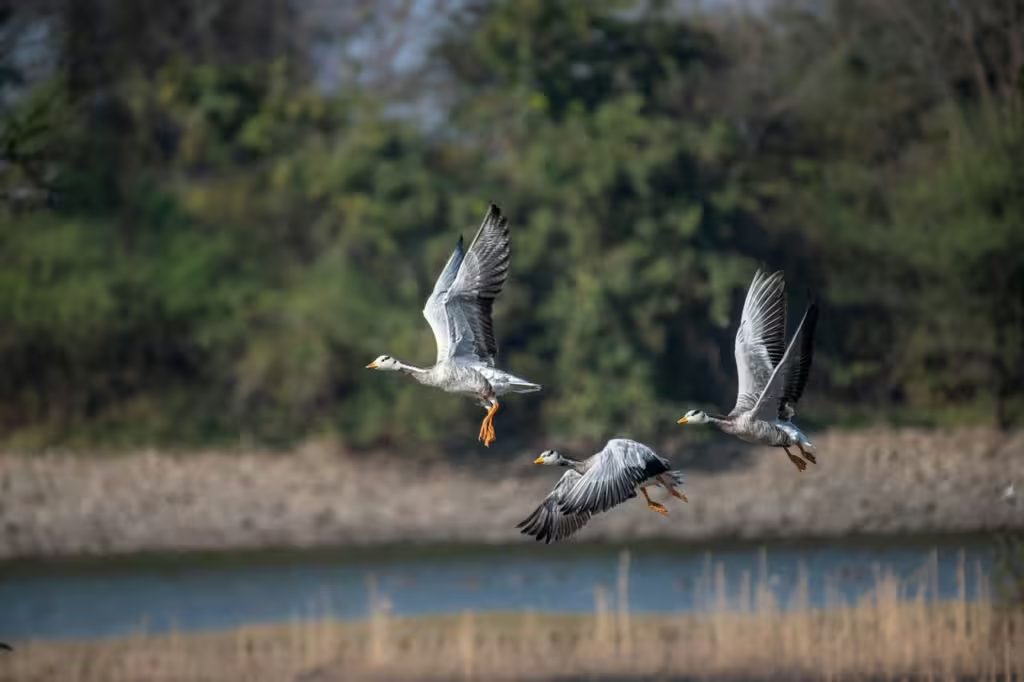
Bar-headed geese do not rely on physiology alone. Their behavior also plays a crucial role in the success of their journey. For once, they fly only at night or in the early morning, thus reducing turbulence and taking advantage of stable air conditions. They also wait for favorable winds, using them to assist their flight and helping them to conserve as much energy as possible whilst flying. These strategies help to minimize the physical demands of the journey, though risks remain.
Risks Along the Way
Despite their prodigious adaptations, migration over the Himalayas is not without its share of danger. Bar-headed geese have to contend with sudden storms in the mountains, exhaustion from long flights, and predation during their frequent stopovers. At the same time, human beings are already impacting their wetland habitats, which are degraded by human infrastructure, pollution, climate change, and simple degradation.
Training for the Journey
Young bar-headed geese actually need to put in some practice before they begin the journey. Despite being physically able to fly it, they do not instinctively know how to complete the migration on their own. They learn by following experienced adults, flocking together and allowing the birds to gain experience in the flight patterns, breathing, and flapping exercises needed. This type of social learning ensures that migration routes and strategies are passed down through generations.
The Importance of Stopovers
Although their high-altitude flight is impressive, bar-headed geese do not complete their entire migration in one single go; that’d be damned impossible. They will stop along the way, taking breaks at wetlands, rivers, and lakes they find so that they can rest, feed, and refuel their energy reserves. These stopover sites are critical for survival. Without them, the journey would be far more difficult.
True Investigator Says…
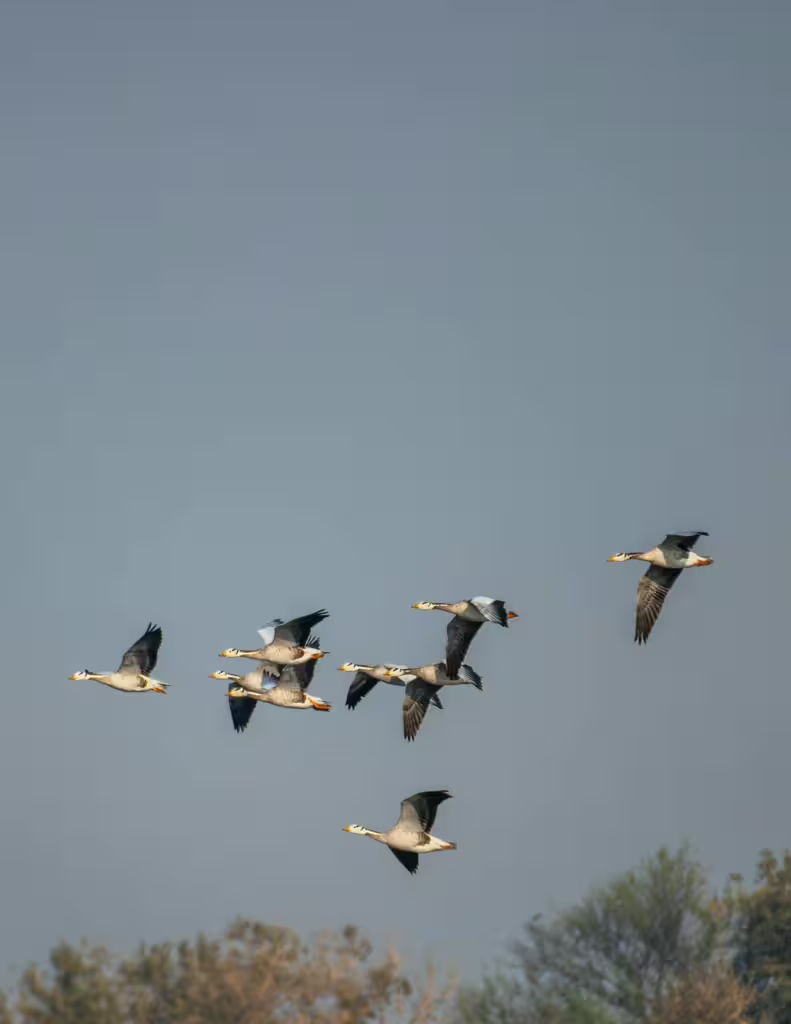
As you can see, bar-headed geese might seem like your run-of-the-mill waterfowl, but these remarkable birds are capable of a bi-annual feat that even the most talented hiking experts second guess. Their migration over the Himalayas is one of nature’s most extraordinary achievements and it would not be possible without evolution.
Over the millennia, these birds have adapted their physiology, flight strategies, and learned behavior to allow them to accomplish something many believe to be impossible. In the end, the journey of the bar-headed geese reminds us of the incredible capabilities of life on Earth and the true power of adaptation.
Discover more from TrueInvestigator
Subscribe to get the latest posts sent to your email.