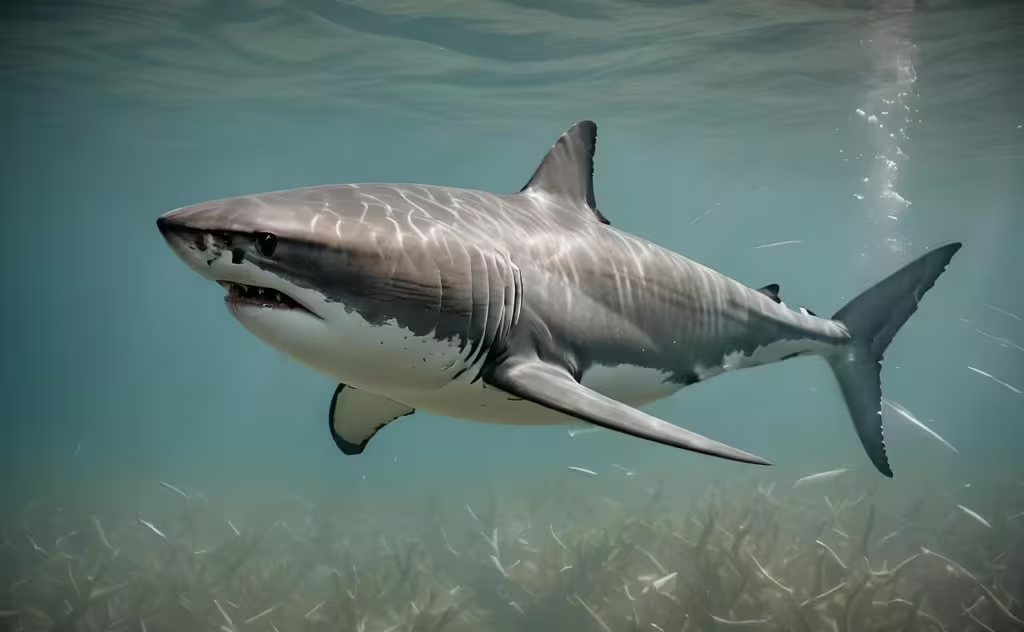

Sometime ago, we sat down to write an article about one of the most iconic species of predatory fish to swim the seven seas. At the time, we chose the hammerhead shark, a creature whose fascinating adaptations and hunting ability made it a real hit among our readers. But the people have spoken and today….we go bigger.
In all of human history, few animals have captured our imagination or instilled such naked fear in us quite as effectively as the great white shark. Their seemingly endless rows of sharp teeth, powerful bodies, and a reputation shaped by movies and headlines, it’s easy to imagine why. In almost all media, great whites are often portrayed as fearsome, relentless predators. For many people, they symbolize danger lurking beneath the ocean’s surface. But is that danger true or is it a self-perpetuating cycle of radical misconception?
In this article, we are going to throw caution to the wind and seek out this supposed danger. We will examine Great white sharks in detail, discussing some of the myths that have been perpetuated about them due to lack of understanding. By the end, we hope to devillainize these marine monsters so that people will see, once and for all, how remarkable they truly are.
A Great White Greeting
We begin with introductions! Meet great white shark, known to the scientific community as Carcharodon carcharias. This species is one of the largest known predatory fish in the ocean. Adults can grow over 20 feet in length and weigh more than 4,000 pounds. There were larger sharks, once upon a time, but fortunately, the Megalodon and it’s ilk have shrunken to be much more “manageable” since the Pliocene era.
Great whites can be found in coastal waters across the globe, though they are most common in temperate regions where prey is abundant. People know them by their powerful bodies, great size, keen senses, and strong tails…not to mention their maw full of sharp teeth. Yet, though we know a great deal about them, the lives of undersea creatures are, by their nature, a mystery to us landlubbers. This is why their behavior is still largely unknown. This is made even more difficult by the fact that they live in the open ocean, where man cannot easily tread water.
Myth 1: Great White Sharks Are Mindless Killing Machines
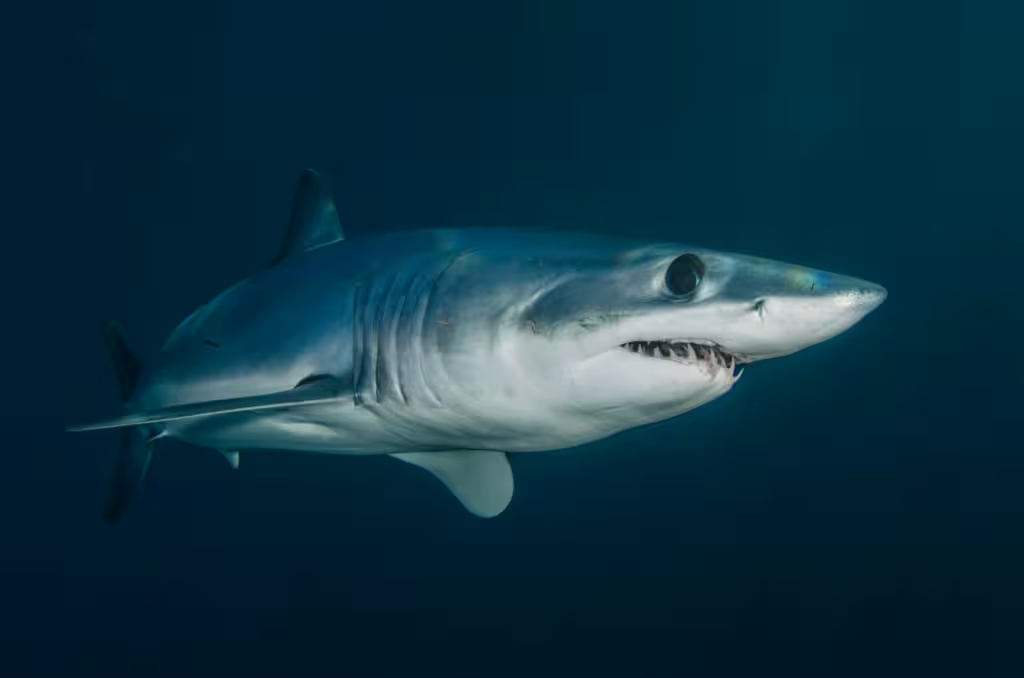
One of the most common misconceptions is that sharks, particularly large sharks like the great white, will attack anything they encounter. The truth is, almost all sharks are selective predators, seeking out specific, preferred types of prey. Great whites are no different and tend to prefer feasting on fish, smaller sharks, rays, cuttlefish, tuna, and seals or sea lions.
In fact, when sharks bite human beings, it is almost always a case of mistaken identity. This is not the case when a human bites a shark, however, as that is almost always intentional. But I digress. The reason sharks tend to attack humans is because from below, a swimmer looks a lot like a seal; a great white’s favorite treat.
It is also important to note that most shark bites are not fatal. In many cases, sharks will actually release humans after an initial bite, suggesting they quickly recognize the mistake and/or don’t much like our taste.
Myth 2: Sharks Constantly Hunt Humans
Popular media, specifically the Jaws or Meg series of movies, often portray sharks as actively seeking out humans. The not-so-scary truth of the matter is that shark attacks are extremely rare. Think about it realistically for a moment. Millions of people enter the ocean each year and despite the odd shark bite here and there, the incidence of unprovoked shark bites remains fairly low. Great whites have lived without interacting with humans for so much of their evolutionary history that they just wouldn’t consider us to be a part of their natural diet; if indeed they consider us at all.
Myth 3: Great Whites Are Always Aggressive
There is no doubt that great whites are powerful predators and voracious eaters but they are far from being constantly aggressive. They are not one-dimensional creatures. They exhibit a wide range of behaviors and likely emotions depending on the situation. These animals display curiosity, avoid unfamiliar or discomforting stimuli, and investigate objects in their environment using their exceptional senses. As it happens, some divers have even observed the sharks behaving cautiously, even fearfully around humans. Heh, guess they’re smarter than we gave them credit for.
The Reality: Highly Adapted Predators
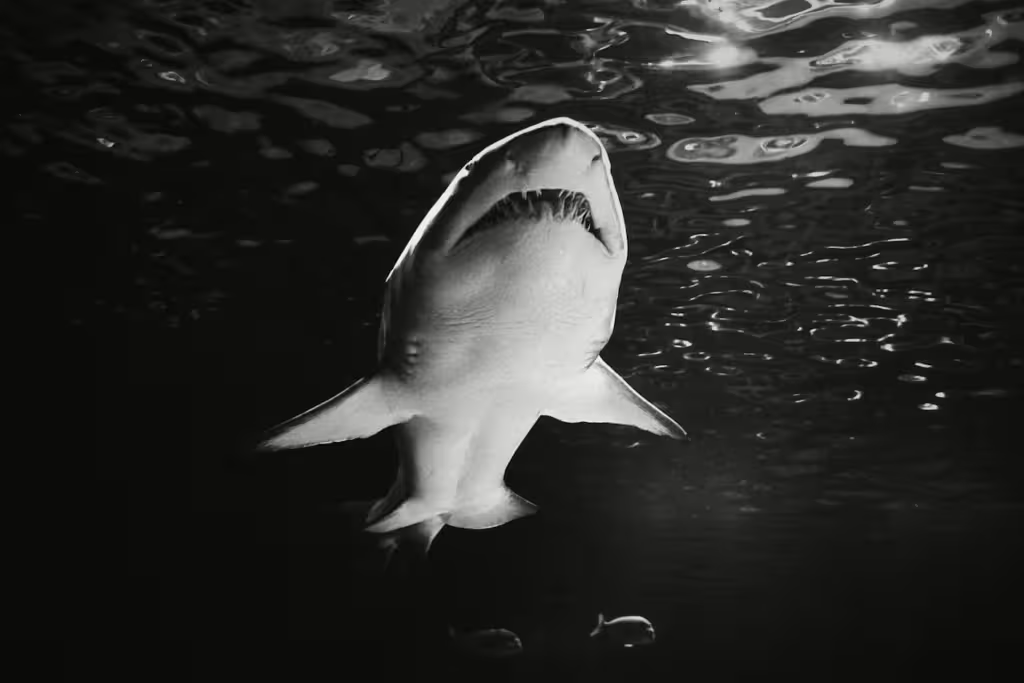
The truth of the matter is that there are many reasons why you should fear great white sharks…if you are a seal. There is no denying that hey are are among the most efficient predators in the ocean. They have powerful senses of sight and smell, able to see under low-light conditions and detect tiny amounts of blood in the water. They also have specialized organs in their nose that allows them to detect electrical signals from other animals.
Great whites are also exceptionally strong and fast for being so large. They can swim at speeds of 25 miles per hour in short, destructive bursts. This allows them to surprise prey with powerful upward strikes. This is why they evince their famous breaching behavior, launching out of the water while attaching prey.
The Role of Great Whites in the Ecosystem
Great white sharks are apex predators, meaning they sit at the top of the food chain in the marine ecosystem. Their presence helps them control populations of prey species and support biodiversity within their habitats. Removing them and even shrinking their numbers, can have an adverse effect on the entire oceanic ecosystem.
Challenges Facing Great White Sharks
Despite having great strength and adaptability, great white sharks still face many of the same threats to marine life posed by human activity. Overfishing, bycatch, pollution, habitat degradation and destruction, as well as climate change, are all having serious ramifications for great whites. Their long gestational period and few offspring means that recovering an already damaged population takes even longer. If we don’t look out for these creatures and reframe our ways of thinking about them, then the effects on the marine ecosystem could be dire.
True Investigator Says…
As you can see, Great white sharks are indeed fearsome. There is no disputing that. Indeed, by virtue of their morphology and diet alone, they have certainly earned a reputation as monstrous predators of the deep. That said, their story reminds us how easily fear can shape the human understanding of nature.
For centuries, we feared the deep, until science taught us to better understand it. As we learn more through science, we learn to look beyond myths and examine the reality, which is often far less frightening than a mouthful of teeth might suggest. In the Great White, we find a species that is both powerful and essential. We should be wary of them, as we should with all would-be predators, but we also must protect them, for the sake of the entire oceanic ecosystem.
In the end, the story of the great white shark one of danger and then discovery. In them, we see a chance to replace fear with respect and cowardice with curiosity. As highly-evolved beings, shouldn’t that always be the case?
Discover more from TrueInvestigator
Subscribe to get the latest posts sent to your email.