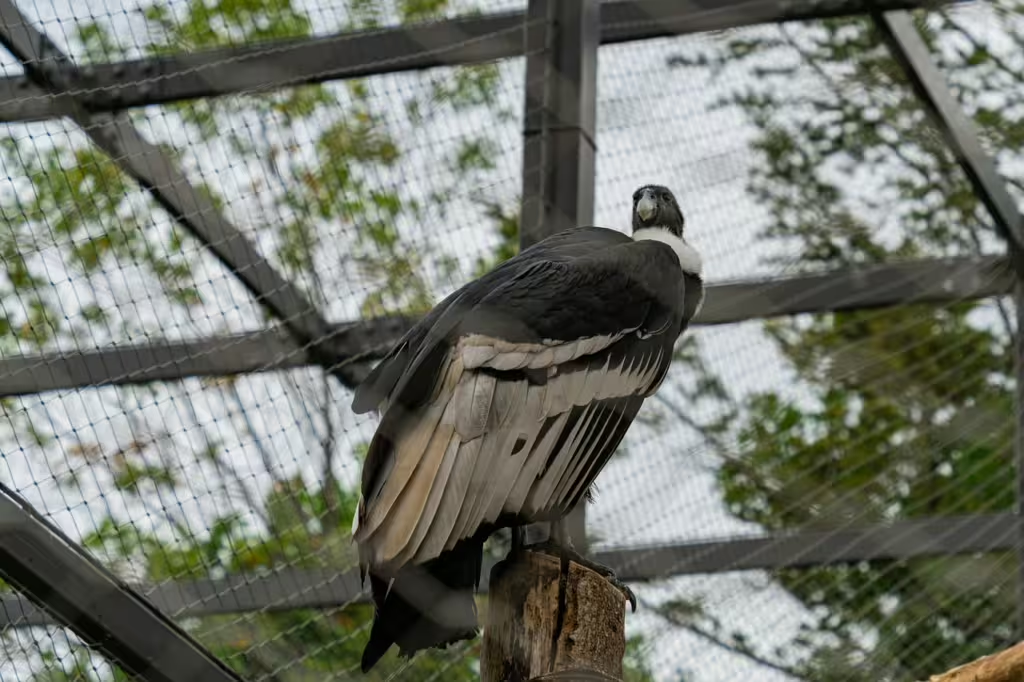

Since the dawn of time, man has dreamt of flying. We marveled at the birds, creatures who could soar through the skies under their own power. Eventually, we found out how to do it ourselves. We were careful enough to enclose ourselves when we fly, however, and though the reasons for this are mostly aerodynamic, it is worth noting that a few of our avian neighbors are large and predatory.
Take the condor, for example, a family of raptors that contains two of the largest birds of prey, nay some of the largest flying animals on Earth. Nesting high above rugged cliffs and open landscapes, condors glide on rising air currents with a quiet, commanding presence. Despite all this, despite the wonder they create, their strength, grace, and adaptability, condors have still found themselves on the brink of extinction at one point or another.
In this article, we will discuss the condors and how their past troubles have seen them become powerful symbols of the power of conservation. Their story of strength and fragility is a powerful lesson about the delicate balance that exists between mankind and the natural world, and also what happens when people commit to protecting wildlife.
Meet the Condors
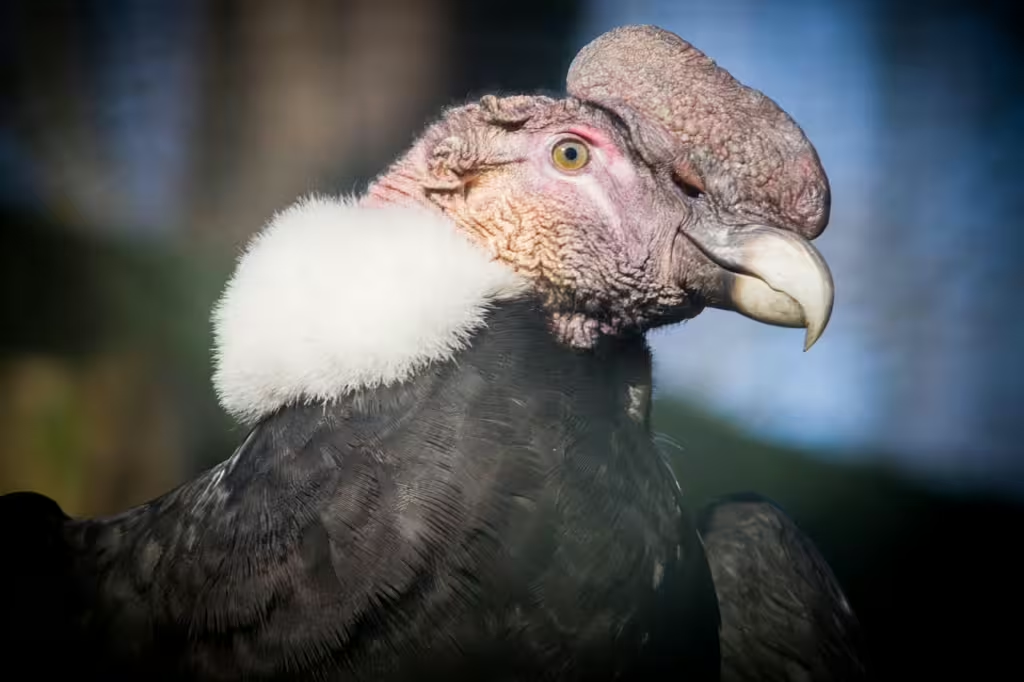
There are only two species of condors living in the world today: the Andean condor (Vultur gryphus), found in South America, and the California condor (Gymnogyps californianus), which is native to North America. Both species exist in the Western hemisphere and belong to a group of birds known as New World vultures. These birds, despite their size and powerful build, are actually scavengers, as their group name implies. This means that, though they hunt occasionally, they feed primarily on carrion; the remains of dead animals.
This somewhat unglamorous, inglorious role might sound grim but but it is vital. In the mountainous, arid ecosystems that the condors call home, their role as cleaners and carcass crunchers is what keeps the area free of disease and helps with nutrient recycling.
Masters of the Sky
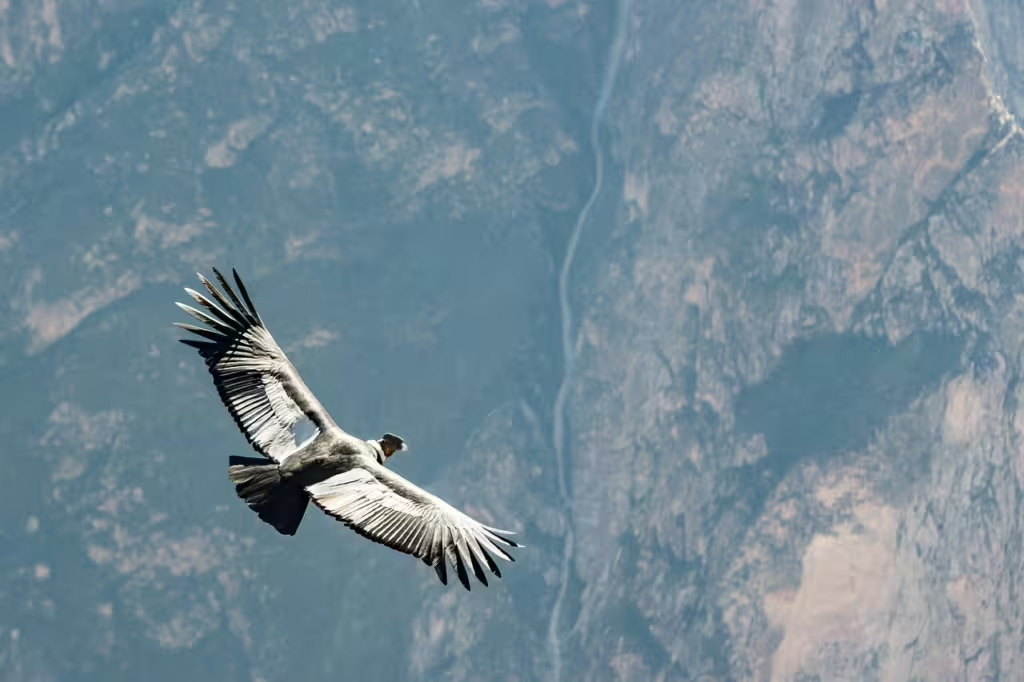
Condors might be fond of feasting on the lowest of the low-hanging “fruit” but they are also absolutely built for soaring. Their enormous wings allow them to glide for hours without flapping. Like other soaring animals, their wings are designed so that they can be the most energy-efficient, large and broad enough to catch thermal air currents. By using these currents they can stay aloft and soar over many miles of land for hours at a time.
They have keen eyesight, better than most other vultures, which tend to have a better sense of smell. This vision allows the condor to scan the landscape for carcasses. Food is scarce out there and finding a meal can take a long while, which can become tiring if one is flapping around the whole time. Once food is located, they descend to feed, often alongside other scavengers. In these instances, their sheer size is often enough to scare off the competition until they have had their fill.
A History of Decline
For centuries, condors thrived across wide regions of North and South America. The California condor once ranged throughout much of North America, while the Andean condor continues to inhabit parts of the Andes Mountains. That is…until human beings started showing up. As can happen in just about every natural habitat we inevitably inhabit, human activity has dramatically altered condor populations.
Habitat loss from development and agriculture has altered the natural landscape. The erection of power lines have resulted in accidental collisions. Nesting sites have been disturbed, either by accident or on purpose. Nevertheless, the most severe threat of all has been poisoning.
Lead contamination, derived from bullet fragments in carcasses that were accidentally ingested by the birds, has been a serious cause of concern for many years. Meanwhile, intentional and accidental poisoning from human chemicals and cruel farmers, has affected thousands of condors and has lead to reproductive issues. Still, the most severely affected was the California condor.
By the 1980s, the California condor population had declined to just 27 individuals. At the time, scientists had a radical idea; bring all of those individual birds into captivity in a last-ditch effort to save the species.
The Role of Lead Poisoning
We touched on it earlier, but one of the most significant ongoing threats to condors is lead poisoning.When hunters use lead ammunition, fragments can remain in dead animals. Condors feeding on these remains may ingest the fragments, leading to toxic effects that cause digestive issues, weakness, disorientation, and eventually death. Condors are long-lived birds with appropriately slow reproductive rates, so any increase in mortality impacts the population in a very big way.
Captive Breeding and Reintroduction
To say that the rescue of the California condor is one of the most ambitious conservation efforts ever undertaken would be an understatement. Once the 80’s era scientists had successfully captured all remaining wild condors, they began a captive breeding program. This program involved several steps: carefully managing breeding pairs, incubating and raising chicks, and carefully monitoring genetic diversity to ensure that any new generations remained genetically robust.
Over time, the population began to grow. The program was working! The young condors were gradually reintroduced into the wild in protected areas and today, there are hundreds of California condors living in the wild!
The Slow Path to Recovery
Despite the success that is the Condor recovery program, condors face an additional challenge that has always proven to be their downfall: slow reproduction. Unfortunately, female condors typically lay only one egg every one to two years. That is not a lot of birds and so, every individual bird matters. When we lose another, either due to accidental injury, poisoning, or poaching, the whole species is once again in danger. As a result, conservation efforts must focus not only on increasing numbers but also on ensuring long-term survival through habitat protection and threat reduction.
The Andean Condor’s Situation
It’s important to note that, while Andean condor is not as critically endangered as its California relative, it also faces pressures from habitat loss or poisoning from bait intended for other predators. And while Andean condors are protected and culturally revered in some regions, in others, they face the same challenges that once nearly eliminated California condors. Currently, conservation efforts across South America aim to protect habitats, reduce human-wildlife conflict, and raise awareness.
True Investigator Says…
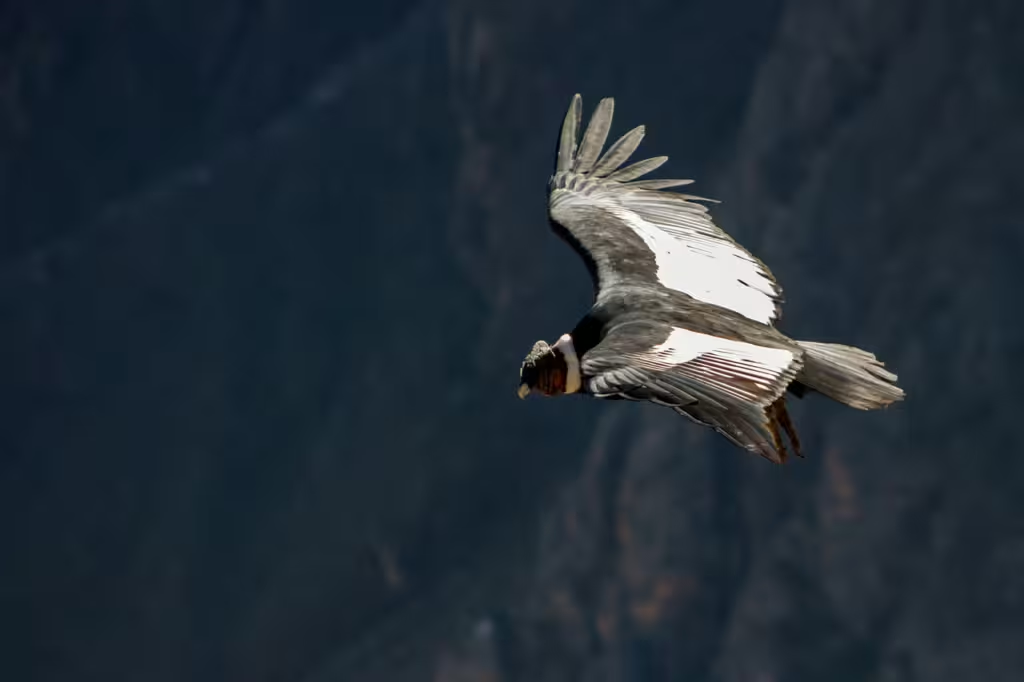
As you can see, condors are a living reminder of both the fragility and resilience of life on Earth. At the same time, their near-extinction was a direct result of human actions. Still, we have done much to undo our mistakes and our commitment to re-establishing the condor population is a sign that humans can be remorseful as well as resourceful.
There is still a long way to go, however. The challenge of conservation is ongoing. It requires vigilance, cooperation, and a willingness to adapt. The condor’s story is not just about the survival of one species, it is about responsibility, renewal, and the enduring connection between people and Mother Nature.
Discover more from TrueInvestigator
Subscribe to get the latest posts sent to your email.