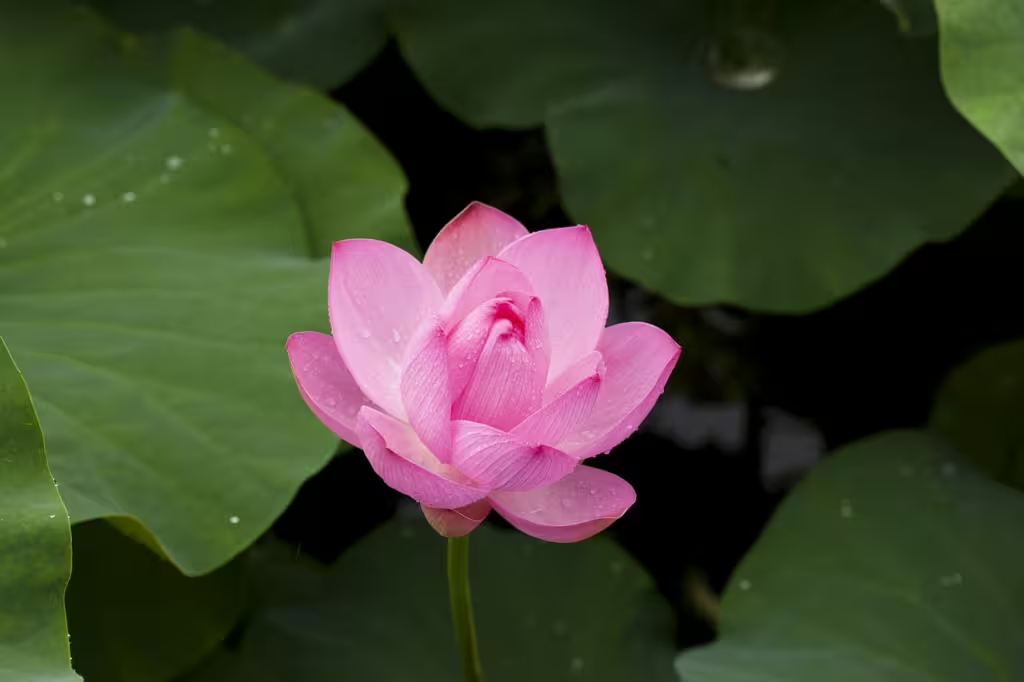

Petals shed the rain
Nanoscopic wax repels
Self-cleaning by design
This opening poem is a haiku, a traditional Japanese three-line poem with a 5-7-5 syllable structure. In most cases, the use of a haiku is meant to be purely poetic, but we felt that a flower as culturally-significant as the lotus required a little more than just your bog standard (get it) introductory statement.
And if any flower on Earth was capable of making a statement, it would be the lotus flower. Throughout human history the lotus has bloomed as a symbol of beauty, purity, rebirth, self-regeneration, and enlightenment. These blossoms, often pink or white in color, appear almost untouched by the grime and muddy waters in which they grow. They stand above their floating green leaves, brightly pure, and in stark contrast to the messiness that exists in nature. In fact, even after rain or splashes of dirty water, the leaves of the lotus appear clean, almost as if they repel the world around them.
In this article, we will explore the lotus and its brilliant, water-repelling leaves. We will not be the first to investigate this botanical phenomenon, of course. Thousands of scientists, engineers, and designers all throughout history have studied and been inspired by it. Perhaps even beyond the scientific curiosity it represents, this particular adaptation might give us a clue into how plants learn to survive in even the most unforgiving environments.
The Lotus: A Plant of Water and Sunlight
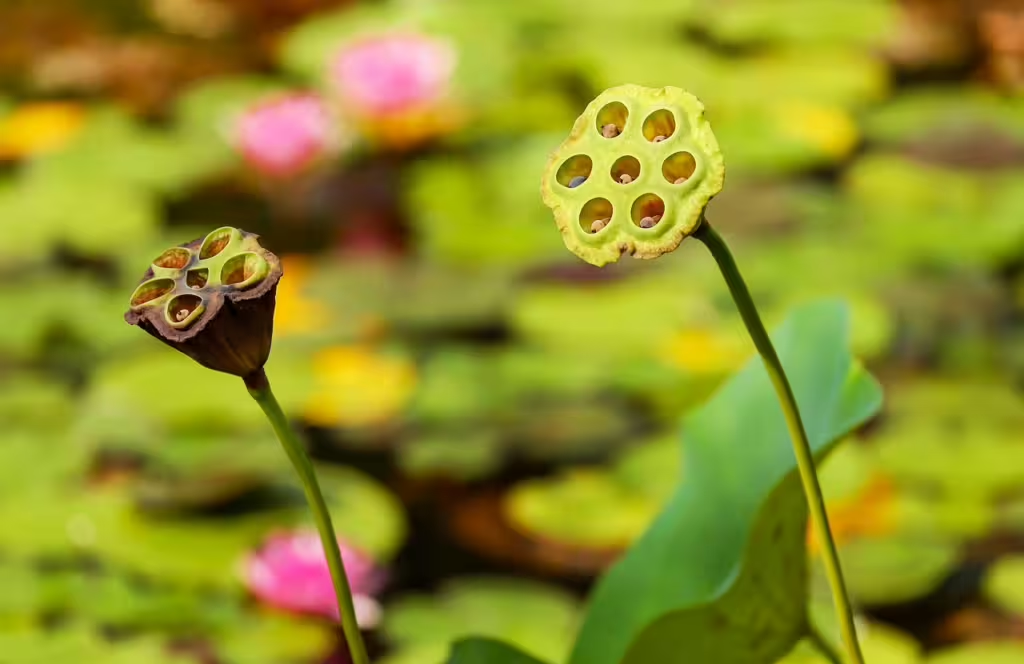
Lotus plants belong to the genus Nelumbo. There are only two different species within this genus, the Sacred Lotus which comes from Asia and Australia, and the American Lotus, which is native to North America. These aquatic plants that grow in shallow freshwater environments such as ponds, lakes, and wetlands, where their beautiful blooms stand out greatly from the surrounding waters.
The thing is, as unsuitable as the lotus might seem at a distance, the plant’s structure is uniquely suited to this type of habitat. They have roots that anchor deep in the muddy soil beneath the surface, as well as long stems that raise the leaves and flowers above the water level. Those same leaves are built so that they float or otherwise stand above the water. Lotus flowers bloom in sunlight, gathering energy via photosynthesis.
The Mystery of the Clean Leaf
At first glance, the repellant leaves and petals of the lotus might seem almost mystical. After all, considering the muddy waters in which they dwell, it would be completely reasonable for most surfaces to be coated in dirt or grime. These leaves are different because, when water hits their surface, it forms rounded drops and rolls along the surface, picking up dirt particles as it makes its way back into the surrounding waters. This is a natural cleaning process, one that requires no effort whatsoever from the plant itself.
The Science Behind the “Lotus Effect”
The secret to the lotus leaf’s self-cleaning ability lies in its surface structure. When viewed under a microscope, we can see that the leaf is not so smooth as it appears to the naked eye. Instead, it is covered with tiny bumps and a tangible waxy coating. Together, these features are what give the lotus its iconic superhydrophobic surface. This comes from the great meaning…well, it repels water quite strongly.
The adaptations repel water by working in conjunction. While the microscopic bumps reduce the contact area between water and the leaf, the waxy coating prevents the water from sticking at all. The effect? The water simply beads rather than spreading out. As it rolls away, it cleans the plant of dirt, dust, and even harmful microorganisms. Because of this, the lotus is considered to be one of the most water-resistent organisms found in nature.
Why Staying Clean Matters
The self-cleaning ability of lotus leaves serves several important biological functions. Since the lotus needs its leaves for photosynthesis, keeping them free of dirt allows for more uncovered surface area with which to do so. Excess dirt might block sunlight, reducing the amount energy the plant can then convert. This way, the plant ensures that it can receive as much light as possible.
Standing water is a breeding ground for bacterial and fungal growth. The lotus effect reduces the chance of water and organic debris rotting upon the surface of the leaves, thereby reducing the risk of bacterial or fungal infection. Leaves also exchange gases with the environment and clean leaves do this more efficiently than those that are caked with dust.
Inspiration for Human Innovation
The lotus effect has inspired a wide range of technological advancements in many areas, including the steel industry! That’s right, scientists and engineers were so taken with this remarkable adaptation that they have studied lotus leaves in order to develop materials that mimic their self-cleaning properties. Water-repellant clothing, dirt-resistant paint, surface coatings for metal, self-cleaning glass and window panes, and anti-fouling surfaces in marine environments.
Human beings have always innovated by copying certain things we’ve observed in nature. We call this biomimicry, a concept that describes how human innovation draws inspiration from natural systems. By copying the lotus’ water-repellant design, the aforementioned technologies reduce the need for cleaning, while ultimately improving their efficiency and durability.
A Symbol Beyond Science
As we touched on earlier with our haiku, the lotus has long held cultural and symbolic significance in many societies. In traditions across Asia, the lotus is seen to represent purity, renewal, and resilience. As with most belief systems, the symbolism that we attribute to the lotus is closely tied to its biology. Much of this may stem from the fact that it looks so starkly clean in the middle of its muddy habitats or that it can weather storms and rains better than most other plants. At the same time, the lotus plant’s ability to remain untainted by its surroundings has made it a powerful metaphor for overcoming challenges and maintaining integrity.
True Investigator Says…
As you can see, the lotus leaf’s amazing adaptation to repel water is a reminder that effective solutions in nature are often simple, elegant, and clean. The lotus grows and thrives, doing as it does, without moving parts or active processes. This efficiency is a hallmark of natural design in that it achieves maximum benefit with minimal energy. For scientists and engineers, this model has been most helpful in allowing us to create sustainable and low-maintenance technologies. The end goal is that these new technologies will hopefully allow us to better live in harmony with our environment and use fewer resources in the course of our daily lives.
Discover more from TrueInvestigator
Subscribe to get the latest posts sent to your email.