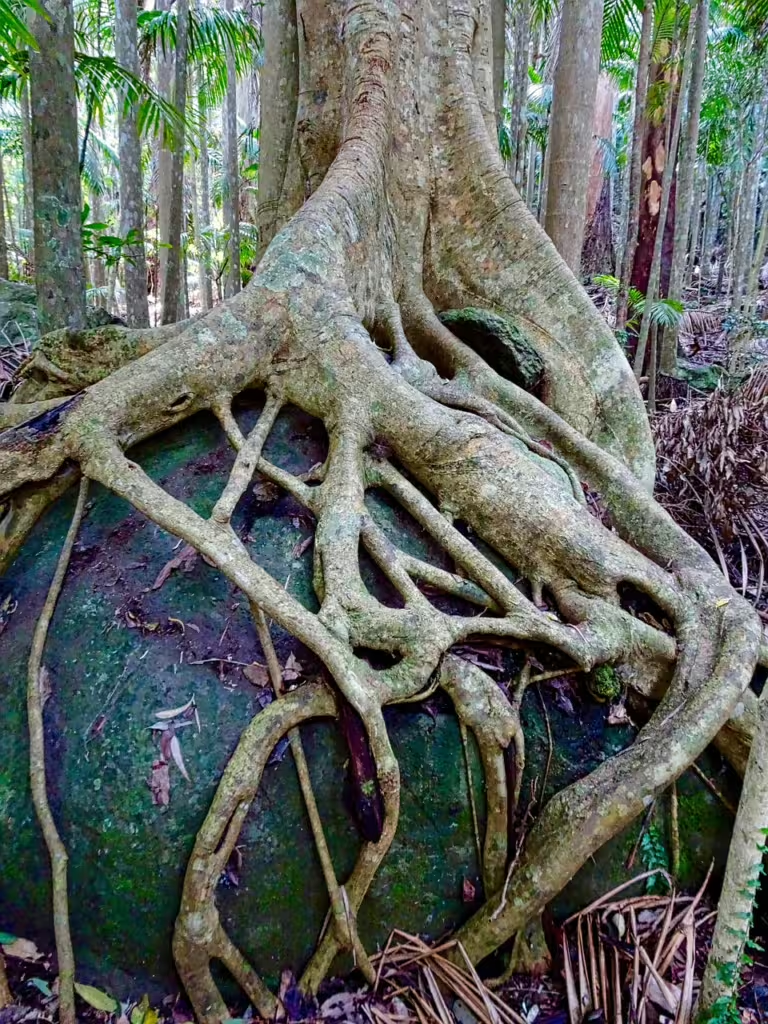

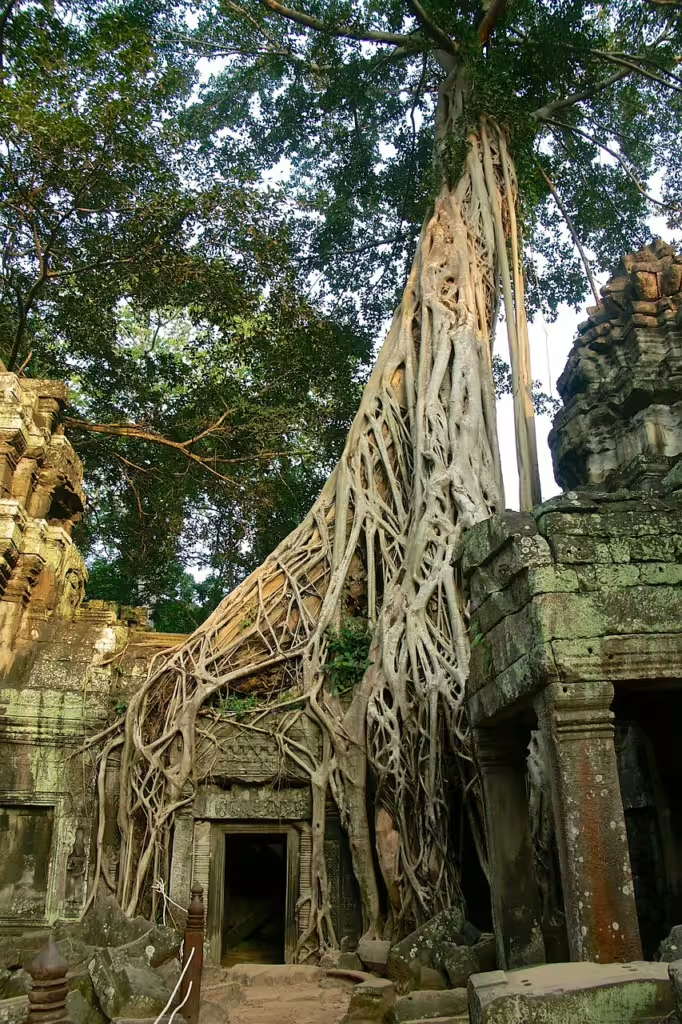
Imagine, if you will, a tropical forest, a place where ruins from long, lost civilizations stand crumbling amidst the surrounding trees. Circling the base of those trees and creeping their way across the cracked edifices of the forgotten buildings, are the tell-tale strangling fig vines of the jungle. No doubt this scene seems familiar to many readers, as it conjures up jungle scenes from so many old books, movies, and Disney cartoons.
What many readers may not realize is that, this scene is not common because it’s hackneyed, it is common because of the aforementioned strangler fig vines are an essential part of these jungle ecosystems. The story of these massive vines begin the same as so many plants; as a tiny seed. Perhaps the seed was brought to the plant or dropped on the tree by a bird or a money. Slowly, the seed germinates, its roots grow down, and over time, the thick tight roots of the tiny strangling fig begin to crush the stone and wood trapped beneath it.
In this article, we will discuss the strangler fig and answer some questions about whether or not this all-too-common plant is a destructive or essential element of the jungle ecosystem. Some see the strangler fig as a creator, others, a destroyer, but has it really earned its reputation as a “forest assassin,” or is it one of the most important pieces of the forest?
What Is a Strangler Fig?
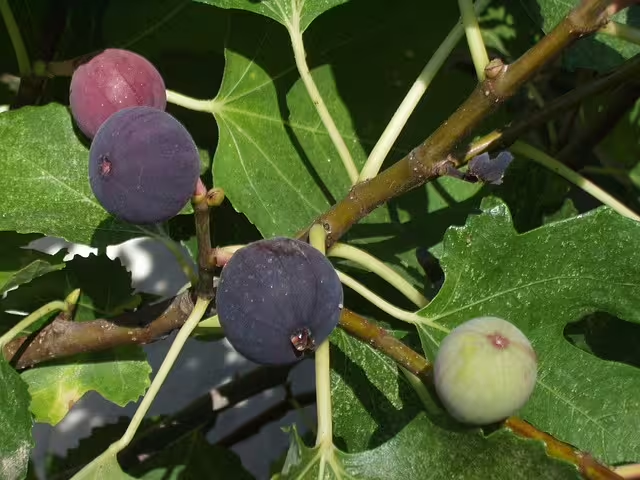
Strangler figs are technically a Ficus, part of a diverse family of plants that includes hundreds of species; most of which are found primarily in tropical and subtropical regions. Yet, unlike other plants and trees, strangler figs don’t take root in the soil; they take root in other, taller lifeforms. As animals eat the fig’s fruit, they “deposit” their seeds via their dung or simply by dropping them onto tree branches in the canopy.
Scientists have often defined strangler figs as epiphytes, plants that grow on other plants without immediately harming them; at least in the early stages of their life cycle. In this way, the fig gets a chance to access the sunlight that it might not normally get if it tried to grow in the shady soil of the rainforest floor. This harmless relationship doesn’t last long, however, as eventually, the fig begins to earn it’s grim moniker…
A Growth Strategy Like No Other
Once the strangler fig has established itself upon its host tree, the transformation begins in earnest. It’s thin roots begin to grow downward, searching for soil to find purchase. The strangler fig is still a plant after all, and it needs to absorb soil and nutrients directly from the soil, just like any other. Those thin roots don’t stay thin for long. As they thicken, grow, and multiply, the form a lattice around the trunk of the host tree.
This is the image we’re all so used to seeing; that of a rootbound network, climbing across the surface of a ruin or larger tree trunk. The root network thickens even further, hardening over time until it is so dense and woody that it almost overtakes the host tree. Eventually, the fig tree’s own canopy grows and expands up into the host tree’s boughs, overtaking them and outcompeting them for sunlight. In essence, the fig “strangles” its onetime host, resulting in the gradual decline, and death, of the original host tree.
Why Do They “Strangle” Their Hosts?
Obviously, the fig doesn’t physically strangle its host tree. They are not preying on the host or harming it in the same way a predatory organism might. Instead, the growth pattern of the strangler fig is such that it outcompetes its host. In the plant-eat-plant world of the rainforest, where competition is everything, this strategy is as sound and effective as any other. Also, it isn’t that the tree is killed off by the fig, it is more that the host’s lack of sunlight and nutrients makes it more vulnerable to disease, pests, or collapse. In the end, even when the host eventually dies and decays, the fig is likely strong enough to remain standing on its own, supported by its network of roots.
Hollow Giants of the Forest
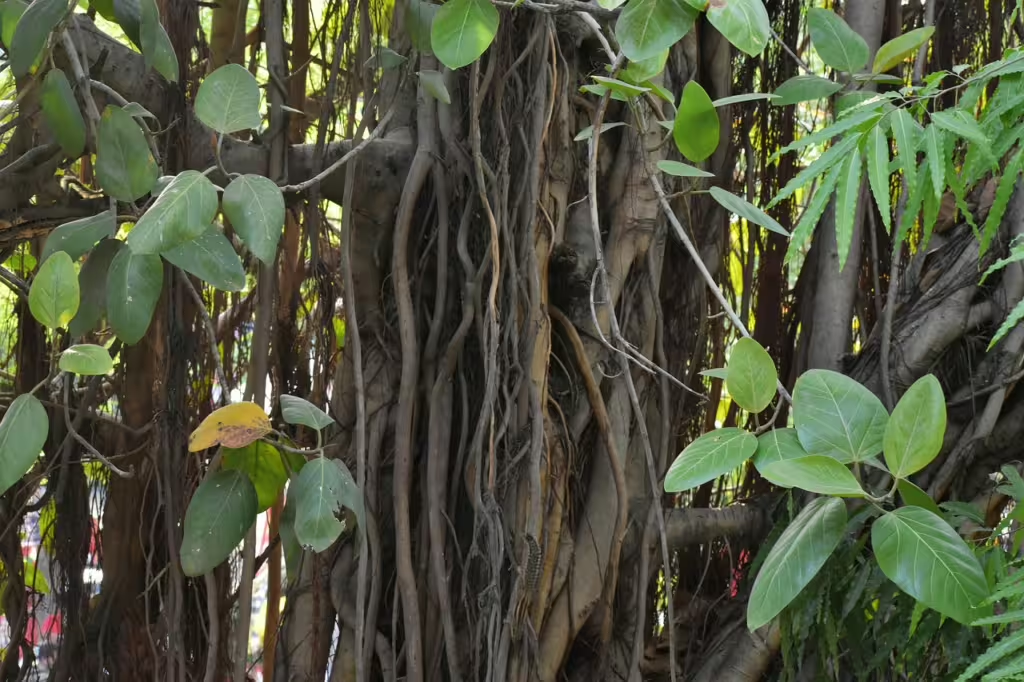
One of the most fascinating outcomes of this seemingly destructive process is the opportunities it creates for life to flourish. As the original host rots away, the empty space left behind is essentially a hollow fig tree, framed by a lattice or column of strangler roots. Many jungle animals: birds, bats, rodents, insects, and reptiles will turn this hollow space into a hacienda. Not only that, the fruit of the strangler fig will provide nourishment for countless species.
A Keystone Species
Strangler figs are often considered keystone species of the rainforest ecosystem. This means that, despite their reputation, these plants play a critical role in maintaining the health of the jungle. The delicious fruit they produce is an essential resource for monkeys, fruit bats, birds, and insects, all of which rely on the fig trees for survival. These creatures, in turn, spread the stranger’s figs all throughout the rainforest, allowing it to take root on trees many miles from the parent plant’s location.
At the same time, the roots of the strangler fig help to stabilize soil, their leaves shade the environment below them, and their opportunistic growth cycle helps them to replace older, weaker trees, thus helping to push along the endless flow of the circle of life.
Are They Harmful to Forests?
Some readers might think that the idea of a tree killing another is harmful to rainforest ecosystems, but that’s the wrong way to look at this situation. This process, while somewhat cruel, is a ways of keeping things in perfect balance. Even without the woeful intervention of human industry, rainforests are in a state of constant flux. Trees grow, compete, die, and are replaced. Strangler figs are one of many species involved in this sometimes cruel cycle. After all, no healthy ecosystem has a single species that dominates indefinitely. And if that’s not a cautionary tale about humanity’s global domination, well…we don’t know what else to tell you.
True Investigator Says…
As you can see, the strangler figs are neither the villains nor the heroes of the jungle’s story, though they are no less essential to the plot. There is an intricate web of life that defines tropical forests and the strangler fig creates and destroys with equal tenacity, providing food and shelter, whilst tearing down that which came before. Like so many lifeforms, these verdant killers are also builders and that makes them truly worthy of investigation.
Discover more from TrueInvestigator
Subscribe to get the latest posts sent to your email.