
Even though there are literally thousands of known species of fish living in the ocean, few carry the same sort of “brand recognition” as the Great White Shark. This ferocious, oceanic predator was made famous because of movies like Jaws but its notoriety existed in humanity’s collective unconscious for many centuries prior to 1975. The thing is, though Great White’s might be up there in terms of fear factor, there are other sharks out there with far more interesting specializations.
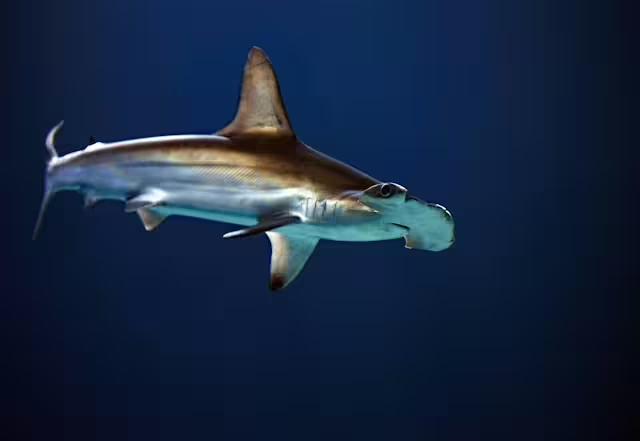
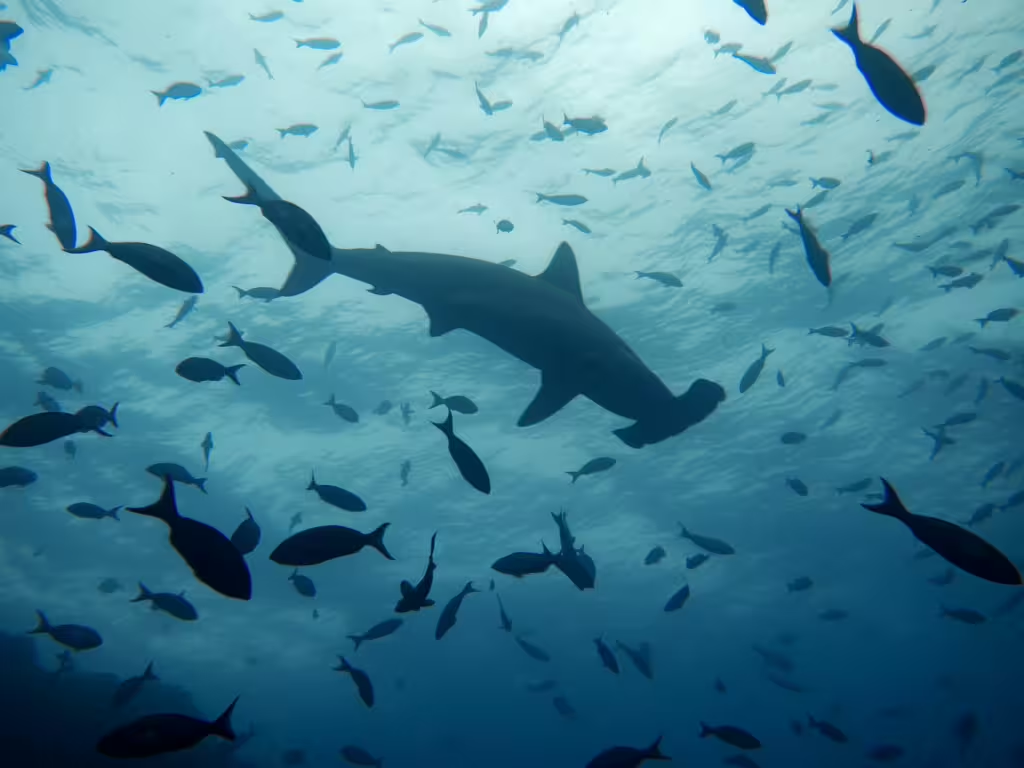
Most readers will know the hammerhead shark by its recognizable silhouette. It is a creature unlike any other shark and indeed unlike many fish that we know of. The hammerhead’s wide, flattened head is a unique adaptation, one that has puzzled scientists and fascinated fish enthusiasts for generations. In olden times, our ancestors probably believed the hammerhead was an animal anomaly, a cosmic joke like the platypus or electric eel, but recent discoveries have found that this iconic head shape is actually functionally relevant.
In this article, we will dive head first into dangerous waters as we learn why hammerhead sharks possess such a curious cranium for a carnivore. Make no mistake, these sharks might look goofy, but they are highly specialized predators with incredible eyesight and peerless hunting prowess. How does it all work, you may ask? Well, the secret is in the hammerhead….
What Makes Hammerhead Sharks Different?
Hammerhead sharks belong to the genus Sphyrna, which only includes several species. The great hammerhead, scalloped hammerhead, and bonnethead are all counted among them and in each case, the shark’s defining feature is the cephalofoil; a broad, flattened extension of the head. Sphyrna sharks’ heads have eyes positioned at each end, far from the center of their face. It is a curious design that sets them apart from all other sharks…and more than a few other animals, as well.
As one might imagine, human scientists and researchers were initially flummoxed about the possible evolutionary reasons for a shark having this cranial cross guard. Eventually, they found that the cephalofoil is actually quite an interesting bit of adaptation. Hammerhead sharks not only have enhanced vision because of it, they also have better maneuverability, and sensory detection, overall. Knowing that though, some readers might be asking themselves, “why haven’t other predatory animals evolved the same way?”
Eyes on the Edges: A Wider Field of View
The wide-set nature of a hammerhead’s eyes actually gives them an exceptionally wide field of view. They are basically able to see nearly 360 degrees around their bodies; far better than most other fish and most other sharks. As a result, hammerheads are able to detect movement in almost every direction. They don’t even need to turn or move their head to do so, either. This means they can easily spot potential prey, monitor their surroundings for potential threats, and navigate even the most perilous underwater surroundings with aplomb.
Depth Perception: Seeing in Three Dimensions
The hammerhead’s ability to see 360 degrees means that it can see above and below them.This means that, close to the surface, they can effectively see above and below the water line. The wide-set eyes also gives the shark binocular vision, a rare skill among fishkind. Some studies indicate that hammerheads may have better depth perception than many other shark species because of their unique visual fields.

Combining Vision with Other Senses
A hammerhead’s vision might be impressive, but it isn’t its only skill. Being a member of the shark family, the hammerhead possesses somethinbg known as the ampullae of Lorenzini, specialized sensory organs which detect electrical signals produced by other animals. These sensors are not just in their nose, as they are with other sharks, but spread across the length of their cephalofoil!
Hunting with Precision
Hammerhead sharks are known for their unique hunting techniques, particularly when targeting one of their favorite meals, stingrays. If a hammerhead shark detects a stingray buried in the sand, they can use their advanced eyesight and apullae of Lorenzini to locate the animal, pin it down using it’s noggin, and deliver a price bite at just the right angle. In this way, the hammer-shaped head becomes more than just a sensory organ, it becomes a sort of tool.
Movement and Maneuverability
It might seem cumbersome to the likes of us, but the current belief is that the hammerhead’s head shape may actually enhance its ability to move through the water. In essence, the cephalofoil acts as a water wing, providing lift and stability and allowing the shark to make quick turns and maintain control, even when swimming fast. Being able to swim with so much control means that the shark can easily adjust its course to catch wily prey, as well as navigate tight underwater hazards with ease. Most readers are familiar enough with our articles and nature, in general, that they know being fast and agile make you pretty great at predation.
Life in Diverse Ocean Environments
Hammerhead sharks are found in warm ocean waters across the globe. They tend to stay near coastlines, coral reefs, and continental shelves, however, where their senses and maneuverability offer an advantage over other local fish. That isn’t to say they won’t venture out into open waters, however, as their enhanced vision allows them to navigate vast ocean spaces just as easily.
Challenges and Conservation
Despite how well-adapted hammerhead sharks are to life in the shark-eat-shark world of the ocean, they are not as adaptable to the threats faced by human beings. Several species of hammerhead are endangered because of overfishing, bycatch, and the incessant degradation of their habitats by pollution, climate change, and ocean acidification; not to mention the inexorable tide of human encroachment into their waters.
The good news is that several conservation organizations have come together to pool their efforts. The current focus of these programs is to protect key habitats, regulate fishing practices, and raise awareness about the importance of marine ecosystems.

True Investigator Says…
As you can see, the hammerhead shark is not “just a pretty face,” but an essential ocean predator whose unique adaptations allow them to stand-out among the carnivorous competition. Their singular cranial shaping is a powerful example of how evolution will often produce extraordinary solutions when faced with very specific survival challenges. A masterpiece of evolutionary ingenuity, hammerheads can be counted among the most specialized predators in the ocean and are just as worthy of Hollywood regulation as our dear, departed friend Bruce.
Discover more from TrueInvestigator
Subscribe to get the latest posts sent to your email.