
When I was a kid, animals were my jam. I had animal bedsheets, figurines, plushies, books, sneakers, and everything else a child have with their favorite things on it. The thing was, I wasn’t the type of little kid who liked lions, tigers, or bears…No, I liked the weird ones: animals like kangaroos, armadillos, cassowaries, and crocodiles. And let’s not forget, the pangolin.
What’s not to like? These adorable, armored, ant-eating animals have more charm in their little clawed digits than some elephants have in their whole trunk. Covered head to tail in overlapping scales, the pangolin looks like something out of a prehistoric age. They can be found all across Africa and Asia, living everywhere from forests to grasslands, eating insects and minding their own business. Yet despite their shyness and the many remarkable adaptations they possess, the prehistoric-looking pangolin is facing an all-too modern threat; poaching.
In this article, we will discuss the pangolin, its nature, diet, and its ecological importance. In an age where climate change, habitat destruction, poaching, and pollution threaten animals from every continent, this unassuming animal has become a symbol of modern conservation.
What Is a Pangolin?
Pangolins are small to medium-sized mammals belonging to the order Pholidota. There are eight species of pangolins — four found in Africa and four in Asia.
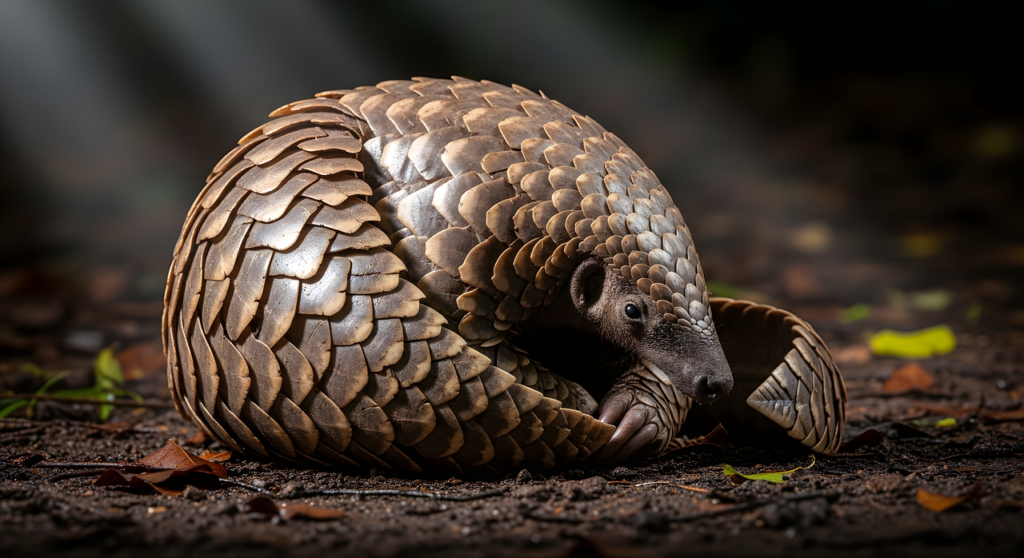
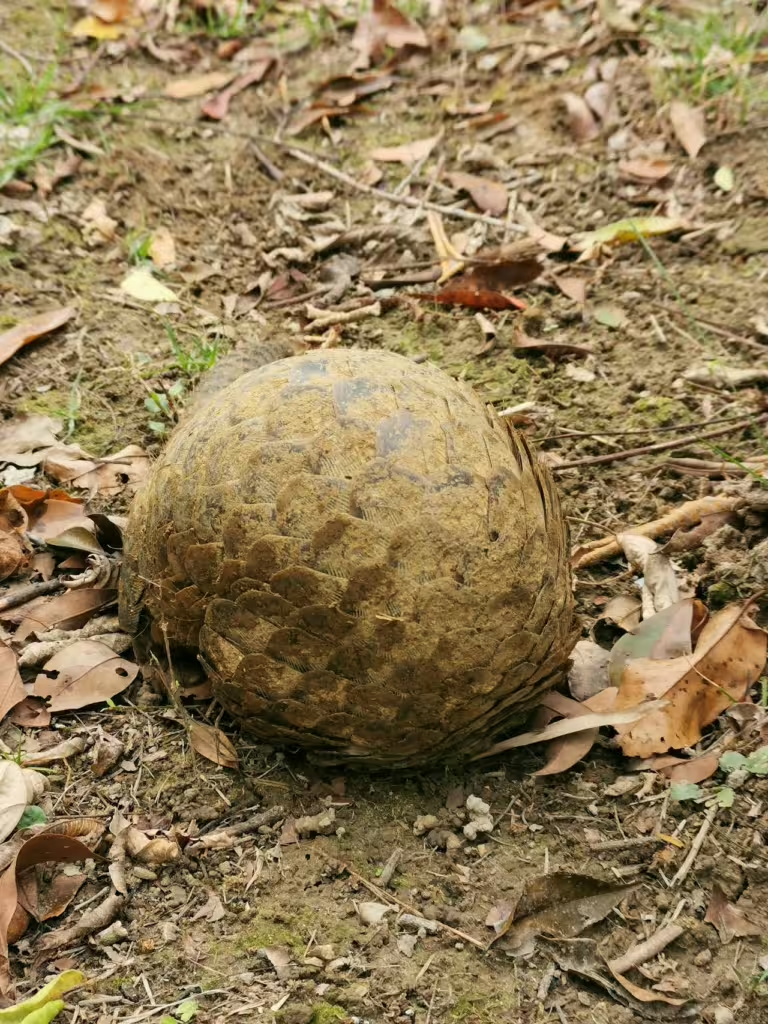
What makes pangolins truly distinctive is their protective covering. Their bodies are armored with keratin scales, the same material that makes up human fingernails. These scales form a tough shield against predators.
When threatened, a pangolin curls into a tight ball, tucking its head and limbs inward. In this position, the scales act as armor, making it difficult for most predators to attack.
Despite this strong defense, pangolins are vulnerable in ways their armor cannot prevent.
Specialized Insectivores
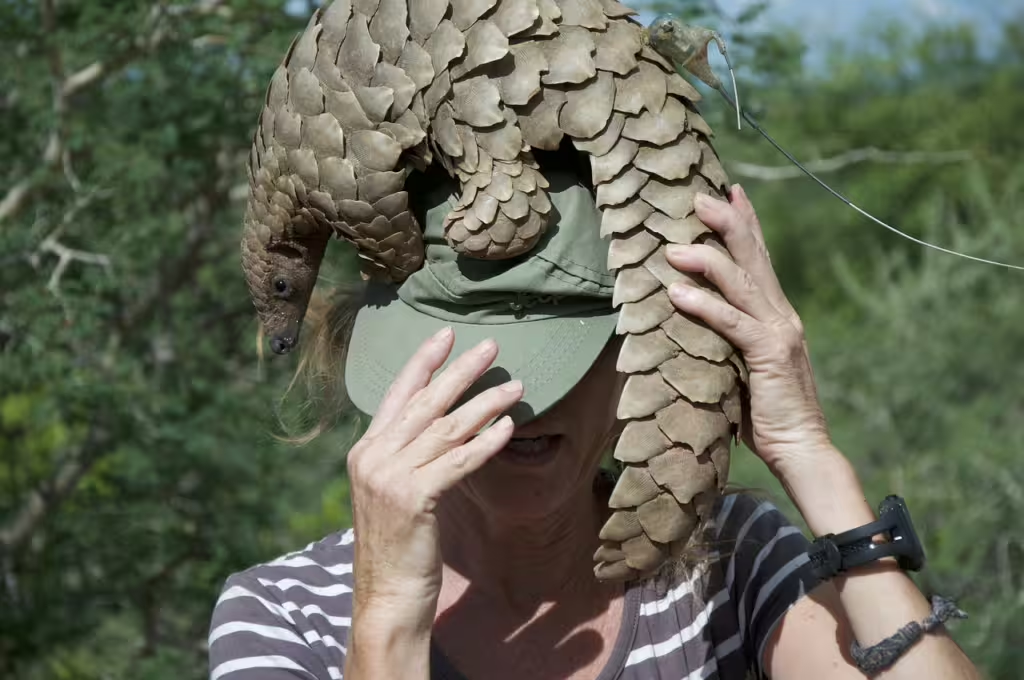
Pangolins are insectivores, meaning they primarily eat ants and termites. They are highly specialized in this way, possessed of long, sticky tongues, which can extend upwards of 16 inches into the anthill. Their powerful front claws are great for breaking into insect nests and digging. Nocturnal by nature, a single pangolin can consume tens of thousands of insects in one night, making them a vital part of their home ecosystems; if only because their mere presence can help keep insect populations in check. During the day, they nest in hollow trees or in burrows.
Why Pangolins Are Trafficked
Pangolins are heavily trafficked for two two reasons: their scales and meat. People consider them to be a delicacy in some places and they serve the meat in high-end restaurants. Their scales are also believed fot have healing properties in some cultures; though there is no scientific evidence of this actually being true. The illegal pet trade also traffics in pangolins, as their charm and placid natures make them ideal for those who are looking for something exotic but not lion-level dangerous.
The Scale of the Crisis
When we say that pangolins are “the most trafficked mammals in the world,” we’re not being hyperbolic. In the past few decades, hundreds of thousands of pangolins have been stolen from their homes and shipped off to collectors. Shipments of pangolin scales weighing several tons have been intercepted by authorities, highlighting the scale of the problem. This is only compounded by the fact that pangolins only breed once a year and one offspring at a time, making them particularly vulnerable to over-hunting.
Why Their Defenses Don’t Work Against Humans
Pangolin scales are perfect for protecting themselves against agitated ants and surly termites. They might even provide enough defense to protect them against natural predators such as lions or leopards, but against humans? They got nothin’. Their defensive response of rolling into a ball instead of fleeing is even more problematic against human beings, who possess thumbs and can easily roll them right into a cage. Sadly, the very tool that ensures their survival against one predator is their greatest weakness to another.
Conservation Efforts
Fortunately, in recent years, many conservational organizations have recognized the urgent threat to pangolins, and have taken steps to protect them. All eight species of pangolins are now listed under the Convention on International Trade in Endangered Species (CITES), which bans international commercial trade. Anti-poaching patrols, rescue and rehabilitation programs, scientific research into their breeding habits and habitat, and public awareness campaigns are all helping the process along.
Challenges to Protection
Despite increased awareness and legal protections already being put into place, there are still challenges. Even the most ardent world governments cannot be everywhere at once. Even with the word out and people doing the right thing, illegal wildlife trafficking networks persist. These awful organizations might be scummy but they are also often complex and therefore difficult to dismantle. High demand for pangolin products, as well as lucrative financial incentives continue to drive poachers to seek out these poor cretures.
The other challenge has to do with the pangolins’ secretive nature. Believe it or not, the fact that they are kind of hard to find also makes them difficult to save. Population declines have been nearly impossible to notice at first, at least until numbers have reached critically low levels. Also, let’s not forget that habitat loss due to deforestation and land development are additional threats to these critters and rob them of what little refuges they have.
Raising Awareness
Raising awareness about the pangolin’s plight is the best thing we can do to help. Look, people know that gorillas and tigers are endangered, but so few know that pangolins even exist. It is only in recent years that the Internet has allowed them to get the wildlife “street cred” that this writer believes they so richly deserve! Greater awareness can lead to stronger protections and more effective conservation efforts.
True Investigator Says…
As you can see, the pangolin, while not necessarily any child’s “favorite” animal, is no less desirable; at least. by the ne’er-do-wells of modern society. Despite, or perhaps because of, their shy, unassuming nature, the poor pangolin has become most trafficked mammals in the world, wanted for its meat, its novelty, and its preference as an exotic pet.
Ultimately, the pangolin’s story is a reminder that even the most well-adapted species can be vulnerable to humanity. Our species is a steamroller and we crush everything that stands in our way, pangolin’s included. What this means, in the grand scheme of things, is that the responsibility for protecting the pangolins also falls to us. It is no mean feat, however. Protecting these animals requires global cooperation, stronger enforcement of wildlife laws, and a commitment to reducing demand for illegal products.
We can do our best to spread the word from the humble pages of True Investigator, but the best way to help animals like the pangolin is to make everyone aware; tag posts, like videos, share with friends. Let the world know that we care about the pangolin. We do that and hopefully the next generation of animal-loving kids will find the pangolin among their quirky favorites too.
Discover more from TrueInvestigator
Subscribe to get the latest posts sent to your email.