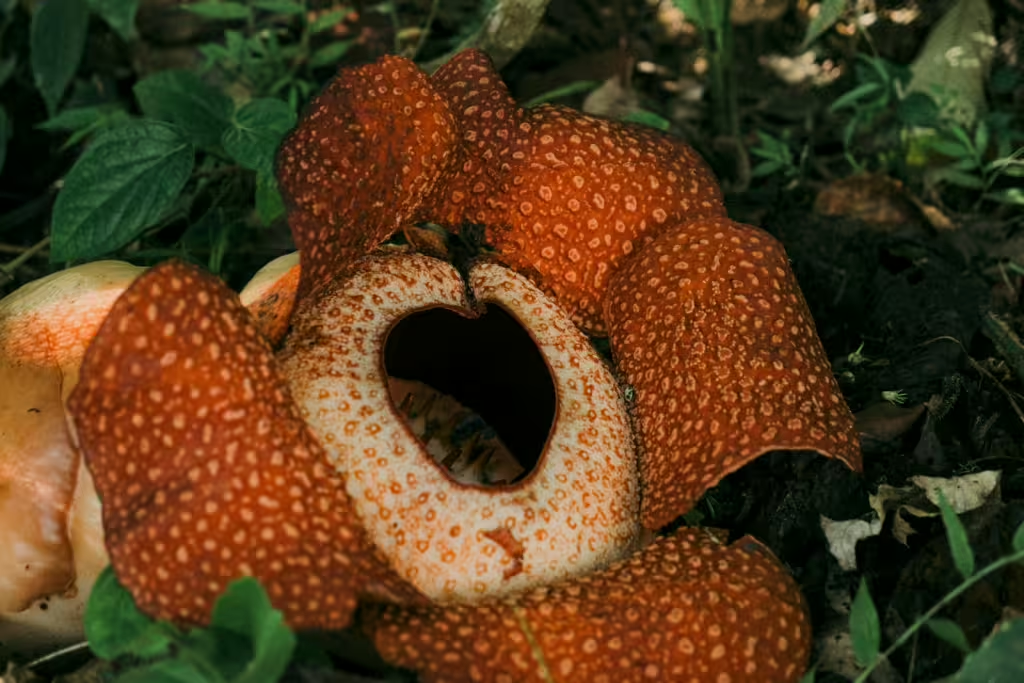

“There are more things in heaven and earth, Horatio, than are dreamt of in your philosophy.” This famous line from Shakespeare’s Hamlet is one of the most quotable lines in literature. It is used to display a sense of wonder of the unknown, to show that our own understanding of the world is woefully myopic. Here at True Investigator, we pride ourselves on subverting our readers’ expectations about the world at large. This is why we take plants and animals, like the one we’re investigating today, and dive deep into what makes them so unusual, but no less factual.
The humid rainforests of Southeast Asia are home to many unique plants and animals found nowhere else on the planet, and one of the strangest is the Rafflesia. Besides its thoroughly alien appearance, the rafflesia has no leaves, no stems, and no roots that look anything like those of its botanical brethren. And that’s not even discussing the corpselike odor the flower produces or the symbiotic relationship it has with another jungle plant!
In this article, we will discuss the unusual features, lifecycle, and environment of the rafflesia flower. By the time we’re done, you too will perhaps begin to glean why that most famous phrase has become etched into our collective literary consciousness and our understanding of the remarkable world in which we live.
A Flower Without a Plant
Here’s another Shakespeare-like query for you; “What is a flower without a plant?” Sounds profound, no? Well, it should. There are few plants living on our plant that exist in this way and one of them is the rafflesia. These uncommon flowers belong to a group of parasitic plants that rely completely on other organisms for survival. Unlike most plants, organisms of this type do not produce chlorophyll. For those who don’t know what that is, chlorophyll is the thing that makes other plants green. This verdant pigment is essentially what allows plants to photosynthesize and convert sunlight into energy; and rafflesia’s don’t have it.
This essentially means that the rafflesia cannot make its own food. How does it get around that particular biological necessity, you might ask? Well, it takes it from the the tissues of a host plant. Rafflesia’s tend to choose particular host plants, usually a vine from the genus Tetrastigma, which grows throughout the tropical forests of its Indonesian home.
Inside the vine, Rafflesia are not the eye-catching flowers that we see decorating jungle guidebooks. Inside, they exists as a mere network of thread-like structures that absorb nutrients and water directly from the host. These structures are more like fungal filaments more than typical plant tissue, but that makes sense in some ways, as plants and fungi are pretty close relatives; evolutionarily speaking.
For most of its life cycle, the rafflesia remains hidden inside the vine. No visible leaves or stems appear above ground. In fact, the only sign of its presence is a developing, bruised bud that eventually pushes through the host plant’s surface.
One of the Largest Flowers in the World
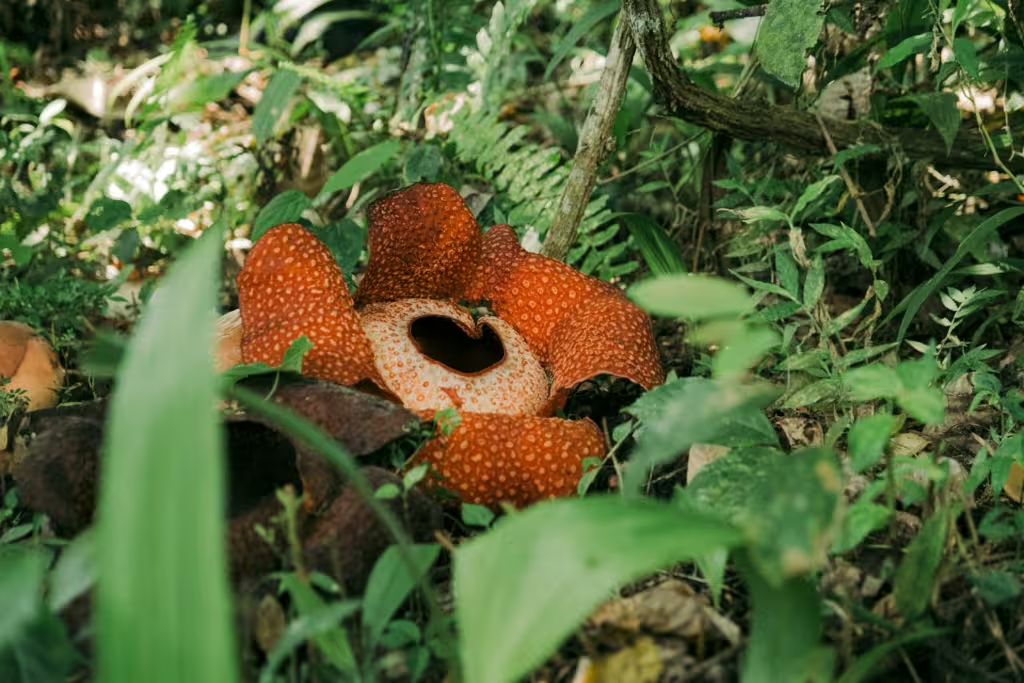
The manipulative, albeit humble beginnings of the rafflesia are unusual to be sure, but its eventual bloom is even more attention-grabbing. When the rafflesia finally does bloom, it produces a massive flower that can reach three feet in diameter and can weigh up to 15 pounds.
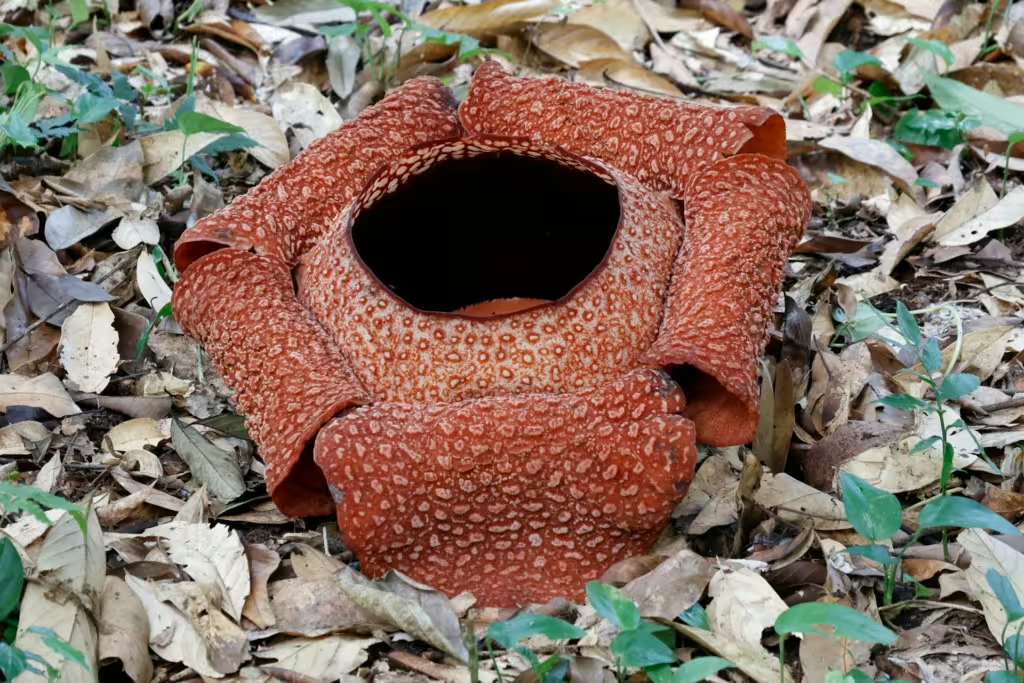
The flower’s thick, fleshy petals that are usually reddish-brown with white or pale spots. At its center is a large opening surrounded by a deep chamber that contains the plant’s reproductive structures. The rafflesia flower itself represents the entire visible portion of the plant. Yet, as stunning as it might seem, it blooms for only a short time, a mere five to seven days before it begins to fade away.
Why the Rafflesia Stinks
Aside from the famously red petals of the giant rafflesia flower, it’s most notable trait happens to be how it smells. We all think of flowers as smelling sweet, fragrant, nice even, but as we have clearly seen, the rafflesia is no ordinary flower. It has a strong and unpleasant odor that many say smells of rotting meat; hence the name “corpse flower.”
Now, this scent may be pretty stinky to our human senses, but carrion flies and beetles love it. They can’t get enough of it. To them, it smells like decaying animals; their favorite food. So they crawl up to the flower, find nothing they want, and saunter off, picking up rafflesia pollen as they do. These meat-eating buggies are the primary pollinators of the plant and they transfer its pollen to other parts of the jungle where they can find purchase on unsuspecting vines, elsewhere.
A Rare and Difficult Bloom
Rafflesia flowers are as rare as they are unusual. This has to do with their remote locations and the long period of growth. It takes many months for the buds to develop into full rafflesia flowers and many never do. Indeed, the rafflesia bloom is so rare and so brief, that few humans ever get the chance to see it happen in the wild Indonesian, Malaysian, Philippine, or Thai jungles where it can be found.
Different species of the rafflesia can be found in tropical rainforests throughout Southeast Asia, but the Rafflesia arnoldii is the largest and most famous of the bunch. It grows in dense forests with high humidity and cannot really survive without those conditions being met; and without its host vine, of course.
Challenges for Conservation
Sadly, many species of rafflesia face conservation challenges due to deforestation, short lifecycle, climate change, and the pressures of tourism. The continued presence of “lookie loos” in Southeast Asian jungles can upset the natural cycle of many plants and animals and rafflesia’s are particularly vulnerable. One misstep can break off a bud and prevent the flower from reaching the mature stage it needs to reach in order to open up, stink, and reproduce. Nevertheless, conservation efforts are focused on protecting rainforest habitats and educating visitors about the importance of preserving these rare plants.
True Investigator Says…
As you can see, the rafflesia might seem out of this world, but its just another remarkable example of evolution’s power for tenacity. The flower that is not a plant challenges our expectations of what a plant can be, hiding as it does for years within its host plant’s organic matter. When it does eventually bloom, its flower is brief, smelly, and fleeting; kind of a metaphor for every living thing, really.
Discover more from TrueInvestigator
Subscribe to get the latest posts sent to your email.