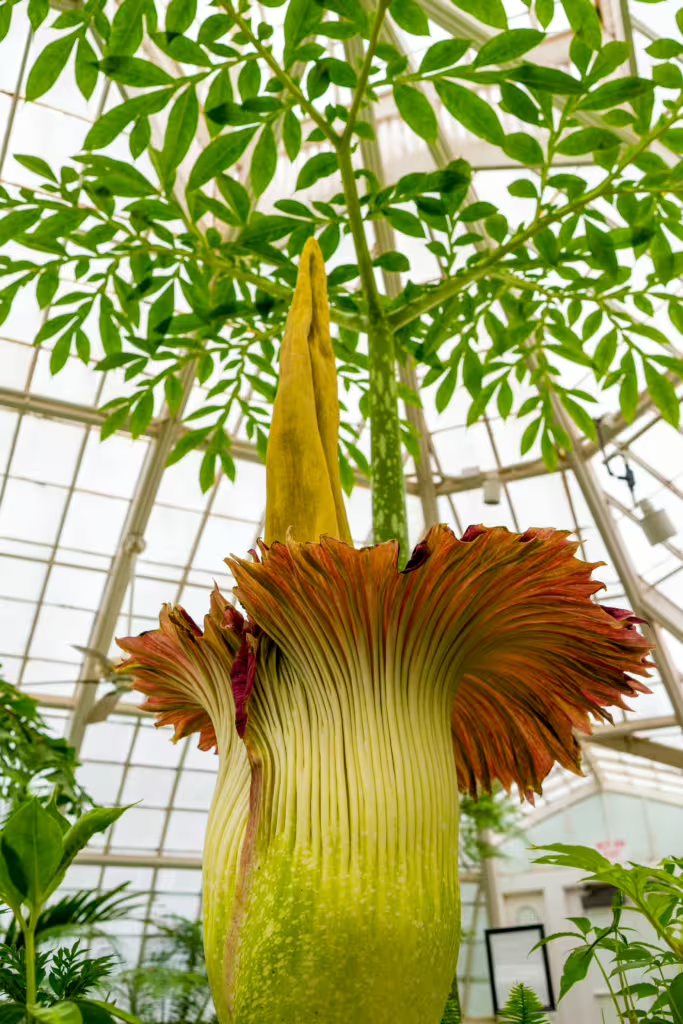

There are many unusual plants on this planet; from plants that move on their own to plants lacking in the basic features that define them as such by our limited understanding. Some of these plants can be found high in the Arctic, clinging to the undersides of rocks. Others, deep in the rainforest, where so many lingering mysteries of nature still remain undiscovered. Our journey today focuses on the latter locale, in the steamy jungles of Sumatra, Indonesia, and Malaysia.
The “Corpse Flower” has earned its awe-inspiring name due to its particularly pungent aroma, but its iconic scent is hardly the most intriguing thing about the Amorphophallus titanum. That’s right. the forceful, unpleasant odor of the titan arum is not all that draw humanity’s attention, it also happens to produce one of the largest flowers in the botanical record.
Despite its foul smell, the titan arum fascinates scientists, botanists, and visitors to botanical gardens around the world. Its enormous size, rare blooming cycle, and unusual pollination strategy make it one of the most remarkable plants ever discovered.
A Giant Among Flowers
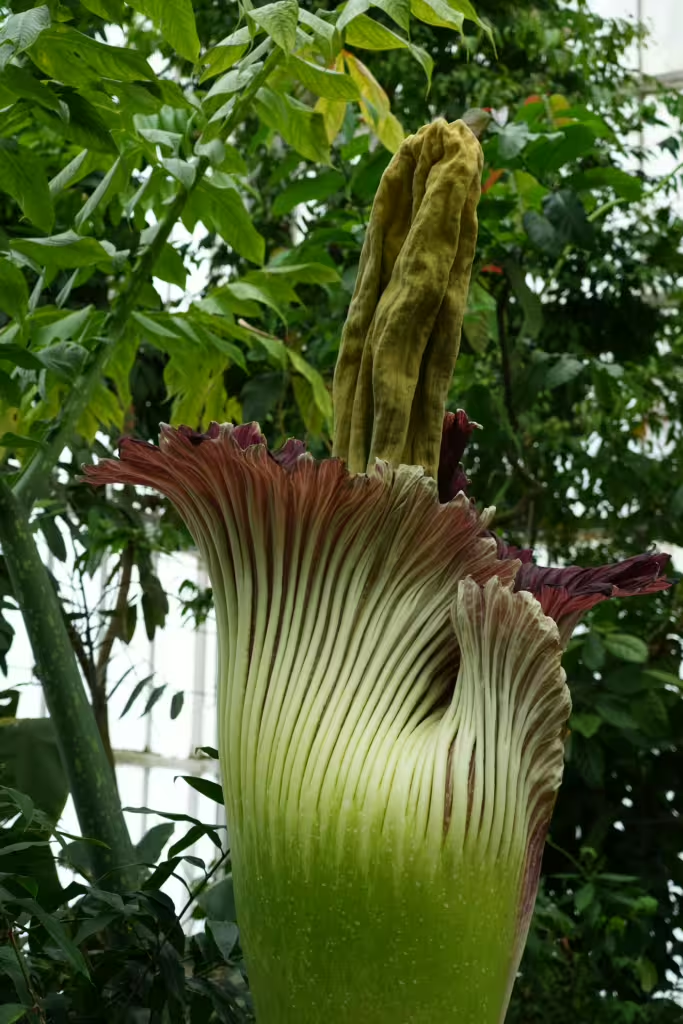
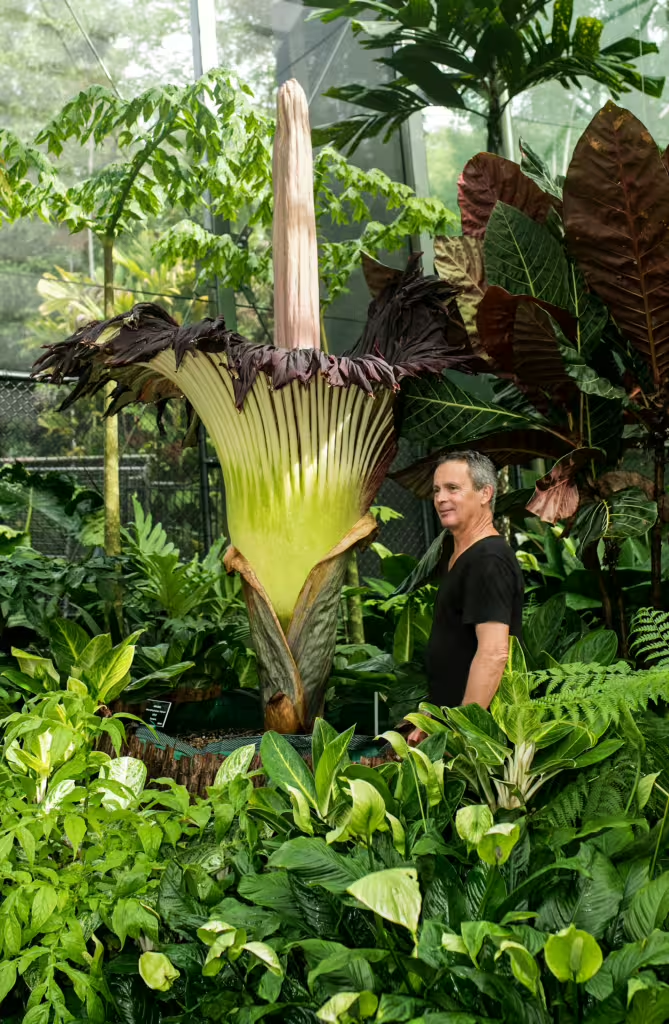
The titan ardum is so-named because of it’s titanic size. It is scientifically known as the largest unbranched inflorescence (flowering structure) in the entire plant kingdom. How big is this floral titan, you may ask? Well, most grow between 8 and 10 feet in height.
At first glance, the plant appears almost alien, but make no mistake, this single giant flower is very real…and very complicated. The complex structure of the titan ardum flower is made up of two main parts: the spadix, in the center, and spathe, which makes up the petal-like structures along the sides.
The outer surface of the spathe is usually green, which helps it blend seamlessly into its rainforest habitat. Inside the spathe is a different story. When the titan blooms, it reveals a deep reddish-purple inside, so deep in color that it almost resembles raw flesh. There’s a reason for this gruesome coloration, of course, and it has a lot to do with the titan ardum’s more famous moniker; the corpse flower.

Why It Smells So Bad
The bruised flesh-colored inside of the corpse flower is only the first clue that this flower is interested in attracting more than bees for pollination. The second clue is the smell, a putrescent odor of rotting meat that becomes positively overwhelming once the flower finally begins to bloom.
This stink of decaying flesh is the corpse flower’s way of inviting its preferred pollinators to come and peruse its petals. Flies and beetles might not seem like pollinators, especially when compared to bees, wasps, and butterflies, but they do the job just as well. And frankly, the rainforests where the titan arum grows are rife with competition over popular pollinators. Thus, instead of attracting bees or butterflies with sweet fragrances, as so many other flowers do, the corpse flower has evolved a way to target insects that feed on carrion.
And since these insects are naturally drawn to the smell of decomposing flesh, the overly stinky corpse flower smells like a perfect place to eat and lay their eggs. Once the beetles and flies enter the flower structure, they encounter the plant’s reproductive parts and unknowingly transfer pollen as they leave, disappointed, to find an actual corpse to lay their eggs inside.
Heat and Scent Production
If the size and smell of the corpse flower weren’t interesting enough, this gigantic bloom also has the ability to generate a significant amount of heat during the flower process. The spadix (towering form in the center of the flower) can reach temperatures close to 98.6, or human body temperature. The purpose of this thermogenesis is to better disperse the funky aroma that the flower needs to attract its pestilent pollinators.
Thermogenesis is not usually seen in living organisms, much less in plants, but in warming itself, the titan arum increases the range at which insects can detect the smell. This is especially helpful in the dense rainforests of Southeast Asia, where a plant needs to make itself known as effectively as possible.
A Rare and Brief Bloom
Like the Rafflesia, the corpse flower’s bloom is relatively brief, even if its lifespan can last between 7 and 10 years or more. It may take that much time for a single flower to produce even one bloom, and that brief flowering usually only lasts between 24 to 48 hours. Live long, bloom fast, stink large; that’s the titan arum’s motto. Interestingly enough, the strongest odor typically occurs during the first night, when the thermogenesis is at its strongest, and tapers off from there.
What the Plant Looks Like Between Blooms
When the titan arum is not flowering, it looks much more mundane, albeit still very large.Instead of a giant bloom, the plant produces a single, enormous, treelike leaf structure that stands around 12 feet tall. You may not even know it is a corpse flower until it has finally absorbed enough energy and blooms.
Native Habitat in Sumatra
Titan arums grow naturally in the tropical rainforests of Sumatra, an island in Indonesia known for its rich biodiversity. This is a warm, humid place, where the vegetation often grows so dense that air is thick and the sun barely reaches down past the canopy. Like so many low-lying plants, the corpse flower has had to evolve to compete, but even its fascinating adaptations cannot save it from the rampant deforestation and destruction wrought by human beings.
Fortunately, the widespread interest of this plant and others like it, have allowed botanical gardens to spread the word about these endangered places and help educate people about their necessity in the grand scheme of things.
The Titan Arum in Botanical Gardens
Due to its rarity and dramatic, if not brief, appearance, titan arums have become popular attractions in botanical gardens all over the world. Many times, those gardens will set up live cameras or even extend visiting hours so that all patrons can catch a glimpse, and a whiff, of the remarkable and unique flower.
True Investigator Says…
As you can see, the titan arum defies much of our conventional understanding about what plants are truly capable of. Named for its truly detestable scent, the “corpse flower” has earned the title as the world’s smelliest flower and has become a botanical superstar that people will literally wait in lines to see…and smell.
Though it is normally hidden deep in the Sumatran rainforest, botanical gardens worldwide have added it to their collection and used it to educate audiences about the curious and varied nature of pollination. Though it may be decidedly unpleasant, the titan arum remains a prime example of evolution reacting to competition, as well as the intricate relationships that exists between plants and the insects that help them reproduce.
Discover more from TrueInvestigator
Subscribe to get the latest posts sent to your email.