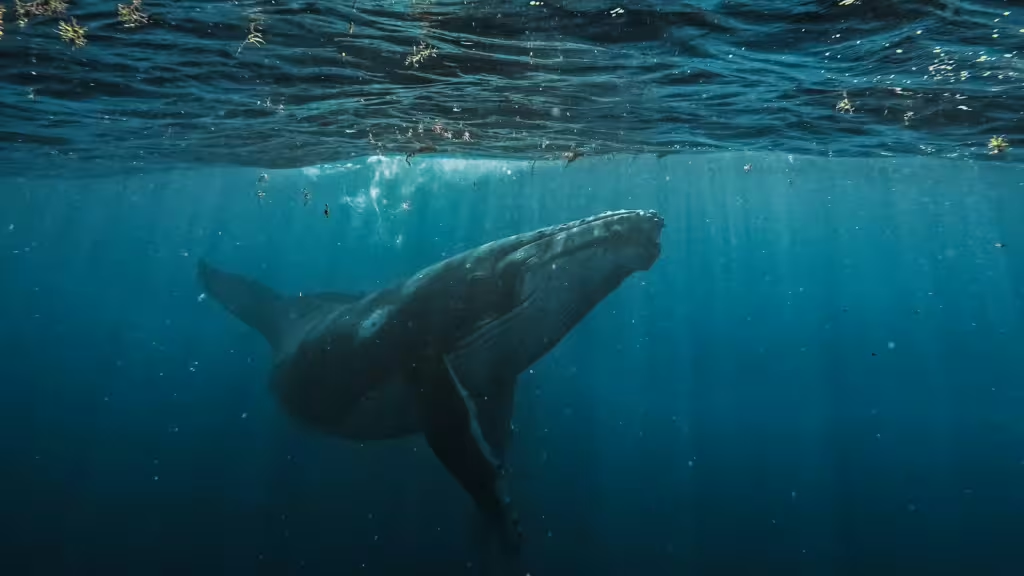

Beneath the vast expanse of the world’s oceans, many billions of lifeforms live in relative harmony. There is a balance in this place, and each creature, from the tiniest microscopic organism, to the largest undersea predators, are necessary to maintain it. And the most tremendous of these aquatic animals is a creature that, in many ways, somehow bridges the gap between the great and small of the sea.
We are speaking, of course, of the blue whale, an animal so immense that it’s scale has surpassed every other animal to have ever existed…even the dinosaurs! The blue whale is leviathan made manifest and it holds the remarkable distinction of being the largest animal on our planet; not just in the modern age, but throughout all of Earth’s known history.
In this article, we will discuss the blue whale from stem to stern, as it were. We will discuss its evolution, its diet, its behavior, and its ecological importance. Finally, we will go over some of the ongoing conservation efforts that have been enacted in order to protect these extraordinary marine mammals.
How Big Is a Blue Whale?
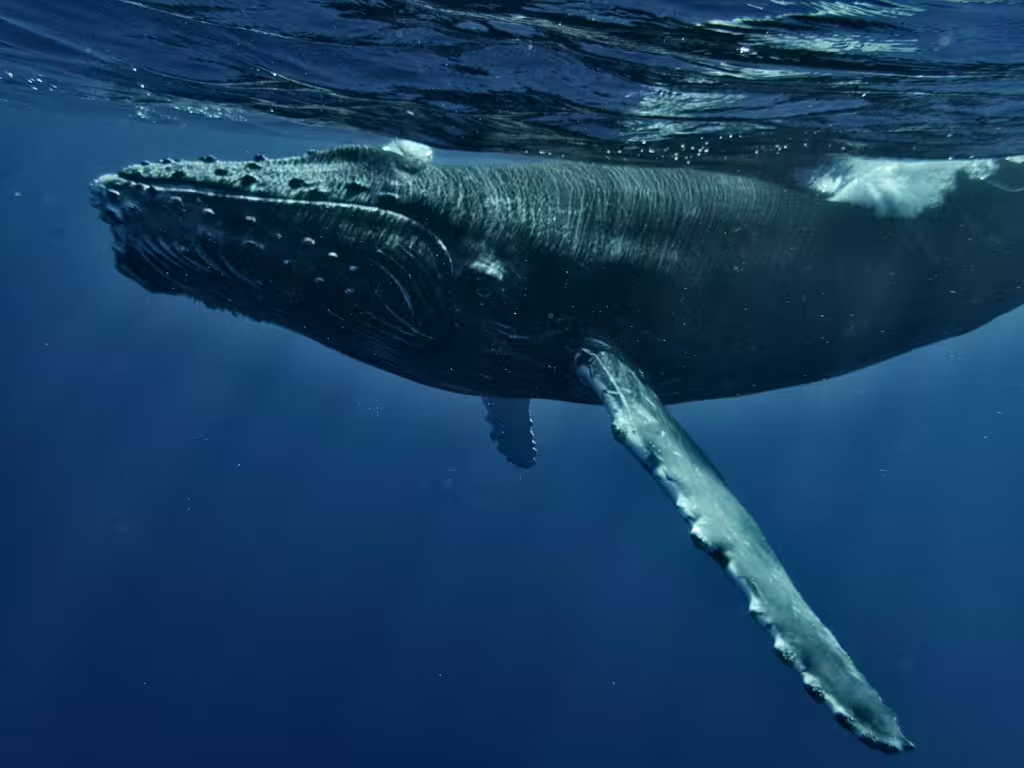
Our current understanding is that the blue whale can reach lengths of up to 100 feet and can weigh as much as 200 tons; that’s big, we can assure you. However, to truly understand the scale of this whale, it might be helpful to compare it to some things you are familiar with on a daily basis. For example. an adult of this species can grow longer than three school buses placed end to end.
Here are some other ridiculous comparisons. The tongue of a blue whale can weigh as much as an elephant, while its heart can be about the size of a small car. As one might expect from a heart that big and a body that big, even their blood vessels are wide enough for a human to crawl through! Their size notwithstanding, however, blue whales are as graceful in the water as any of their cetacean cousins. They are streamlined and can reach top speeds of around 20 miles per hour if the need arises.
Why Blue Whales Grew So Large
So, why would an animal need to grow this big in the first place? Well, scientists believe that blue whales reached their enormous size due to a combination of evolutionary factors; the foremost of them being the availability of food. You see, blue whales don’t eat giant squids like Sperm whales or seals like Orcas, they feed primarily on krill.
These tiny, shrimp-like crustaceans swim in swarms of millions beneath the sea. In some cold waters, the krill populations are so dense that a blue whale can open its mouth and swallow whole swaths of them with minimal effort. Being so large allows the whales to take advantage of the food availability and consume enormous amounts of them in the most efficient way possible.
There is also the factor of energy efficiency. Larger animals lose heat more slowly in cold water and can travel long distances without expending too much energy. Their immensity also offers them protection from virtually every other sea-dwelling animal…save humans of course.
A Diet of Tiny Krill
Blue whales are filter feeders and catch the krill they swallow using hundreds of baleen plates that hang from their upper jaws. These plates act like giant sieves and replace the animal’s teeth. As the whale lunges toward a swarm of krill, they open their mouth and take in an enormous gulp of water. The whale then pushed the water back out of its mouth through its baleen plates, while the krill become trapped and are swallowed. A single blue whale can consume up to four tons of krill per day during peak feeding seasons. Talk about endless shrimp!
Life in the Open Ocean
Blue whales can be found in oceans all over the world, though they typically prefer colder waters because of their krill-rich diets. Like humpback whales, blue whales will migrate between the seasons; spending summer in the cold, nutrient-rich polar waters and wintering in tropical climates to breed and give birth to their live calves. Such migrations are no mean feat, either, and can span thousands of miles each year.
Communication Across the Ocean
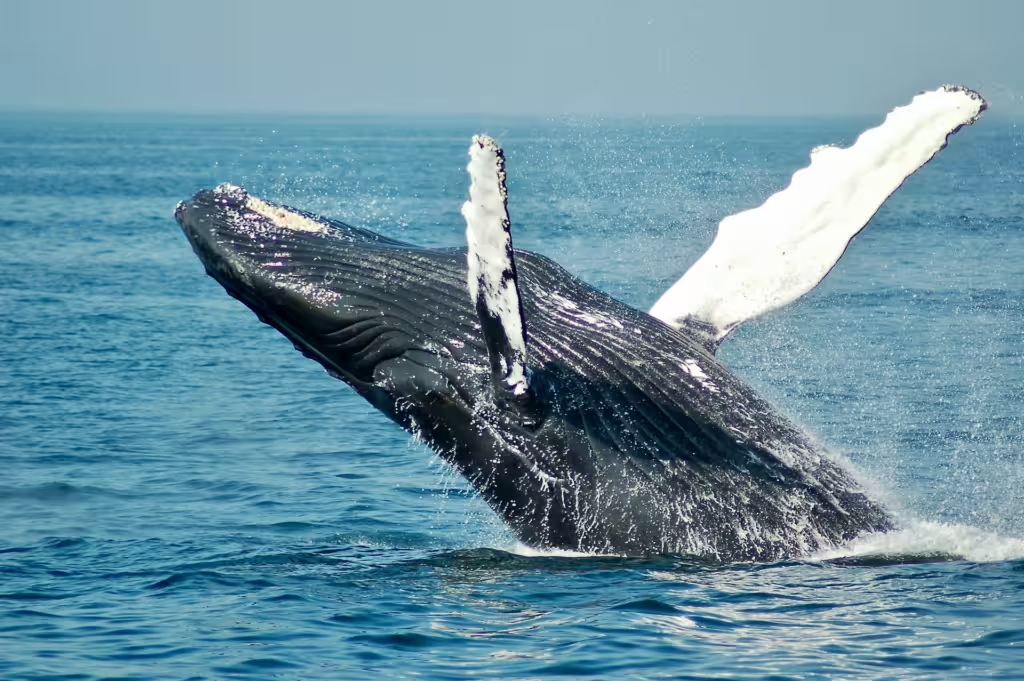
Blue whales communicate with one another through a series of low-frequency calls. These vocalizations help them to navigate, coordinate mating, and communicate with one another across fairly wide expanses of open ocean. Interestingly enough, even though the whales can produce some of the “loudest” sounds made by any animal on Earth, they are often in too low of a frequency for human beings to hear without the aid of specialized equipment.
The History of Whaling
Despite their size, blue whales were once heavily hunted for their oil and meat. Between the early 1900s and the mid-1900s, it is estimated that more than 300,000 blue whales were killed worldwide. This intense, unrestrained whaling of blue whales pushed the animals to the very brink of extinction and it wasn’t until the mid-20th century that people noticed and decided to do something about it. Part of this was because blue whales spend so much time in the open oceans, away from human eyes. People just didn’t notice right away…
Conservation Efforts
Once folks recognized the dramatic decline in whale populations after the age of whaling ended in earnest, several international agreements were put into place. One, the International Whaling Commission (IWC) arose in 1966. It banned commercial whaling of blue whales and since then, populations have slowly begun to recover.
However, blue whales still face several threats in the modern age simply by virtue of humans being around. They can be injured by accidental ship collisions or get entangled in fishing gear. They can swallow discarded fishing gear and other ocean trash which can get stuck in their systems, causing poisoning and starvation. Ocean noise pollution from ships and drilling can be equally problematic. And finally, climate change continues to threaten the whales and especially their krill populations, Warmer waters are bad for krill and ocean acidification can be just as devastating on krill juveniles.
Why Blue Whales Matter
We touched on it earlier, but blue whales play an important role in ocean ecosystems. Their massive krill buffets helps keep krill populations in check. Meanwhile, their waste and even their fallen carcasses help support other parts of the marine ecosystem, by contributing nutrients and recycling them back into the ocean at large. Their waste helps to feed plankton, which forms the base of the entire marine food web!
True Investigator Says…
As you can see, blue whales are one of the most amazing creatures that humanity has ever had the privilege of sharing the planet with. Their enormous hearts (literally) and powerful voices are second to none and from their diets to their ecological importance, they represent one of the most remarkable achievements of evolution in the fossil record. This is why we must make protecting these gentle giants such a priority. If we do not reign in the damage we have already done, then future generations will be robbed of the opportunity to appreciate these awe-inspiring cetaceans.
Discover more from TrueInvestigator
Subscribe to get the latest posts sent to your email.