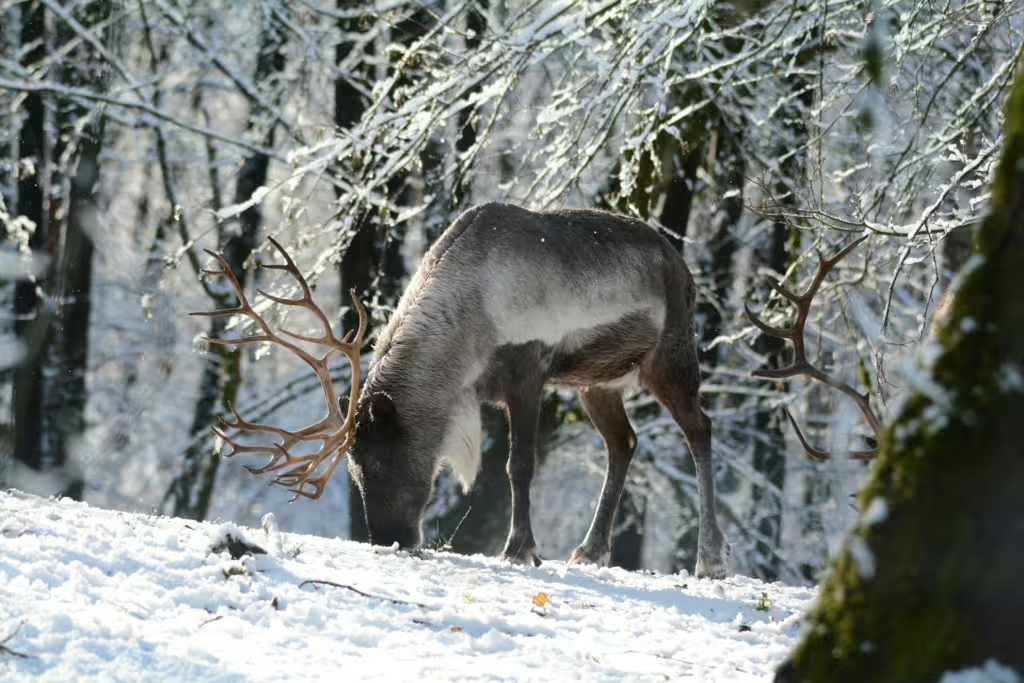

Each year, children all over the world wait up on Christmas Eve to hear the jingling of sleigh bells and the clattering of hoofbeats on rooftops. And though real reindeer do not make the long trek down from the North Pole to the four corners of the globe in one night, they are, in reality, true masters of migration.
If one were to peer across the vast and windswept Arctic tundra, one might encounter a prime example of one the greatest land migrations on Earth. We’re not talking about eight magical reindeer either, we’re talking about tens of thousands of caribou, moving in flowing lines across open plains, river valleys, and snow-covered ground. This remarkable journey spans hundreds, sometimes thousands, of miles, and the forces that propel the caribou to undertake it could be described as magic; to the uninitiated.
Fortunately, those of us at True Investigator are counted among the well-informed and we have the science behind the so-called sorcery. These Rudolph relatives are not guided by Christmas magic but an astounding mixture of instinct, memory, and the rhythm of the seasons. In this article, we will discuss how caribou migrations proceed, why they occur, and how this continuous cycle is shaped by everything from climate and food availability, to predators and human intervention.
Who Are the Caribou?
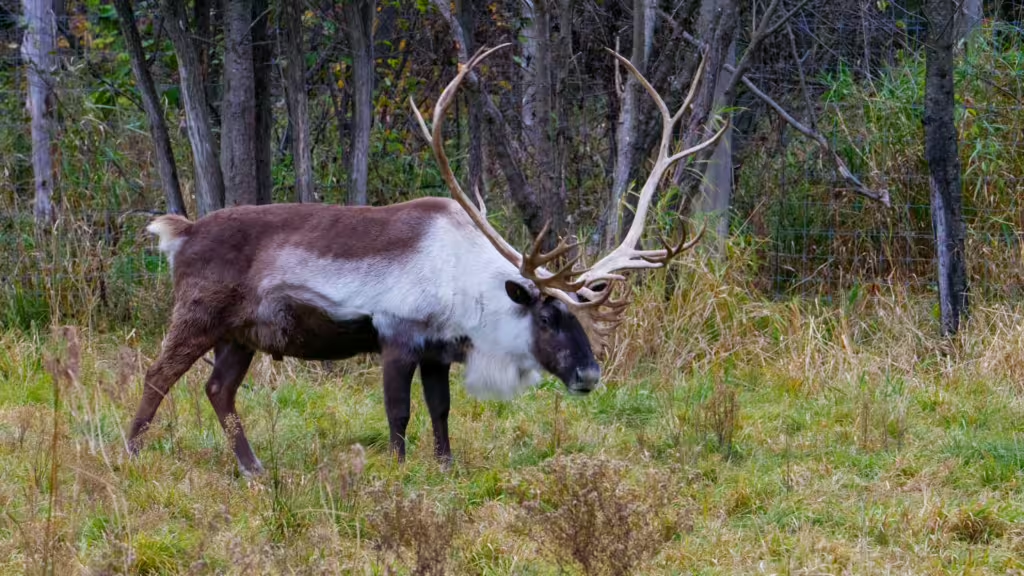
We should be clear, caribou and reindeer are the same thing. Members of the deer family, these Arctic ungulates are referred to as reindeer in Europe and Asia, while wild caribou are so-called in North America. Unlike most deer species, both male and female caribou are adorned with antlers that they grow, season over season. In addition to their distinctive hood ornaments, caribou hooves are specially adapted for Arctic life and change with the seasons. These hooves appear wide and splayed in summer, allowing them to walk across soft tundra, but harden in winter, enabling them to dig through snow for food.
Caribou can be find across a host of intercontinental northern climbs, inhabiting northern regions of Alaska, Canada, and Greenland, as well as parts of Scandinavia and Siberia. Many populations are migratory ( the point of our story) and travel seasonally between their summer and winter ranges.
Why Migrate?
Migration, in all its many forms, is driven by one simple notion; survival. In a place like the Arctic tundra, a land of extremes, where dark winters can be a long as they are brutally cold, animals must move with the food, shelter, and warmth. At the same time, Arctic summers are brief, though they are productive in terms of food. In these rare, comfortable moments, nearly constant daylight fuels the explosive growth of plantlife, which the caribou need to survive.
Caribou, and many Arctic animals, have learned to take advantage of these seasonal changes. In Spring and Summer, they move north in order to fins fresh vegetation and have their young. These calving grounds are ideal for the early stages of development. In Autumn, they begin to travel inland, moving south to more sheltered winter habitats. In Winter, when snow is deep in most places, they seek areas with shallower, more manageable snow depth, where they can access vegetation with through rooting and digging.
For the most part, the timing of these migrations aligns with plant growth cycles, as newly emerging tundra plants provide vital nutrients for pregnant females and growing calves. Climate change has made this process harder, however, as the instinctual signals within the caribou don’t always align with the way the winds are literally blowing. Climate change alters snow conditions, plant growth timing, and insect abundance. Moreover, warmer winters can create icy layers beneath even shallow snows that make digging for food that much more difficult.
The Journey Begins: Spring Migration
As daylight returns to the Arctic in early spring, pregnant female caribou arise to begin their long match toward their traditional calving grounds. Those grounds tend to be located in open tundra landscapes, where there are fewer predators and a great abundance of early-season vegetation. This is by no means an easy trek, however, as the journey can span hundreds of miles. Along the way, the caribou find themselves crossing rivers, wetlands, and snowfields in equal measure.
What’s most interesting about this leg of the journey is that it is imbedded in the caribou’s DNA. Over the centuries, generations of caribou have followed this exact routes. The pathways are embedded in their collective memory and calves born along these routes inevitably learn the same migration pathways from following their mothers. Within days of arrival, females give birth; typically to a single calf.
Calving Season on the Tundra
Calving is timed precisely and births usually occur within a short window of a few weeks. This is by design and it is a synchronized birthing strategy which provides safety in numbers for the entire, gigantic herd. After all, when thousands of calves are born simultaneously, predators such as wolves and bears cannot possibly capture them all.
As with most hoofed, herd animals, newborn calves are remarkably resilient. Indeed, within a few short hours, they are able to stand and begin walking. Within days, they can even keep pace with the herd. The open tundra also offers visibility, thus allowing the adult caribou to detect approaching predators from a distance.
Summer Abundance
During the short Arctic summer, the tundra transforms into a green buffet for the caribou, rabbits, birds, and bugs of the region. Mosses, sedges, grasses, and flowering plants burst into life under nearly 24-hour sunlight. And make no mistake, this is a buffet, as the caribou feed almost continuously during their stay here, replenishing energy reserves lost during winter and supporting calf growth. They need to fill up and be ready, because winter is coming and they still need to migrate if they want to keep surviving through the harshest part of the year.
Autumn Movement
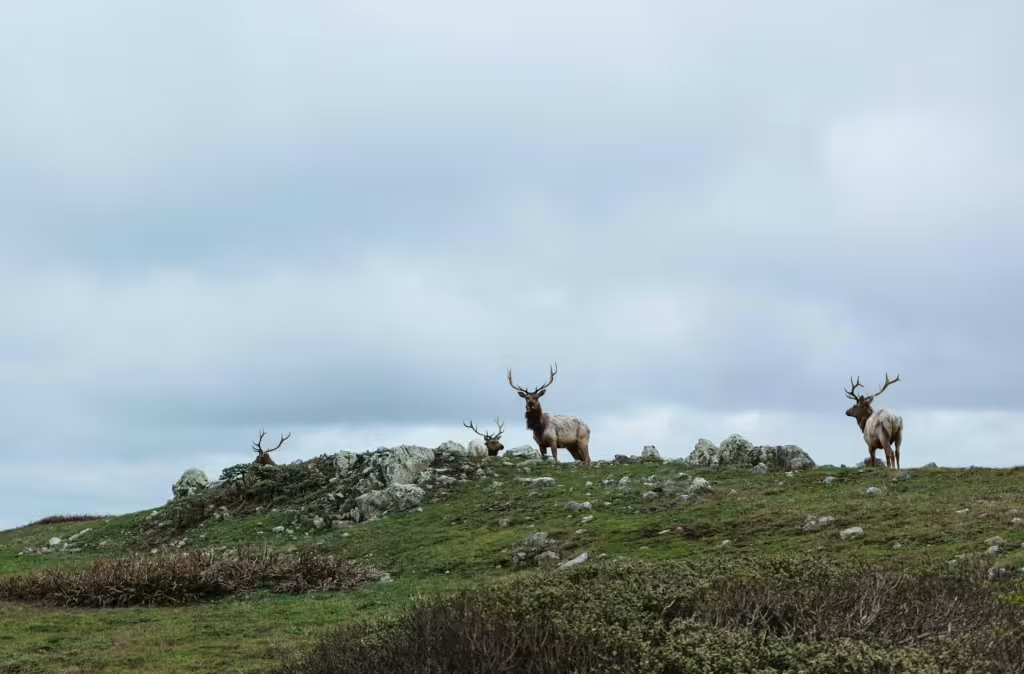
As temperatures begin to drop and daylight shortens, caribou start to move back inland. The Autumn migration will lead them into the boreal forests of the Arctic or the nearest to the wind-swept tundra ridges where snow is shallower. This is also the breeding season, when male caribou enter the rut and compete for access to females. Bull caribou use their antlers to spar and establish dominance and after they are done, they lose a significant amount of body weight; having spent energy on competition rather than feeding.
Winter Survival
Winter, as one might expect, presents the greatest challenge for the caribou, but they meet it with steadfastness and strength, each and every year. Sure, snow has covered everything and will for months, and sure, the temperatures can dip well below freezing, but do the caribou care? A little! But they find ways to survive.
Their diet changes to mostly lichens and they dig for them beneath the snow in a process called cratering. Thus, winter migration patterns are influenced by snow depth and hardness. Deep and icy snow is not ideal for finding lichen or covered vegetation, so the caribou move around to areas where they don’t face these conditions. In addition, caribou are physically adapted to the cold. Their hollow hair traps insulating air, and a specialized nasal structure warms incoming air before it reaches the lungs.
True Investigator Says…
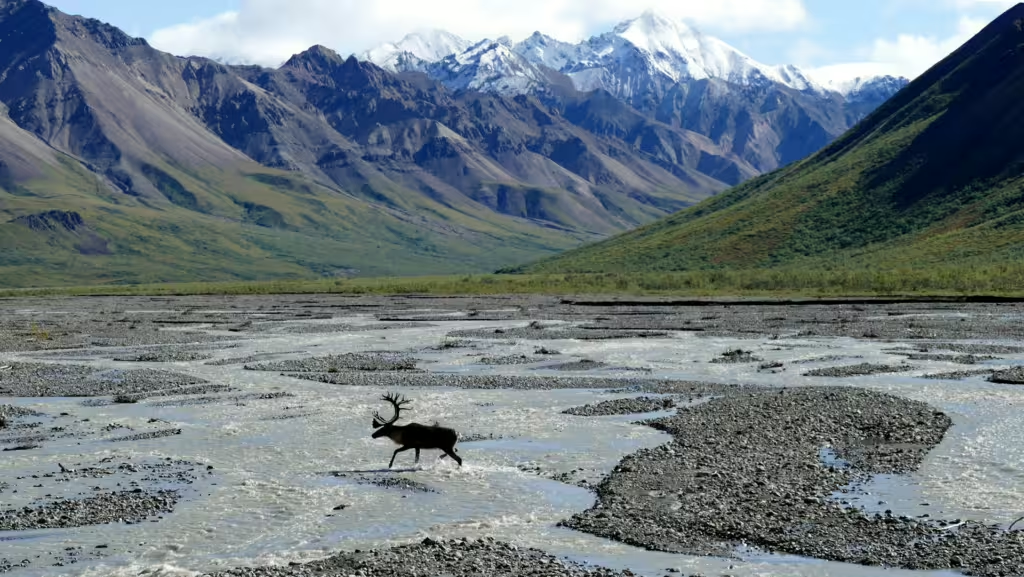
As you can see, caribou might not be soaring through the night skies anytime soon, but that doesn’t make their movements and migration patterns any less remarkable. The sight of caribou ranging their long, arduous path across the Arctic tundra is one of nature’s greatest stories of endurance and generational ingenuity.
Driven by seasonal change, sustained by collective memory, and shaped by the demands of survival, the march of the caribou across one of the harshest landscapes on Earth, reminds us how important it is for us to follow our instincts; to know when to move, as well as where. Through animals, we catch glimpses into our own ancient, migrational instincts, and might even find ways to become more in tune with the natural world.
Discover more from TrueInvestigator
Subscribe to get the latest posts sent to your email.