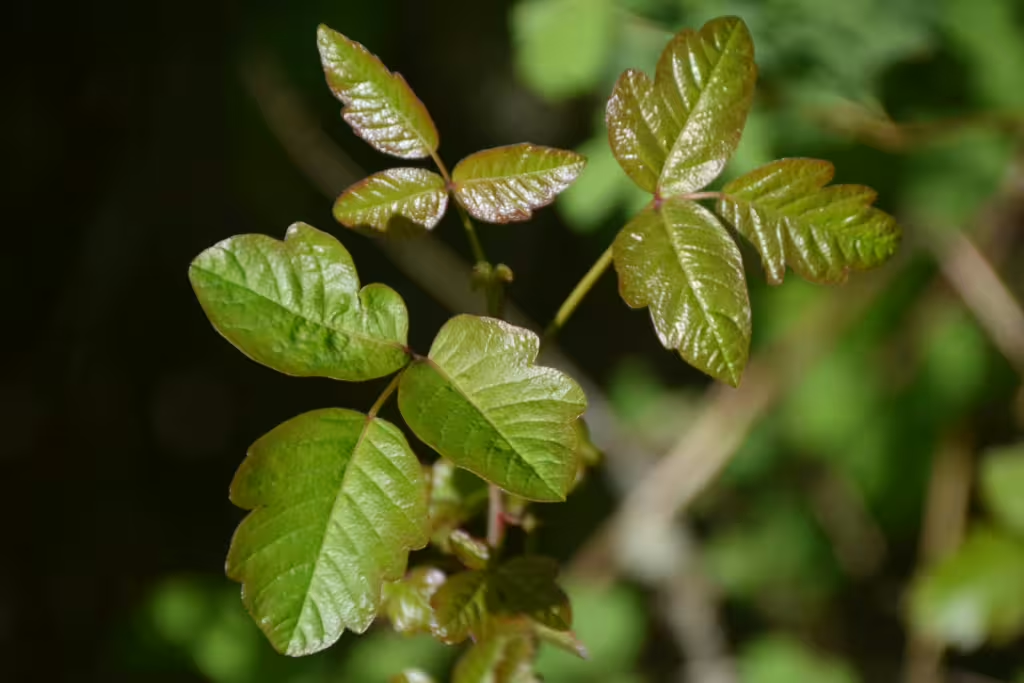

Whether you’re a hiker, gardener, scout, or just someone who likes the great outdoors, chances are you’ve run afoul of poison ivy at some point. Even those who haven’t felt it’s itchy, stinging touch live in mild fear of encountering it. Fortunately, most guidebooks offer at least a reasonable description of what it looks like. Poison ivy is recognizable by its famous “leaves of three,” but that doesn’t always mean you can avoid it out in the wild.
To the uninitiated, this unassuming shrub might look tiny but it comes with a powerful defense mechanism. Even the slightest touch to bare skin can leave it red, blistered, and unbearably itchy. The thing is, this isn’t an example of a plant that goes out of its way to “attack” humans, it’s a lesson in evolution, biological defense, and the complex chemistry that exists between plants and human beings.
In this article, we will pull up our hiking boots, tuck in our pants, and bring readers on a Magic School Bus style journey into the wild world of poison ivy.
Meet the Plant: More Than Just a Weed
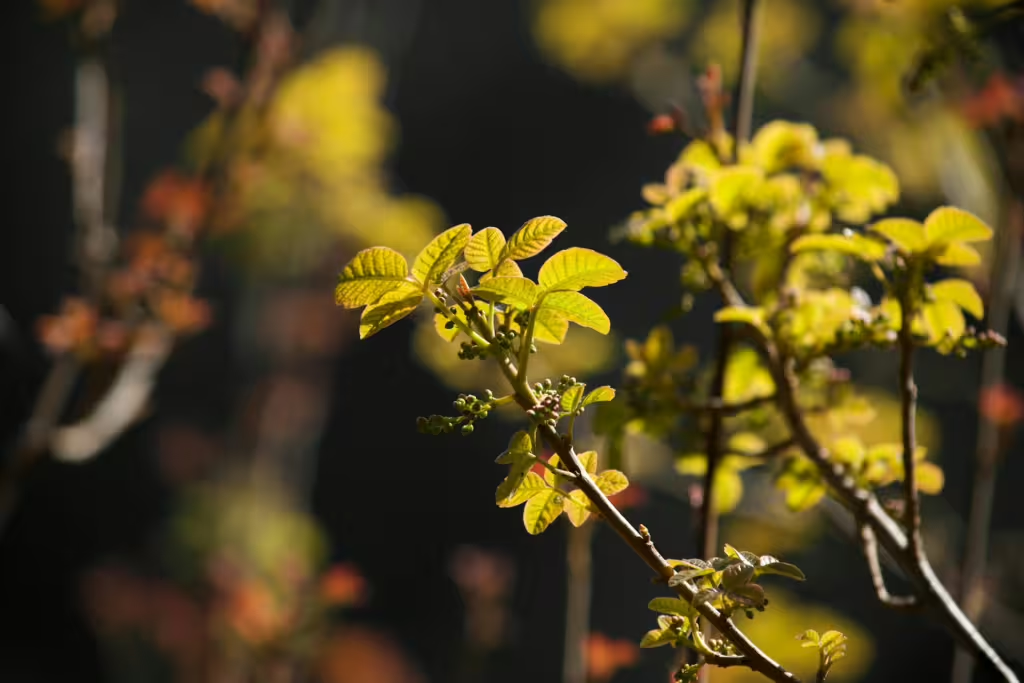
Poison ivy (Toxicodendron radicans) is not just an itchy weed, it is a versatile North American mainstay that thrives in a wide range of climates. It also grows in a number of different ways. It can be found as a woody shrub, a ground covering plant, or a climbing vine that meanders its way up trees. This diversity of form is what makes it kind of hard to avoid in certain wild spaces.
Those in the know can identify it by its leaves, which typically appear in clusters of three leaflets. That said, their shape and coloration can vary widely. In spring and summer, the leaves are green. In autumn, they often turn bright red or orange before falling.
Despite its reputation and the discomfort it provides, poison ivy plays a vital ecological role in North American ecosystems. Birds eat the berries that grow on its branches, and deer browse its leaves freely. This is because they are one of the animals that can do so without suffering any ill effects. The plant is hardy as well and can grow on the edge of the forest, along woodland trails, and in disturbed areas where weather, construction, or the presence of other animals have left spaces for it to grow. What’s more, each of those places are exactly the spots where humans are likely to encounter it.
The Secret of the Itch: Urushiol Oil
The itching sensation caused by poison ivy can be attributed to a naturally-occurring, oily compound called urushiol. This oil is found not only in the obvious places like leaves and stems, but in the roots as well. It can even remain on the dead plant material, such as fallen leaves, for some time. Basically, the urushiol is released when any part of the plant is damaged, crushed, broken, or even lightly brushed by skin. It is sticky, so it easily attaches to skin, clothing, pet fur, and the ends of gardening tools.
Even the smallest amount of the oil can trigger a physical reaction in humans. Our current scientific understanding is that even the tiniest amount of urushiol is potent enough to start up the itch. That’s right, even microscopic traces of the stuff can cause symptoms in sensitive individuals.
Why the Rash Happens
What’s more, urushiol works differently than plants that just irritate the skin directly. It triggers the body’s immune system in such a way that the end result is basically a form of contact dermatitis.
When urushiol touches skin, it penetrates quickly; often within minutes. The oil binds to proteins in skin cells, altering them in a way that makes the immune system perceive them as foreign invaders. This triggers the body’s histamine response or immune response. Inflammation, redness, swelling, and even blisters appear before long…and then the itching begins.
This response isn’t always sudden. It can take 12 to 48 hours to appear, meaning some people might not even realize that they’ve touched poison ivy until the next day!
Why Some People React More Than Others
Interestingly enough, not everyone reacts to poison ivy in the same way. Sensitivity varies widely, but approximately 70–85% of people are allergic to urushiol to some degree. There are some lucky individuals who appear resistent to the oil, but most develop at least a mild redness or itchiness. Some individuals experience severe blistering which might require medical intervention. In the end, genetics, environmental factors, and even previous exposure can affect how a person responds to the oil.
Unlike some toxins whose effects lessen with repeated exposure, the severity of symptoms created by urushiol oil exposure can actually increase the more one encounters it. Indeed, repeated exposure may actually increase sensitivity because the immune system “remembers” urushiol. Thus, future contact can provoke a stronger response.
How Urushiol Spreads
One reason poison ivy reactions seem to “spread” on the skin is because urushiol is easily transferred. You can get secondary contact from clothing or gardening gloves you wore during your initial exposure, from oil that’s attached to pet fur, or from the tools you used around the plant. Moreover, urushiol can remain active on surfaces for months or even years.
It is imperative that those who make contact wash their exposed skin within 10–30 minutes, as it can significantly reduce the likelihood of a reaction. Soap and water are effective at removing the oil before it binds to skin proteins.
Treatment and Recovery
The good news in all of this is that most poison ivy rashes resolve themselves within one to three weeks. They still need to be treated, however, and most treatments focus on managing the most annoying symptoms. Cool compresses, over-the-counter cortisone creams, and antihistamine treatments are the most common approaches to soothing the itch. Calamine lotion and oatmeal baths are also effective home remedies. More severe cases often require prescription corticosteroids to reduce inflammation. Above all else, try and avoiding scratching the rasg too much, as this will help prevent any secondary infections.
A Lesson in Plant Defense
Poison ivy is unique because it demonstrates how plants defend themselves through unorthodox, biological means. This not an insect that can flee from predators, so it has to use its oily exterior to deter predators. It might feel like an attack, but it’s just survival.
True Investigator Says…
As you can see, poison ivy isn’t just a nuisance, its an amazing bit of chemical evolution. The oil that suffuses this plant interacts with the human immune system in such a way that few others do and although it’s uncomfortable, it is no less remarkable. So remember, next time you find yourself in a verdant wood, keep an eye out for those three-distinct leaves, it might just save you a few days of itching!
Discover more from TrueInvestigator
Subscribe to get the latest posts sent to your email.