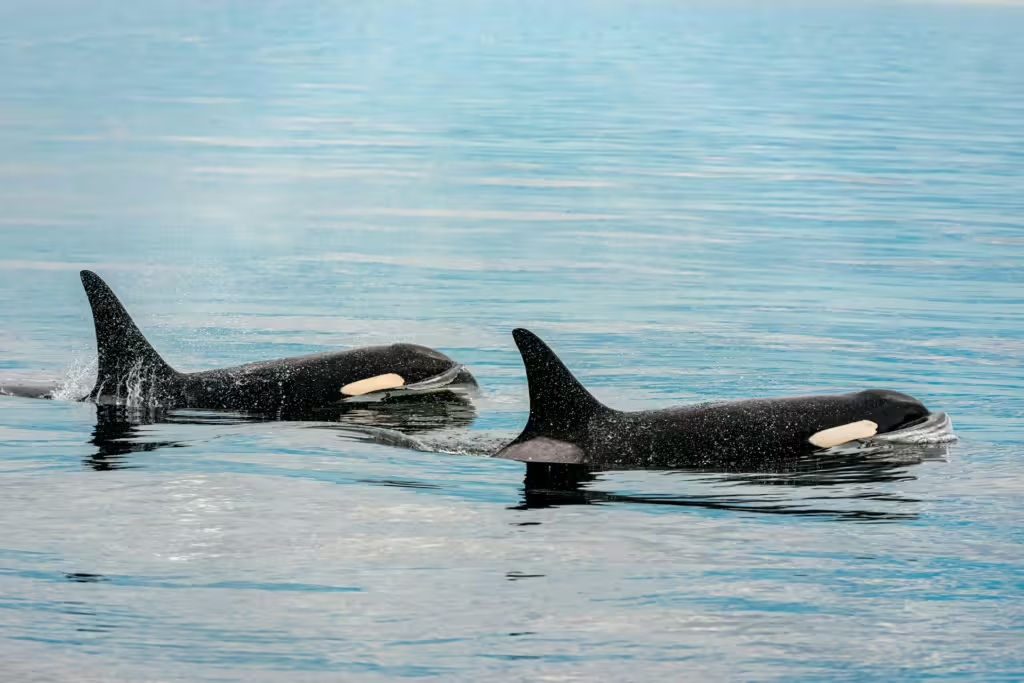

In our last article, we ventured into the frozen tundra to learn about the terrestrial terror known as the wolverine. Today, our exploration into the world’s many remarkable predators takes us into slightly more dangerous waters; pun very much intended. In the cold, nutrient-rich waters of the Pacific Northwest, dwells an iconic undersea predator that can give even the most voracious of sharks a run for its money; the orca.
Despite this apex predator’s fearsome reputation and its nom de guerre, “killer whales” are actually quite gentle; at least amongst their own kind. Beneath the ocean’s frigid surface, orcas move in coordinated arcs, wefting to and fro in near-perfect rhythm. You see, the orca’s social intelligence, like many whales and dolphins, is quite unique within the animal kingdom.
Indeed, orcas are considered to be among the most socially sophisticated animals on Earth. Their lives revolve around family bonds, cooperative hunting strategies, and long-term relationships, but they also have certain cultural tradition within their family groups, some of which can cross whole generations. So get ready to dive down and see why one of the most killer facets of these underwater predators is their killer communication skills!
A Society Built on Family
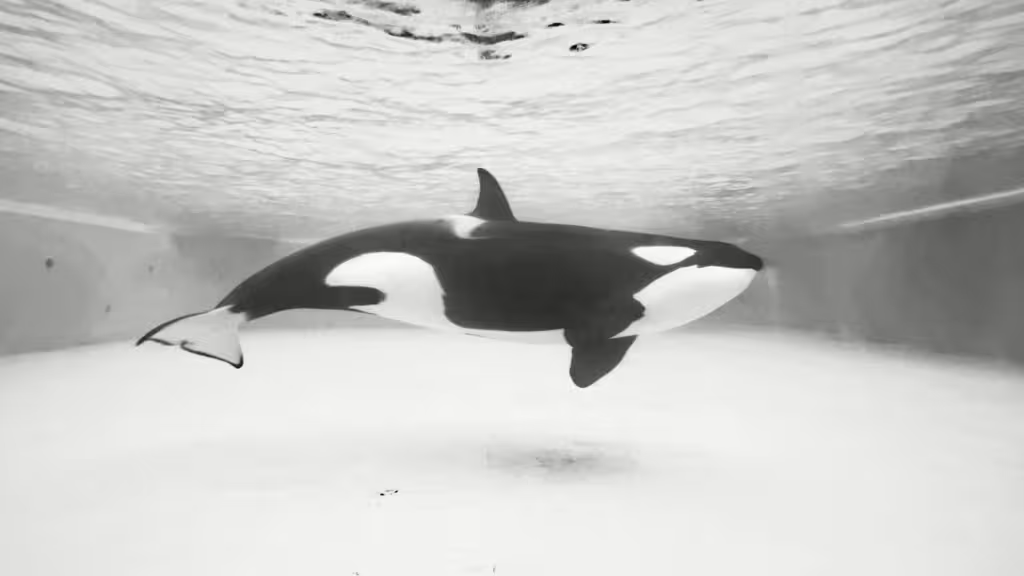
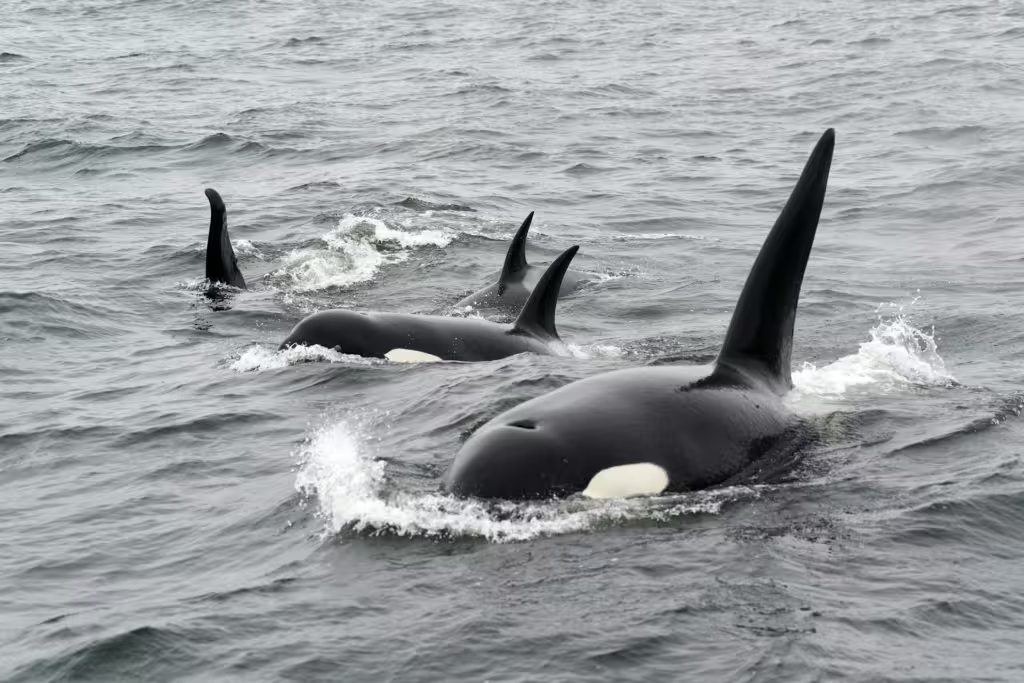
Many marine mammals, from whales to dolphins, to seals and walruses, live in family groups. Orcas live in tightly knit family groups called pods. These pods are typically matrilineal, which means they are led by an older female. This matriarchal society is also seen in elephant herds. In orca communities, the sons and daughters of each female remain with their mother for life.
That said, I wouldn’t go around calling every orca you met a “mama’s boy,” not if you want to keep your bones intact! All joking aside, these matriarchal bonds create multi-generational communities amongst orca-kind, though not all of them intermingle. A single pod may include grandparents, adult offspring, and young calves all traveling, hunting, and communicating together; often in ways that outsider orcas cannot easily decipher.
At the same time, the orca matriarch plays a critical role in the grand scheme of it all. Research suggests that older orca females carry valuable ecological knowledge — such as where to find salmon in seaons where numbers might be reduced. Their experience increases survival rates for the entire group. In this way, wisdom is passed down not through instinct alone, but through lived memory.
It should also be noted that, with the exception of humans and a few other mammalian species, few animals maintain such long-term maternal bonds.
Communication and Dialects
One of the clearest signs of orca intelligence lies in the way they communicate. Like dolphins and other whales, orcas communicate with one another using a combination of clicks, whistles, and pulsed calls. These vocalizations can help with maintaining the cohesion of the pod, aid in navigation, coordinate hunts, and simply allow the orcas to “talk” to one another.
What makes orca communication even more extraordinary is the presence of dialects. That’s right, different pods possess distinct call patterns. Basically, they have their own regional accents just as we do in certain human languages. You’ll have Cockney orcas and those that can speak RP (received pronunciation.)
Members of a pod learn and repeat specific call structures unique to their group. These vocal traditions are culturally transmitted from one generation to the next. A calf learns the dialect of its mother’s pod, reinforcing identity and belonging. This cultural dimension sets orcas apart from many other marine species.
Cooperative Hunting Strategies
Orcas are apex predators, but they hunt more like wolves than tigers of the sea. Large and powerful as they are, these marine giants rarely hunt alone. Most of their hunting strategies depend heavily on teamwork. Certain orcas hunt different prey, however. These different subspecies are called ecotypes. Some hunt salmon, others are proficient with sea lions or seals, and in each case, they use different hunting strategies developed by generations of learning and working together.
Play and Social Bonds
Social intelligence is not only displayed in hunting and communication but in play. Indeed, orcas engage in play behaviors that strengthen bonds, such as interacting with seaweed, breaching repeatedly, and swimming around each other. It isn’t just the young orca calves that play either, but the adults, which only further strengthens the social bonds between the animals. Affectionate behaviors such as rubbing bodies together or swimming closely side by side is also used to reinforce those social connections. Physical closeness maintains group unity, further strengthening emotional ties.
Cultural Traditions
Earlier, we touched on how orca intelligence extends beyond instinct into a semblance of culture. What does this mean, exactly? Well, certain pods have been known to exhibit unique behaviors that are not explained solely by survival needs. For example, some orcas have been observed wearing dead salmon on their heads as “hats.” This specific behavior has been documented in specific populations in the southern oceans and it wasn’t just one orca that did it, but whole families, exhibiting the same trend. Culture in animals isn’t the same as it is in humans, of course, but refers to learned behaviors shared within a group. Orcas are among the clearest examples of non-human cultural transmission.
Lifelong Learning and Memory
Orcas possess large brains relative to body size, which helps them with both emotional response and social interaction. And since orcas can live up to 80 years, they can actually accumulate quite a bit of environmental knowledge, which is why elderly females lead their pods with accumulated wisdom. Having such long lifespans also strengthen social networks. This means that orca familial relationships deepen over time, reinforcing cooperation and collective problem-solving.
Challenges to Orca Societies
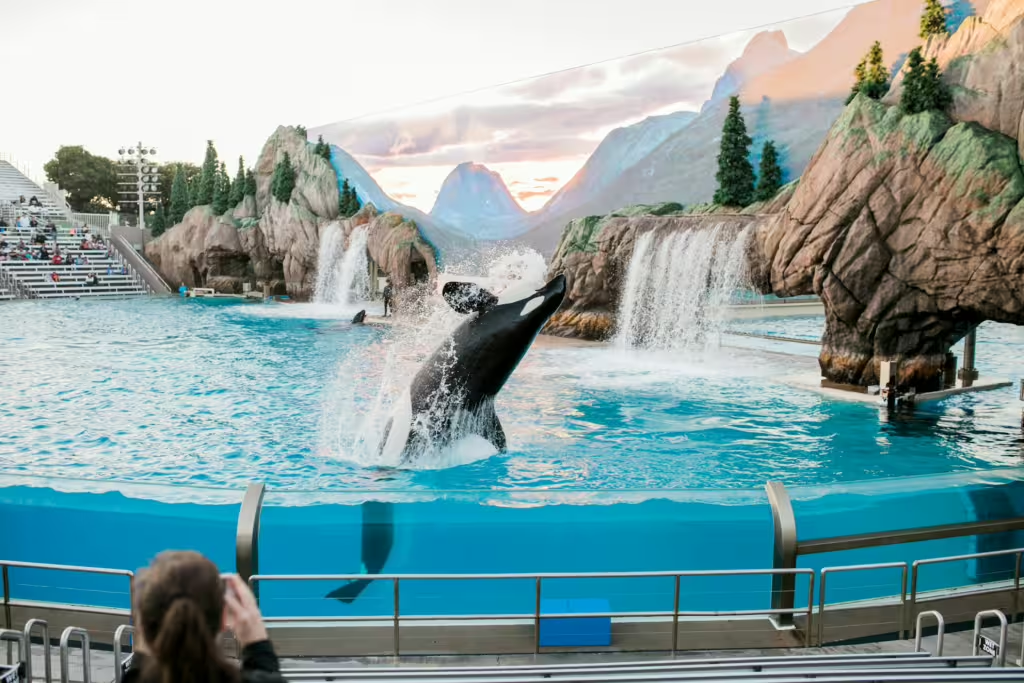
As with most animal populations, orcas are facing threats to their populations from human interference. Declining salmon populations, global warming, ocean pollution, noise disturbance, ocean traffic, and all the other myriad effects of climate change are making life harder for many orca family pods. Noise pollution from ships is particularly devastating as it can affect orca communication and echolocation; meaning families cannot talk to one another. This effects social bonding and hunting behavior, making life difficult and potentially fracturing social systems that have been built over generations.
True Investigator Says…
As you can see, orcas are not just oceanic masters of their domain because of their ferocity, but because of their profound social connections. These animals live in matriarchal groups and possess unique dialects that only those family groups can truly comprehend. They share cooperative hunting strategies as well as cultural traditions that most animals don’t even contemplate.
Through the orca lens, we are reminded that intelligence is often what helps communities to thrive. For beneath the ocean’s surface, far from human cities, complex societies have nevertheless evolved and become something truly unique. In the end, social intelligence of orcas is not just a marvel of marine biology. It is a testament to the power of cooperation that exists in many corners of the natural world.
Discover more from TrueInvestigator
Subscribe to get the latest posts sent to your email.