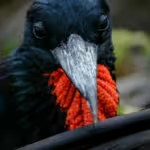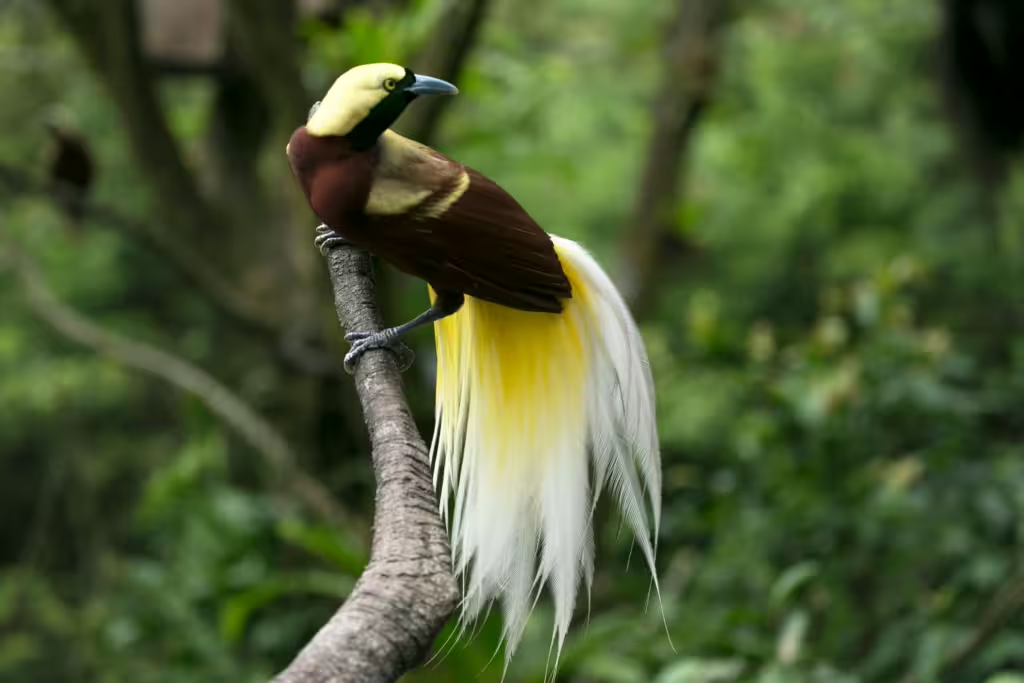

If one were to venture deep within the rainforests of New Guinea and parts of eastern Australia, one might be party to a wondrous sight. Here, in the boughs of the canopy, some of the most elaborate courtship displays in the animal kingdom take place. This rainforest is the realm of the birds-of-paradise, an avian family that is named, not only for their locale, but for their dazzling feathers, vibrant colors, and legendary dance moves!
For centuries, explorers and ornithological experts alike have been captivated by these birds. Where once their displays were thought to be random spectacles, our continuing knowledge has uncovered that each movement, each flash of plumage, each call, serves an important purpose in the dance; and in how these birds find mates amongst the glut of colorful rivals.
In this article, we will talk about these remarkable birds, their habitat, diet, behavior, and the stunning steps that go into many of their most notable courtship displays.
A Stage Set in the Rainforest
Despite what some folks might believe, the birds-of-paradise is not a single species, but part of the family Paradisaeidae. This avian family contains more than 40 recognized species. Interestingly enough, most of them hail from the same part of the world. The vast majority dwells in the dense tropical forests of New Guinea.
Think of it like finches on the Galapagos Islands; all of them from one base ancestor, but evolving a vast array of different adaptations once they moved to other areas of the region. The same is true for bird-of-paradise, though their evolutionary changes have more to do with costume alterations and divergent dance moves.
In the dense New Guinea rainforest, visibility is severely limited and sound travels differently through layers of vegetation. As a result, male birds need to be able to stand out in such a way that they can be glimpsed by females. In order to facilitate this, the males go one step further, transforming small patches of forest into performance stages to begin their elaborate courtship routines. We call these display sites, Leks.
All species set up different stages to highlight their best qualities. For example, some carefully clear leaves and debris from the forest floor, while others select prominent branches where sunlight filters through, illuminating their feathers at just the right angle.
Evolution Through Choice
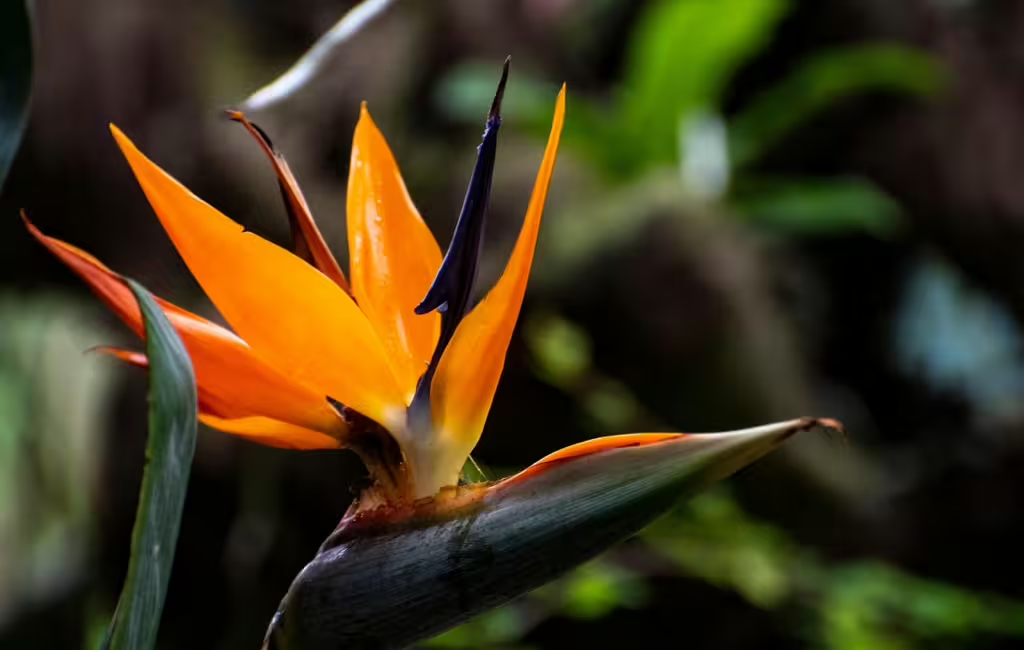
We’ve spoken about evolution on True Investigator before, but the idea of evolution that drives beauty and behavior as a means of adaptation is likely unfamiliar to most readers. Sexual selection is a remote area of evolution and it is not present in every family in the animal kingdom, nevertheless it is a process driven primarily by female preference; especially in this instance.
Over generations, female birds-of-paradise have learned to favor males with brighter plumage, precise dance movements, unique vocalizations, or even more symmetry in their feather arrangements. This is all dependent on the species and the lady in question, of course, but what it ultimately means is that males of this avian family have evolved to meet these preferences. Some even found ways to adapt their appearance, voice, or moves to catch the attention of females.
Now, to some, these elaborate traits might seem somewhat excessive, but to the female birds-of-paradise, they serve as signals of genetic fitness. The intense competition among males has made it so that courtship displays have to be that much more complex and remarkable.
Choreography and Precision
Courtship dances are not about dancing to the beat of one’s own drum, but of dancing to the beat of one’s preferred female suitors. These routines are rehearsed often prior to their “opening night” so that the male birds can get down the proper timing, posture, and coordination needed to make an impression.
Males make a few common moves, though with subtle differences depending on the light, location, acoustics, and position of leaves or feathers. They will tilt their heads at exact angles, puff their chest feathers in rhythmic motions. They vibrate their winds to produce sound, hop in repeated patterns, or even freeze in the midst of dramatic poses.
According to most ornithological experts, the sheer complexity of these displays suggests neurological specialization. There is even speculation that certain birds-of-paradise might possess enhanced motor coordination compared to related species.
The Role of Sound
Visual spectacle is only a small piece of the performance. Many birds-of-paradise incorporate unique vocalizations or mechanical sounds into their courtship. The purposes of these whistles, clicks, or buzzing noises are made using vocal chambers, surrounding acoustics, or even modified feathers. Some males might clap their wings or snap their tail feathers to create rhythmic accompaniment to their undertones. Sound is particularly important, especially in dense forests where females can’t always see their prospective suitors. Indeed, a well-timed call can attract a female’s attention before the stage play even begins.
Energy and Risk
Courtship displays require significant energy. Males may spend hours each day preparing, practicing, and performing. Bright plumage can also attract predators. Nevertheless, the potential reward, that of reproductive success, far outweighs the amount of effort these birds are putting in. The rainforest is large and in a place where only a small percentage of males successfully mate, competition becomes fierce and essential to every bird’s survival.
Conservation Concerns
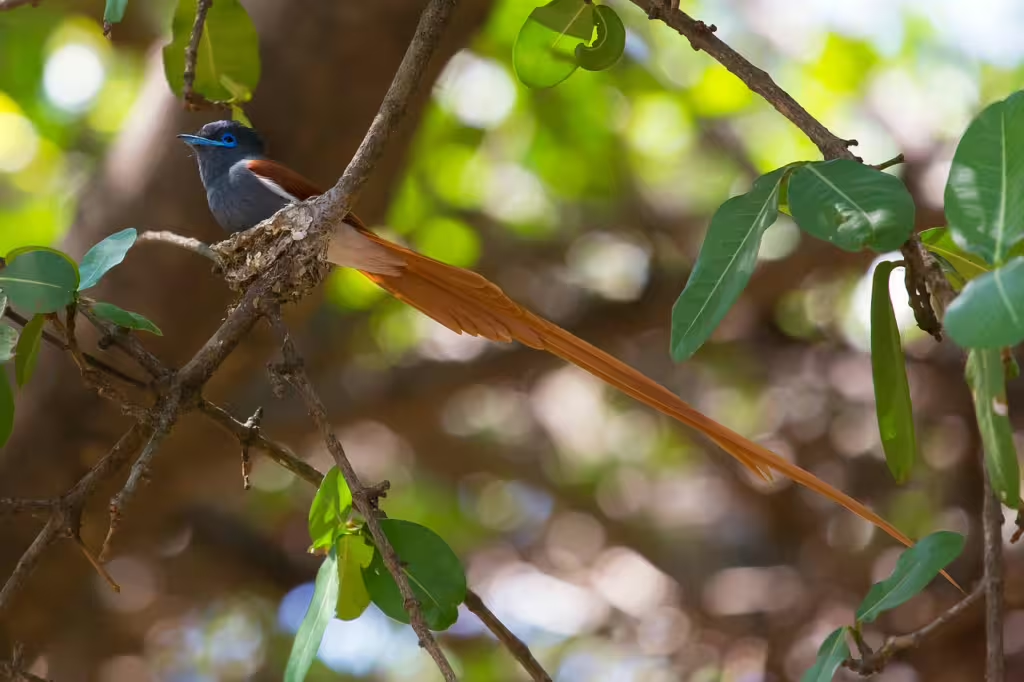
In order to thrive, birds-of-paradise depend on their rainforest ecosystems to be quiet and unmolested and unfortunately, that hasn’t been the case for many centuries. Deforestation, habitat fragmentation, and climate change continue to threaten many species of these birds, not to mention the other animals that live in the Southeast Asian habitats.
Many of the birds’ dances, songs, and displays of plumage have evolved to rely on forest structures, the diffusion of light, sound, and temperature. Thus, habitat loss has had an incredibly disruptive effect on their breeding success.
At the same time, some species remain vulnerable to poaching. And while the illegal feather trade is not nearly as destructive as it once was, some individuals continue to make life difficult for the birds-of-paradise. Still, environmental protections have improved immensely in recent decades
Final Thoughts
As you can see, in so many ways, the birds-of-paradise remind us that survival in nature isn’t solely about how fast, strong, or ferocious a creature happens to be. Success is often determined by cleverness, creativity, and artistry. The complex courtship dances of these artsy avians are among the most extraordinary behaviors in the natural world. They are vibrant expressions of beauty and biology, intertwined.
Discover more from TrueInvestigator
Subscribe to get the latest posts sent to your email.